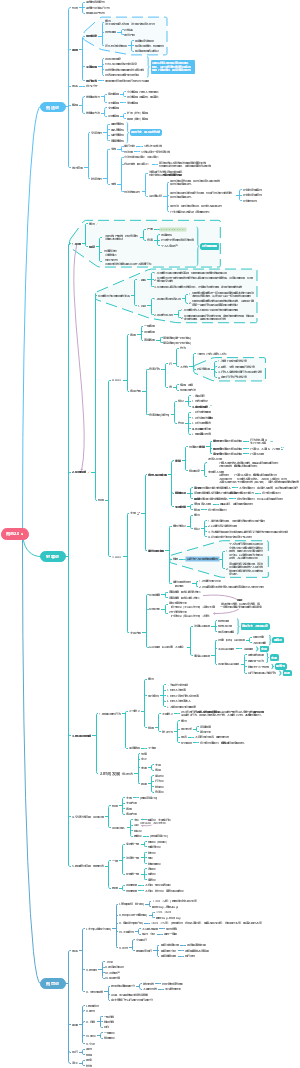
the vocal tract(声道):the pharynx(咽), mouth and nose
the mouth: the oral cavity(口腔)
the nose: the nasal cavity(鼻腔)
consonants(辅音)
vocal folds(声带振动)
voiceless(清音)
p t k f s h
voiced(浊音)
b d g v z w l m n
glottal(喉塞音)
manner of articulation(发音方式)
stop(plosive)爆破音(塞音)
p b t d k g
fricative摩擦音
f s s z h
affricate破擦音
liquids流音
l r
nasal鼻音
m n
glides滑音
j w
place of articulation(发音位置)
bilabial双唇音
p b m w
labiodental唇齿音
f v
dental齿音
alveolar齿龈音
t d n s z r l
postalveolar后齿龈音
palatal硬腭音
j
velar软腭音
k g
glottal声门音
vowel(元音)
pure/monophthong vowel(纯元音或单元音)
diphthong 双元音
the height of the tongue raising: high, mid, low
the position of the highest part of the tongue: front, central, back
the length of tenseness of the vowel: tense, lax or long, short
lip-rounding: round, unround
triphthong三重元音
The sounds of English(英语发音)
describe consonants(辅音描写)
voicing
place of articulation
manner of articulation
describe vowel( 元音描写)
phonetics(语音学)
definition: it is interested in all the speech sounds used in all human languages, it aims to answer questions like: how they are produced, how they differ from each other, what phonetic features they have, how they can be classified, etc.
phone音子: a phonetic unit or segment.(语音学单位)The speech sounds we hear and produce during linguistic communication are all phones.Phones do not necessarily distinguish meaning, some do, some don't
coarticulation(协同发音)
anticipatory coarticulation逆化协同发音
perseverative coarticulation重复性协同发音
phonology(音系学)
definition:the study of the sound patterns and sound systems of languages. It aims to discover the principles that govern the way sounds are orgnized in languages, and to explain the variations that occur.
phoneme音素:a phonological unit(音系学单位),it is a unit of distinctive value,an abstract unit,not a particular sound, but it is represented by a certain phone in certain phonetic context.
eg: the phoneme /p/ can be represented differently.
minimal pairs(最小对立体): when two different forms are identical(the same) in every way except for one sound segment which occurs in the same place in the strings, the two sound combinations are said to form a minimal pair.
eg: [t] and [d] : tin/din, tie/die
[i:] and [i] : beat/bit, bead/bid
allophones音位变体: [ ]are two differebt phones and are variants of the phoneme /p/, such variants of a phoneme are called allophones(音位变体) of the same phoneme.
phonetic similarity( 语音相似性): the allophones of a phoneme must bear some phonetic resemblance(语音相似)
free variants(自由变体) and free variation(自由变异)
Apart from complementary distribution, a phoneme may sometimes have free variants
Free variation is also seen in regional differences.Either, direction.