导图社区 Ch2-English Literature in the Renaissance Period
- 139
- 2
- 0
- 举报
Ch2-English Literature in the Renaissance Period
这是一篇关于Ch2-English Literature in the Renaissance Period的思维导图,主要内容有1.OLD ENGLISH IN TRANSLATION、2.THE FLOWERING OF ENGLISH LITERATURE、3.DRAMA、4.SHAKESPEARE。
提示: 本内容由社区用户上传并分享。平台不对内容的真实性、合法性、知识产权归属及是否侵害第三方权利进行事前审核或保证。本内容可能包含受版权保护的图片、字体或其他第三方素材,使用前请自行确认授权范围。
- 英国文学
- 文艺复兴
- Ch2-English Literature in the Renaissance Period
这是一篇关于Ch2-English Literature in the Renaissance Period的思维导图,主要内容有1.OLD ENGLISH IN TRANSLATION、2.THE FLOWERING OF ENGLISH LITERATURE、3.DRAMA、4.SHAKESPEARE。
- 英国文学史
这是一篇关于英国文学史 English literature in the old and middle age 的思维导图,主要内容有1.1 The Making of England、1.2 The Roman Conquest、1.3 The English Conquest等。
Ch2-English Literature in the Renaissance Period
社区模板帮助中心,点此进入>>
- Ch2-English Literature in the Renaissance Period
这是一篇关于Ch2-English Literature in the Renaissance Period的思维导图,主要内容有1.OLD ENGLISH IN TRANSLATION、2.THE FLOWERING OF ENGLISH LITERATURE、3.DRAMA、4.SHAKESPEARE。
- 英国文学史
这是一篇关于英国文学史 English literature in the old and middle age 的思维导图,主要内容有1.1 The Making of England、1.2 The Roman Conquest、1.3 The English Conquest等。
- 相似推荐
- 大纲

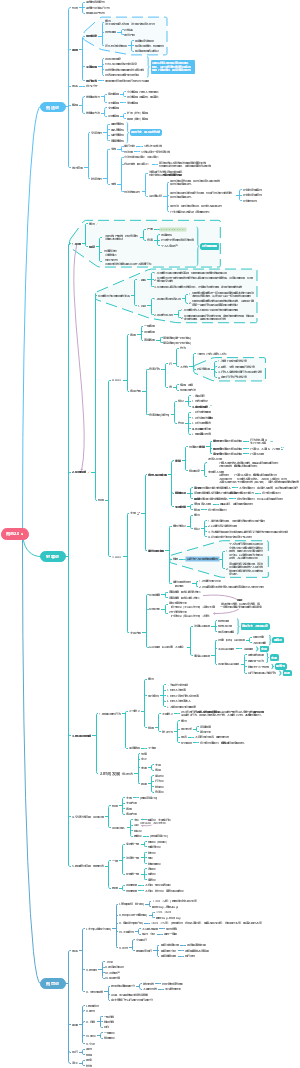

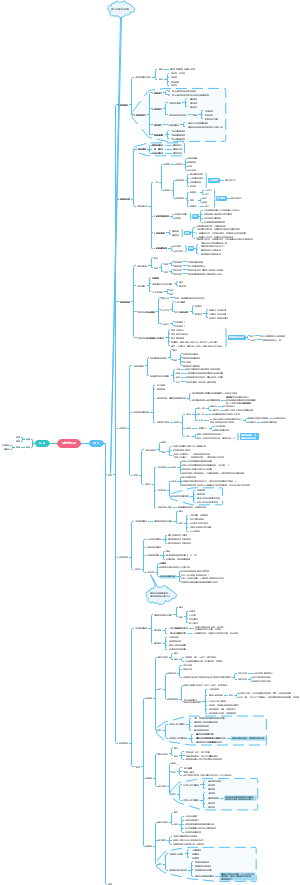
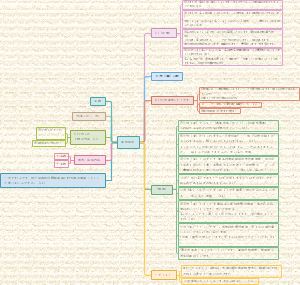
Ch2-English Literature in the Renaissance Period
1. OLD ENGLISH IN TRANSLATION
1.1 THE NEW MONARCHY
Barely after the end of the Hundred Years ' War with France (1337-1453) England was again blown into the whirlwind of civil war . The War of the Roses (1455-1485) between the House of Lancaster and the House of York struggling for the Crown continued for 30 years . Henry VIl(1485-1509) founded the Tudor dynasty , a centralized monarchy of a totaly new type which met the needs of the rising bourgeoisie and so won its support .
1.2 THE REFORMATION
The international regime of the Roman Catholic Church had long been burdensome to the King of England in establishing an absolute monarchy . A conflict was inevitable .
Henry VIll (1509-1547)
Queen Mary(1553-1558)
Queen Elizabeth(1558-1603)
1.3 THE ENGLISH BIBLE
Before the Reformation , the Latin Bible was universally used by the Catholic churches . The English translation of the Bible emerged as a result of the struggle between Protestantism and Catholicism . The result is a monument of English language and English Literature .
1.4 THE ENCLOSURE MOVEMENT
The political and religious turmoils of the age were but the reflection of the changes in the national economy of England which developed at a slow but steady pace. The Enclosure Movement was carried on heartlessly in England .These labourers were the fathers of modern English proletarians .
1.5 THE COMMERCIAL EXPANSION
The progress in industry at home stimulated the commercial expansion abroad. Queen Elizabeth encouraged exploration and travel , which were compatible with the interests of the English merchants. They were those who established the first English colonies
1.6 THE WAR WITH SPAIN
In the commercial expansion , Spain was the rival with England over the sea . The struggle between England and Spain occupied the last third of the 16th century. Up to 1588, the English bourgeoisie had been fighting for their existence ; fter that they fought for power . In this way the English bourgeoisie came to the fore in the arena of history .
1.7 THE RENAISSANCE AND HUMANISM
The rise of the bourgeoisie soon showed its influence in the sphere of cultural life . The result is an intelectual movement known as the Renaissance , or , the rebirth of letters . It sprang first in Italy in the 14th century and gradualy spread al over Europe.
Two features are striking of this movement .
The one is a thirsting curiosity for the classical literature .
Another feature of the Renaissance is the keen interest in the activities of humanity .
Humanism reflected the new outlook of the rising bourgeois class , which saw the world opening before it . According to the humanists , both man and world are hindered only by external checks from infinite improvement . Man could mould the world according to his desires , and attain happiness by removing all external checks by the exercise of reason .
2.THE FLOWERING OF ENGLISH LITERATURE
From the first half of the 16th century , the English RenaiSsance began to develop Into a flowering of literature . Translation occupied an important place in the English Renaissance . To supply the growing demand of the public , classical and Italian and French works were turned into English . Another kind of literature prevailing at the time was the large amount of books describing discoveries and adventures
famous writers
Sir Philip Sidney(1554-1586)
Edmund Spenser(1552-1599)
Francis Bacon(1561-1626)
3.DRAMA
3.1 THE MIRACLE PLAY
The highest glory of the English Renaissance was unquestionably its drama . English drama had roots reaching back to the miracle plays of the Middle Ages . The " miracles " were simple plays based on Bible stories . Then the players got into the market place , usually performng on a wagon , stopping at chosen places .
3.2-THE MORALITY PLAY
Besides the miracle plays , and a little later , there were the morality plays . A morality presented the conflict of good and evil with allegorical personages , such as Mercy , Peace Hate , Folly and sO on . The morality was therefore a somewhat dreary Kind of performance with the endless speech - making of those abstract characters .
3.3-THE INTERLUDE
Then there arose a new kind of drama called " Interlude ,” a short performance slipped into a play to enliven the audience after a solemn scene .
3.4-THE CLASSICAL DRAMA
Meanwhile , through the revival of classical literature English playwrights came into contact with Greek and Latin drama . From it they learned all the important rules in structure and style . The more exact conceptions of comedy and tragedy , and the orderly division into five acts . Comedies and tragedies on classical models appeared in the middle of the 16th century .
3.5-THE LONDON THEATRE
In the 16th century London became the centre of English drama . By 1567, professional actors were organized into companies , and regular playhouses were built in the outskirts of London . The stage was without scenery , footlight or a front curtain . It stood for any place indoors or out ; and when one scene was finished and the actors had retired , it might represent an entirely different place for the next scene . Women ' s parts were always taken by boys . These features are very much like those of the old Chinese drama .
3.6-THE AUDIENCE
Both the gentlemen and the common people went to the theatres . Though the audience covered almost all classes of Londoners , it was the crowd of moving , jostling “ groundlings ", that is , the ordinary people in the pit that were the dominant force in Elizabethan theatre . To most of the spectators , in this time of no newspapers and few novels , it was the only source of intellectual pleasure .
3.7-THE PLAYWRIGHTS
The companies were in constant need of new plays . They called on men of letters for assistance . Numberless playwrights , amateur or professional , wrote for the actors . There was a group of so - called “ university wits ” who wrote for the stage of the time . They were all of humble birth and struggled for a livelihood through writing . It was these impecunious and industrious men of letters who furnished the Elizabethan stage with a large part of its repertoire .
4. SHAKESPEARE
4.1 LIFE
We know very little about Shakespeare . The scanty facts of Shakespeare ' s life come down to us from three sources : church and legal records , folk traditions , and the comments of his contemporaries . The church and legal records contain a series of dates and facts concerning his birth ,marriage , business transactions and his death . Wiliam Shakespeare was born on April 23,1564, in Stratford - on - Avon , a charming little town in Warwickshire . His father , John Shakespeare , was a well - to - do trader in wool , hides and leathern articles , and once held the office of chief aiderman , equivalent to mayor . When Shakespeare was fourteen , his father fell into debt . 'In 1582 Shakespeare was married to Anne Hathaway , a farmer ' s daughter , who was eight years older than her boy husband . They had three children : Susanna and the twins , Judith and Hamnet . Shakespeare arrived in London in 1586 or 1587. Shakespeare lived in an age when the old feudal social and economic order was being destroyed and a new capitalist society was being born and when London took a leading part in that destruction and that new birth. Shakespeare died on April 23, the anniversary of his birth , in 1616, and was buried in Stratford Church .
4.2-PERIODS OF SHAKESPEARE ' S DRAMATIC COMPOSITION The settling of the chronological order of Shakespeare ' s plays has enabled scholars to discern a process of development in his work . Shakespeare ' s career as a dramatist may be divided into four major phases which represent respectively his early , mature , flourishing , and late periods .
4.2.1-THE FIRST PERIOD (1590-1594)
When Shakespeare wrote these early plays , he was a young man from 26 to 30. His work in this period bears the mark of youth , but of youth with astonishing Versatility and wonderful talent .
4.2.2-THE SECOND PERIOD (1595-1600)
The second period of Shakespeare ' s work is his mature period , mainly a period of “ great comedies " and mature historical plays . It includes 6 comedies ( A Midsummer Night ' s Dream , The Merchant of Venice , The Merry Wives of Windsor , Much Ado about Nothing , As You Like It , Twelfth Night ). 5 historical plays ( Richard 11, Henry IV , Parts 1 and 2, Henry V , King John ), 1 Roman tragedy ( Julius Caesar ). His Sonnets are also thought to be written in this period .
4.2.3-THE THIRD PERIOD (1601-1607)
The third period of Shakespeare ' s dramatic career is mainly the period of “ great tragedies ” and “ dark comedies .” It includes 5 tragedies ( Hamlet , Othello , King Lear , Macbeth , Timon of Athens ), 3 comedies ( Troilus and Cressida , All ' s Well That Ends Well , Measure for Measure ) and 2 Roman tragedies ( Antony and Cleopatra , Coriolanus ).
4.2.4-THE FOURTH PERIOD (1608-1612)
The fourth period of Shakespeare ' s work is the period of romantic drama . It includes 4 romances or “ reconciliation plays "( Pericles , Cymbeline , The Winter ' s Tale , Tempest ) and a historical play ( Henry )
4.3-THE GREAT COMEDIES
A Midsummer Night ' s Dream , The Merchant of Venice , As You Like It and Twelfth Night have been called Shakespeare ' s “ great comedies ". A Midsummer Night ' s Dream is a beautiful fairy - tale combined with the story of the struggle for happiness of two pairs of lovers . The Merchant of Venice takes its plot from an Italian story . It is a “ grave comedy ." It is the best , which contains a portrayal of the vengeful Jewish moneylender Shylock and reflects Elizabethan views.
4.4-THE MATURE HISTORIES
Shakespeare ' s histories include ten historical plays , nine of which dramatize successively two centuries of English history from Richard ll(1377-1399) to Henry VII (1509-1547).
4.5-THE GREAT TRAGEDIES Toward 1600, storm - clouds gathered , so to speak , over the creative activities of Shakespeare . The cooperation between the Crown and the rising bourgeoisie , which was the basis of the Elizabeth ' s regime , was over . The economic and social crises which began at the end of Elizabeth I ' s reign continued right up to the English Revolution (1640). It was in this atmosphere of general unrest that Shakespeare created his great tragedies , Hamlets ,Othelo , King Lear and Macbeth , in which he exposes the social contradictions of the time with penetration .
4.5.1-OTHELLO
Othello is a new man of the Renaissance . He is a great warrior , and too noble - minded to suspect those whom he loves . Othello is a tragedy of humanism . The subject of King Lear is taken from an old English legend . The theme of King Lear is not simply filial ingratitude . The play depicts a great social upheaval . The miseries of Lear disclose the essence ot a corrupt society , In which each is ready to destroy the other.
4.5.2-MACBETH
The plot of Macbeth is based on Holinshed ' s Chronicle of Scottish History . Macbeth is a powerful general of Scotland , who has distinguished himself by crushing internal and foreign enemies , and won " golden opinions from all sorts of people ".
4.6-HAMLET Hamlet is considered the summit of Shakespeare ' s art . The story comes from an old Danish legend . Before Shakespeare , Thomas Kyd had written a play on the same subject . It was a tragedy of “ blood and thunder ." But under Shakespeare ' s pen , the medieval story assumed a new meaning .
4.6.1-STORY
The action of the play is laid in Denmark . Gertrude , Queen of Denmark , widowed by the sudden death of the King , within two months marries the late king ' s brother Claudius , who thus becomes the new King . Prince Hamlet , son of the late king , returns home from the University of Wittenberg . He suspects foul play on the part of Claudius , his uncle . Then his father ' s ghost appears to him at the castle of Elsinor , and confirms Hamlet ' s suspicion . He undertakes to avenge the murder . The king arranges that Laertes s to challenge Hamlet to a friendly duel and kill him with a poisoned rapier . In the duel , Laertes wounds Hamlet but is himself struck with the same poisoned weapon . Before death , Laertes reveals the plot . The queen , at this moment , has drunk from a poisoned cup intended for Hamlet . Hamlet , in a passion , stabs the King , and then dies through his poisoned wound , giving the election to the crown to Fortinbras of Norway .
4.7-THE LATER COMEDIES
Pericles , Cymbeline , The Winter ' s Tale , and The Tempest , written between 1608 and 1611, are Shakespeare ' s later comedies . Owing to their tragi - comic nature , they are sometimes called his “ romances .” These plays portrav a wide range of tragic events , pathetic emotions , and difficult conditions , but they all end in reconciliation and reunion and emphasize upon a renewal of hope that comes from repentance and forgiveness , together with a faith in the younger generation , who by love will heal the wounds inflicted in the past .
4.8-THE POEMS
Venus and Adonis , a narrative poem printed in 1593, was Shakespeare ' s first published work . The story is taken from Ovid ' s Metamorphoses . The Rape of Lucrece , another narrative poem , is a “ graver labour " and the subject tragic .
Shakespeare ' s Sonnets . The sonnet is a poem in 14 lines with one or the other rhyme scheme , a form much in vogue in Renaissance Europe , especialy in Italy , France and England .+ In 1609 appeared Shakespeare ' s Sonnets . Never before Imprinted . The collection contains 154 sonnets , commonly thought to be written between 1593 and 1599.
They may be roughly divided into three groups . Numbers 1-17 are variations on one theme . A handsome young man is being persuaded to marry and beget offspring who wil preserve his beauty in a new generation , though he himself will lose it as he growS old . Gradually this theme gives place to the idea that the beloved youth will survive through the poet ' s verse . Numbers 18-126 are on a variety of themes associated with a handsome young man ( who is presumably , but not necessarily , the youth of 1 to 17). The poet enjoys his friendship and is full of admiration promising to bestow immortality on the young man by the poems he writes in his honour .
Then begins a new series (127-154), principally about a - married woman with dark hair and complexion , the so - caled “ dark lady of the sonnets ", by whom the poet is enthralled , though well aware of her faults . They express strong feeling . They have a density of thought and imagery that makes them seem the quintessence of the poetical experience .
4.9-FEATURES OF SHAKESPEARES DRAMA
1. Shakespeare is one of the founders of realism in world literature . 2. Shakespeare ' s dramatic creation often used the method of adoptation . 3. Shakespeare ' s long experience with the stage and his intimate knowledge of dramatic art thus acquired make him a master hand for playwriting . 4. Shakespeare was skilled in many poetic forms : the song , the sonnet , the couplet , and the dramatic blank verse . 5. Shakespeare was a great master of the English language