导图社区 欧盟法(supranational _intergovernmental)
- 58
- 1
- 1
- 举报
欧盟法(supranational _intergovernmental)
欧盟法简要框架,欧委会代表联盟自己,议会代表人民,欧盟理事会代表成员国。本篇导图详细的总结了欧盟法,感兴趣的小伙伴可以看看哦~
提示: 本内容由社区用户上传并分享。平台不对内容的真实性、合法性、知识产权归属及是否侵害第三方权利进行事前审核或保证。本内容可能包含受版权保护的图片、字体或其他第三方素材,使用前请自行确认授权范围。
- 欧盟法

- 相似推荐
- 大纲

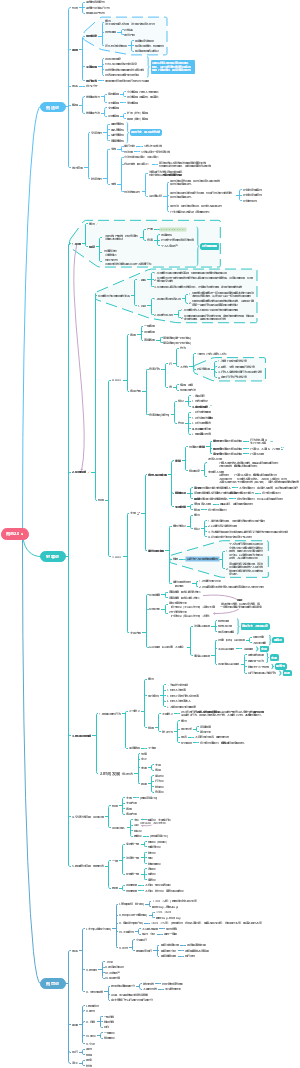
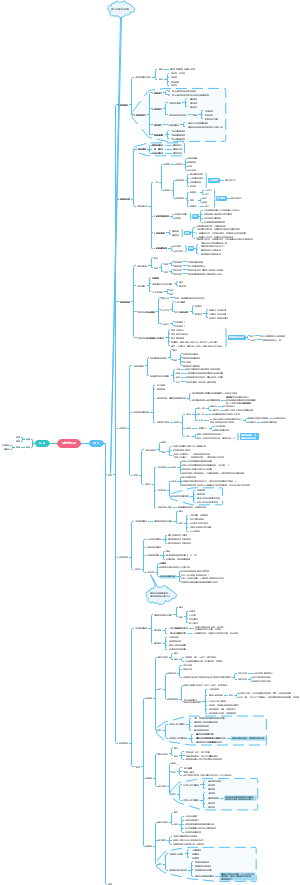
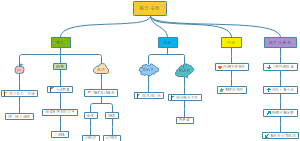




欧盟法(supranational &intergovernmental)
Economic background and cooperation
International monetary fund
Marshall Plan
General agreement on tariffs and trade(关贸协定)
European Coal and Steel (ECSC)-European Defense Community(EDC:国防共同体-premature)-European Economic Community (EEC)-European Atomic Energy Community (EURATOM:原子能共同体)——Original aim was to avoid war
European Coal and Steel (ECSC)——The Commission |The Council of Ministers|The Parliament |The Court of Justice
ECSC &EEC &EURATOM ——The European Communities ——1.The Commission |2.The Council of Ministers|3.The Parliament |4.The Court of Justice (1965)
European Economic Communities ——European Community(EC)-add 5. The Court of Auditors. (1992)
6.The European Council|7.The European Central Bank
Three Pillars of the European Union(欧盟的三大支柱)
European Coal and Steel (ECSC)&European Atomic Energy Community (EURATOM:原子能共同体)
The Common Foreign and Security Policy
Police and Judicial Co-operation in Criminal Matters
The European Union ——the European Parliament|the European Council | the Council| the European Commission|the Court of Justice of the European Union|the European Central Bank|the Court of Auditors
欧盟权能与原则
专属权能、共享权能、政策协调权能、支持协调与补充权能
principle of conferral (授權)、 principle of subsidiarity(輔助)、principle of proportionality(比例/適當)
欧委会代表联盟自己、议会代表人民、欧盟理事会代表成员国
The European Commission 歐盟委員會(EC)
一国一委员。欧盟的行政机构
watchdog or guardian of the Union
propose legislation 通过提出立法案
act independently in the interests of the EU and do not represent the interests of their respective Member State
主要职责:站在欧盟的立场上提出立法案、贯彻欧盟政策和财政方案、实施政策组织监管、执行欧盟法律以实现欧盟的总体利益。
EC enforces EU law but has limited powers of independent decision- making (主要為執行機構)
EC formulates and proposes legislative initiatives (立法草案倡議
EC manages the EU’s budget and allocates funding (along with the Parliament and the Council of Ministers) (使用預算)
EC represents the EU on the international stage (對外代表)
The European Parliament 歐洲議會 (EP)
places of work
administrative offices:Luxembourg
Meetings of the whole:Strasbourg&Brussels
Committee meetings:Brussels
Members:every 5 year|by 27 member state——decide the form of its election|欧盟公民直选
组成:20 Parliamentary/Standing Committees
Special Temporary Committees: deal with specific issues& empowered to create formal Committees of Inquiry to investigate allegations of maladministration of EU law
divided into Parliamentary Delegations:maintain and develop the EP’s international contacts (especially relations with parliaments in third countries )
职能:独立任职 不代表成员国利益
the EU budget &some areas of expenditure
provides democratic legitimacy to the EU.立法权,与欧盟理事会共享
power of consent – prerequisite for the accession of new Member States or the entry of the Union into international and association agreements
control and supervisory powers over the Commission(对Commission 进行监督)
Appointment of the Commissioners
Censure/Removal of the Commission
Powers of scrutiny, inquiry and litigation
The Council of the European Union /The Council 歐盟理事會(CoM)
Members of the Council=the Council of Ministers (CoM)——Ministers from existing Governments in the Member States.
组成:10 council configurations(格局、布局)|General Secretariat(consists of approximately 2800 officials)
President:rotates between Member Governments every 6 months
Ministers:由各国相应的部长构成(如农业理事会由各国农业部部长构成)
How to make decisions?——by a vote of Ministers from the Member States-根据人口确定各国票数多少
Simple majority (for procedural decisions) :至少15国
Qualified majority(票数代表65%的欧洲人民&55%成员国|used for decisions concerning the internal market, economic affairs and trade)
Unanimity (一致通过|for foreign policy, defence, judicial and police cooperation, and taxation)
职能:
negotiates over detailed proposals for EU action
Help coordinate Member States' policies in some areas (将联盟的政策协调给各个成员国)
Develop the common foreign and security policy on the basis of strategic guidelines set by the European Council 确认和执行共同外交和安全政策(总的政策由欧洲理事会-首脑峰会确定)
Concludes international agreements on behalf of the Union;
Adopt legislative acts – in many cases in "co-decision" with the EP
Adopt the Union's budget (together with the EP)
Policy
Most policy areas :
Commission——the primary drafter
the EP——co-legislator with the CoM (ordinary legislative procedure)
In other policy areas
the Commission& the EP——a more marginal role
the CoM——in charge of its own agenda
The European Council 歐洲理事會(峰會)
各首长开会,主要为欧盟提供政治方向。為歐盟的發展提供必要的推動力,確定總體政治方向和優先事項,但不能行使立法權。处理其他机构未能解决的成员国间复杂敏感的问题。确定欧盟的共同外交与安全政策。推荐和提名欧盟一些关键职位的候选人
The Court of Justice of the European Union 歐盟法院 (CJEU)
组成:
Formerly:European Court of Justice (ECJ)& Court of First Instance (CFI)——assist the ECJ
The Court of Justice (CoJ) |The General Court (GC, previously the CFI, Court of First Instance) |Specialised Courts (currently no one, as Civil Service Tribunal was disbanded in 2016)
The Court of Justice (CoJ):One judge from one Member State
The General Court (GC):At least one judge from one Member State
职能:
Direct Actions
Preliminary Rulings(初裁)
Advisory bodies
Economic and Social Committee:voice of civil society
represents trade unions,employers,farmers,consumers and so on
advertises on new EU laws and policies
promotes the involvement of civil society in EU matters
Committee of the Regions :voice of local government(区域理事会)
represents cities and regions
advises on new EU laws and policies
promotes the involvement of local government in EU matters
The sources of the EU law
基础性规范
Treaties
The Treaty on European Union (TEU) & The Treaty on the Functioning of the European Union (TFEU)——the principle source of law for the Union
Set out the distribution of competences between the union and the Member States
Establish the powers of the European Institutions
The Founding Treaties
The Amending Treaties
The Accession Treaties
直接适用性 directly applicable:once ratified,treaties automatically become part of the generally binding law of the member state
framework documents|broad guidelines|DO NOT provide extensive details for the implementation
Declarations
do not enjoy express treaty status 不享有明确的条约地位
派生性规范
Regulations 条例
have general application|binding in its entirety|directly applicable in all Member States——普遍适用、完全的约束力、直接适用(无需转换,成员国无权检查、检验、转换或者颁布实施细则)
直接适用性:自生效日起在整个联盟自动生效,无需其他程序(如单独宣布)
是对基础条约的规定的具体化
各成员国通过其有关机构必须保障条例得以正确的适用
The Council Regulation:无议会参与且全部直接适用——民主赤字
Directives 指令
A directive shall be binding, as to the result to be achieved, upon each Member State to which it is addressed, but shall leave to the national authorities the choice of form and methods.对各个成员国要求某个目标,不规定具体的措施
Once adopted at European level, the directive is then transposed by Member States into their internal law 以相应的国内的立法予以跟进
不直接适用 but 会确保成员国修改自己的法律使其符合标准
对成员国留有酌行处理的权利
成员国必须在指令的期限内执行指令 if not EC may initiate proceedings against the Member State
adopted by the European Institutions& in accordance with the founding treaties
Possibly directly effective vertically
Decisions 决定
决定的规制对象具有指向性
生效日自动生效
Two kinds of decisions
Decisions that specify the addressees (individual cases) => Decisions I (类似非规范性文件)
General decision (not regulating individual cases) => Decisions II
Recommendations 建议& Opinions 意见
EU institutions express a view to the MSs or citizens
have no binding force
May have Persuasive Effect on the CJEU in its decision-making
The real significance of recommendations and opinions is political and moral.
Recommendations
addressees are not placed under a legal obligation to behave in a particular way
Opinions
Union institutions issue in an assessment of a given situation or developments in the Union or individual MSs
may imply preparation for other forms of actions
green paper/white paper——共识,发展为本opinions,再发展为法律
其他渊源与辅助性渊源
The Charter of Fundamental Rights of the European Union
内部规范,内部要求,个人不可直接适用
Leading General Principles of Law and Fundamental Rights
International Treaties and Agreements (WTO)
Case Law of the Court of Justice
(Not formally binding)
Legislative Procedures
Ordinary Legislative Procedure
Special Legislative Procedure
Usually (not always) done by the Council
EP:EP is not an equal footing & has a role in giving consent, consultation or rejection
Other procedures
Approval procedure
EP can choose from approval or rejection, no power to amend
Procedure for adopting non-legislative acts
Enforcement(Administrative + Judicial)
Infringement Proceedings 违反条约之诉
通过司法保障条约和联盟法律的实施
Commission 判断——MSs发表其意见——Commission 针对该意见提出opinion:if the state does not comply with the opinion with the period——bring the matter to CJEU
Ensure MS compliance with Treaty obligations; .
Provides a procedure for resolution of disputes between the Commission and the MSs;
If a dispute reaches the Court of Justice, the ruling will clarify the law for all MSs to follow in the future.
the standard of “failed to fulfill an obligation”
Failure to remove national legislation that is now in conflict or inconsistent with EU law;
Failure to implement an EU Directive correctly (deliberately or inadvertently), completely, or on time
Failure to remove inconsistent legislation constitutes a breach
A Member State can also breach its obligations under Union law when it fails to act in circumstances in which it should have acted “不作为” (breach:违反、违背)
How does a ‘breach’ come to the attention of the Commission?
as a result of the Commissions own investigations (‘own initiative’)
from the failure of Member States to notify how they have implemented EU law (‘non-communication’) (as required under secondary legislation)
reported by other Member States, the European Parliament. or concerned or affected individual citizens/companies.
Informal Stage (Mediation) 调解
Commission reach a conclusion——Commission inform/notify the MS& engage in informal discussions with the MS——Commission identify the nature of the breach (查明性质)& set out a time limit within it expects the MS to comply
Usually, a MS is prepared to remedy its mistake at this point——suspended
If not
Formal Stage: (1) Letter of Formal Notice
The Commission sends a Letter of Formal Notice (LoFN) to the MS concerned(details of the alleged breach of Union law & the intention of the Commission to initiate proceedings)
The MS must submit its own observations on the alleged breach.
Formal Stage: (2) The Reasoned Opinion
the MS does not reply to the LoFN/ does not reply within the time specified/ the reply received is unsatisfactory—— the Commission deliver its Reasoned Opinion (RO)(provides statement that the Commission conclude that the MS is in breach of Union law)
RO provides a further time ,the MS need to bring the alleged infringement to an end
RO is not a binding act
Judicial Stage
RO failed——the commission refer the matter to the CoJ(to the judicial stage)
case is weak& 委员会多年拒绝成员国的辩护——委员会不太可能继续诉讼
If the CoJ finds a MS in breach——a judgment requiring the breach be remedied immediately.
If the MS fails to comply with a judgment——the Commission has the possibility of a second court ruling ordering that the state has to pay a lump-sum fine and/or a penalty
if a MS failed to comply with a directive, the CJEU can apply a penalty at the same time that it gives its ruling.
Actions by other MSs
一国认为他国未履行条约规定的义务——将其提交至CoJ
在一国对他国提起诉讼前,应提交至Commission(必须前置)
每个有关国家有机会提交意见后,The Commission 应发表合理意见
如果commission在三个月内没有发表意见,不影响将案件提交至法院
Actions for annulment 宣告无效之诉
联盟立法违背了联盟条约或者基本权利,法院可宣布其无效
谁提起诉讼:成员国政府、欧盟理事会、委员会、议会、与该法律,规则直接有关的个体。
actions against institutions of the EU
Major contribution to individual remedy
Restriction for individuals/legal persons
Individual concern: must affect the person
Direct concern: ‘immediate, automatic and inevitable disadvantageous legal effects without need for further intervention’
Preliminary Rulings 初步裁定/先行裁决
Judicial Monitoring/Oversight 司法监督/监督
CoJ 关于初裁的规定:
interpretation of EU law 解释性先行裁决(对条约的解释)
Object:
Background: => all EU languages & applied by national courts(启动权在各成员国法院,包括其他裁判行机构手中)
Case-law: relevant international treaties
Methods of interpretation: literal, contextual, purposive => a combination
Role of CJEU
Reactive: responds to questions submitted to it by the national courts
1 Not to consider the validity of national law
Not to consider how to apply EU law (national courts’ job)
National courts
Expected to apply EU law as interpreted
具体:
通过解释,确认欧盟的具体法律规则是否对个人(体)产生权利和义务,也就是裁定具体的欧盟法律规则是否具有直接效力,
对条约、立法等规范性法律文件文字或者内容的解释、明确
通过解释,确认欧盟的具体法律。是否具有高于成员国法律的效力
先行裁决不会直接对成员国法律作出裁判,但是具体的欧盟法律与相关的成员国法律的关系与使用问题,会得到明确的分析与处理
validity of the acts of the EU institutions 合法性先行裁决(欧盟机构、机关、办公室法案的解释和有效性)
Object:
Only secondary law
Role of national courts
national courts suspects secondary legislation may be invalid——made a reference (lack of competence)
具体:
以条约为基本准绳,对欧盟各机构的日常立法以及相应的行为进行合宪性审查
程序
成员国法院在处理案件的过程中碰到了欧盟条约和欧盟法律的问题时,认为这些问题需要进行解释和明晰,其有义务将需要解释或判断的欧盟法律的问题提交
成员国国内法院的案件应暂停,等待欧盟法院先行裁决的判决
先行裁决的裁判结果是其进行具体案件判决的法律依据
如果成员国法院没有按照欧盟法院先行裁决的判决进行裁判,则会被上级法院纠正,甚至导致欧盟针对该成员国的诉讼
启示:启动权设置于成员国,是赋予个成员国在欧盟法律运行过程中的主动参与和与联盟互动的一种权能,这种参与和互动是欧盟法律完备与发展的重要源泉
欧盟法院先行裁决的判决可以被再援引——欧盟法院的判决权威性高&判决的效力具有普遍性
national courts/ tribunals——interpret EU law, including the Treaties and the Union’s acts.欧盟法院是欧盟条约和立法的唯一权威解释机构
National courts or tribunals apply the law & CJEU only interprets the EU law
Other Characteristics
The situations that CJEU refuse the preliminary rulings:
Abuse of power
irrelevance
insufficient information of factual/legal background
Court or tribunal=> functional approach
Discretionary vs mandatory=> boundary blurs
Discretionary:National courts may consider time, cost, the workload of the CJEU, and the wishes of the parties.
Mandatory: a court of last resort
Possible reform
Proposals
Conferral of jurisdiction on the General Court
Urgent preliminary ruling procedure
Restricting the range of requesting courts or tribunals (e.g. first instance)
Abolishing mandatory procedure
Allowing CJEU to filter questions
Summary
Who: national court or tribunal request, CJEU rules, and nat. court applies
About what: interpretation & validity of secondary legislation
For what: unity of EU law
Details:
Do they have discretion not to request?
What is a court or tribunal?
Problems and reforms
Direct effect & Supremacy
Direct Effect
Direct Effect & Direct Applicability
Directly applicable:automatically becomes law in a MS once issued(such as treaties, regulations, decisions......)
The Criteria for Direct Effect
Vertical and Horizontal Direct
Directives: possibly directly effective vertically
Supremacy 优先效力
Highest in authority, rank or degree
Internal Market
Introduction
Members:EU/ MSs
Aims:to increase Competition、Specialisation、 Economic scal、Resources allocation、Economic integration……
Free Movement of Persons
EU citizens can move freely between MSs with no reason and may reside in any MS they choose=> EU citizens shall be treated equally to the nationals
only if they do not pose an undue burden on the social welfare system or public safety in their chosen MS.
Free movement of workers
Workers: anybody who is economically active& Not necessarily paid in money
Factor of production => economic nature
Right:
Workers can take up employment, conclude contracts, and not suffer discrimination compared to nationals of the MS
Equal Treatment in relation to tax
Equal Treatment in relation to social benefits
More restrictions, including residential qualifying periods.
Free movement of Citizens
Right:
Citizens and immediate family members
To entre, depart and return without due restrictions
Passports for many central and eastern European citizens
To reside, without becoming an unreasonable burden on social assistance
No requirement of being economically active in 3 months
To vote in local and European elections
The right to equal treatment with nationals, but for social assistance only after 3 months of residence
Free Movement of Services
Freedom of establishment
relates to restriction imposed on companies in setting up agency or moving its residency.
Freedom to provide service
People who provide services "for remuneration", especially commercial or professional activity
Health care generally counts as a service.
Free Movement of Goods
Charges having equivalent effect to customs duties
Internal Taxation
Distinctly applicable measures (DAMs)区分适用
关税同盟+消除内部边界
禁止利用其他内部税收保护本国产品
禁止进出口数量限制与其他可能影响贸易的要求,但满足一定条件下可以提出克减/例外
Free Movement of Capital
all restrictions on the movement of capital between Member States and between Member States and third countries shall be prohibited
Summary
Persons: workers (employment-based benefits) vs citizens (less substantive rights)
Services: establishment vs service providing
Goods: custom union, no internal taxation, quantitative restrictions & MEEQs
Capital: domestic payment & no restriction even between MSs and third countries
Minimal restriction based on nationality, supranational oversight, and a prospect of a Home Market