导图社区 Introduction of ADR
- 99
- 2
- 1
- 举报
Introduction of ADR
Summarying from: Shujie Chen, ‘New developments of ADR in foreign countries’ ( Xiamen University Press , 2017). Including its development in England and comparison with Chinese arbitration system
编辑于2021-12-17 22:00:32- 仲裁法
- ADR
- 比较法研究
- 英国法律
- 行政许可作业
行政许可可分为:一般行政许可、特许、认可、核准、登记等内容。资料来源于辽宁省盘锦市、沈阳市政务服务网。
- Introduction of ADR
Summarying from: Shujie Chen, ‘New developments of ADR in foreign countries’ ( Xiamen University Press , 2017). Including its development in England and comparison with Chinese arbitration system
- 海关权力的内容
西南政法大学海关法之海关权力的内容课程笔记,包括行政许可权、税费征收权、行政监督检查权、行政强制权、佩戴和使用武器权等。
Introduction of ADR
社区模板帮助中心,点此进入>>
- 行政许可作业
行政许可可分为:一般行政许可、特许、认可、核准、登记等内容。资料来源于辽宁省盘锦市、沈阳市政务服务网。
- Introduction of ADR
Summarying from: Shujie Chen, ‘New developments of ADR in foreign countries’ ( Xiamen University Press , 2017). Including its development in England and comparison with Chinese arbitration system
- 海关权力的内容
西南政法大学海关法之海关权力的内容课程笔记,包括行政许可权、税费征收权、行政监督检查权、行政强制权、佩戴和使用武器权等。
- 相似推荐
- 大纲
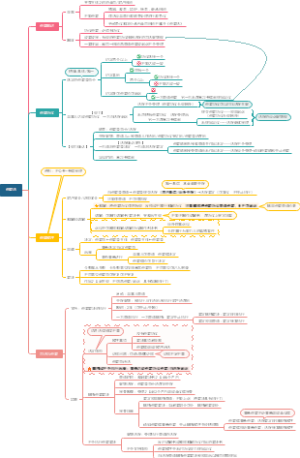

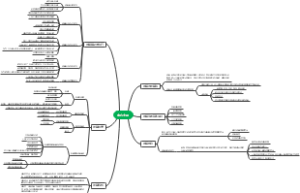



ADR
Introduction
The evolution of human society is not only a gradual process from barbarism to civilization, but also a process of the formation and development of different types of dispute resolution mechanisms.
Before the emergence of the state, self-help relief was the norm
fter the emergence of the state, legal violence is exercised uniformly by the state, and public relief plays a leading role in the dispute resolution mechanism
Based on the characteristics of private law autonomy, there is also a certain social relief space, and self-reliance relief is declining
Three dispute resolution mechanisms in modern society constitute a diversified civil dispute resolution system dominated by litigation
Background of ADR
Limitations of civil litigation
Complex program
Long period
The rights of some social groups cannot be guaranteed
High cost
Strict standardization and state mandatory restrictions on autonomy of will are not conducive to the reconciliation of contradictions between the subjects of disputes
In order to protect the people's rights of "access to justice", a diversified dispute resolution mechanism, including dispute resolution mechanisms such as negotiation, mediation, arbitration and litigation, should be established to meet the diversified needs of social subjects
Each specific nine point solution in this mechanism plays its unique role, coordinating and complementing each other
Ensure the status of judicial procedure as the final means of relief
Basic principle of ADR
The meaning and basic characteristics of ADR
ADR is the voluntary resolution of a dispute without recourse to the courts.
Classification of ADR
Negotiation
Arbitration
子主题
Both arbitration and negotiation are two forms of appropriate dispute resolutions (ADR) and alternative processes to court litigation. Both are private, speedy, less costly and ensure confidentiality. Other forms of ADR are conciliation and mediation.
Negotiation and arbitration differ in function and the people who play a part in each process. In arbitration, an arbitrator is appointed by both parties while a facilitator oversees a negotiation.
In arbitration, the arbitrator decides on the outcome of the dispute after hearing both sides. The resolution is called an award, which is final and legally binding. Meanwhile, a facilitator allows both parties talk to each other about the dispute and aids in making a settlement. The result of a negation is called a memorandum of agreement. This document is not as legally binding as an award.
Both facilitators and arbitrators are usually third parties. The arbitrators solely and directly decide on the outcome of the dispute while the facilitators let both parties come into their own agreement. To sum up, a facilitator is a non-direct party in the process.
The costs of arbitration can be decided by the arbitrator or by both disputing parties, depending on the situation. Meanwhile, the negotiator’s fee is usually split between the two parties.
An award (in arbitration) cannot be appealed to a court. On the other hand, a court can question or overturn a memorandum of agreement that transpired as a result of negotiation.
Arbitrators are usually lawyers or people associated with the law while facilitators may not have a law background.
Read more:
Mediation
Conciliation
1. In mediation, the facilitator should be impartial and objective to the parties’ dispute, while with conciliation the facilitator plays a more active role.
2. In mediation, the parties are encouraged to find a solution, with the facilitator only acting as a guide. While with conciliation the facilitator has the responsibility to identify the objectives of the parties and actively help find a solution.
3. Within mediation, the facilitator does not give any judgement. With conciliation, the facilitator also plays the role of evaluator and intervener that base the solution on what is deemed the most beneficial solution according to the facilitator.
4. It is not necessary to find a resolution when it comes to mediation, but the aim is an agreement. With conciliation, a resolution is a necessary outcome and is executable as a decree of the civil court.
5. Mediation is governed by the Code of Civil Procedure Act, 1908. Conciliation is governed by the Arbitration and Conciliation Act, 1996.
6. Confidentiality plays an important part in both processes, however, they are enforced differently. Within mediation confidentiality is based on trust, and is it advised for all parties to sign a Confidentiality Clause for extra measure. Confidentiality in conciliation is determined by the law.
7. Mediation intervenes when a substantial conflict or dispute have arisen that needs professional intervention. Conciliation is used preventively and aims to stop a dispute to developing into something substantial.
8.
9. Read more:
Manifestation of ADR
Regulation and its derived forms
Arbitration and its derivative forms
Negotiation and its derivative forms
Court attached ADR
America
Since the 1970s, American courts have gradually introduced ADR directly into the traditional dispute resolution mechanism, which not only enriches the content of civil litigation system reform, but also means that ADR has realized the dual track operation of civil and official, which greatly promotes the development of ADR. ① As early as 1983, Article 16 of the federal rules of civil procedure of the United States allowed judges to consider the possibility of using conciliation or extrajudicial procedures to resolve disputes and take action at the pre-trial meeting stage; 1996 dispute between the Federal Judicial Center and the International Institute for conflict prevention & resolution. In addition, many industry organizations regularly hold academic conferences on court attached ADR research and some specific ADR technology research every year. "Scholars, judges and lawyers can have full dialogue and exchange through these platforms, which effectively promotes the development of court attached ADR.
England
For a long time, ADR has not been paid enough attention in Britain, and people have always been skeptical or even exclusive of ADR. In the civil judicial reform with the theme of "approaching justice" launched in the 1990s, ADR was highly praised by Lord Wolff and regarded as one of the main ways to reduce litigation costs and alleviate litigation pressure. ③ The British rules of civil procedure, which came into force on April 26, 1999, clearly introduces ADR into the court system as an important means of case management.
Legal effect of ADR
Whether ADR has legal effect, such as whether its procedural rules are legally binding and whether its agreements or decisions are enforceable, is an unavoidable problem in ADR practice, which may also be an important reason why many people doubt ADR. If ADR is given legal effect, it must face ③ dilemma: is dispute resolution based on rights or interests? Generally speaking, a society ruled by law always tries to transform social relations into legal relations through clear rights and obligations, and determine the corresponding right relief methods accordingly. ADR is either mainly based on interests, or the parties directly reach an agreement by means of right compromise (of course, it does not exclude ADR based entirely on rights). Obviously, such an agreement based on interests or compromise of rights is not completely reasonable or even illegal, which may violate the spirit of the rule of law. ① Taking mediation as an example, Japanese scholar Anping Taniguchi believes that "today, the concept of law and rights has been permeated in our social life and consciousness. The mediation method of asking for compromise without asking who is right and who is wrong in the law can no longer win the support of the people", because "Although the parties applying for mediation did not choose to use the litigation system, they also asked for mediation in order to realize their rights." ② therefore, whether and how to give ADR legal effect is indeed a major legal theory and practice problem.
We believe that whether it is mainly based on interests or directly through right compromise, the practice of ADR cannot be divorced from the track of rule of law, which is the fundamental premise to determine whether to give ADR legal effect. Based on this, considering that procedural justice can shoulder the function of realizing substantive justice, ③ we advocate that the degree of formalization of ADR procedure determines whether to give it legal effect Basic basis. In detail, due to the complexity of ADR, generally giving ADR legal effect is likely to violate the spirit of the rule of law. A more desirable way is to decide whether to give it legal effect according to the degree of formalization of ADR procedures.
"Approaching justice" and judicial crisis
From the perspective of "approaching justice", the problems perplexing the operation of the western civil judicial system mainly include litigation delay, high litigation costs and cumbersome litigation procedures.
In many countries, high litigation costs are a gap between the people and the courts. For example, in Britain, the litigation costs are not only high, but also unpredictable. In reality, the litigation costs of each party are likely to exceed the amount of the subject matter of the dispute. Lord Owen pointed out that high litigation costs are one of the main defects of the British civil judicial system. ② litigation costs High cost is an important issue involved in the British civil justice reform advisory report, the final report Appendix III discusses the issue of litigation costs. The appendix points out that according to statistics, when the amount of the subject matter of the lawsuit is less than £ 12500, the cost of rejecting the lawsuit greatly exceeds the amount of the subject matter of the lawsuit. This means that the right of £ 10000 must be claimed through the court. The plaintiff must first invest the amount of his request, and he has to bear the risk of compensating the litigation costs of the other party. Because 42% of British residents live in the UK every year The income is less than 10000 pounds. These residents are facing heavy pressure on litigation costs in using litigation procedures. It can be seen that reducing litigation costs has become the focus of civil justice reform in Britain. The situation in other common law countries is no better than that in Britain. In Australia, the volume and complexity of litigation have increased greatly, and the current system is labor-intensive and cost-effective The cost of legal aid is high and the efficiency is low. As in the UK, the tight legal aid budget shows that it is difficult to maintain. Therefore, Australia has decisively reduced the funding of legal aid. The situation in the United States is more complex. Although the social impact of its high litigation cost is softened by the successful litigation reward system to some extent, the system has also caused serious problems Lawyers like to take over successful and remunerated litigation, which is mostly motivated by high punitive damages. ®
The program is cumbersome Another important manifestation of the obstruction of "access to justice". Taking Britain as an example, both the county court and the high court have the right to hear cases of first instance. The litigation cases handled by the former are mainly heard according to daily reasons. The legal principles are simple and the problems are not complex. Generally speaking, such cases do not need to go through complex procedures, but once they enter the court, they will be followed by the parties of both parties A large number of intermediate applications, different orders made by the court for these applications and related hearings, the complexity of the procedure is often beyond people's imagination before litigation. For most litigation, the workload of its ancillary litigation has exceeded the litigation itself, resulting in a large amount of delay and cost. ② in Germany, although there is no serious litigation delay and litigation costs With expensive problems, but based on the concept of professional court setting, there are many courts of first instance in Germany. The provisions and contents of court rules formulated by these different courts are quite complex, which makes it impossible for ordinary people to understand, and even professionals sometimes find it difficult to adapt.
It is not difficult to see that the delay in litigation, high litigation costs and cumbersome procedures are the main reasons for the people to achieve "access to justice" From the perspective of the state, it is also an important manifestation of the problems existing in the operation of the civil judicial system. In addition, for the state, the substantial increase in the number of litigation is also a problem faced by its civil judicial system, and even a social problem that can not be ignored. Litigation is the realization of "access to justice" by the people Therefore, the increase of the number of lawsuits is "close to justice" with the people At least in theory, there should be no conflict between them, but obviously, the sharp increase in the number of litigation generally constitutes one of the important reasons for civil judicial reform in various countries. Looking around the world, the sharp increase in litigation cases has become a global phenomenon, especially in some countries. Decades ago, the Netherlands and China were regarded as "tired of litigation" A country dominated by culture. ③ however, from 1985 to 2015, the number of cases accepted by Dutch courts continued to grow. In the past 30 years, the number of cases accepted by the Supreme Court each year also increased from 200 to 500.
Judicial reform and ADR
n developed countries, the absorption of ADR by British civil judicial reform is quite prominent. Although Britain has traditionally held a negative attitude towards ADR, the judicial authorities have obviously changed this position in the civil judicial reform in recent years. Lord Wolff's final report points out that people are encouraged to resort to the court only after exhausting other available and more appropriate dispute resolution methods; All civil courts should provide information on the sources of alternative dispute resolution. In order to encourage people to use ADR, the final report recommends taking some specific measures, especially the following two types of measures. First, legal aid funds can also be applied to pre litigation dispute resolution and alternative dispute resolution. Second, before filing a lawsuit, one party may make a request for settlement of all or part of the dispute. If the other party does not accept it, special rules will apply to the litigation costs and cost sanctions will be imposed on the uncooperative parties
Not only that, the court also actively makes use of folk ADR resources. For example, when there is no relevant agreement between the parties, the judge can instruct ADR providers, such as mediators appointed by the Dispute Resolution Center (CEDR).
In addition, the UK has also eliminated some negative factors that hinder the practice of ADR, especially the expansion of legal aid funds to ADR procedures. For a long time, legal aid funds have been only applicable to litigants, not to ADR litigants, which undoubtedly greatly restricts the enthusiasm of litigants to adopt ADR. In October 1998, the litigation costs and appeals under the British Legal Aid Commission The committee made a Wilkinson decision confirming that the time spent by lawyers acting as representatives of the parties receiving legal aid to participate in mediation should be included in the calculation of remuneration. Rules of civil procedure After the implementation, the scope of application of Wilkinson's decision has expanded. At present, legal aid funds can also be applied to ADR methods including investigation, arbitration, early neutral assessment and mediation. ① this is undoubtedly a major development.
Development trend of ADR
Legal process of ADR
Electronic operation of ADR
Professional development of ADR
ADR in the framework of British civil judicial reform and its reference significance
As mentioned earlier, from the court's perspective, Britain has adopted the model of "strongly supporting prudent intervention", that is, it is not inclined to provide ADR products directly to the parties. On the contrary, the United States adopts the mode of "strongly supporting active intervention", which directly offers rich ADR products to the parties, court-annexed ADR (court-annexed ADR). It should be pointed out that the criticism of ADR by American scholars is mainly directed at the ADR attached to the court. Although ADR helps to realize the sustainable development of the rule of law, it also tends the anti rule of law objectively. Therefore, it should be considered that China's ADR practice is in a specific context of the rule of law. That is, governing the country according to law has just been established as the country's strategy. The level of the rule of law still needs to be improved. Therefore, it is imperative to select an appropriate ADR model. The first mock exam of ADR in Britain has kept the court as a judiciary and promoted ADR development, which should be a reference to China.
Written afterwords
The diversified dispute resolution mechanism in contemporary society must combine social generation (natural formation) and rational national construction. First, its demand comes from the community, and its form is often the innovation of traditional resources. Its operation must adapt to the living habits and spiritual and cultural needs of the public in a specific society or community and meet the needs of contemporary social dispute resolution and social governance. This mechanism's meaningful structure or reform and the particular system is usually started through local or bottom-up practice aimed at practical problems. When the experience accumulation reaches a certain degree, the decision-makers should respond to this demand in time: either confirm it through legislation or carry out practical system design, promote it from top to bottom through policies, And bring individual and local experience into the institutionalized diversified dispute resolution mechanism.
There is no doubt that the mutual reference between different countries and cultures is exceptionally natural and frequent in the contemporary world. China's people's mediation system has enlightened the dispute resolution mechanism in western countries, and the construction of diversified dispute resolution mechanisms in China is also affected by the ADR movement in the contemporary world. The era we live in is the era of globalization. According to the general understanding, globalization refers to economic globalization, but the content of globalization is not only, or even mainly, about economic interdependence. ② This characteristic determines that China's developing diversified dispute resolution mechanism cannot be independent of the development trend of ADR in the world. We should not only "The internal vision of cultural holders" to view the current development of China's diversified dispute resolution mechanism but also to observe the new development of ADR systems in other countries and regions from the perspective of others. The successful experience of ADR systems in various countries provides us with foreign resources that can be used for reference and a direction worthy of consideration to avoid detours...