导图社区 考研复试英语高频问题30个
- 75
- 2
- 0
- 举报
考研复试英语高频问题30个
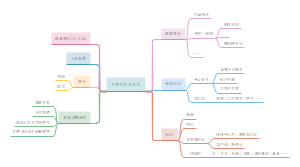
考研复试英语高频问题30问,帮你轻松应对面试挑战!内容涵盖四大类:一、自我介绍延伸类,考察表达流畅度,二、专业认知类,重点评估专业匹配度,三、学业规划类,测试规划性与稳定性,四、个人素养与其他类,综合考察能力,高频问题包括团队合作看法、英语提升方法、未被录取的应对计划、研究生重要品质等,最后别忘记准备提问环节全面覆盖复试核心考点,助你自信通关!
提示: 本内容由社区用户上传并分享。平台不对内容的真实性、合法性、知识产权归属及是否侵害第三方权利进行事前审核或保证。本内容可能包含受版权保护的图片、字体或其他第三方素材,使用前请自行确认授权范围。
- 考研复试
- 英语口语
- 面试准备
- 考研复试英语
- 个人素养考察

- AI动画生成流程
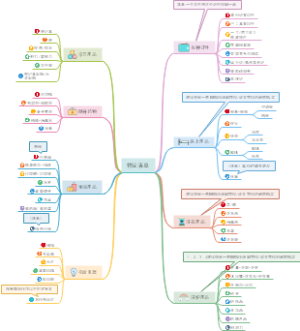
在AI技术飞速发展的当下,AI动画生成成为了创意领域的新宠,为创作者们打开了全新的创作大门。这张由万兴脑图精心构建的AI动画生成思维导图模板,宛如一位贴心的创作指南,为想要涉足或深耕AI动画生成领域的人士提供了清晰且全面的流程指引。在故事脚本环节,不仅介绍了以人类灵感为起点借助LLM大语言模型发散的创作方式,还列举了如DeepSeek、ChatGPT、豆包等实用的工具,为创作者的故事构思提供了丰富的灵感源泉和高效的操作途径。AI创作全流程指南:从脚本到成片的一站式解决方案,"用AI将灵感一键变成影片!" 覆盖动画生成、字幕添加、视频修复、剪辑配乐全流程新手推荐剪映 Topaz Video组合,快速上手画质提升进阶可选Runway等闭源工具获得更高品质关键技巧:分镜脚本决定影片骨架,Prompt优化影响生成质量,商用需注意版权一致性控制是难点,推荐分步生成角色与场景AI配音可选商用平台或自训练模型,字幕剪辑用剪映最便捷。对于适用人群,无论是充满创意的动画爱好者,渴望用AI技术将自己的奇思妙想变成生动的动画作品,此模板都能发挥巨大价值。
- 改变人生的101部必看电影
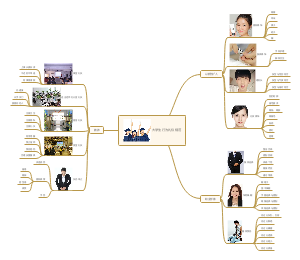
【改变人生的101部必看电影】这份片单带你探索生命意义、亲情友情、职场觉醒等7大主题从《超脱》的哲学思考到《教父》的人性剖析,从《星际穿越》的宏大命题到《我是山姆》的温情治愈,每部电影都是人生的缩影《盗梦空间》烧脑反转,《断背山》细腻动人,《素媛》发人深省,《白日梦想家》激励追梦无论你想寻找自我、治愈心灵还是思考世界,总有一部能触动你。
- 《简·爱》读书笔记
穿越荆棘与偏见,简·爱以瘦弱身躯呐喊出灵魂平等的强音。这不仅是爱情的颂歌,更是独立人格的觉醒。翻开它,让那份不屈的尊严点燃你内心的火焰!
考研复试英语高频问题30个
社区模板帮助中心,点此进入>>
- AI动画生成流程
在AI技术飞速发展的当下,AI动画生成成为了创意领域的新宠,为创作者们打开了全新的创作大门。这张由万兴脑图精心构建的AI动画生成思维导图模板,宛如一位贴心的创作指南,为想要涉足或深耕AI动画生成领域的人士提供了清晰且全面的流程指引。在故事脚本环节,不仅介绍了以人类灵感为起点借助LLM大语言模型发散的创作方式,还列举了如DeepSeek、ChatGPT、豆包等实用的工具,为创作者的故事构思提供了丰富的灵感源泉和高效的操作途径。AI创作全流程指南:从脚本到成片的一站式解决方案,"用AI将灵感一键变成影片!" 覆盖动画生成、字幕添加、视频修复、剪辑配乐全流程新手推荐剪映 Topaz Video组合,快速上手画质提升进阶可选Runway等闭源工具获得更高品质关键技巧:分镜脚本决定影片骨架,Prompt优化影响生成质量,商用需注意版权一致性控制是难点,推荐分步生成角色与场景AI配音可选商用平台或自训练模型,字幕剪辑用剪映最便捷。对于适用人群,无论是充满创意的动画爱好者,渴望用AI技术将自己的奇思妙想变成生动的动画作品,此模板都能发挥巨大价值。
- 改变人生的101部必看电影
【改变人生的101部必看电影】这份片单带你探索生命意义、亲情友情、职场觉醒等7大主题从《超脱》的哲学思考到《教父》的人性剖析,从《星际穿越》的宏大命题到《我是山姆》的温情治愈,每部电影都是人生的缩影《盗梦空间》烧脑反转,《断背山》细腻动人,《素媛》发人深省,《白日梦想家》激励追梦无论你想寻找自我、治愈心灵还是思考世界,总有一部能触动你。
- 《简·爱》读书笔记
穿越荆棘与偏见,简·爱以瘦弱身躯呐喊出灵魂平等的强音。这不仅是爱情的颂歌,更是独立人格的觉醒。翻开它,让那份不屈的尊严点燃你内心的火焰!
- 相似推荐
- 大纲


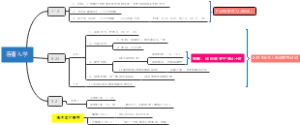
考研复试英语 高频问题30个
一、自我介绍延伸类(基础必考题,考察表达流畅度)
1. Could you briefly introduce yourself?
Reference Answer: Good morning/afternoon, respected professors. My name is XXX, from XXX City, XXX Province. I graduated from XXX University, majoring in XXX. During my undergraduate studies, I focused on mastering professional basic knowledge and achieved a good academic performance. I am a careful, patient and hard-working person, and I have a strong interest in XXX (your postgraduate major). I hope I can get the opportunity to study in this university and make progress under your guidance.
2. What is your greatest strength?
Reference Answer: I think my greatest strength is my perseverance and carefulness. When I set a goal, I will stick to it and never give up easily. For example, when I was preparing for the postgraduate entrance examination, I insisted on reviewing professional knowledge and doing exercises every day, even when I felt tired. In addition, I am very careful in doing things, which helps me avoid mistakes in learning and finish tasks efficiently.
3. What is your greatest weakness?
Reference Answer: My greatest weakness is that I sometimes tend to be overly pursuing details, which may make me spend more time on some small things and affect the efficiency of completing tasks. However, I have realized this problem and am trying to improve it by making a reasonable plan in advance and arranging time reasonably, so as to balance detail and efficiency.
4. Why did you choose our university?
Reference Answer: There are three main reasons why I chose your university. First of all, your university has a strong academic atmosphere and a high reputation in the field of XXX (your major), and many outstanding professors have made remarkable achievements in this field, which attracts me deeply. Secondly, the curriculum setting of your major is scientific and practical, which can help me systematically master professional knowledge and improve my comprehensive ability. Finally, the learning environment and research conditions of your university are very good, which can provide a good platform for my future study and research.
5. Why did you choose this major for postgraduate study?
Reference Answer: I chose this major mainly because of my strong interest and the consideration of my future development. During my undergraduate studies, I came into contact with the related knowledge of this major and found that I was very interested in it. I am eager to further study and explore in this field. In addition, with the rapid development of society, the demand for talents in this field is increasing. I hope to improve my professional ability through postgraduate study and lay a solid foundation for my future career.
6. How do you evaluate your undergraduate study?
Reference Answer: I think my undergraduate study is fulfilling and meaningful. During these four years, I not only mastered the basic professional knowledge and skills, but also developed good learning habits and thinking modes. I actively participated in various practical activities and academic lectures, which broadened my horizons and improved my comprehensive quality. Although I have made some progress, I also know that there are still many deficiencies in my professional knowledge, which is why I want to pursue postgraduate study to further improve myself.
7. What did you learn from your undergraduate major?
Reference Answer: From my undergraduate major, I learned not only professional knowledge such as XXX, XXX and XXX (list 2-3 core courses), but also the ability to think independently and solve problems. I learned how to collect and sort out information, how to analyze and solve practical problems with professional knowledge, and how to cooperate with others to complete tasks. These abilities are very important for my future study and work.
二、专业认知类(核心重点题,考察专业匹配度)
8. What do you know about your major?
Reference Answer: My major is XXX. It is a discipline that combines theory and practice, mainly studying XXX (core research content). With the development of science and technology, my major has been widely applied in XXX, XXX and other fields (list 2-3 application fields), and has broad development prospects. I know that the research direction of your university in this major focuses on XXX (briefly mention 1-2 research directions of the university), which is exactly what I am interested in.
9. What is your favorite professional course and why?
Reference Answer: My favorite professional course is XXX. On the one hand, this course is closely related to the core content of my major, and its theoretical system is very rigorous, which helps me lay a solid foundation for further study. On the other hand, the knowledge in this course is very practical, which can be applied to practical work and research. When learning this course, I actively participated in class discussions and after-class practice, and gained a lot of experience and insights.
10. Have you read any professional books or papers recently? Please talk about it.
Reference Answer: Recently, I have read a professional book named XXX written by XXX. This book mainly introduces XXX (core content of the book), which makes me have a deeper understanding of XXX (related professional knowledge). In addition, I also read a paper about XXX (paper topic) published in XXX journal. The paper discusses XXX (core viewpoint of the paper), which gives me some new ideas and inspirations for my future research.
11. What are the main research directions of your major?
Reference Answer: The main research directions of my major include XXX, XXX and XXX (list 3-4 core research directions). Among them, XXX (the direction you are interested in) is the most popular research direction in recent years, which mainly focuses on XXX (brief introduction of the direction). I am very interested in this direction and hope to engage in related research work during my postgraduate study.
12. What do you think are the challenges in your major?
Reference Answer: I think the main challenges in my major are two aspects. On the one hand, with the rapid development of science and technology, the knowledge of the major is updated very quickly, which requires us to keep learning and keep up with the latest research progress. On the other hand, the research of this major requires a solid theoretical foundation and strong practical ability, which needs us to spend a lot of time and energy to accumulate and improve.
13. How do you think your major will develop in the future?
Reference Answer: I think my major will develop in a more intelligent, practical and interdisciplinary direction in the future. With the integration of artificial intelligence, big data and other technologies, my major will be applied in more fields, bringing more convenience to social development. At the same time, interdisciplinary cooperation will become more and more close, which will promote the innovation and development of the major. I am very optimistic about the future development of my major.
14. Do you have any experience in professional practice? Please talk about it.
Reference Answer: Yes, I have some professional practice experience. During my undergraduate vacation, I interned in XXX company (or laboratory), where I was mainly responsible for XXX (specific work content). Through this practice, I applied the professional knowledge I learned to practical work, improved my practical operation ability and problem-solving ability, and also had a deeper understanding of the application of my major in the industry. This experience also made me more determined to pursue postgraduate study.
15. What professional skills do you have?
Reference Answer: I have mastered some basic professional skills related to my major. First of all, I am proficient in using XXX software (list 1-2 professional software, such as Excel, SPSS, CAD, etc.) which is commonly used in my major. Secondly, I have a good command of professional English, and can read and understand professional English papers and materials. In addition, I have the ability to collect and sort out professional information, and can conduct simple research and analysis.
三、学业规划类(高频必考题,考察规划性与稳定性)
16. What are your plans for your postgraduate study?
Reference Answer: I have made a clear plan for my postgraduate study, which is divided into three stages. In the first stage (the first year), I will focus on learning professional courses, master the core knowledge of the major, and lay a solid theoretical foundation. In the second stage (the second year), I will actively participate in the research projects of the tutor, learn research methods and skills, and try to write professional papers. In the third stage (the third year), I will focus on completing my graduation thesis, and at the same time, I will pay attention to the development of the industry and prepare for my future career.
17. Do you plan to pursue a doctoral degree after postgraduate graduation?
Reference Answer: My current plan is to focus on my postgraduate study first, and then decide whether to pursue a doctoral degree according to my learning and research situation during the postgraduate period. If I find that I have a strong interest in academic research and have the ability to engage in doctoral research, I will actively pursue a doctoral degree to further improve my academic level. If I think I am more suitable for practical work, I will choose to work and apply my professional knowledge to practice.
18. How will you balance study and extracurricular activities during postgraduate study?
Reference Answer: I think the key to balancing study and extracurricular activities is to make a reasonable plan and arrange time properly. First of all, I will take study as the core, ensure that I can complete the learning tasks and research work on time. On this basis, I will participate in some meaningful extracurricular activities, such as academic lectures, professional competitions and volunteer activities, which can broaden my horizons and improve my comprehensive quality. I will not let extracurricular activities affect my study, and will adjust the time according to the actual situation.
19. What do you hope to gain from your postgraduate study?
Reference Answer: I hope to gain three aspects from my postgraduate study. First, I hope to master more in-depth and professional knowledge, improve my professional quality and research ability, and lay a solid foundation for my future development. Second, I hope to learn from outstanding professors and classmates, develop good learning and thinking habits, and broaden my horizons. Third, I hope to cultivate my ability to solve practical problems independently, so that I can better adapt to the needs of society and the industry.
20. How will you deal with the difficulties you may encounter during postgraduate study?
Reference Answer: I know that there may be many difficulties during postgraduate study, such as difficult professional knowledge, setbacks in research work, etc. When facing these difficulties, first of all, I will keep a calm mind and actively adjust my mentality, not be discouraged by temporary setbacks. Secondly, I will take the initiative to ask my tutor and classmates for help, learn from their experience and methods. Finally, I will sum up the experience and lessons in time, adjust my learning and research methods, and persist in overcoming the difficulties.
21. What kind of research topic are you interested in? Why?
Reference Answer: I am very interested in the research topic of XXX (specific research topic). On the one hand, this topic is closely related to the core content of my major and has important theoretical and practical significance. On the other hand, I have read some related literature and materials and found that there are still some problems to be solved in this field, which stimulates my interest in research. I hope to carry out in-depth research on this topic during my postgraduate study and make some contributions.
四、个人素养与其他类(补充考题,考察综合能力)
22. What are your hobbies in your spare time?
Reference Answer: In my spare time, I have many hobbies. First, I like reading, especially professional books and literary works. Reading can broaden my horizons and enrich my knowledge. Second, I like doing sports, such as running and playing basketball. Doing sports can make me keep a healthy body and a positive attitude, and also help me relieve the pressure of study. In addition, I also like to communicate with others, which can help me learn from others and improve my communication ability.
23. How do you deal with pressure?
Reference Answer: I think pressure is an inevitable part of life and study, and the key is how to face it correctly. When I feel pressure, I will first find the source of the pressure and try to solve the problems that cause the pressure. If I feel tired, I will take a proper rest, do some hobbies I like, such as listening to music and running, to relieve the pressure. In addition, I will also communicate with my family and friends, talk about my troubles, and get their support and encouragement.
24. Do you like working in a team or alone? Why?
Reference Answer: I think both working in a team and working alone have their own advantages, and I can adapt to both ways. When working in a team, we can communicate with each other, share ideas and experience, complement each other's advantages, and complete tasks more efficiently. When working alone, I can focus more on my own work, think independently, and improve my ability to solve problems independently. I will choose the appropriate way according to the specific task.
25. What is your favorite book/movie? Please talk about it.
Reference Answer: My favorite book is XXX. This book tells the story of XXX (brief introduction of the book). From this book, I learned XXX (the inspiration gained from the book), such as the importance of perseverance, the courage to pursue dreams, etc. These qualities have inspired me to keep moving forward in my study and life. I think this book has a great impact on me and makes me grow a lot.
26. What do you think is the most important quality for a postgraduate?
Reference Answer: I think the most important quality for a postgraduate is perseverance and curiosity. Postgraduate study requires a lot of time and energy to engage in research work, and there may be many setbacks and difficulties in the process. Perseverance can make us stick to it and not give up easily. Curiosity can stimulate our interest in research, make us actively explore unknown fields, and constantly pursue new knowledge and new progress. In addition, carefulness and sense of responsibility are also very important qualities for postgraduates.
27. If you are not admitted this time, what will you do?
Reference Answer: If I am not admitted this time, I will not be discouraged. First of all, I will seriously sum up the reasons for my failure, find out my deficiencies, such as insufficient professional knowledge, poor English expression ability, etc. Then, I will make a reasonable plan to make up for my deficiencies. I may choose to take the postgraduate entrance examination again, or find a job related to my major, accumulate practical experience, and then pursue my postgraduate dream in the future. No matter what choice I make, I will keep a positive attitude and keep moving forward.
28. How do you improve your English ability?
Reference Answer: I mainly improve my English ability through three aspects. First, I insist on reading English materials every day, such as English newspapers, professional English papers and English novels, which can improve my reading comprehension ability and expand my vocabulary. Second, I practice speaking English every day, such as reciting English passages, talking with classmates in English, which can improve my oral expression ability. Third, I do more English listening exercises, such as listening to English news and English lectures, which can improve my listening ability. I believe that persistent practice can continuously improve my English ability.
29. What do you think of teamwork?
Reference Answer: I think teamwork is very important, especially in research work. Teamwork can gather the strength of everyone, complement each other's advantages, and solve problems that are difficult to solve by individuals. In a team, we can communicate with each other, share ideas and experience, learn from each other, and improve our own ability. At the same time, teamwork can also cultivate our sense of responsibility and communication ability, which is very important for our future study and work.
30. Do you have any questions to ask us?
Reference Answer: Thank you for your question. I have two small questions to ask. First, what are the specific requirements for postgraduates in terms of academic research during their study in your university? Second, can you introduce the employment situation of postgraduates majoring in XXX in your university? Thank you very much for your answer.