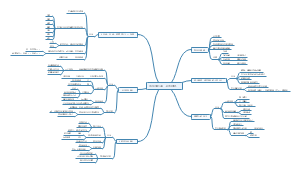
导图社区 Analysis of Course Materials C
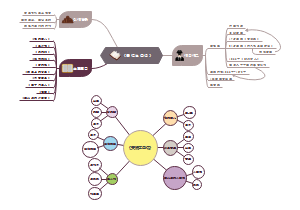
这是一篇关于Analysis of Course Materials C的思维导图,Attach particular importance to the learning process, and advocate practicality and applicability。
编辑于2022-09-15 19:42:39 黑龙江省all the words used by a particular person, socioeconomic group, profession, etc.
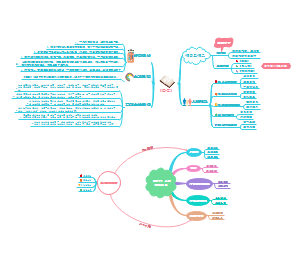
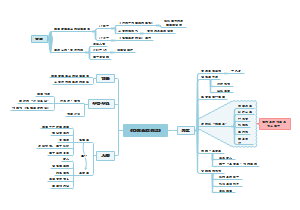
这是一篇关于英语教学要素分析的思维导图,主要内容有学习者分析、教学内容分析、教学目标分析、学习者需求分析。
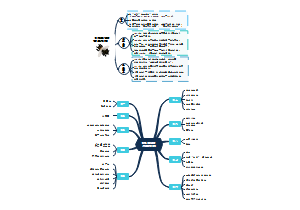
这是一篇关于The main elements的思维导图,Committed to using techniques in the design of text fonts, typography and other appearance to draw learners' attention。
社区模板帮助中心,点此进入>>
all the words used by a particular person, socioeconomic group, profession, etc.
这是一篇关于英语教学要素分析的思维导图,主要内容有学习者分析、教学内容分析、教学目标分析、学习者需求分析。
这是一篇关于The main elements的思维导图,Committed to using techniques in the design of text fonts, typography and other appearance to draw learners' attention。
Analysis of Course Materials Currently Used in Middle School
Syllabus and curriculum
Syllabus
A syllabus is a descriptive outline and summary of topics of a particular course.
A syllabus offers a brief overview of the objectives and expectations of the course.
A syllabus is more abstract and contains specific information about the course.
A syllabus constitutes the essential guide for the course.
The purpose of the syllabus is to allow students to work their schedules for maximum efficiency and effectiveness.
Curriculum
The curriculum may consist of various courses designed to reach a particular proficiency or qualification.
Differences
The syllabus is the subset of the curriculum.
The syllabus is a detailed overview and the curriculum is content.
The syllabus is often distributed to students on the first clay of class, but the course will not.
The syllabus may vary somewhat from one teacher to another, but the curriculum is the same.
My thoughts
A brief history of English syllabuses in China
1978 Syllabus
The emphasis is put on developing students' reading and self-learning abilities and some listening, speaking, writing and translating ability.
1980 Syllabus
It aims to provide students with some basic practice in listening, speaking, reading, writing and translating.
1986 Syllabus
Pay more attention to the training of oral, written expression and reading ability.
1992 Syllabus for Junior High Schools
Pay more attention to the cultivation of communication ability and learning habits.
Pay more attention to quality education and moral education of students.
1993 Syllabus for Senior High Schools
Based on the 1992 junior high school syllabus, more attention is paid to the acquisition of knowledge of the target language countries and the students' observation, memorization. thinking and imagination abilities.
2001 National English Curriciiluin for Nine-Year Compulsory Education
The main task is to stimulate and cultivate students' interest and confidence in learning the language.
Pay more attention to the lifelong development of students.
My thoughts
Principles for 2011 New English Curriculum Standard and requirements for English language teachers
Designing principles for 2011 New English Curriculum Standard
Emphasize quality-oriented education, and promote students' self-growth
The New Standard is to increase studenis' awareness of the cultural dilferences.
It pays close attention to students' affective factors in order to stimulate their interest and confidence in learning.
Aim for educating all students, and respect individual differences
In the New Standard. students' overall development is the motivation and the goal of the English curriculum.
principle of learner-cent eredness
Develop competence-based objectives, and allow progressiveness and continuity
Nine-stage system of describing English learning objectives.
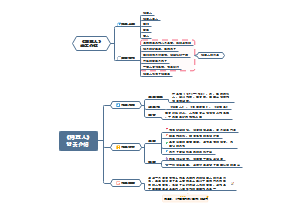
Attach particular importance to the learning process, and advocate practicality and applicability
Modern foreign language teaching lays much more importance on 1 he learning process than outcome.
The New Curriculum Standard Advocates Teachers to Create English Learning Scenarios for Students.
Optimize assessment system, and focus on students' comprehensive ability in language use
The assessment system refers to summative assessment and formative assessment.
Summative assessment focuses on the outcomes of learning
Formative assessment focuses on students1 performance and progress during their learning process
Improve and utilize various teaching and learning resources
English curriculum requires that teachers should properly utilize .
Both teachers and students have to explore and make the best use of mass media.
My thought
Requirements for English language teachers
Analysis of course materials currently used in middle school
Guiding criteria for English course materials
The New English Curriculum Standard (2011)(key words)
authentic
daily life
life-long learning
students' ages and different language levels
language skills, language knowledge, emotions and attitudes, learning strategy and cultural awareness
students' cognition and mental development
students learning needs, motivation, interests hobbies and wishes.
communicative and task-based way
flexible
adjust the teaching methods
Analysis of Go for It ! (revised version in 2012)
The Goals of Go for It !
Mainly use a step-by-step approach to build students' confidence and combine learning with their personal life.
The features of Go for It !(key words)
step-by-step approach
Variety of form-focused language practice
Grammar focus
The game-like interactive activities
The recycling activities
Self-check
High practicality
communicative competence
Broad vocabulary
Student-centered and quality-oriented education
Topic-function-structure-task language teaching model
innovative and operative
language skills and learning strategies
input of cultural information
The topic distributions of Go for It !
Analysis of the unit structure of Go for It !
Relation
History of English language teaching
What is the methodology?
In an educational setting , currIculum contains three main subcomponents: syllabus design , teaching methodology and evaluation .
Sylabus design
Content
What contents should we teach ?
In what order should we teach this content ?
What is the justification for selecting this content ?
Methodology
Classroom techniques and procedures
What exercises , tasks , and activities should we use in the classroom ?
How should we sequence and integrate these ?
Evaluation
Learning outcomes
How well have our students done ?
How well has our program served our students ' needs?
Three levels of conceptualization and organization
Approach
The level at which assumptions and beliefs about language and language learning are specified.
Method
An overall plan for systematic presentation of language based on a selected approach.
Technique
The specific activities manifested in the clasroom , such as substitutional drils , dictation or role - play.
Background to language teaching methodology
Structural view
Language: A system of structurally related elements for the coding of meaning .
The target of language learning: The mastery of elements of this system the sound system, grammatical units and lexical items.
The Audiolingual Method embodies this particular view of language .
Functional view
Language: A vehicle for the expression of functional meaning.
The communicative movement n language teaching subscribes to this view of language.
The semantic and communicative dimensions.(√)
The grammatical characteristics of language (×)
Interactive view
Language : A communicative tool for the creation and maintenance of social relations .
Interaction
Conveying and receiving authentic messages。
Task - basked language Teaching draws on an interactional view of anguage.
A learning theory underlying an approach or method responds to two questions
What are the psycho - linguistic and cognitive proceses involved in language learning ?
What are the conditions hat need to be met in order for these learning processes to be activated ?
Four learning theories
Behaviorist theory(Skinner)
Threebasic ideas
Conditioning
Habit formation
The Importantance of the" environment"
Cognitive theory
think
Norma Chomsky
Language is not a form of behavior , it is an intricate rule - based system and a large part of language acquisition is the learning of this system .
There are a finite number of grammatical rules in the system and with a knowledge of these an infinite number of sentences can be produced .
A language learner acquires language competence which enables him to produce language .
Constructive theory
Learning is a process in which the learner constructs meaning based on his her own experiences and what he / she already knows .
John Dewey
Teaching should be built based on what learners already knew and engage learners in learning activities.
Socio-constructivist theory
Vygotsky
Zone of Proximal Development(ZPD)
scaffolding
Major trends in twentieth-century language teaching
The grammar-translation method(19th century)
Pay attention to the relationship and accuracy between the original and the translated text.
The Direct Method
natural language learning principles provided
Teaching is mainly through connection with reality, focusing on oral communication.
A Typical Audio- lingual Lesson
The language was viewed as a system of structurally related elements for the encoding of meaning , the elements being
Phonemes
Morphemes
Words
Structures & Sentence types
A Typical Audio- lingual Lesson is the Combination of Structural Linguistics and Behaviorism.
A controlled audio dialogue→A structure drill→Exploitation activities
Chomsky-cognitive code learning
Alternative approaches and methods
community language learning
Suggestopedia
Total Physical Response
The Silent Way
Current communicative approaches
Communicative Language Teaching (CLT)
Five Core Characteristics
Appropriateness
Message focus
Psycholinguistic processing
Risk taking
Free practice
Communication Continuum
Task Based Language Teaching
Purpose
Context
Process
Product
The new English curriculum in 2011 focuses on all aspects of students, and more on their all-round development and lifelong education
Teachers should use learning resources inside and outside the school to expand their own vision
Teachers integrate culture into teaching and cultivate students' cultural awareness
Teachers should provide students with ways of feedback and adjust teaching methods and strategies according to the feedback,
Teachers should adapt to students' learning level and ability, and encourage students to learn more language learning methods.
Teachers should understand students and actively establish good relations with them.
My Understanding
From 1978 to 2001, the syllabus changed from more emphasis on basic ability to practical ability to focus on the cultivation of students' habits and lifelong learning.Pay more attention to humanistic care
The biggest difference between the two is that the syllabus is a general overview, the curriculum is specific, the content is fixed, and the overview varies from person to person
Curriculum is a process in which students receive the knowledge from teachers and practice the knowledge they have learned
The syllabus mainly provides students with a guiding plan to better understand the teaching tasks and objectives