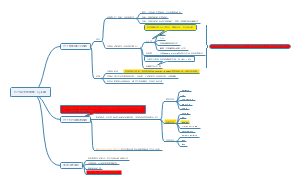
Conversational implicature: eg: Charlene: I hope you brought the bread and the cheese. Dexter: Ah, I brought the bread. After hearing Dexter's response, Charlene has to assume that Dexter is cooperating and not totally unaware of the quantity maxim. But he didn't mention the cheese. If he had brought the cheese, he would say so, because he would be adhering to the quantity maxim. He must intend that she infer that what is not mentioned was not brought. In this case, Dexter has conveyed more than he said via a conventional implicature.
Generalized conversational implicatures: When no special knowledge is required in the context to calculate the additional conveyed meaning, it is called a generalized conversational implicature. eg: I was sitting in a garden one day. A child looked over the fence.
Scalar implicatures: on the basis of a scale of values and are consequently known as scalar implicatures. eg: They are sometimes really interesting. By using 'sometimes‘, the speaker communicates, via implicature, the negative of forms higher on the scale of frequency (+> not always, +> not often).
Particularized conversational implicatures: conversations take place in very specific contexts in which locally recongnized inferences are assumed. Such inferences are required to work out the conveyed meanings which result from particularized conversatonal implicatures. eg: Rick: Hey, coming to the wild party tonight? Tom: My parents are visiting.