Solid:
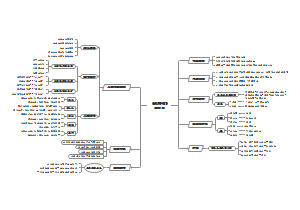
• packed close together
• in a regular arrangement or lattice
• not able to move freely, but simply vibrate in their fixed positions.
Liquid
• closely packed together
• in an irregular arrangement
• able to move around past each other.
Gas
• arranged totally irregularly
• spread very far apart compared to solids and iquids
• able to move randomly.
diffusion in fluids
the dissolving of gases
Brownian motion.
atoms and molecules
elements
The structure of the atom
atomic stucture
subatomic particles
protons
neutrons
electrons
measuring the size of atoms
mass spectrometer
relative atomic mass
carbon-12
subatomic particles
Protons and neutrons have almost the same mass.
Electrons have virtually no mass at all ( 1/1840 of the mass of a proton).
proton (atomic) number and nucleon number
proton number : Z
nucleon number : A
=number of protons + number of neutrons
isotopes
The number of neutrons in the atoms is the difference between isotopes.
They have the same number of protons and electrons.
radioisotopes
relative atomic masses
1 atomic mass unit (a.m.u.) = 1/12 × mass of one atom of carbon-12.
the uses of radioactivity
radioactive dating
half-life
industrial uses of radioisotopes
Major : nuclear power stations
Other : monitoring the level of filling in containers,
checking the thickness of sheets of plastic,
paper or metal foil (for example, aluminium baking foil) during continuous production,
and detecting leaks in gas or oil pipes
medical and food-safety uses of radioisotopes
chemotherapy
radiotherapy
Electron arrangements in atoms
energy levels
Bohr's theory
◆ Electrons are in orbit around the central nucleus of the atom.
◆ The electron orbits are called shells (or energy levels) and have different energies.
◆ Shells which are further from the nucleus have higher energies.
◆ The shells are filled starting with the one with lowest energy (closest to the nucleus).
◆ The first shell can hold only 2 electrons.
◆ The second and subsequent shells can hold 8 electrons to give a stable (noble gas) arrangement of electrons.