导图社区 Social variations
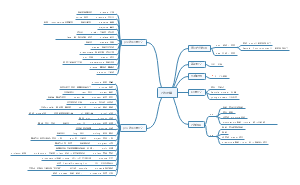
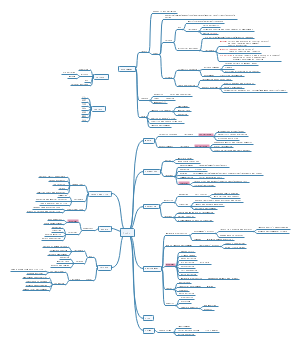
这是一篇关于Social variations的思维导图,主要内容包括:sociolinguistics,social status,social vs. regional dialect,age。指语言在使用过程中因社会因素(如社会阶层、年龄、性别、种族、职业等)的影响而产生的变异形式。
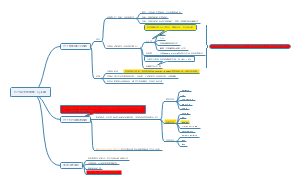
编辑于2026-01-18 01:28:58这是一篇关于minority language language opp的思维导图,主要内容包括:preservation / revitalisation 语言保护与复兴,language policy 语言政策,language oppression,causes of language loss。
这是一篇关于language identity 语言与身份认同的思维导图,主要内容包括:pronouns 代词,age-graded vocabulary,national identity(国家身份)、creeping Australianisms(澳洲英语的渗透)、pitch & identity(音高与身份)、race & language(种族与语言)、age - graded vocabulary(年龄分级词汇)。
这是一篇关于construction的思维导图,主要内容包括:memory limitations 记忆限制,building sentence,Morphemes,Words,Patterns 构式,chidren acquire constructions,idioms 习语,constuction grammar (缩写CxG),formulaic ut
社区模板帮助中心,点此进入>>
这是一篇关于minority language language opp的思维导图,主要内容包括:preservation / revitalisation 语言保护与复兴,language policy 语言政策,language oppression,causes of language loss。
这是一篇关于language identity 语言与身份认同的思维导图,主要内容包括:pronouns 代词,age-graded vocabulary,national identity(国家身份)、creeping Australianisms(澳洲英语的渗透)、pitch & identity(音高与身份)、race & language(种族与语言)、age - graded vocabulary(年龄分级词汇)。
这是一篇关于construction的思维导图,主要内容包括:memory limitations 记忆限制,building sentence,Morphemes,Words,Patterns 构式,chidren acquire constructions,idioms 习语,constuction grammar (缩写CxG),formulaic ut
Social variations
sociolinguistics
Sociolinguistics looks at language in actual use (descriptive) rather than in an idealized version in grammar books and reference tools (prescriptive)
Language indexes identity in several way
We also perform our identity through language
Language is linked to group affiliation
The difference between language, dialect, variety, creole, pidgin is more political than linguistic
social vs. regional dialect
regional
geographical
social
speech community 言语共同体
Cannot be defined by only language Social Cultural Political Ethnic etc.
people who in habitual contact with each other by means of speech which involves either a shared language variety or shared ways of interpreting the different language varieties used in the area (Mesthrie et al. 2000, P.38)
social status
social variation
refers to differences in language use that correlate with social factors such as class, gender, age, ethnicity, or status.
standard English
e.g. RP (Rceieved Pronunciation)
BBC English Queen’s English
educated & prestigious
Standard Southern British English (modern equivalent)
概要
a social dialect used by well-educated English speakers throughout the world, used for news broadcasts and in print, and generally taught in English-medium schools
Standard English not an accent (though people associate it with this) It is not a language It is not a style It is not a register (lexis associated with a topic) Not a set of prescriptive rules Standard English is a dialect Greater prestige Does not have an associated accent Not part of geographical area A social dialect
non-standard English
Everything else! Lack of acceptance related to race in USA and class in UK African-American vernacular English (AAVE) Brummie, Cockney, Scouse Australian English (until recently) New Englishes Singaporean English Jamaican English Chinese English
levelling 语言平整化
reduction of dialect and/or accent variation
1.reduction of variation;2.≠ standardization;3. 发生在密集接触的社群中 e.g.城市化/人口流动
e.g. Esturay English (aka new RP)
similiar: Cockney
social class dialects
social class
differences in social prestige, wealth and education, can be observed in
vocabulary
lavatory vs. toilet
grammar
Rose walks vs. Rose walk
pronunciation
water
sharp stratification
status
Status is the respect or deference others give to a person, or withhold from them. It reflects social recognition and influence, which may differ from economic wealth.
社会地位(social status)指个体在社会互动中被他人赋予的尊重、服从或认可程度,其高低不必然与经济地位(economic status)一致。
Caste dialects 种姓方言
e.g. India
clear cut social divisions
caste systems
determined by birth, and strict social rules govern all aspects in one's life
social distinction à speech differfence dialectàsocial background
William Labov
describe how language varies in any community
benefit both theoretical understanding and practice guidance, e.g. education
variable & variants
variable 变异点
the language feature that can change
many linguistic variables are phonological ones
the /t/ variable in water: [t] or [ʔ] ——water vs. wa'er the /h/ variable in house and hospital: [h] or Ø
also some syntactic variables, more precisely morphosyntactic variables
(s) of the third-person singular: He’s happy; He be happy; He happy
variants 变体
the specific forms variable can take.
distinct variant 明确变体
presence/absence
清楚不同的变体,每个变体是明确可识别的,也可能没有使用(zero variant 零变体 Ø)。
clearly identifiable form of a linguistic variable
e.g.[ŋ] in singing vs. [n] in singin’
continuous variant 程度变体
a matter of degree rather than discrete choice
e.g. vowel nasalisation:the vowel /æ/ in man is more strongly nasalized than the /æ/ in mat, because it occurs before a nasal consonant, showing varying degrees of nasalization rather than a simple nasalized vs. non-nasalized distinction.
e.g. singing and singin’the final sound is the linguistic variable (ng), with the two variants [ŋ] and [n].
New York City (Labov) the fourth floor
criteria——determining the social class of speakers
occupation/ education/ Income/ house value
investigated the relationship between phonological variation and social class through five variables—(th), (dh), (r), (a), and (o). A key component of the study was the fourth floor department-store experiment, which showed systematic class-based differences in the pronunciation of postvocalic /r/. Labov demonstrated that some variables involve distinct variants, such as the presence or absence of /r/, while others show continuous variation, such as gradual shifts in vowel quality, and that these patterns are closely correlated with social class as measured by education, occupation, and income rather than occurring randomly.
age
age-induced variation in speech
pitch and quality of voice
gender—— five-year old vs. puberty
young vs. old
pronunciation
/t/-glottalization—— water; bottle
vocabulary
swear word
current slang
age and social dialect
the use of vernacular forms
The use of vernacular forms varies with age: teenagers use them frequently despite awareness of Standard English middle-aged speakers use them least older retirees tend to revert to vernacular speech
age and language change
language change 语言变化
innovation—— more young speakers
disappearing form
more older speakers
generational shift
age-graded variation 年龄分层差异
stable forms used differently at different life stages
How to distinguish?
must first study the distribution of stable forms across the speech community.