导图社区 Writing up a thesis
- 17
- 0
- 0
- 举报
Writing up a thesis
这是一篇关于Writing up a thesis的思维导图,Describe and evaluate relevant empirical studies
编辑于2022-09-20 16:54:44 河北省- 句子

- 相似推荐
- 大纲

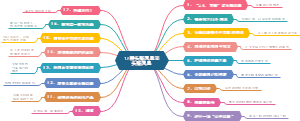



Writing up a thesis/dissertation
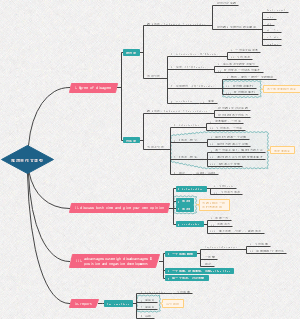
Writing an introduction
Three components
a. a general description of your study
"The study was undertaken to find out...The research questions to be addressed in the study are the following:..."
b. the need for a study
explain why the study is worth undertaking, included practical and theorectical importance
Practical value
be shown in the improving of L2 teaching and learning, in the compiling of bilingual dictionaries, or in translation, etc.
Theorectical value
a. confirm or disconfirm a theory b. modify existing theories c. clarify a controversial issue d. develop a new model that is badly needed e. enrich our understanding of a phenomenon
c. the overall structure of the thesis
the chapter heading should be covered
e.g. "Part" is the first order heading and "Chapter", the second-order, the description should cover both Parts and Chapters.
In some cases, Introduction Chapter also includes the definitions of key terms, delimitations, and assumptions of the study.
The conceptual definitions of key variables are better included in the Literature Review chapter
The operational definitions are better placed in Methodology Chapter
The Introduction Chapter can be written when the other chapters have been finalized
Reason: the research questions which were developed in your proposal may have been modified almost until you finish writing up the chapter of Results and Discussion
Writing a literature review (the most difficult part)
A literature review demonstrates the writer's conceptual understanding of the research topic and his/her ability to argue for the need for the study
It is the most difficult part to write and takes much more pain to finish than is usually expected
survive a painful process and eventually produce a good literature review
result: gain a profound insight into the essence of research
Problems: many students do not pay enough attention and write it by patching together all kinds of definitions and studies at his/her disposal without any clear and logical link
results: not pass or pass with poor quality
Major components
It must be linked with the past and the future
A literature review included: a. Conceptual definitions of key terms b. An examination of the research topic in light of the theorectical perspective c. A description of related empirical studies with evaluating comments d. A critical review of research designs including instruments related to your study e. A conceptual framework if there is any
Define key terms conceptually
review critically the various definitions that have surfaced in the literature
common problem: a dozen definitions are listed on one or two pages without any comments in between and at the end of the list, the researcher's own conceptual definition is given
The simple solution is that all the variables that were measured in your study have to be defined conceptually
Review from the theorectical perspective
Research topics are very often derived from theories or linked with theorectical issues
A review starts with explicating a theory or a controversial issue that is relevant to the proposed study
Describe and evaluate relevant empirical studies
indispensable in a literature review
The best place to see whether the researcher has acquired the macro-level organizing ability to put the relevant materials together to develop an arguement
this kind of description does not necessarily cover every detail of a study
the evaluation need not be comprehensive
The most crucial thing is that you need to classify the studies according to your needs
Needs: a. illustrating the extensiveness of the existing research on the topic b. showing conflicting findings c. displaying methodological problems that will be avoided in your study d. demonstrating the small number of subjects studied in the study, etc.
Examine research designs
be needed when one of the differences between your study and previous ones lies in research design
The differences, such like the number or type of subjects, the instruments, and/or the procedures of data-collection and data-analysis, etc.
Describe the conceptual framework in your study
be optional for a master's thesis but compulsory for a doctoral thesis
a list of assumptions that have been established based on your literature review or the basis on which your hypotheses for testing are developed
They are not necessarily in the order as they are presented, it depends on your purposes and your personal preference
Actual writing
Procedures
contains an introduction and several subsections
Introduction
a sort of an advanced organizer in which the reader is informed of the scope of the review and its sequential arrangement
Subsections
be clearly written and logically connected under specific headings
Construct an outline
constructing an outline in which subheadings are listed before writing a literature review
Two or three-level headings are sufficient to conceptualize the argument
not require the details since its major function is to specify the scope of the literature review
the outline will inevitably undergo change along with the progress of your research and writing
Draft the literature review
not necessarily follow the order of sections strictly you can choose to write first the section that you are most familiar with
Revise the literature review
revising at least three times no matter how good it looks
modify the macro-structure for the first time ask questions:" Is this part relevant to my study?" and "How is this section related to the other sections of the literature to my study?"
the emphasis of the second revision is on the inter-paragraph level, i.e. the relations between paragraphs
the third revision is on the inter-and intra-sentential levels, i.e. the logical link between sentences and problems within a sentence
Each revision should have a focus
Common difficulties
Difficulties in content
a. the students feel overwhelmed by the materials they read, they have no much to review
solution: build up an argument in which all the information should be pertinent to your own study
b. including irrelevant materials and giving too much space to less important topics
solution: list subheadings from the most relevant to the least relevant while specifying its approximate length
c. students may feel that they have no empirical studies to review although they have read a lot
solution: zoom in and have a look at the materials most closely related to the topic
Difficulties in organizing
a. the subheadings do not form a natural flow of thought in the overall structure /the logical link among the subheadings seems to be absent
solution: use five general principles to organize the subheadings a. from the general to the specific b. from the abstract to the concrete c. from the theorectical to the empirical d. from the "long shots" to the "close-ups" e. from others' studies to yours
b. the difficulty in organizing the review arises when a series of empirical studies need to be described and commented on
use the most common ways to solution: a. presenting them according to variables b.presenting them according to research designs c. presenting them according to the types of subjects d. presenting them according to the designs in data-collection e. presenting them according to findings f. presenting them according to theorectical assumptions
The choice of a particular way of organizing empirical studies highlights the importance of a particular aspect of the literature that usually coincides with what you wish to improve through your study.