导图社区 Mind Map of Teaching Journals_Farrell, Thomas S. C.
Farrell, Thomas S. C. "Teaching journals." Reflective Language Teaching: From Research to Practice
编辑于2023-03-06 01:11:22 广东Teaching journals
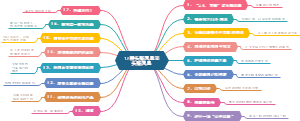
1. Introduction
Definition
Teaching journals are means language teachers can use to reflect on their practice.
Function
Teaching journals provide teachers with a written record of various aspects of their practice such as classroom events and enable them to step back for a moment to reflect on their work.
2. Literature Review
Benefit
as a problem-solving device, for seeing new teaching ideas and as a means of legitimizing their own practice
practising language teachers can benefit more from having others (peers) read their journals, because they can get another’s perspective, insight and interpretation which may be difficult to achieve if a teacher attempts to reflect alone
Purposes of teaching journals
as a way of clarifying one’s own thinking
as a way of exploring one’s own beliefs and practices
as a way of becoming more aware of one’s teaching styles
as a way of monitoring one’s own practices
in order to provide positive feedback on one’s teaching, for example by writing about successful experiences
to vent one’s frustrations and set goals for remedying problems
to raise questions and issues to think about in the future
as a way of collaborating with other teachers in exploring teaching issues
as a way of triggering insights about one’s self as a teacher and about one’s teaching
to provide a record of one’s teaching for others to read
Purposes of collaborative journal writing for peers
as a means of encouraging reflective enquiry
as a means of challenging, supporting and monitoring the teacher’s thinking
as a means of asking questions
as a means of analysing the teacher’s development, learning and current levels of understanding
as a means of guiding instruction
as a means of linking and synthesizing the teacher’s understanding with his/her classroom practices
3. Case Study
three EFL teachers write about their teaching
4. Implement
Procedures to start a teaching journal
Start a teaching journal (if you have not already done so).
Reflect on a recent teaching practice or experience in the classroom, positive or negative, that caused you to stop and think about your teaching
Write this (word processing or on paper).
Decide whether you want this to be an intrapersonal journal or a dialogical journal.
After each journal entry ask yourself two or three questions about what you have written. Your peer may respond to these questions.
Keep writing about your chosen topic for at least a month.
Review your entries each week. Can you find any patterns emerging?
If you have chosen an intrapersonal journal, write a summary of important events and what you have learned.
If you have written a dialogue journal, decide on what parts of the text you want your peer to read (block text, staple pages together that you do not want made public, or write a different version for your peer).

Approaches to writing teaching journal
stream of consciousness approach
edited approach
online teaching journals
blogs
5. Teachers‘ View on Teaching Journals
pros
Writing a journal forces the teacher to reflect on certain issues and bring them out in the open.
Journal writing gets teachers thinking about things that are unconsciously going on in the mind.
Journal writing enables receptive teachers to discover the importance of relating their own experience of learning to that of the pupils they teach.
Journal writing enhances awareness about the way a teacher teaches and a student learns.
Journal writing serves as a means of generating questions and hypotheses about teaching and the learning processes.
Journal writing is the most natural form of classroom research.
Journal writing promotes the development of reflective teaching.
cons
Writing a journal is time-consuming.
Writing a journal can be artificial unless it is a regular activity.
Comments by peers can be unfocused.
Journal writing can become tedious after some time.
Journals can be difficult to analyse and interpret by teachers, peers and teacher educators.
Some writers really do not enjoy writing a journal or diary as a form of reflection.
6. Conclusion
Language teachers can write teaching journals to record their reflections of most aspects of their practice and review later for patterns that may have emerged as a basis for reflection.
Writing about one’s practices seems to be an efficient means of facilitating reflection.
When teachers share their reflective journals, they not only foster collegial interaction but they can also gain different perspectives about their work while also contributing to professional knowledge in the field as a whole.