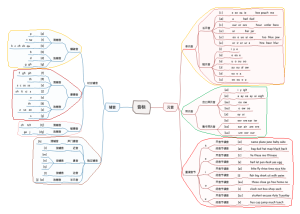
~ sees language as a linguistic system made up of various subsystems:phonology(语言学), morphology(词形学), syntax(句法学).
When ~ was combined with stimulus-response principles of behaviouristic psychology, the audiolingual approach to language learning emerged.
The functional view of language
British linguists, in the 1960s
~ not only sees language as a linguistic system but also a means for doing things.
Most of our day-to-day language use involves functional activities: offering, suggesting, advising, apologizing.
The interactional view of language
~ considers language to be a communicative tool, whose main use is to build up and maintain social relations between people
Learners not only need to know the grammar and vocabulary of the language but as importantly they need to know the rules for using them in a whole range of communicative contexts.
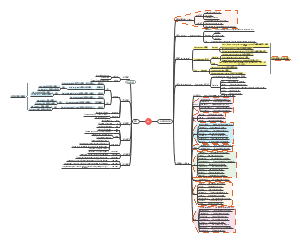
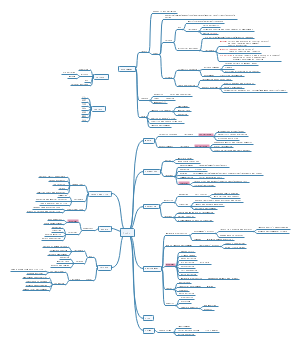
Current theories about language learning
★ research on ~
the Natural Approach, Total Physical Response, and the Silent Way are based on one or more dimensions of processes and conditions.
process-oriented theories
how the mind organizes new information such as habit formation, induction(归纳,particular→specific), making inference, hypothesis testing and generalization.
condition-oriented theories
emphasize the nature of the human and physical context in which language learning takes place, such as the number of students, the kind of input learners receive, and the atmosphere.
Behaviorist theory
Skinner
It is based on a stimulus-response theory of psychology.
stimulus, response, reinforcrment
language is also a form of behavior. This theory of learning is referred to as behaviorism.
influential
audio-lingual method
constant repetition and the reinforcement of the teacher.
Mistakes were immediately corrected
Cognitive theory
Noam Chomsky
students are asked to think rather than simply repeat.
language is not a form of behaviour, it is an intricate rule-based
system and a large part of language acquisition is the learning of this system.
A language learner acquires language competence which enables him to produce language.
influential
students should be allowed to create their own sentences based on their understanding of certain rules. (opp to the audio-lingual method) .
Constructive theory
John Dewey
learning is process in which the learner constructs meaning based on his or her own experiences and what he or she already known.
Teachers need to design environments and interact with learners to foster inventive, creative, critical learners.
Socio-constructive theory
Vygotsky (1978)
emphasizes interaction and engagement with the target language in a social context based on the concept of “Zone of Proximal Development (ZPD)” and scaffolding(support).
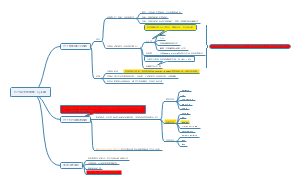
What makes a good language teacher
ethic devotion
professional qualities
personal styles
How can one become ~
the most important and difficult
the development of professional competence
Wallace(1991), uses a 'reflective model' to demostrate
the development of professional competence.