LANGUAGE is such an integral part of our life and humanity that too much about it has been taken for granted.They take it as a tool for access to other fields of knowledge rather than as a subject in and of itself.
1.2 What Is Language?
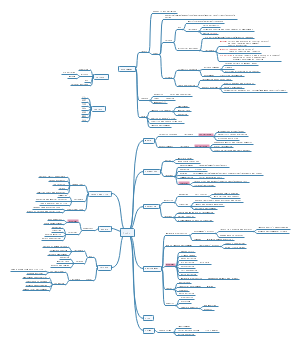
In short, language distinguishes us from animals because it is far more sophisticated than any animal communication system.
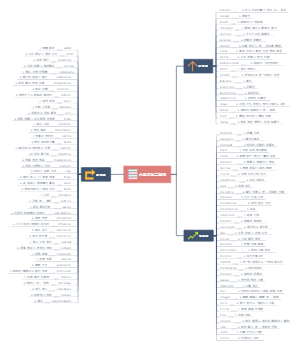
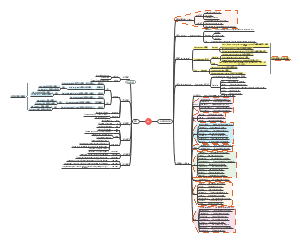
1.3 Design Features of Language
1.Arbitrariness任意性
Definition:the form of linguistic signs bear no natural relationship to their meaning. The link between them is a matter of convention.
(1)Arbitrary relationship between the sound of a morpheme and its meaning, even with onomatopoeic words.(拟声词也是任意性)
(2) Language is not arbitrary at the syntactic level.
(3)The link between a linguistic sign and its meaning is a
mater of convention.
2.Duality二重性
(discreteness分离性)
Definition: Duality is meant the property of having two levels of
structures, such that units of the primary level are composed of
elements of secondary level.
It is one of the most economical features of human language.
Hierarchical 层级性 Stratification 分层性
3. Creativity/Productivity
创造性/多产性
Definition: It refers to a language's capacity for novel
messages to be built up out of discrete units.
Because of duality the speaker is able to combine the basic
linguistic units to form an infinite set of sentences, most of which are never before produced or heard.
The recursive nature of language provides a theoretical
basis for its possibility.( Recursiveness递规性)
4.Displacement 移位性
Definition: It means that human languages enable their users to
symbolize objects, events and concepts which are not present(in
time and space) at the moment of communication.
Displacement benefits human beings by giving them
the power to handle generalization and abstractions.
5. Cultural transmission文化传承性
The process whereby language is passed on from one
generation to the next is described as cultural transmission.
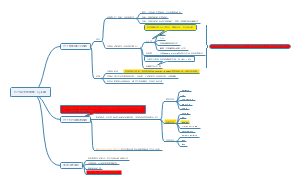
The primitive times people imitated the sounds of the animal calls in
The “pooh-pooh” theory
In the life of our primitive ancestors, they utter instinctive
sounds of pain,anger and joy.
The “yo-he-ho" theory
As primitive people worked together, they produced some
rhythmic grunts which gradually developed into chants and
then into language.
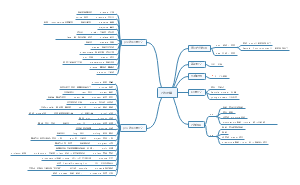
1.5 Functions of Language
By Jakobson(six functions)
Referential所指功能 To convey message and information
Poetic 诗歌功能 To indulge in language for its own sake
Emotive 感情功能 To express attitudes,feelings and emotions
s)
Conative 意动功能 To persuade and influence others through commands and requests
Phatic 寒暄功能 To establish communion with others (一些没有实际意义的话,如天气或打招呼)
Metalingual function元语言功能 To clear up intentions and meanings
By Halliday(metafunctions)
ldeational function概念功能
Interpersonal function 人际意义
Textual function 语篇意义
By textbook (seven functions)
Informative function (also called ideational function)
Language is the instrument of thought and people often
use it to communicate new information.
Interpersonal function 交际功能
It is that people establish and maintain their status in a society.
Performantive function 行事功能
It is primarily to change the social status of persons.
Emotive function 情感功能
It is one of the most powerful uses of lanquage because it
is crucial in changing the emotional status of an audience
for or against someone or something.
Phatic Communion寒暄功能
We use such small, seemingly meaningless
expressions to maintain a comfortable relationship between people without involving any factual content.
Recreational function娱乐功能
The use of language for the hearty and sheer joy and using it.
Metalingual function元语言功能
Our language can be used to talk about itself.
1.6 What Is Linguistics?
Linguistics is usually defined as the science of language or, alternatively, as the scientific study of Language.Linguistics is a rich and exciting field.
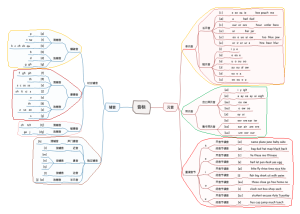
1.7 Main Branches of Linguistics
Phonetics 语音学
Phonology 音系学
It studies the rules governing the structure, distribution, and the sequencing of speech sounds and the shape of syllables.
Morphology 形态学
It is concerned with the internal oraanization of words, It
studies the minimal units of meaning-morphemes and
word-formation processes.
Syntax 句法学
It is about principles of forming and understanding English sentences.
Semantics 语义学
Semantics examines how meaning is encoded in a language.
Pragmatics 语用学
Pragmatics is the study of meaning in context. It is concerned
with the way language is used to communicate rather than with the way language is internally structured.
1.8 Macrolinguistics
Psycholinguistics心理语言学
It investigates the interrelation of language and
mind, in processing and producing utterance and in
language acquisition.
Developmental Psycholinguistics
Experimental Psycholinquistics
Sociolinguistics 社会语言学
It covers a variety of different interests in language and society, including the social functions of language and the social characteristics of its users.
Anthropological Limguistics 人类语言学
Computational Linguistics 电脑语言学
It is an interdisciplinary filed which centers around the use of computers to process or produce human language, also
known as natural language.(machine translation)
1.9 Important Distinctions in Languistics
Descriptive(描写式) and Prescriptive(规定式)
Descriptive---describe/analyze linguistic facts observed or langue people actually use.(Modern linguistics)
Prescriptive---lay down rules for "correct" linguistic behavior in using language.(Traditional grammar)
Synchronic(共时)and Diachronic (历时)
Synchronic--description of a language at some point of time.(Modern linguistics)
Diachronic---description of a language through time.(historical development of language over a period of time)(by Saussure)
Langue (语言) and Parole(言语)By Saussure
Langue---the abstract linguistic system shared by all members of the speech community.
Parole---the realization of langue in actual use.
Competence (语言能力) and Performance (语言运用)By Chomsky
Competence---the ideal user's knowiedge of
the rules of his language.
Performance---the actual realization of this
knowledge in linguistic community.