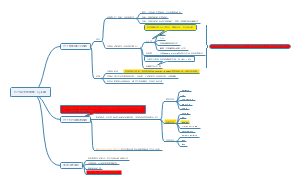
Price Informativene Price Volatility Learning Information Aggregation Compensation Score
Introduction
price volatility is an alternative equilibrium
studying the equilibrium relation between both endogenous variables before understanding comparative statics.
develop an empirical framework to analyze the relation between volatility and informativeness. introduce the notion of comovement score
introducecthe notion of comovement score, which is a statistic that
measures the relative distance of a given asset to the positive/negative comovement regions.
show how to empirically measure stockspecific comovement score
changes in volatility are less likely to reflect changes in informativeness in the same direction in recent times
model primitives, identifying regions in which both variables comove unambiguously in a particular direction.
Our results highlight that using volatility to make inferences about informativeness is only justified in specific circumstances
Data
2.1Environment
show that the relation between volatility and informativeness characterized in Proposition 1 below holds exactly in any model with linear demands and additive noise, and approximately in a more general class of models
2.2. Equilibrium
our baseline environment features a unique stable stationary rational
3. Relating volatility and informativeness
3.1. Definitions
in equilibrium to be able to make inferences about movements in price informativeness, which is not directly observable, from movements in price volatility, which can be easily computed
3.2. Volatility-informativeness relation
measuring informativeness using VP is inadequate to capture the amount of information contained in asset prices, which is ultimately what we care about in this paper
3.3. Comovement regions
that are valid for changes in any of the underlying model parameters, including those that appear in the volatilityinformativeness relation
4. Comovement score: definition, measurement, and
validation
4.1. Comovement score: definition
in informativeness for any change in primitives is a contribution of independent value.
4.2. Comovement score: measurement
the share of trading motives orthogonal to fundamentals (such as the rebalancing trades of index funds) is typically higher for those stocks. In
contrast, it is plausible that value and high idiosyncratic volatility stocks have a relatively smaller share of these trades orthogonal to fundamentals.
4.3. Comovement score: validation
This figure shows that there exists a positive correlation between the comovement score and the likelihood of positive comovement, which is consistent with the theoretical predictions of our framework
5. Conclusion
We show that whenever prices are sufficiently informative (uninformative), changes in parameters induce a positive (negative) comovement between price informativeness and price volatility in response to changes in any of the
model primitives
that using volatility to make inferences about informativeness is only justified in a particular set of circumstances.