导图社区 美国经济思维导图准备校对版
- 563
- 2
- 1
- 举报
美国经济思维导图准备校对版
这个思维导图整理了美国经济。内容包括美国经济历史和现在的美国经济。通过美国经济史,我们可以看到美国如何从最早的一个微不足道的殖民地发展壮大至世界第一强国,以及在发展过程中,技术变革与制度创新是如何解决发展中遇到的问题等等。
编辑于2021-04-04 20:18:36- 经济史
- 美国经济
- 相似推荐
- 大纲

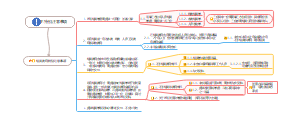
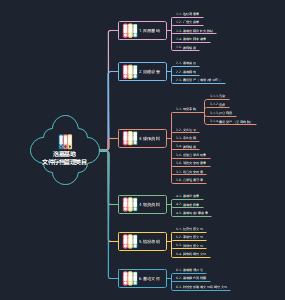
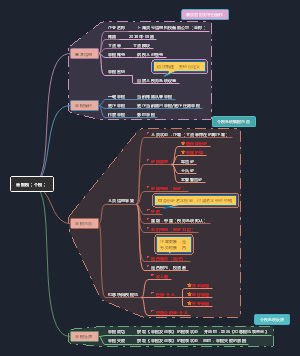

The U.S. economy
History of American Economy
In 1894
The United States rose to become the world′s largest industrial nation
Its economic aggregate has officially surpassed that of the United Kingdom, making it the world′s largest economy
From 1920 to 1921
The first financial crisis
reason
Economic adjustment after the windfall of the First World War
External demand to reduce
From1929 to 1939
Second Financial Crisis (the Great Depression)
reason
The malignant development of the contradiction between the sociality of capitalist production and the private possession of the production results
Solution: Roosevelt′s New Deal
1.The new policy calls for cutting government and social spending budgets and concentrating on restructuring industry
2.Increase government control over the market and abandon the gold standard
3.Agricultural production was reformed
characteristics
Last long
A wide range
destructive
It rippled across the capitalist world
influence
1. Enhanced the government′s participation in economic policies
2. Reinforce economic nationalism.
3. In order to get rid of the Great Depression, Germany and Japan began to embark on the road of foreign aggression and expansion and the road of fascism.
1938, just before World War II
The United States accounts for thirty-six percent of the industry of the capitalist world
1948, just before World War II
The third financial crisis
A slight adjustment of 10 percent decline in industrial production
The United States accounts for 53.4 percent of the industry of the capitalist world and has been the superpower since the end of World War II.
The 1950s and late 1960s
The fourth financial crisis in 1954
reason
The end of the Korean War reduced military demand
result
Gross national product and industrial output declined
The fifth financial crisis in 1957
reason
Demand for cars and real estate fell
The sixth financial crisis in 1960 ~ 1961
Gross industrial production fell
From 1961 to 1969
Sustained economic boom
This was the golden age of American economic development.
reason
Expand the world market
Apply the achievements of the Third Scientific and Technological Revolution
Develop new industries
The government manages macroscopically
Continued and developed the social welfare policies of Roosevelt′s New Deal
status
The United States accounted for 53.4 percent of the industrial output of the capitalist world, 32.4 percent of its export trade, and 74.5 percent of its gold reserves
The United States was the economic hegemon of the capitalist world during this period.
In the 1970s
A period of economic depression
The seventh financial crisis from 1969 to 1972
The eighth financial crisis of 1973-1975
The economy is stagnant and inflation is high
In the 1980s
A period of economic recovery and prosperity
Ninth financial crisis, 1979-1982
The end of 1982-1988
The economy has recovered and is growing steadily
Inflation is under control
Employment increases
The national economy continued to grow
In the 1990s
"New Economy"
The tenth financial crisis of 1989-1993
The crisis has hurt Japan the most
The economy continued to grow after 1993
reason
Clinton Administration Measures
Increase public investment
Reducing the fiscal deficit
Streamlining Government
Reforming the tax system
Reforming the health care system
The 11th Financial Crisis (Internet Bubble) from 2000 to 2003
The Twelfth Financial Crisis in 2008 (Subprime Loan Crisis)
reason
Neoliberal policies
Excessive innovation in financial products
There was excessive speculation in financial markets
The solution
Authorizes the Treasury Department to create a plan to dispose of impaired assets
Allows the Treasury to insure financial institutions′ lossable assets
A Financial Stability Oversight Council and an independent commission were established to oversee the implementation of the Act
Curbs on executive compensation at companies receiving government aid
Cooperate with foreign financial regulators and central banks
Protecting taxpayers′ interests is a priority
Increase help for mortgage applicants in foreclosure
Current American Economy
Agricultural
Advantage
The land is fertile and the rainfall is abundant
The climate is mild and suitable for growing crops
Nearly half of the world's crops are first grown in the United States
Farm characteristics
Most farms are family farms
Small family farms account for 90% of American farms
Most farms are part-time farms
Off-farm income is the main source of income for small family farms
Large farms are more likely to adopt contract farming
Export trade of agricultural products
Horticultural products (fruits, vegetables, nuts) are a major component of US agricultural exports
Oilseed products, mainly soybeans, are the second largest group of U.S. agricultural exports
Livestock products, poultry products, feed, wheat and cotton account for a large part of agricultural exports
Agricultural policy
Direct subsidies
Direct subsidies are provided to farmers based on historical sown acreage and yield
Counter cyclical subsidy
Farmers receive subsidies when the effective price of a particular crop is below the target price, and the lower the market price, the greater the subsidy
Marketing loan program
Producers of designated crops receive loans from the government in the form of collateral products or in exchange for loans with agricultural products
Food Assistance Program
Increase food costs and household income
Land fallow project
To establish long-term surface resources on environmentally sensitive land
Wetland Conservation Programme
Provide support and assistance to restore wetlands on agricultural land
Environmental quality incentive projects
Technical assistance and financial subsidies will be provided to farmers to improve environmental quality
Wild Habitat Incentive Scheme
Provide support to landowners for wildlife habitat improvement
Crop insurance
Provide farmers with the tools to fluctuate their incomes due to fluctuations in yields and prices
services
Characteristics
The service industry is developed and ranks in the world's leading position
The dominant position of the traditional service industry has been strengthened, while the emerging service industry has developed rapidly
Trade in services is quite developed
The drivers of rapid development
Government support
The transformation of the enterprise
Social and cultural
Impact on the economy
Benefits
We will create a large number of job opportunities and promote the upgrading of the country's industrial structure
Drives the national economy to develop rapidly, makes the United States obtains the strong position in the economic globalization era
disadvantages
Leading to the increasing hollowing out of American industry
The development of virtual economy is divorced from the real economy
manufacturing
Nearly 12 million Americans (9 percent of the work force) are directly employed in manufacturing
Four major manufacturing industries
Computers and electronics
Chemical products
Food, beverage, tobacco
Petroleum products
Military developed
Billions are made every year by selling military products abroad
American car manufacturers are the world's largest and most profitable companies
Boeing is the world's largest manufacturer of commercial jet transport aircraft
Military aircraft
The helicopter
Space vehicle
missile
High-tech industry
The world's first
Attach importance to technological innovation
We will greatly promote economic growth
World dominance
The computer
Engineering and technology
Information technology
Concentrate on high and new technology areas
Technology developed
Knowledge intensive
Talent aggregation
Mainly distributed in western region (Pacific coast)
Silicon Valley is the largest high-tech producing area in the United States
The ministry of foreign trade
Exports of goods and services are at record levels
Trade protection policy
Withdrawing from TPP, Pacific Partnership
Raising Trade Barriers
Tax policy to bring companies back to the United States
A major driver of economic growth
Imbalance of Import and Export
Main export commodities
Chemical products
Mechanical and electronic products
Transportation equipment
minerals