导图社区 1. Introduction and Overview of nanotechnology
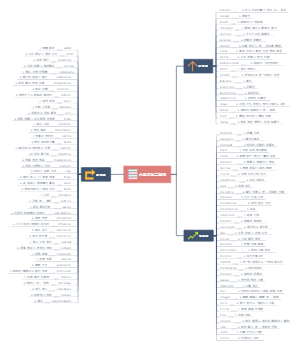
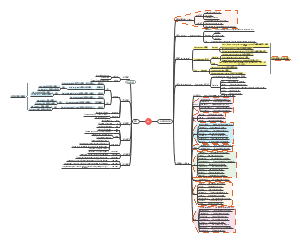
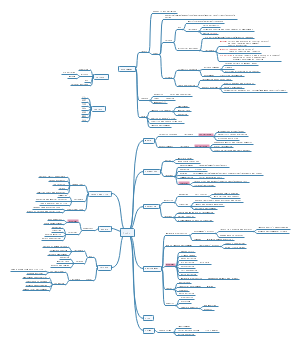
这是一篇关于1. Introduction and Overview o的思维导图,主要内容包括:Applications of Nanotechnology to Devices and Microsystems,Scaling Devices to Nanometer Range,Why Nanotechnology for Advanced Microelectronics and Bi
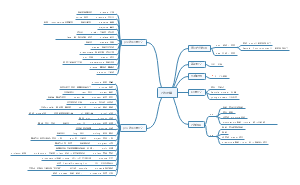
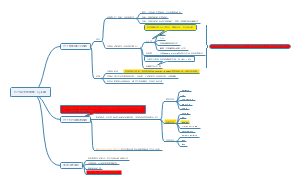
编辑于2024-09-14 16:29:28这是一篇关于5. Etching的思维导图,主要内容包括:Considerations for Dry Etching,Etch Rate Dependence,Dry Plasma Etching,Wet Chemical Etching,requirements and tradeoffs。
这是一篇关于1. Introduction and Overview o的思维导图,主要内容包括:Applications of Nanotechnology to Devices and Microsystems,Scaling Devices to Nanometer Range,Why Nanotechnology for Advanced Microelectronics and Bi
社区模板帮助中心,点此进入>>
这是一篇关于5. Etching的思维导图,主要内容包括:Considerations for Dry Etching,Etch Rate Dependence,Dry Plasma Etching,Wet Chemical Etching,requirements and tradeoffs。
这是一篇关于1. Introduction and Overview o的思维导图,主要内容包括:Applications of Nanotechnology to Devices and Microsystems,Scaling Devices to Nanometer Range,Why Nanotechnology for Advanced Microelectronics and Bi
1. Introduction and Overview of Nanotechnology
Why Nanotechnology for Advanced Microelectronics and Biosystems
Integrated Circuits (ICs)<10nm
Become Smaller with Higher Performance, Lower Power and Cost
New technology, new materials and new designs
generate Biosensors
Scaling Devices to Nanometer Range
Moore's Law
Transistor density doubled every 2 years
Nanotechnology brings Faster, Cheaper, and Lower Energy Computers
limitations
Heat dissipation
High Heating Power Density due to Densely Packed Transistors, which will Damage and Slow Down ICs
Extensive Cooling is needed in IC Packages
Atomic Size
With 45 nm Gate Length, already required 1.2 nm SiO2 (Few Atoms) for Scaling. It's difficult to control below single atom(Gate length 3nm)
Applications of Nanotechnology to Devices and Microsystems
new design
FinFET – Gate contacts 3 Sides around Channel to provide Better Control
Gate-All-Around – Gate contacts Channels from All 4 sides with Multiple Layers of Nanosheets to reduce Leakage and provide needed Current
Nanoimprint
applications
Imprinting on Metal and Ceramic
Modes of Reversal Imprinting
Imprinting on Flexible Substrate
Substrates that Cannot be Easily Spin-Coated - Flexible Polymer Films - Plastic Electronics
3D Patterning by Repeated Imprinting
Multiple Layer 3D Nanostructures
Imprinted 3-d Grating With Sealed Cavities
Nanochannels
4 Repeated Reversal Imprints
Uniform Array and Multiple Levels of 3D Nanochannels Formed by Repeating Reversal UV Nanoimprint
Integrated Channels with Electrodes for Stretched DNA and Protein Interaction
Image Single Protein Molecules Bound to Single DNA Molecules
DNA Motion Induced in Si Channels by Applied Voltage due to ac Field
High Aspect Ratio, Thick Si Microheater
Generate Large Volume for Absorbents
Thick Microheater Filled with Different Adsorbent Granules for 3-stage μPCF
Wide Range, High Sensitivity, Obtaine Chromatogram of 30 Compounds
Surface Energy Control For Reversal Imprint
Surface Energy Can be Controlled by Silanes or Plasma
Silanes Can be Mixed in Various Ratio for Desired Surface Energy
Nanoimprint over Large Areas for Cell Growth(on Imprinted Polystyrene Gratings PS Gratings), Cells Aligned and Elongated on PS Gratings (Increase with Reduced Grating Width)
Stacking Nanosquares
Photonic Crystal Defects could be Generated after Stacking Nanosquares on top of Nanoholes
Point Defect Generated by Missing Nanosquares Directly on Top of Nanoholes
3D Nanoplasmonic Biosensor with Microposts for Detection of Filopodia in Cells
Highest Separation Efficiency of 99.4% was Achieved on Selectively Coated Platforms
THz Open Resonance Antenna (ORA) with ME Dipole, Spherical Concave Surface, and Silicon Partially Reflective Surface
Compact Terahertz Dielectric Folded Metasurface
Dielectric Material in Si Avoids Metallic Loss to provide High Efficiency
High Gain and Low Profile THz Antenna by Two Parallel Metasurfaces
Nanotechnology Requirements
Low Temperature, Low Pressure, High Throughput, and Flexible Patterning of 3D Nanostructures in Si, Polymer, Oxide, and Metal - Channels, Cavities, Sidewalls, Scaffolds, Microfluidic Systems with Interconnects
Can be Apply to Fabricate Electronic & Photonic Devices, Sensors, Actuators, and Biomedical Microsystems
Low Damage and Precise Control are Needed for NanoDevices and Systems to Achieve High Performance
Key Technology Challenges
Patterning Technology
Materials
子主题
Transistors
Integrating Many Transistors Together – Lower Cost, More functions
Gate, Source, and Drain to replace
Vacuum Tubes
Dimensions and Large Integration have Advantages of Higher Speed, Multiple Functions, Lower Power, and Lower Cost
cleanroom
class 1000/100 room
figures represent the how many particles there in the clean room
electrons will combine the molecules to creat defects
requirements
wear clearoom clothing
to reduce particles in the environment to minimize defects in devices
Technologies
lithography
Photolithography(0.5um)
Electron Beam Lithography(10nm)
only the one can draw various patterns
Nanoimprint Lithography(1nm)
advantages
high resolution
high throughput
Simple Patterning System – Resolution not limited by Photons or Beams
3D Patterning over Topography
Patterning Directly in Functional Materials to Simplify Process(e.g. Metal, Flexible Film)
Deposition
Etching
High Density, Self-aligned Si Field Emitters, Sharp Tips Formed by Dry Etching with Mask Erosion
Metrology Equipment
yellow room
light will change the pattern(photosensitive materials) except yellow colour