导图社区 语法-动词
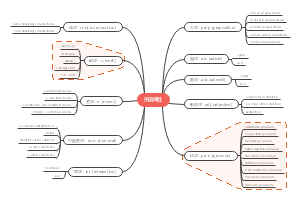
这是一篇关于语法-动词的思维导图,主要内容包括:短语动词,动词的形式,情态助动词,助动词,系动词,实义动词,动词的分类。
编辑于2025-01-01 15:56:32语法-动词
动词的分类
按语义分为
实义动词
可以做出来的动作
系动词
表状态
可以单独做谓语
不能够实义动词和系动词一起出现。
i am doing homework。am是助动词,doing是非谓语。助动车和实义动词非谓语可以同时出现
在谓语中的作用
助动词
帮助的功能
情态动词
自身有一定的语义,也是帮助的功能
这两个不能单独做谓语,要合实义动词,系动词放一起才可以
实义动词
实义动词的特点:有完整语义,能独立做谓语,可分为及物动词和不及物动词
及物动词
其后面必须跟宾语,意义才完整。
例子:It was difficult for the inspectors to discover which documents were important and which were not.
He wasn't expecting our hospitality.没料到我们这么好客
有些及物动词后面可以跟两个宾语,前面为间接宾语,后面为直接宾语
• They granted us a loan. • She will lend you her MP5. • I owed him间接 an apology直接. • They denied剥夺 the prisoner间接 all freedom直接.
有些及物动词和一个介词短语或副词连用
• acquaint...with… • base...on(upon)… • bring...with… • compare...to…(把A比作B) compare … with(把A和B做对比) dedicate...to(…是宾语)
• deprive..sb.of sth • direct...to • divide...into • prevent..sth .from sth(阻止什么远离什么) 当成一个动词词组 • regard...as • remind...of
• Further treatment will prevent cancer from developing. • Can it ever be right to divide a mother from her child?
不及物动词
其后面不需要也不能跟宾语
例子:She wondered what would happen if her parents found her.
collapse • come • cry• drift • erupt • exist • expire • faint。happen(事情发生)
有些不及物动词经常和某个介词连用,便可以加宾语,不可以随便造
• adhere to…(坚持做某事) • associate with • believe in • conform to遵守 • contribute to • refer to提及,引申
• Local businesses have agreed to contribute捐款. • I believe that each of us can contribute to the future of the world.
既做及物动词,也可以做不及物动词
• He doesn’t run fast. • He runs a store.
• They advance at an average of 50 miles a day. • She advanced a new theory after many experiments.
• run• stand站、忍受• move • pass • sing• study
1.及物动词+宾语 2.及物动词+间接宾语+直接宾语 3.及物动词+宾语+介词短语 4.不及物动词 5.不及物动词+介词+宾语
3. Because of his excellent performance, the boss rose his salary.(rise是自己上升,不及物) 4. Because of his excellent performance, the boss raised his salary.raise是人提升,有个动作发出者
短语动词
短语动词是动词、介词、副词等通过一定的结合而 组成的。
动词+副词(副词后的名词可以颠倒顺序,放在动词和副词之间)
Encourage children to put aside存起来(整体当成动词短语) some of their allowance to buy Christmas presents.
put on,pick out,put aside, put away,give in, give up,run away,go back,throw away, think over, look around,turn off,break out,set up,give up,find out,look through,go on
当分不清是副词还是介词,介词后面一定要加名词,如果可以不加名词就是副词。put on clothes/put clothes on 都可以,所以on是副词
Encourage children to put(整体当成动词短语) some of their allowance aside放在宾语后可以的话就是副词 to buy Christmas presents.
动词+介词(一般是及物动词,因为介词后要加宾语)
The report says one in five men die from alcohol related causes in Russia.
You can always depend on her. on不能放到her后面。所以是介词
ask for,care for,care about,look after,get off,depend on,think of,die of(外部环境造成的死亡)die from(内部原因的疾病),believe in,listen to,look at,go over,arrive at,arrive in
动词+副词+介词
He was looking forward to working with the new manager.
look forward to,catch up with跟上,add up to,break away from远离, keep out of远离, get along with相处,get on with相处
动词+名词+介词
Our goal now is to get rid of the disease in the whole world.
catch hold of, pay attention to,take part in, make use of, get rid of,catch sight of,take the place of,take notice of,take pride in,show interest in
be+形容词+介词
The world may not be ready for me, but ready or not, here I come.世界落后了对于我
Some people are afraid of flying on an airplane.
be fond of, be afraid of, be famous for, be sure about/of, be good at, be good for, be good to, be ready for, be active in, be proud of
动词+名词(不能自己造)
When does the wedding take place?
take place, keep watch看守
大多数短语动词既可用作及物动词,也可用作不及 物动词,有时词义有变化。
• They carried on(on是介词) the discussion late into the night. • Don’t worry about me. Just carry on.(on是副词)
• I must look up the word in the dictionary.(及物词组) • Things are beginning to look up now.不及物词组
• They carried on the discussion late into the night.继续 • Don’t worry about me. Just carry on.前进 • I must look up the word in the dictionary.查阅 • Things are beginning to look up now.好转
系动词
定义:连接主语和表示主语身份,性质,状态的动词。
表示状态(持续(一直),表象(好像),感官(用人类的感官表示一种事情的状态)的系动词。都可以用be来代替
be,look看起来,seem,appear, smell,taste,sound,remain,stay,stand,lie, keep
• To know everything is to know nothing. • His influence was considerable but now he appears merely ridiculous.
表示变化或者结果的系动词,都可以翻译成变得,可以用be单词代替
• become,get,grow,turn, go,come,fall,prove
• He went/was blind at the age of twenty. • The weather is becoming warmer and warmer as the spring is coming. • The search proved/was difficult.
助动词
助动词的特点
无语义
不能独立做谓语
必须与实义动词或者系动词连用,构成否定疑问,各种时态,被动语态,虚拟语气。
be的用法(am 、is、are、was、were、been、being)
be+现在分词=进行时态
English is becoming more and more important.英语变得越来越重要。
be+过去分词=被动语态
The window was broken by Tom.
do的用法
构成一般疑问句
Did you study English before you came here?
do+not否定句
I do not want(谓语) to be criticized.
强调作用
Do call me
have的用法
have+过去分词=完成时态
He has left谓语 for London.
He has got married.他已经结婚了=he is married
be, do,have 同时也可以用作实义动词
i have two brothers
i have learnt english for 3 years
i did my homework
谓语部分的找法
不仅仅是一个谓语动词,和助动词一起找。
do u like english? do &like是谓语部分
He is singing. He was beaten谓语=助动车+实义动词.
be: am, is, are, was, were, been, being do: does, did have: has, had, having
情态助动词
特点
不能独立做谓语
语义不完整,但是有语义
必须与实义动词或者系动词连用,表达可能,建议,愿望,必要等看法或者态度
• can• could • may• might • must• will• would • shall• should• ought to• dare• need• used to • had better
can和could的用法
表示具备某种能力,不一定要做的出来。
can表示现在能不能
I could do such things then, but I can’t now.以前可以,现在不可以
could表示过去能不能
表示请求,容许就不是时间上的区别了
could比can委婉
回答用can,can't,也可以用mustn't(强烈)
-Can/ could I smoke here? -Yes, you can. -No, you can’t/mustn’t smoke here.
表示推测,可能性50%
She could have taken the wrong bus.
He can't have stayed at home, for I just met him in the library.加否定是绝对不可能
特殊句式
cannot/can never…too… / 无论怎么…也不过分;
• One cannot be too careful.一个人无论怎么小心都不为过。
cannot…. enough越…越好
• I cannot thank you enough.我怎么感谢你都不够多
may的用法
maybe是副词=perhaps 也许可能。may be是加了系动词,may不能直接做谓语,必须加动词才行
表示请求容许或者容许,might比may更礼貌
May I turn on the TV?
She asked if she might borrow my bike.宾语从句,从句也必须是过去式
表示可能性“也许” might和may在语气上更不肯定一些
He said that the news might be true.
特殊句式
may/might as well 不妨,最好
After sweeping the courtyard, we might as well clean the rooms. 情态助动词后面是动词原型
must的用法
表示义务,命令或者劝告“必须”
答must引起的问题时,否定用needn’t或 don’t have to must‘t 表示“绝对不行,不可以” 语气很强的不允许。
-Must the ladies wear dresses? -No, they don' t have to/they needn’t.
表示推测“一定,肯定”
只用于肯定句
We __needn‘t__ hurry, for there’s plenty of time.
否定句式疑问句用can/could
must be true和can‘t be true语气一样
They can't/ couldn’t be watching the news now.(否定句不能用mustn't)
-Can/ May I come in? -No, you can't/ mustn’t.(省略了do)
表示偏要,非要,硬要,指令人不快的事情。
Why must you always interrupt me?
shall的用法
用于第二三人称,表示说话人的命令,警告,强制,允诺,威胁或者决心等
You shall go to the ball.
表示强制,用于法令,条约,规章中“必须,应该”
Candidates shall remain in their seats until all the papers have been collected.
用于疑问句中,与第一三人称连用。
Shall I turn on the lights?
should的用法
表示应当,应该
表示可能,应该,一种推断
表示竟然
It’s strange that he should be late.竟然迟到了
will意志力、遗嘱/would的用法
表示请求,建议
would比will语气委婉
Would you pass me the book?
表示意愿愿望和决心
They asked if we would不可以改成will因为是宾语从句 do that again.
情态动词+have done表示责备的语气。should,could,might,need等,它们常被用来表示说话人对过去事情的不满或者遗憾,带有强烈的责备语气。
should have done
“过去本应该做而(实际)没有做” 含有责备或遗憾的语气 否定形式: should not have done
You should have called me when you were in trouble.
Aren’t you tired? I ____a___ you had done enough for today. A should have thought对自我责备 B. must have thought 对过去肯定的猜测。不会猜自己。 C. might have thought D. could have thought
could/might have done
表示过去本来能够(可以)做某事,但实际上没有做到 “本来能够(会)…”
I could have lent you the money. Why didn't you ask me?
need have done
情态助动词加have done表示与事实相反
表示本来需要做某事而没有做
must have done用于肯定句
表示“过去一定做过某事”,是很有把握的推测。 其否定can’t/ couldn’t have done.
• I must have seen you somewhere, but I can’t recollect your name.
动词的形式
第三人称单数,主语是第三人称单数时候,动词形式应该是第三人称单数现在时
过去式:表示过去发生的事情
过去分词:可以构成完成时时态和被动语态
现在分词:通常由v+ing构成,可以构成各种时态