导图社区 中学英文语法一般时态学习知识点笔记
中学英文语法一般时态学习知识点笔记,包括一般现在时态——并非表示现在、被遗忘了的一般过去时态、一般将来时态——预测、 计划和意愿等内容。
编辑于2022-11-11 09:21:49 广东中学英文语法一般时态学习知识点笔记
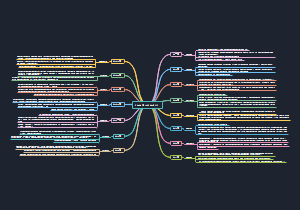
一般现在时态---并非表示现在
表示普遍的事实或真理
Water freezes at 32 Fahrenheit and boils at 212 Fahrenheit.
Water consists of hydrogen and oxygen.
The sun rises in the east and sets in the west.
The world is round.
Knowledge is power.
表示重复活动
表示习惯的动作
He often goes to the gym.
I go to the gym twice a week.
He walks to school every day.
表示习惯的状态
I like rice for dinner.
这一用法通常和一些表示动作频率的时间副词连用
表示肯定的频道副词有:
always
frequently
usually
sometimes
generally
occasionally
often
...
表示否定的频度副词有:
never
seldom
rarely
表示频度的副词短语有:
once a week.
twice a year
on alternate days
隔日
这些副词一般放在否定助动词前,always除外
The history lectures sometimes aren't interesting.
His wife complains that he sometimes doesn't listen to her.
He doesn't always leave before 6 o'clock.Sometimes he works until 7 o'clock.
例句
He is always late
He always goes to school by bike.
用法比较:表示重复活动的一般现在时态和现在完成进行时态
一般现在时是在泛泛地谈时间,并没有时间段的概念;而完成进行时表示 说话人的脑子里会有一个“到目前为止”的时间段概念,甚至是给出像"for about four years"这样一个明确的时间段
I swim 1,000 meters every afternoon. 我每天下午游1000米
I have been swimming 1,000 meters every afternoon. 到目前为止,我是每天下午游1000米。
一般现在时态表示正在发生的动作
一般现在时态用在以there和here开头的句子中,表示目前的短暂动作
Here comes your wife.
There goes our bus,we'll have to wait for the next one.
表示现在瞬间的动作,这个瞬间动作时说话人在说话的同时即刻发生的。 比如:球赛解说、剧情介绍、解释自己正在做的事情、给别人一边说 一边做的示范动作等等
Michael passes to Clint.Clint to Jack,Jack back to Clint--and Clint shoots--and it's a goal!
The woman is a spy,now she enters the room,opens the drawer,takes out a pistol and slips it into her pocket.
I select an album,remove the record from its cover and put it on the turn table.
Watch carefully.First I pick up the receiver,dial the number I want,then drop the coin into the slot as required.
一般现在时态表示将来发生的动作
用在条件状语从句和时间状语从句中
主要用在条件状语从句(if和unless)和时间状语从句(when,as soon as,before和after等)中,表示将来的动作
例句:
Please let me know when he comes back.
What are you going to do when you leave school?
I'll be glad if she comes over to visit me.
I'll give the book to him as soon as I see him.
I will get everything ready before you come back.
若从句的动作含有“意愿”的意思,则从句中可用will
If you will give me a hand with these books,I'll appreciate it.
If they will not accept a check,we shall have to pay in cash,though it would be much trouble for both sides.
If you will continue to fight,the victory will certainly be yours.
在谈到未来的计划和时间安排表的时候,表示将来的动作
此时句中的动词往往是表示短暂性动作的动词,如go,come,leave,start和move等等
例句
The train starts at 2 o'clock.
We move next week.
They leave for Shanghai by train tomorrow evening.
在从句中表示将来的动作,此时从句往往用了一个将来时
I will reward the person who finds my lost kitten.
I will give the booklet to whoever asks for it.
一般现在时态表示过去发生的动作
表示死者的理论、著作等
Francis Bacon says,"Reading makes a full man;conference a ready man;and writing an exact man."
引用书刊、报纸、通知或新近接收到的信件的内容时
The newspaper reads,"The criminal who killed eight women has been executed."
The sign on the washing machine says,"Out of Order".
一般现在时态指现在完成时
在口语中,可用用一般现在时代指现在完成时。能这样使用的动词不多,通常有: hear,find,see,learn,tell和read等。
例句:
I am(= have been)informed that you have been there. 有人告诉我,你到过那里。
I hear(=have heard)that he has left Beijing.
被遗忘了的一般过去时态
基本用法一:过去发生的短暂动作或状态
例句
I saw him in the library yesterday morning.
I began to learn English ten years ago.
I bought this computer three years ago.
He was late for school this morning.
I was tired last night,so I went to bed early.
基本用法二:过去发生的重复或延续活动
动作现在已结束
例句:
I slept for eight hours last night.
She lived in our town for three years,but she is living in Beijing.
I lived in the country for ten years.
He used to do morning exercises.
I wrote a letter once a week to my family when I was in my first college year.
用法比较:一般过去时和现在完成时用于“for+时间段”的区别
一般过去时与"for+时间段"连用,表示动作在过去已经结束,并没有延续到现在; 而现在完成时与“for+时间段”连用,则表明动作延续到现在,并且还有可能延续下去。
She lived in our town for three years. 她在我们小镇生活过3年。
She has lived in our town for three years. 她在我们小镇已经生活了三年了。
口语用法一:“我不知道”---“I don't know” or "I didn't know"?
A:Look,I'm sorry to bother you about this,but that music's really loud.
B:Sorry,I didn't realize you could hear it.
口语用法二:“我忘记了”---“I forget” or "I forgot"?
口语中无这种语境:I forget to do。。。
I am sorry I forgot to return your physics book last night.
另外:
我忘记还可以说成It slipped my mind...
A:Did you pick up my books from Ron's house? B:Sorry.It slipped my mind.
口语用法三:“我以为”---“I think” or "I thought"?
I thought 我本来还以为。。。
A:I really thought that I'd wid the match. B:Oh,well,better luck next time,Henry.
I really think that I will win the match. 我真的很肯定我会赢得这场比赛。
口语用法四:根据上下文的语境灵活地使用一般过去时
口语用法五:礼貌表达
在口语中,一般过去时(也可以用过去进行时)可以表示语气委婉,此时的过去时丝毫没有过去的意味。
例句:
I wondered if you could help me. 我想知道你是否帮我。
Could you give me a hand?
I was wondering if you could possibly lend me your car for this evening.
一般将来时态---预测、计划和意愿
will 表示将来---预测
Will we travel to the stars?
Will we meet E.T.?
Will women still need men?
How hot will it get?
be going to 表示将来---预测
例句:
Look at those clouds!It's going to rain.
It's not going to snow again tomorrow,is it?It was supposed to be warm all week.
表示“预测”时,be going to比will有更多的证据支持,而且事件发生的时间更近
例句:
另外:be going to往往表示当前已有迹象表明说话者无力控制的即将发生的行为。
表示“预测”时,will语气比be going to显得正式
be going to 表示“计划”与will表示“意愿”
be going to 表示计划,需要用“人”作主语
Look at those black clouds! It's going to rain.这里做"推测"
Look at the time.I'm going to miss my bus.
be going to 可以表示“决心”,具有强烈的感情色彩
You're gonna be sorry!You're gonna be so sorry! 你一定会后悔的,我绝不饶了你!
will表示“意愿”,一个当机立断的决定
就是说没有事先计划的
A:The telephone is ringing. B:I'll get it.
比较:will表示"意愿"和be going to表示"意愿"
Husband:There isn't any milk left in the fridge. Wife:I'll buy some after work.
I have bought a computer and I'm going to learn the computer science.
现在进行时表示将来
现在进行时可以表示对最近的将来做出计划或安排。
I'm flying to Beijing next Monday. (机票已经买好)下周一我要飞往北京。
必须带有表示将来的时间状语
必须是人称主语
It's raining tomorrow.
与一般现在时表示将来的区别
一般现在时要比现在进行时听起来更正式,个人主观色彩要淡些。
如果是一系列预定的将来的安排,则一般时态比较简洁
用be going to表示计划与进行时态表示的计划区别
一般现在时表示将来
其他表示将来的句型结构
be to do
1、表示已安排好要在将来发生的事,是比较正式的用法
They are to go on a strike on July 8th. 他们定于7月8日举行罢工。
She is to be married next month.
The Premier is to visit Australia next month.
2、表示强烈的命令,相当于must,should,如:父母对孩子,上级对下级或法律条文中的规定等。
You are to finish your homework before you go to play.
The form is to be filled out in ink and returned this week.
be about to do
这一结构表示即将发生的动作,意思是“正要,马上就要”
The train is about to leave.
Jack is holding a fly swatter and staring at a fly on the kitchen table.He is about to swat the fly.
be on the point/verge/brink/eve of doing
这一结构和be about to do差不多,但其发生的时间比be about to do还要快一些。
He was on the point of killing himself when she stepped into his room.
The child was on the verge of laughing,but he held back.