导图社区 Australia history
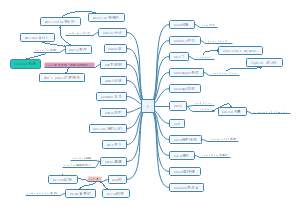
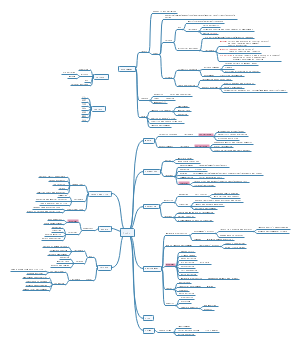
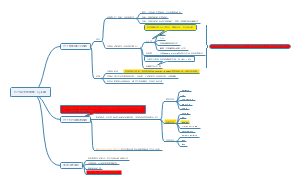
Australia history的思维导图,内容有 Prehistory、Early history、modern history and contemporary history.
编辑于2023-05-29 10:42:05 广东Australia history
Prehistory
Early history about 25,000 years ago, the ancestors of the Australian Aborigines from Southeast Asia to settle here, living in the mainland southeast of Tasmania, the island's aborigines called Tasmanians.
The primitive Aborigines of Australia were divided into numerous tribal groups who spoke different languages.
Early history
In 1432, the Chinese landed near Darwin. In some ancient texts of Arabia and China, there are records of the southern continent.
In the 16th century, world maps of Europe showed a continent connected to Antarctica. The first Europeans to sail to Australia were the Dutch.
In 1606, the Dutchman William Yantz landed on the Cape York Peninsula in northern Australia and set up camp, the first European landing on the continent
Tasman discovered Tasmania in 1642, and the northern shore of the mainland in 1644. Tasmania was named Van Diemen's Land after the Governor-General of the Dutch East Indies, Van Diemen's Land. Australia is known as New Holland by the Dutch.
In 1688, the Englishman Dampier came ashore near Golden Bay on the northwest coast of Australia.
modern history and contemporary history
Colonial history
In 1786, the British government decided to establish New South Wales as a penal colony. In January 1788 naval officer Arthur Phillip was ordered to lead some officers to the Cape of Good Hope, and in February (centered on Sydney) the colony was officially established, with Phillip as its governor.
In 1804 a new colony was established in Tasmania. During the early colonial period, New South Wales experienced what historians call the Dark Ages.
Beginning in 1820, Britain changed its policy of developing Australia by exile, and freemen began to enter.
In 1823, the British government passed an act authorizing the establishment of a local council in New South Wales with limited legislative powers.
From 1824 to 1836, new settlements were established at Morton Bay, Phillip Bay, and Gulf St Vincent
Swan River Colony (now Western Australia) established in 1829
The years 1830-1860 were a period of rapid change in Australian history.
In 1840, the convict assignment system was abolished and free migration was encouraged to solve the labor problem. From then on, Britain stopped sending convicts to Australia.
Between 1863 and 1880, there were eight inter-colonial conferences.
The Labour Party was formed in 1891. The development of the trade union movement broke the boundaries of the colonies.

Federal history
On September 17, 1900, the Queen of England signed a declaration declaring that the Commonwealth would come into being on the first day of the new century.
On 1 January 1901, the Commonwealth of Australia was formally established in Sydney. Australia became a dominion of the British Commonwealth of Nations.
It began accepting immigrants in 1907. Between 1911 and 1914, more than 50,000 immigrants received government assistance each year, and the number of immigrants who did not receive government assistance was three times that number.
World War I broke out in 1914. Australia supported Britain, the end of the war in 1918, Australia participated in the Paris Peace Conference, supported the League of Nations.
From 1921 to 1929, 300 thousand British immigrants immigrated to Australia. In 1931, the British Parliament passed the "Westminster Act" to give self-governing territories internal and external independence, since then Australia has become an independent country within the British Commonwealth of Nations.
In 1950, Australia signed the Colombo Plan in support of Indonesian independence.
The ANZUS Security Treaty was signed in 1951. The 1963 Australia-US Agreement agreed to establish a US naval communications base in the north-west corner of Western Australia.
In March 1983, the Labour Party won the general election, and R.J.L. Hawke became Prime Minister. Reelected in 1984.