导图社区 Canada history
- 362
- 0
- 0
- 举报
Canada history
关于Canada history的思维导图,如Establishment of the Federal State
编辑于2023-05-25 13:41:24 广东- Canada history

- 相似推荐
- 大纲
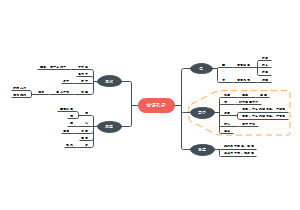

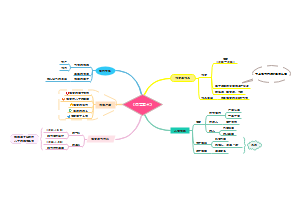
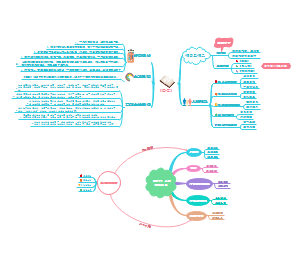
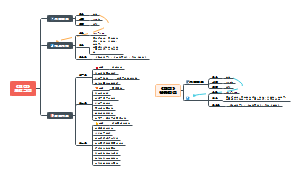

Canada History
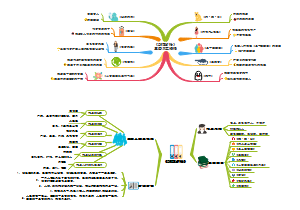
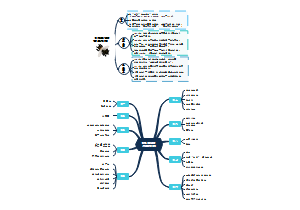
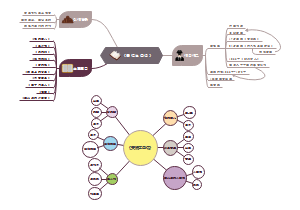
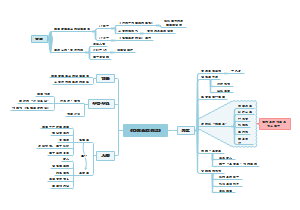
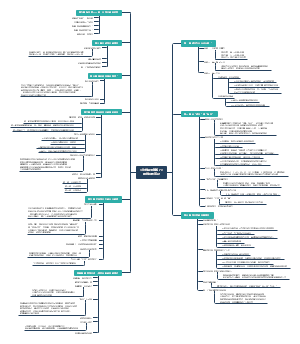
Establishment of the Federal State
In the 1950s and 1960s, with the development of politics and economy in the provinces, the colonies entered the period of seeking union and establishing a federal state.
On September 1, 1864, representatives of the colonial provinces held the first meeting of consultative union and reached an agreement in principle in support of union. On October 10 of the same year, the provincial representatives held the second meeting of the consultative coalition and adopted the Quebec Resolution.
On December 4, 1866, at the Third Conference to Negotiate the Union held in London, England, representatives of the provinces and officials of the British Colonial Office worked together to make a final revision of the Quebec Resolution.
In the spring of 1867, the upper and lower houses of the United Kingdom formally adopted the British North America Act, the Canadian Constitution.
On July 1, 1867, the provinces of Quebec, Ontario, Nova Scotia and New Brunswick were united under the British North American Act to form a unified federal state and named the Dominion of Canada.
In 1870, the MacDonald Government negotiated and reached an agreement with the Hudson's Bay Company to acquire title to land in the west and northwest for 300 thousand pounds.
In 1871 and 1873, British Columbia and Edward Island joined the federation, so that, in addition to Newfoundland, half of the North American continent from the Atlantic to the Pacific Ocean has been unified in the Canadian Dominion, Newfoundland officially joined the federation in 1949, becoming Canada's 10th province.
In order to expand the economy, MacDonald Government organized immigrants to the west and developed the west. The Canadian Pacific Railway was built between 1872 and 1881.
There were two gold fervors along the Fraser River in 1858 and in Krondike, a tributary of the Yukon River in 1896, during which nickel, silver, radium and other metal deposits were also discovered, making Canada a major mining country in the world.
Early 20th century
In the early 20th century, when Britain declared war on Germany in World War I, Canadian volunteers sent to the Western Front later formed the Canadian Corps.
The conscription crisis erupted in 1917 when Conservative Prime Minister Robert Laird Borden imposed compulsory conscription on French Quebecers.
In 1919, Canada joined the League of Nations as independent of the United Kingdom, and the Statute of Westminster 1931 affirmed Canada's independence.
In 1930, the Canadian economy was in the Great Depression. In response to the Great Depression, the Federal Federation of Co-operatives introduced social welfare policies in Saskatchewan in the 1940s and 1950s .
During World War II, Canada declared war on Germany under Liberal Prime Minister William Leon Mackenzie King. The first Canadian troops arrived in Britain in December 1939.
During the Dutch occupation by Germany, Canada provided asylum for the exiled Dutch royal family, and then Canada liberated the Netherlands from Nazi Germany. During World War II, Canada manufactured many military equipment for the Dutch army, Britain, the Republic of China and the Soviet Union, which made the Canadian economy develop rapidly.
Modern Canada
In 1949, the Dominion of Newfoundland joined the Canadian Federation. Canada's rapid economic growth has led to a growing affinity for North American land, and with it a stronger sense of identity among Canadians.
In 1982, the Constitution of Canada came into force, giving Canada its own constitution and the birth of the Canadian Charter of Rights and Freedoms.
In 1999, Nunavut gained independence from the Northwest Territories and became Canada's third territory
The late 1980s and early 1990s saw a number of events that shook Canadian society: the Montreal Engineering College massacre in 1989, the Orca crisis in 1990, and the Persian Gulf War in 1990.
European colonial period
Europeans first set foot in Canada around 1000 AD, when northern Europeans crossed the sea from Greenland to the coast of present-day Newfoundland, Canada, and established a temporary settlement.
Colonial New France
In 1534, French explorer Jacques Cartier explored the Gulf of St. Lawrence and took possession of that land on July 24 in the name of King Francois I of France, opening the way to inland Canada.
In 1603-1604, the French explorer Samuel de Genplan traveled to Canada, initially establishing a settlement on the island of St. Croix in the Bay of Fundy.
In 1608, the first permanent European settlement in North America was established in Quebec City, Quebec.
In 1627, France established the New France Company, and the king granted the company the right to rule over the New France colonies, expanding the scope of the colonies.
In 1663, Louis XIV of France revoked the charter of the New France Company, and the colony became a province under the direct authority of His Majesty, who appointed officials and sent troops.
In the 17th century, the British and French colonists launched a long struggle for Canada.
In 1670, the British king issued a charter to the Hudson Bay Company, declaring that the company had sovereignty and a monopoly on trade in and around Hudson Bay. The British also occupied the island of Newfoundland.
At the end of the 17th century, as Britain and France contended for European hegemony and maritime hegemony increasingly fierce, the struggle between the two sides in the North American colonies also intensified.
During the Seven Years War, Britain and France fought fiercely. With the Treaty of Paris signed in 1763, New France became a British colony and Canada became a British colony.
British colonial period
After the British occupied Canada, the Royal Proclamation was issued in October 1763 to implement the British representative system and British law in the colonies, encouraging the British and the residents of the 13 British North American states to immigrate to Canada.
In May 1774, Britain enacted the Quebec Act, which adopted a policy of appeasing French residents, especially made obvious concessions to the upper echelons.
In 1791, the British Parliament passed the "Constitution Act," which divided the former Quebec Province into Upper Canada, which was dominated by British residents, and Lower Canada, which was dominated by French residents. The Act temporarily eased the contradictions between the British and French residents .
In 1793, the explorer A. Mackenzie, an immigrant from Scotland, crossed the Loki Mountains along the River Peace and reached the shores of the Pacific Ocean, completing the first transcontinental expedition.
In the1820-1830, the Canadian people were dissatisfied with the British rule, and a group of reformers representing the interests of the colonial bourgeoisie and farmers emerged, setting off reform movements in the provinces.
In 1837, two armed uprisings broke out in Upper and Lower Canada and were suppressed by the British government.
In 1840, the British Parliament passed the Act of Union, deciding to merge the two provinces of Upper and Lower Canada, establishing the Province of Canada, and establishing responsible government in each province, so that the provinces obtained some autonomy.
The Indigenous Period
Canada was originally inhabited by Indians and Inuit. The earliest inhabitants of Canada were Indians, who crossed the Bering Strait from northeastern Asia to the Americas in ancient times
In the process of Canada's territorial expansion to the west, Metis and some Indians held two uprisings to safeguard freedom and survival rights and oppose national oppression.
Because unification was achieved within the limits permitted by Britain, Canada failed to achieve true independence in the fields of politics, economy, justice and diplomacy. In the process of coalition, Canada formed two political parties: the Conservative Party and the Liberal Party.
In 1791, British Canada consisted of six provinces: Upper Canada, Lower Canada, Nova Scotia, New Brunswick, Prince Edward Island, and Newfoundland.