导图社区 10Costing methods
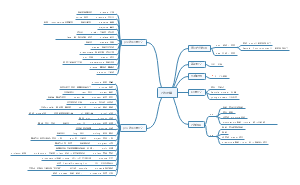
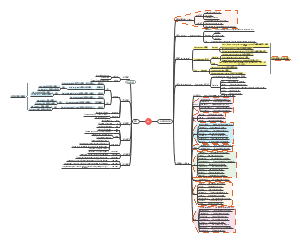
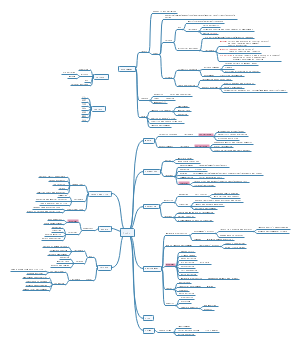
acca f2 第十章Costing methods,内容有: Job and batch costing Service costing Joint and by-products Activity-based costing (ABC) Total quality management(TQM) Life cycle costing Target costing
编辑于2023-06-04 20:52:46 广东ACCA fr,内含有tangible asset、 recognition、 initial measurement。
acca f2 第十章Costing methods,内容有: Job and batch costing Service costing Joint and by-products Activity-based costing (ABC) Total quality management(TQM) Life cycle costing Target costing
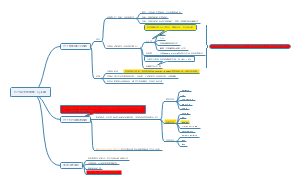
acca f2 第14章, a control technique which compares standard costs and revenues with actual results. Differences between standard and actual results are called variances and these are used to improve performance.
社区模板帮助中心,点此进入>>
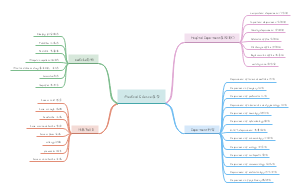
ACCA fr,内含有tangible asset、 recognition、 initial measurement。
acca f2 第十章Costing methods,内容有: Job and batch costing Service costing Joint and by-products Activity-based costing (ABC) Total quality management(TQM) Life cycle costing Target costing
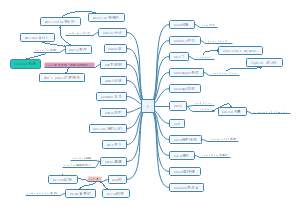
acca f2 第14章, a control technique which compares standard costs and revenues with actual results. Differences between standard and actual results are called variances and these are used to improve performance.
Costing methods
Job and batch costing
Characteristics of job and batch costing
Cost cards
Pricing a job
A selling price based on a 20%margin means that profit is 20%of cost.
Cost of job 80+Profit 20=Selling price 100 求价格可列方程式:cost+price(?)*percentage=price
A selling price based on a 20%mark-up means that profit is 20%of cost.
Cost of job 100+Profit 20=Selling price 120
Service costing
Characteristics of service organisations
Composite cost units
综合成本单位
Charging customers for services
similar to that which applies in job costing
Simultaneous
The production and consumption of a service are simultaneous, and therefore it cannot be inspected for quality in advance.
Heterogeneous
A service is heterogeneous. The service received will vary each time. Services are more reliant on people.
Intangible
A service is intangible. The actual benefit being bought cannot be touched.
Perishable
Services are perishable, that is, they cannot be stored.
Service department costing
The bases for charging service costs to user departments
No charge at all
Total actual cost
Standard absorption cost
Variable cost
Opportunity cost
Cost plus a margin for profit
·To control the costs and efficiency in the service department.
·To control the costs of the user departments, and prevent the unnecessary use of services.
Joint and by-products
Joint products:Joint products are two or more products which are output from the same processing operation, but which are indistinguishable from each other up to their point of separation. By-products:A by-product is a supplementary or secondary product (arising as the result of a process) whose value is small relative to that of the principal product.
Distinguishing between joint and by-products
(a)A joint product is regarded as an important saleable item, and so it should be separately costed. The profitability of each joint product should be assessed in the cost accounts.
(b)A by-product is not important as a saleable item, and whatever revenue it earns is a ‘bonus’for the organisation. Because of their relative insignificance, by-products are not separately costed.
Valuing joint and by-products
pay attention to the split-off point or separation point
Do not allocate joint costs to By-products
·If usual occurrence then calculate net proceeds of by-products and reduce process costs by this amount.
If one-off then calculate net proceeds and treat as miscellaneous income.
Dealing with common costs
Physical measurement
(1) Allocate the joint costs on a physical units basis.
(2) Assuming P1 sells at $2/unit and P2 sells at $5/unit, what is the profit for each product?
Sales value at split-off point
most widely used
because the assumption that some profit margin should be attained for all products under normal marketing conditions is satisfied.
the cost is allocated according to the product's ability to produce income
comparison
physical measurement
is useful where
·The joint products are in the same form eg both solids or both liquids
·The joint products are components in another product and therefore have no relevant sales value.
sales value
is useful where:
•Products are to be sold immediately with no further costs being incurred (such as selling costs);
·Joint products are not in the same form of output
Joint products in process accounts
14.4
Activity-based costing (ABC)
Theory of ABC
Steps in ABC
(a) Group overheads into activities, according to how they are driven. These groups are known as cost pools
(b) Identify the cost drivers for each activity, ie what causes the activity cost to be incurred.
(c) Calculate a cost per unit of cost driver.
d) Absorb activity costs into production based on usage of cost drivers.
ABC vs traditional absorption costing
uses many cost drivers as absorption bases
linked more closely to the causes of the overheads
recognises that overhead costs arise out of diversity and complexity of operations
Total quality management(TQM)
Total quality management (TQM) is the process of applying a zero defect philosophy to the management of all resources and relationships within the firm as a means of developing and sustaining a culture of continuous improvement that focuses on meeting customers'expectations.
process
(a)建立一个产品/服务的质量标准 (b)建立程序或生产方法,以确保在适当的较高比例的情况下达到这些标准 (c)监控实际质量 (d)在实际质量低于标准时采取控制措施
(a) Establishing standards of quality for a product/service
(b) Establishing procedures or production methods to ensure these standards are met in a suitably high proportion of cases
(c) Monitoring actual quality;and
(d) Taking control action when actual quality is below standard.
two key philosophies
Get it right, first time
-The cost of preventing mistakes is less than the cost of correcting them if they occur.
Continuous improvement
-Never be satisfied with current achievement. It is always possible to improve performance.
Performance measures
Measures should also cover the work of the sales, distribution and administration departments
Life cycle costing
Product life cycle
be divided into five stages
considers all the costs that will be incurred from design to abandonment of a new product and compares these to the revenues that can be generated from selling this product at different target prices throughout the product's life.
Target costing
Deriving a target cost
comparison
(a) Define product specification and estimate anticipated sales volume. (b) Set a target selling price at which the company will be able to achieve the desired market share. (c) Required profit is estimated based on profit margins or return on investment. (d) Target cost is calculated as:Target selling price -target profit =Target cost (e) The estimated cost of the product is calculated based on the product specification and current cost levels. (f) Estimated Product Cost-Target Cost=Cost Gap (g) Efforts are made to close the cost gap. Aim to 'design out'costs before production starts.
Target costing involves setting a target cost by subtracting a desired profit margin from a competitive market price.
‘cost plus pricing’
calculate the cost of manufacturing and selling a product, and then add mark up
do not consider any external factors