导图社区 Nitinol 材料特性
Nitinol 镍钛的特性,包含晶相、拉伸性能、shape memory、相关法规等知识,希望这份脑图会对你有所帮助。
社区模板帮助中心,点此进入>>
安全教育的重要性
电费水费思维导图
D服务费结算
个人日常活动安排思维导图
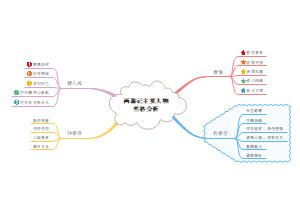
西游记主要人物性格分析
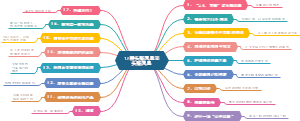
17种头脑风暴法
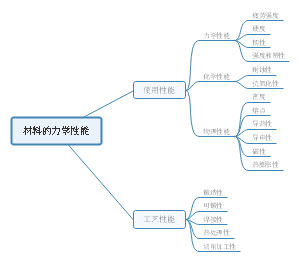
材料的力学性能
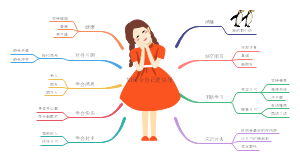
如何令自己更快乐
头脑风暴法四个原则
思维导图
Nitinol
Austenite
parent phase : 5peaks 100, 110*,200, 211*,300*
Simple cubic(B2,Pm3m)
stable at high temperature
orderd
Martensite
daughter phase: 9peaks 001,011,002,111,020,111,202,220,104
Monoclinic (B19', P21/m)
Inherits order
Stable at low temperatures
R-Phase: Another Martensite
P3,α ~ 89°
奥氏体-热诱导或应力诱导-R相-降温-奥氏体-马氏体
Austenite-to-Martensite Transformation
Homogeneous lattice strain
Inhomogeneous lattice-invariant strain
Twinning
Twinning,Twin Plane
shape memory
Thermal memory:单晶马氏体-加热-奥氏体-冷却-孪晶马氏体-变形-单晶马氏体
Temperature
hysteresis: T 升高, As -Af;T降低,Ms-Mf
MEASUREMENT
DSC: Differential Scanning Calorimetry
Bend-Free Recovery: Cool sample and bend to 2% strain, per ASTM F2082
Increasing Strain :2% 保持不变,>2%,Af 同步提升
Increasing Load Increases: As/Af 与 load 成正比
DSC和BFR比较:
DSC-As < BFR-As <BFR-Af <DSC-Af
DSC更稳定
Superelasticity
Mechanical memory:STRESS-INDUCED MARTENSITE
奥氏体-变形-单晶马氏体-回弹-奥氏体
TENSILE BEHAVIOR
Af> Test Temperature , 孪晶马氏体- 过渡-单晶马氏体
Af< Test Temperature, 奥氏体-过渡-单晶马氏体
Af<< Test Temperature ,奥氏体
Stress vs Test Temperature
T升高,UTS 降低,上平台升高,下平台(维持0-升高)
Remnant Strain vs. Temperature
dσ/dT= −ΔH/(ε0*T)Clausius-Clapeyron
Superelastic Window , Remnant Strain 接近0%。
提高Af ,Superelastic Window右移。反之,左移
Modulus vs. Test Temperature
Modulus vs. Test Temperature :低温(如0℃以下)时保持不变,超过某温度急剧升高
Elongation vs. Test Temperature
Elongation vs. Test Temperature:~100℃保持恒定,大于100℃急剧降低
Af 的影响
UPS和LPS,随Af降低而升高(测试温度37度)
UP长度,随着Af升高而变短。(奥氏体完全应力诱导马氏体的稳定性)
△T=Tt-Af 的影响
UPS和LPS,随△T升高而升高,斜率与Clausius-Clapeyron公式相关
Deformation Mode 影响
Effect of Deformation Mode:有影响,纯弯曲UPS/LPS比拉伸高
法规
ASTM F2005: Terminology
ASTM F2063: Wrought Nitinol
ASTM F2004: DSC Testing
ASTM F2082: BFR Testing
ASTM F2516: Nitinol Tensile Testing
ASTM F2129: Corrosion Testing
ASTM F2633: Nitinol Tubing
ASTM E3097:Constant Force Thermal Cycling
ASTM E3098: Free Recovery