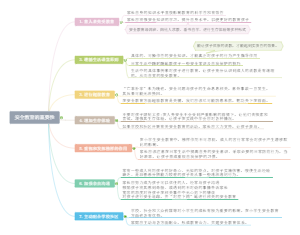
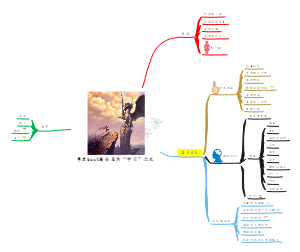
The study of primates provides scientifically based perspectives that allow us to understand the behavior of ancestors and the abilities of existing close relatives.
Paleoanthropology
Studying the Origin, Ancestors, and Early Representatives of Modern Human Species
Skeletal Biology & Osteology
Forensic Anthropology
Bioarchaeology
What makes you a human?
What made our ancestors humans?
Brain capacity, tool usage, hunting, speech, etc
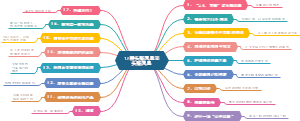
Evolution
In biology, it refers to the changes in genetic traits within a population between generations.👀
natural selection
Darwin's Theory of Evolution
⁉️ Reflection: Research only stays at the individual level, without paying attention to the role of populations in biological evolution. Darwin cannot yet provide a scientific explanation for the nature of genetics and variation.
Its main contents can be summarized as: natural selection, survival of the fittest. The fittest survive, and the unfit is eliminated.
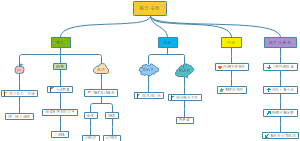
Evolutionary mechanism
Genotype
It is the basis for generating phenotypes (external manifestations).
Gene flow
When the ethnic groups are not geographically or culturally hindered, the genetic variation will migrate through some individuals, causing the genes to spread between different groups.
genetic drift
It refers to the random change of the frequency of middle genes in the population between each generation.
Genetics
DNA
The base is located at the center, surrounded by a double helix formed by phosphate and sugars on the outside.
Two concepts: locus and alleles
Chromosome
Of the 23 pairs of human chromosomes, 22 are autosomes, and the remaining pair are sex chromosomes composed of X chromosomes and X chromosomes or X chromosomes and Y chromosomes.
RNA
mRNA, tRNA, rRNA
Protein
Evolutionary variation
gene mutation
It may be harmful to the individual, or beneficial to the individual, or both.
For example, people with a sickle-type red blood cell disease gene are more resistant to malaria. For example, people with a sickle-type red blood cell disease gene are more resistant to malaria.(Labs 1-2)
After several generations of inheritance, natural selection affects individual genotypes
Lab2: Population Genetics
Evolutionary fitness and genetic changes
Sickle cell trait and malaria
Variation
Environmental adaptation
For example, resistance to sickle cell disease and malaria
NS structures species adaptations
Adaptive Developmental Responses
Cultural Responses
Adaptive Responses
Cold Stress
Thermal environment
High Altitude Hypoxia
solar radiation
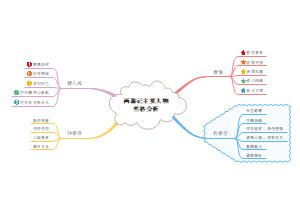
Race
It is a group of people with some common genetic characteristics in their physique.
The race is divided by skin color, eye color, eye shape, hair color, hair quality, nose shape, thickness of lips, head shape, face shape and other characteristics.
Treat race as a classification level, such as equating race with subspecies.
History of a flawed concept
Racism
It is a self-centered attitude that believes that racial differences determine the historical and cultural development of human society, and that the group to which it belongs, such as race, nation or country, is superior to other groups.
Reflection: Hawking suggests in his book that wealthy individuals can soon choose to edit their own and their children's DNA, turning them into superhuman beings with stronger memory, disease resistance, intelligence, and longer lifespans. Will this violate the laws of race and natural evolution?