导图社区 语言学导图笔记
- 98
- 6
- 2
- 举报
语言学导图笔记
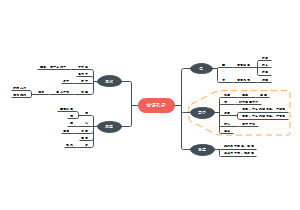
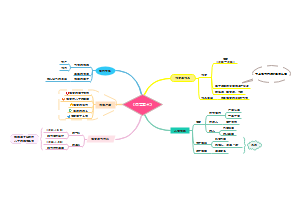
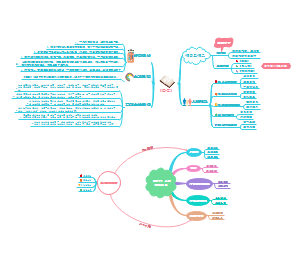
语言学是以人类语言为研究对象的学科,探索范围包括语言的性质、功能、结构、运用和历史发展,以及其他与语言有关的问题。下图整理了单词、单词的构成、词汇变化等方面内容,值得收藏学习哦!
编辑于2021-07-20 17:03:57- 单词的构成
- 相似推荐
- 大纲


语言学第三章
3.1 What Is Word?
WORD is a unit of expression that native speakers may recognize by intuition, whether it is expressed in spoken or written form.
3. 1. 1 Three Senses of"WORD
(1) A physically definable unit
2) Word both as a general term and as a specific term
(3) A grammatical unit
3. 1. 2 Identification of Words
(1) Stability
(2) Relative uninterruptibility
(3)A minimum free form
This was first suggested by Leonard Bloom field(1933). He advocated that (i) sentence should be treated as "the maximum free form"and(ii)word"the minimum free form. Word is the smallest unit that can be used, by itself, as a complete utterance , as possibly in the following exchange of utterances
3. 1. 3 Classification of Words
(1) Variable and invariable words
INVARIABLE WORDS refer to those words such as since, when, seldom through, hello. They do not hawe inflective endings.
As for VARIABLE WORDS, they may have inflective changes. That is, the same word may have different grammatical forms but part of the word remains relatively constant.
2) Grammatical words and lexical words
Those which mainly work for constructing group, phrase, clause, clause complex, or even text are grammatical words such as, conjunctions prepositions, articles, and pronouns
And those which mainly work for referring to substance, action and quality, such as nouns, verbs, adjectives, and ad are lexical word.
Lexical words carry the main content of a language while grammatical ones serve to link together different content parts.
(3) Closed-class words and open-class words
A word that belongs Chapter 3 Lexicon to the CLOSED-CLASS is one whose membership is fixed or limited such as pronouns, prepositions, conjunctions, articles, and others. One cannot easily add or deduce a new member
However, the OPEN-CLASS is one whose membership is in principle infinite or unlimited. When new ideas inventions, or discoveries emerge, new members are continually and constantly being added to the lexicon Nouns, verbs, adjectives and many adverbs are all open-class Items
(4) Word class: This is close to the notion of PARTS OF SPEECH in traditional grammar.
i. Particles(助词)
PARTICLES include at least the infinitive marker"to"(even though it has he same spelling form as the preposition to, it really has nothing in common with to or any other word class), the negative marker not, and the subordinat units in phrasal verbs, such as get by (to continue ones way of life), do up (to fasten), look back(to remember)
助词( partical)至少包括动词不定式标记"to”(尽管和介词to具有相同的拼写形式,但助词和介词及其他词类没有什么共性), 否定标记“or”和短语动词的从属单位,例如 get by(过活),doap(捆好), look back(回忆)。
ii. Auxiliarie(助动词)
a separate word class rather than verbs, owing to their unique properties.
iii. Pro-form(代词形式)
In traditional grammar, pronoun is the only word class which can function as a substitute for another item. To be more exact, it refers to the closed sets of items which can be used to substitute for a nominal group or a single noun.
In order to refer collectively to the items in a sentence which substitute for other items or constructions, some linguists have advised to regard PRO-FORM as a separate word class.
iv. Determiners (限定词)
American English. It refers to those words which are used before the noun (including its pre-modifiers like adjectives) acting as head of a nominal group and which determine the kind of reference the nominal group has: for example whether it is definite (like the) or indefinite (like a(n)), partitive(like some) or universal (like all)
According to Quirk, et al. (1985: 253), there are three sub-classes of DETERMINERS: prc-determiners, central determiners, and post-determiners.
Pre-dctcrminers include all. both. half. double three times. one-third. one-fifth and the like
The most common and typical central determiners are the detinite and indefinite articles. Other central determiners are this, that, these, those, every each, some, any, no, either, neither, my, our, your, his, her, its, their, etc
Post-determincrs include cardinal numerals, ordinal numerals, general ordinals like next, last, past, (an other, additional; and other quantifiers like many, (a) few, several, much, little, a lof of, plenty of, a great deal of, a great number of, ctc
3.2 The Formation of Word
3. 2. 1 Morpheme and Morphology
MORPHEME is the smallest unit of language in terms of the relationship between expression and content, a unit that cannot be dividcd into further smaller units without destroying or drastically altering the meaning, whether it is lexical or grammatical.
The systematic study of morpheme is a branch of linguistics called MORPHOLOGY, which studies the internal structure of words, and the rules by which words are formed.
3. 2. 2 Types of Morphemes
(1) Free morpheme and bound morpheme
Those that may occur alone that is, those which may make up words by themselves, are FREE MORPHEMES. For example, dog, nation and close are free morphemes. And such words are called mono-morphemic word. So all mono-morphemic words are free morphemes. Morcover, there are poly-morphemic words, which consist wholly of free morphemes are called COMPOUNDS.
They must appear with at least another morpheme and are called BOUND MORPHEMES.
(2)Root, affix and stem. Poly-morphemic words other than compounds may be divided into roots and affixes
ROOT is the base form of a word that cannot be further be analyzed without destroying its meaning
A root may also be frec or/and bound. First, free root morphemes are those hat can stand by themselves and are the base forms of words.
Second, there are relatively a few bound root morphemes in English, such as-ceive in receive, perceive, and conceive; -mit in remit, permit, commit, and submit: -tain in retain, contain, and maintain; -(ur in incur, recur, and occur, ctc
Third, a few English roots may have both free and bound variants. For instance, sleep (/sli: p/) and child (/tail/)are free root morphemes, whereas slep- in the past tense form of sleep, i. e. slept, and child- in the plural form of child, namely children, cannot exist by themselves, and are hence bound
AFFIX is a collective term for the type of morpheme that can be used onl when added to another morpheme (the root or stem), so affix is naturall bound. Affixes in a language are limited in number, and are generally classified into three subtypes, namely, prefix, suffix, and infix, depending on their position around the root or stem of a word.
(3) Inflectional affix and derivational affix
First, inflectional affixes are generally less productive than derivation affixes: they very often only add a minute or delicate grammatical function to the stem. Second, inflectional affixes do not change the word class of the word they attach to, such as flower, flowers, whereas derivational affixes might or might not. Derivational affixes often change the lexical meanings.
However, derivational affixes are very productive in making new words.
Whether one should add inflectional affixes or not depends very often on the other factors within the phrase or sentence. boy in the sentence. However, derivational affixes are more often based on simple meaning distinctions.
In English, inflectional affixes are mostly suffixes, which are always word final (e. g. drums, walks, Mary's). But derivational affixes can both be prefixes (e. g. suburban, depart, online)and suffixes(e. g. slaver, teacher, work able)
3. 2. 3 Inflection and Word Formation
there are two fields that Morphology is concerned with:
(i)the study of INFLECTIONS(also called INFLECTIONAL MORPHOLOGY), as exemplified with bark+-s
(ii) the study of WORD- FORMATION (often referred to as LEXICAL or DERIVATIONAL MORPHOLOGY), as in purify (pur(e)+-ify
(1) Inflection. INFLECTION indicates grammatical relations by adding inflectional affixes, such as number, person, finiteness, aspect and case; and when inflectional affixes are added, the grammatical class of the stems(to which they are attached) will not change.
(2) Word formation
WORD-FORMATION, in its restricted sense, refers to the process of how words are formed. It can be further divided into two sub-types: the compositional type( COMPOUND)and the derivational type(DERIVATION)
i. Compound
The term COMPOUND refers to those words that consist of more than one lexical morpheme, or the way to join two separate words to produce a single form COMPOUND这个术语指那些由两个或两个以上的词素构成的词,或是指由两个单独的词连接起来构成一个新的形式的构词方法,如 icecream(冰淇淋), sunrise
Compounds can be further divided into two kinds: the endocentric compound and the exocentric compound
The head of a nominal or adjectival endocentric compound is de-verbal; that is, it is derived from a verb. Consequently, it is also called a verbal compound or a synthetic compound. Usually, the first member is a participant of the process verb.
The exocentric nominal compounds are formed by V+N, V+A, and V+ P, whereas the exocentric adjectives come from V+N and V+ A
通常情况下,位于右边的成分不仅决定整个复合词的类别,而且决定复合词的主要意义。在这个意义上,右边的成分是中心成分。
11. Derivation
DERIVATION shows a relationship between roots and affixes.
(a)Word class changed
(b) Word class unchanged
3. 2. 4 Sememe vs. Morpheme, and Phoneme vs. Morpheme
(1) Sememe vs morpheme
SEMEME is the smallest component of meaning
As for the relationship between sememe and morpheme, there are five mapping and non-mapping occasions 义素和语素之间有五种映射( mapping)和非映射(non- mapping)的情况
i. One morpheme vs. one sememe
ii. One morpheme vs. more than one sememe
“a” in await, awash and asymmetry
iii. One semcmc vs. more than one morpheme
iv. Morphemes that have no specific sememe
“en” in enjoy
v. Function changes in both sememe and morpheme without morpheme change
Run
(2)Morpheme vs. phoneme
MORPHOPHONOLOGY(MORPHONOLOGY 形态音系学MORPHOPHONEMICS (MORPHONEMICS形态音位学).
This is a branch of linguistics that refers to the analysis and classification of the phonological factors that affect the morpheme forms,
and, correspondingly, the morphological factors that affect the phoneme forms.
So, it studies the interrelationship between phonology and morphology.
i. A single phoneme vs. a single morpheme
ii. A single morpheme vs. multiple phoneme
Thus, the syllabic (phonological) structure of a word and its morphemic morphological) structure do not necessarily correspond.
iii. Allomophone(语素变体)
因此,正如美国结构主义学家认为的,语素跟音素一样是一个抽象单位,但处于一个不同的语言层面上。语素由一串音素组成,或者用于表达词汇意义或者帮助建构语法结构。书写语素时,语素要放在大括号}之内。以表复数的语素为例,可以用这个形式表达:(-s~-z~-iz -al~-i:~-n~-o
Thus, morpheme, like phoneme, as held by American structuralists, is an abstract unit, but at a different linguistic level. It consists of a sequence of phonemes and cithcr expresses lexical meaning or helps construct grammatical structure. In morphemic transcription, morphemes are put between braces like () Take the plural morpheme for example, it can be expressed in the form of ...
iv. Morphemic conditions(语素的限制)
Morpheme shapes vary according to both phonological conditions and to the conditions of their own. 语素形式既受音位的限制又受其自身的限制。
(a) Phonologically conditioned(语素的限制):The form or shape of morphemes may be conditioned by pl monologic factors. Compare the following two sets of words
The negative morpheme is realized as in-or im-in the two sets respectively The reason is very simple, because the change of/n/(an alveolar nasal) to/ (a bilabial nasal) due to /p/ after it. Therefore, the ASSIMILATION of/n/is said to be conditioned by /p/.
Opposite to assimilation, there is DISSIMILATION, which refers to the influence of one sound segment upon the articulation of another, so that the sounds become less alike, or different. 同化( Assimilation)。与同化相对的是异化( Dissimilation),异化指的是一个音段影响了另一个音段的发音,结果这些音变得不同或不太相近。
(b)Morphologically conditioned(形态的限制):Morphemes can also be influenced by morphological factors. In doing so three requirements should be met
First, all the allomorphs should have the same sememe, for instance, the plural morpheme(-s--z--1z--al--i: -n-o
Second, all the allomorphs should be in COMPLEMENTARY DISTRIBUTION. For instance, the plural morpheme -n) occurs only with a li lmited number of words such as ox
hird, allomorphs that have the same sememe should occur in parallel formation.
iv. Morphemic conditions(语素的限制)
Morpheme shapes vary according to both phonological conditions and to the conditions of their own. 语素形式既受音位的限制又受其自身的限制。
(a) Phonologically conditioned(语素的限制):The form or shape of morphemes may be conditioned by pl monologic factors. Compare the following two sets of words
The negative morpheme is realized as in-or im-in the two sets respectively The reason is very simple, because the change of/n/(an alveolar nasal) to/ (a bilabial nasal) due to /p/ after it. Therefore, the ASSIMILATION of/n/is said to be conditioned by /p/.
Opposite to assimilation, there is DISSIMILATION, which refers to the influence of one sound segment upon the articulation of another, so that the sounds become less alike, or different. 同化( Assimilation)。与同化相对的是异化( Dissimilation),异化指的是一个音段影响了另一个音段的发音,结果这些音变得不同或不太相近。
(b)Morphologically conditioned(形态的限制):Morphemes can also be influenced by morphological factors. In doing so three requirements should be met
First, all the allomorphs should have the same sememe, for instance, the plural morpheme(-s--z--1z--al--i: -n-o
Second, all the allomorphs should be in COMPLEMENTARY DISTRIBUTION. For instance, the plural morpheme -n) occurs only with a li lmited number of words such as ox
hird, allomorphs that have the same sememe should occur in parallel formation.
3.3 Lexical change
3.3. 1 Lexical Change Proper(特有的词汇变化)
(1) Invention(发明法): Technological and economic activities are the most important and dynamic in modern human life, many new lexical items come directly from them, such as Kodak, Coke, nylon, Xeros Frigidaire, granola, and others to satisfy the e ncw situations
(2)Blending(混成法): BLENDING is a relatively complex form of compounding, in which two words are blended by joining together the initial part of the first word and the final part of the second word, or by only joining the initial parts of the two words.
Fusion: Blending can also occur at a higher cognitive Ievel. From the similarity in the two expressions she was on the verge of a crackup and she was on the verge of breakdown, the confusion of crackup and breakdown leads to the coining of crackdown. The same is true of riffle (ripple +shuffle), stample (trample stamp on ) and pinwheels (pinwheel +spin ) This sort of blending is particularly called FUSION(熔合法)
(3) Abbreviation(缩写词): Many English words have come into being through ABBREVIATION in their etymological history. This phenomenon is also called CLIPPING
4) Acronym(略缩语): ACRONYM is made up from the first letters of the name of an organization, which has a heavily modified head word
(5 Back-formation(逆构词法): BACK-FORMATION refers to an unusually abnormal type of word- formation where a shorter word is derived by deleting an imagined affix from a longer form already in the language.
However, some people would rather treat this process as class shift.
(6) Analogical creation(类推构词): The principle of ANALOGICAL CREATION can account for the co- existence of two forms, regular and irregular, in the combination of some English verbs. For instance, people know quite well that the past tense suffix for English verb should be-ed, and they tend to apply it to all verbs. As a result, we have both the old forms and the new forms for many English verbs.
Analogical creation is to be distinguished from overgeneralization, the latter being regarded as a mistake in the use of language, as in goed(went ), teached (taught)
(7) Borrowing(借词): English in its development has managed to widen its vocabulary by BORROWING words from other languages. Greck, Latin, French, Spanish Arabic and other languages have a played an active role in this process.
i. Loanwords(借词). The borrowing of LOANWORDS is a process in which both form and meaning are borrowed with only a slight change, in some cases to the phonological system of the new language that they enter.
ii. Loanblend(混合借词). LOANBLENDING is a process in which part of the form is native and the rest has been borrowed, but the meaning is fully borrowed. For example, the first parts of the words coconut and China-town came from Spanish and Chinese respectively, but the second parts are of the English origin
iii. Loanshift(转移借词). LOANSHIFT is a process in which the meaning is borrowed, but the form is native. The Italian ponte means "bridge "in the literal sense, when it refers to a type of card game, the meaning was borrowed from English. The English word arti ficial satellite is also a case of loanshift from the Russian sputnik
iv. Loan translation(翻译借词). This is a special type of borrowing, in which each morpheme or word is translated in the cquivalent morpheme or word in another language.
3.3.2 Morpho-syntactical Change(形态句法变化)
(1) Morphological change(形态变化): The present section is on the in flectional side, i. e. the form of inflectional affixes.
(2) Syntactical change(句法变化): Fusion or blending is also used in making new phrasal and sentential structures
3.3.3 Semantic Change
(1) Broadening(词义扩大): BROADENING is a process to extend or elevate the meaning rom Its originally specific sense to a relatively general one.
(2) Narrowing(词义缩小): Narrowing is contrary to broadening: the original meaning of a word can be narrowed or restricted to a specific sense.
(3) Meaning shift(词义转移):All semantic changes involve meaning shift. Here MEANING SHIFT is understood in its narrow sense, that is, the change of meaning has nothing to do with generalization or restriction as mentioned above. What makes the meaning of a word different is its departure from its original domain as a result of its metaphorical usage(隐喻用法).
(4) Class shift(词性转换): By shifting the word class one can change the meaning of a word from a concrcte entity or notion to a process or attribution. This process of word formation is also known as ZERO-DERIVATION(零派生), or CONVERSION(变换).
(5) Folk etymology(俗词源): FOLK ETYMOLOGY refers to the change of the form of a word or phrase resulting from an incorrect popular notion of the origin or meaning of the term or from the influence of more familiar terms mistakenly taken to be analogous.
3. 3. 4 Phonological Change
Phonological change refers to changes in sound leading to changes in form
here are some tactors that contribute to the formation of new pronunciation
(1) Loss(脱落)
The LOSS OF SOUND can first refer to the disappearance of the very sound as a phoneme in the phonological system.
2) Addition(添加)
Sounds may also be added to the original sound sequence.
(3) Metathesis(换位)
METATHESIS is a process involving a change in the sequence of sounds Metathesis had been originally a performance error, which was overlooked and accepted by the speech community.
(4) Assimilation
ASSIMILATION refers to the change of a sound by the influence of an adjacent sound, which is more specifically called“ contact”or“ contiguous”assimilation. The assimilation processes at work could be explained by the theory of least effort"; that is, in speaking we tend to use as little effort as possible so that we do not want to vary too often the places of articulation in uttering a sequence of sounds. Assimilation takes place in quick speech very often. For instance, in expressions such as immobile, irrevocable, impolite,
3. 3. 5 Orthographic Change
Changes can also be found at the graphic level. Since writing is a recording of the sound system in English, phonological changes will no doubt set off graphic changes.