导图社区 企业结构与国际贸易
- 25
- 0
- 0
- 举报
企业结构与国际贸易
这是一篇关于就企业结构与国际贸易思维导图,介绍详细,描述全面,希望对感兴趣的小伙伴有所帮助!
编辑于2023-12-29 16:52:02
- 资料分析 - 平均数问题考点
在资料分析中,平均数问题频繁出现,是考试的重点考察内容。该模板全面且系统地梳理了平均数问题的各个考点,为考生构建起清晰的知识体系。现期平均数是基础考点,模板中不仅给出了其公式定义“平均数 = 总数/个数”,还详细列举了常见的考察形式,如直接求平均数、求总数、求个数,同时提供了速算技巧——截位直除,帮助考生快速准确地得出答案。基期平均数的讲解同样细致,明确公式定义后,指出其速算技巧类似于基期比重的计算,让考生能够触类旁通,提高解题效率。两期平均数比较是考生容易出错的地方,模板通过清晰的升降判断规则“a > b 上升,a < b 下降”,帮助考生准确判断平均数的变化趋势,避免失误。平均数增长率和平均数增长量这两个考点也有深入剖析。借助万兴脑图制作的这一思维导图模板,考生可以在备考过程中快速梳理知识点,查漏补缺,加深对平均数问题考点的理解和记忆。在考试时,能够迅速调用相关知识,运用速算技巧,提高答题速度和准确率。它是考生提升资料分析成绩、实现考试突破的得力助手,助力考生在竞争激烈的考试中脱颖而出。
- 大学计划和规划
大学计划和规划,大学四年,是人生中一个充满无限可能与挑战的宝贵阶段。为即将或正在经历这一阶段的学子们提供一份详尽而实用的指南,帮助大家从入学之初就树立明确的目标,制定合理的计划,逐步构建起扎实的专业知识体系。
- 经济学基础(2025中级经济师)
经济学基础(2025中级经济师),涵盖广泛的经济学基础知识,内容结构清晰,分为多个部分或章节,针对考试的重点和难点,进行有针对性的学习和练习,提高解题能力和应试技巧。
企业结构与国际贸易
社区模板帮助中心,点此进入>>
- 资料分析 - 平均数问题考点
在资料分析中,平均数问题频繁出现,是考试的重点考察内容。该模板全面且系统地梳理了平均数问题的各个考点,为考生构建起清晰的知识体系。现期平均数是基础考点,模板中不仅给出了其公式定义“平均数 = 总数/个数”,还详细列举了常见的考察形式,如直接求平均数、求总数、求个数,同时提供了速算技巧——截位直除,帮助考生快速准确地得出答案。基期平均数的讲解同样细致,明确公式定义后,指出其速算技巧类似于基期比重的计算,让考生能够触类旁通,提高解题效率。两期平均数比较是考生容易出错的地方,模板通过清晰的升降判断规则“a > b 上升,a < b 下降”,帮助考生准确判断平均数的变化趋势,避免失误。平均数增长率和平均数增长量这两个考点也有深入剖析。借助万兴脑图制作的这一思维导图模板,考生可以在备考过程中快速梳理知识点,查漏补缺,加深对平均数问题考点的理解和记忆。在考试时,能够迅速调用相关知识,运用速算技巧,提高答题速度和准确率。它是考生提升资料分析成绩、实现考试突破的得力助手,助力考生在竞争激烈的考试中脱颖而出。
- 大学计划和规划
大学计划和规划,大学四年,是人生中一个充满无限可能与挑战的宝贵阶段。为即将或正在经历这一阶段的学子们提供一份详尽而实用的指南,帮助大家从入学之初就树立明确的目标,制定合理的计划,逐步构建起扎实的专业知识体系。
- 经济学基础(2025中级经济师)
经济学基础(2025中级经济师),涵盖广泛的经济学基础知识,内容结构清晰,分为多个部分或章节,针对考试的重点和难点,进行有针对性的学习和练习,提高解题能力和应试技巧。
- 相似推荐
- 大纲
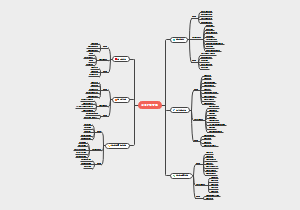




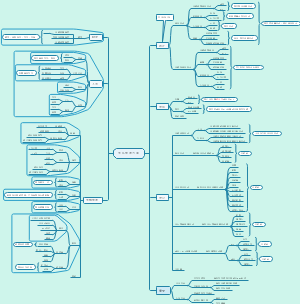
The Structure of Firms and Internal Environment
structure of firms
definition
Organisations exist to add value to inputs and create outputs that consumers will purchase
There are many different types of products, services and consumers
Therefore, different types of organisations exist to fulfill customers requirements, deal with differences in supply etc
classification for organizations
Size
Ownership
Legal form
Sole Trader (Not a legal form)
Most basic form of organisation
Not a legal form of organisation – the individual and the organisation are indistinguishable
Individual is responsible financially and legally for any debts, outstanding unfulfilled contracts etc.
Liability for the above is unlimited
If the business owes money and there is insufficient money in the business itself, then the private individual is liable
Very easy to establish
Difficult to know how many organisations exist; in the UK, VAT (Value-Added Tax) returns are used to measure the number
No obligation to file annual accounts
Sole trader can have employees (despite the name)
Many fail after a short time due to their lack of management expertise and access to financial resources
Examples – hairdressers, newsagents, window cleaners
Partnerships
Two or more people combine resources and form a partnership
In the UK, The Partnership Act 1890 defines a partnership as “the relation which subsists between persons carrying on a business with a view to profit”
Contract exists between the two parties, terms include:
The amount of capital subscribed by each partner
How profits will be determined and allocated between partners
Salary allocation for the partners
Procedure for dissolving the partnership
Prior to 2000, partnerships did not have a legal entity and therefore each partner had unlimited liability (as with the sole trader)
Limited Liability Partnerships Act 2000
Allows limited liability to partnerships in specific circumstances
Examples – solicitors, accountants etc.
Limited companies
Limited in this instance meaning that the owners no longer have unlimited liability for the debts of their companies
This is covered in the UK by the Companies Act 2006
In the US, these are known as incorporated companies(股份有限公司)
Creating the limited company in the UK Two legal documents required:
Memorandum of Association(公司章程、公会规约)
Name of the company – must end in Limited (for the UK)
A statement regarding the limited liability of the owners, including whether they would be responsible for any outstanding debts if the company was wound up
Objects clause(目的条约) – “this specifies the scope within which the company can exercise its separate legal personality”
Regulates the company’s association with the outside world
Articles of Association(公司章程)
Regulates the internal administration of the company
This includes elements such as
Issue and transfer of shares
Rights of shareholders
Meetings of members
Appointment of directors
Procedures for producing and auditing accounts
在英美法国家或地区,公司有两份章程性文件,即Memorandum of Association和Articles of Association,共同简称为M&AA,前者一般译为组织大纲,是公司注册时向政府注册机构提交的公司章程,其内容比较简单,通常只包括公司名称、公司组织形式、公司注册地址、股份数额、股票种类等基本信息,有些国家只需公示这份文件,后者一般译为章程,主要规定公司的治理规则,侧重于公司内部规章。
Company administration
All companies have directors(董事) who are selected by the shareholders to run the company
All companies must have a secretary who is responsible for specific tasks including filing reports and accounts with the Register of Companies
Shareholders(股东)
Own the company, therefore can exercise control over it
Company reports and accounts
The annual report has to be produced
All companies that have a share capital must make a return to the Register of Companies
This includes an audited Balance Sheet(经审计的资产负债表)and Profit and Loss account(损益账户) that gives a true representation of the transactions(交易) for that year
Liquidation and receivership (清算和接管)
Liquidation - ”termination of a business operation by using its assets to discharge its liabilities”
清算-以其资产清偿负债终止业务
Receivership(破产接管) – “a court action that places property under the control of a receiver during litigation(法律诉讼) so that it can be preserved for the benefit of all”
the state of property that is in the hands of a receiver; "the business is in receivership"
Public Limited Companies (PLC)
definition
Must have a minimum share capital of £50,000, compared to £100 of a private limited company
Must have a minimum of two directors
A PLC can offer its shares and debentures(公司债券)to the public
Advantages
Can quickly gather a large amount of capital (finance) from the public which is conducive (helpful) to the growth of the company
Company’s shares can be freely transferred after the listing on the Stock Exchange (listing on the Stock Exchange means that the Stock Exchange has approved the company based on financial and other data provided that it can trade its shares. Any person can purchase these shares and they can be transferred to other people or / and companies)
Disadvantages
The company's ability to resist risks (market – e.g.competition, change of customer preferences etc.) is poor because most of the time the majority of shareholders lack a sense of responsibility. This is improving but only on a small scale
Large shareholders – because they hold many shares, their voting influence is so strong that the smaller shareholders power is very small / weak
The company's trade secrets are easily exposed compared to a private company because the rules of the Stock Exchange are that any changes to the company must be made public for the benefit of all shareholders
quangos(半官方机构)
The UK government's definition in 1997 of a quango was: A body which has a role in the processes of national government, but is not a government department or part of one, and which accordingly operates to a greater or lesser extent at arm's length from Ministers.
In effect it is a semi-public administrative body outside the civil service / public sector but receiving financial support from the government, which makes senior appointments to it.
They are supposed to do some practical job better than a government department could e.g. One UK example is the Forestry Commission, which is a non-ministerial government department responsible for forestry in England.
Commercial and quasi-commercial(类商业) organisations operating in the public sector
State-owned Enterprises (SOEs):(国有企业)
Often referred to as nationalised industries(国有化企业)
Most countries have a state-owned industry sector
In the UK, the majority have been privatised(私有化)
e.g. telecommunications(电信), public utility providers(公共事业供应商) such as power(电力), water, train services etc.
Co-operative societies(合作协会)
Date back to the 19th century in the UK
Aim was to provide cheap food to their members and to share any profits
Can be producer based or retail based
Largest in the UK – The Co-operative Group
Areas include food (largest sector), insurance and banking – The Co-operative Bank (which will be covered in Topic 11– Corporate Responsibility)
Charities and voluntary organisations
In the UK, charities are registered with the Registrar of Charities
Main purpose is to
provide charitable support for various groups in society (e.g. Red Cross, Oxfam) or to
invest in research e.g. Cancer Research or British Heart Foundation
However, the organisation of these charities can be complex due to their dual roles of both raising money and distributing aid/funding
Employees often work as volunteers and do not receive any financial reward
franchise organisations (特许经营组织)
Franchisor (授予特许者)
owns the franchise brand name, usually a public or private limited company
Franchisee (特许经营人)
buys the right to use the franchise from the franchiser (more likely to be a sole trader)
Examples
Domino’s Pizza, Bodyshop, McDonald’s
franchise指特许经营权,是一种权利。franchisee指特许经营者,被授予特许经营权的人,可以理解为“加盟店”。franchiser和franchisor是一样的意思,只是拼写不同,指“能够授予他人特许经营权的人或组织”。简单来说,franchise是一种权利,franchisee是权利的被授予者,franchise是授予他人权利的人/组织
Industry sector
internal environment
definition
The relationship between the external environment (covered in topic 2) and the internal environment is key to the way an organisation functions
Management within organisations needs to be aware of the implications of changes in their external environment and how these can be utilised internally, based on the resources they have available to them
Organisation charts and organisational structures
Worthington states that, whichever organisational structure is chosen, the following should be achieved
Achieve efficiency in the utilisation of resources
Provide opportunities for monitoring organisational performance
Ensure the accountability(责任) of individuals
Guarantee co-ordination(合作) between the different parts of the enterprise
Provide an efficient and effective means of organisational communication
Create job satisfaction, including opportunities for progression
Adapt to changing circumstances brought about by internal or external developments
Organisation Chart:“defines the formal pattern of role relationships and the interactions between roles and individuals occupying those roles”
Worthington classifies individual authority relationships(个人权威关系) into the following categories:
Line relationships(垂直管辖关系)
Occur when authority flows vertically downward through the structure from superior to subordinate (e.g. managers-section leader-staff)
Staff relationships are created when senior personnel appoint assistants who normally have no authority over other staff but act as an extension of their superior
Functional relationships(职能关系)
Functional relationships are those between specialists (or advisors) and line managers and their subordinates (e.g. when a specialist provides a common service throughout the organisation but has no authority over the users of the service). E.g.. Personnel or IT
Lateral relationships(横向关系)
Lateral relationships exist across the organisations, particularly between individuals occupying equivalent positions within different departments or sections (e.g. committees, heads of departments, section leaders)
group
Grouping by organisational activities
Functional organisation – focused around the functional activities
By product or service – certain groups and individuals are responsible for certain product lines
Divisional structure(部门结构) – an organisation is split into individual divisions that are self-contained
Possibly each division containing its own functional areas
functional areas
definition
“The functional areas of finance, operations management, HRM etc. and the individuals who are allocated to them, are central to the process of transforming organisational inputs into output.
The management of these functions and of the relationships between them will be a key factor in the success of the enterprise and in its ability to respond to external demands for change“
marketing(市场营销)
“Social and managerial process by which individuals and groups obtain what they need and want through creating and exchanging products and values with others”
operations management (运营管理)
“Operations is concerned with the transformation of a variety of inputs such as information, people, materials, finance and methods into a variety of outputs such as goods, services, profit, customer and employee satisfaction”
finance & accounting
Raising, controlling management and reporting of all financial aspects of an organisation
Split into 3 key areas
Financial management
Management accounting
Financial reporting
(note implication – is mainly for larger companies, Private and public limited companies)
human resource management (HRM)
“Human Resource Management involves all management decisions and actions that affect the nature of the relationship between the organisation and its employees –its human resources”
research and development (R&D)(研究和开发)
“is the name given to the organisational function that is usually the focus for innovation within a firm. R&D can refer to an activity or the name of a specific department. Expenditure on R&D and the size of an R&D department have been used as measures of levels of innovative activity”
In-class Exercise
You just graduated from QMUL/BUPT and had a huge success in selling your very first App on Apple’s App Store. You’re enthusiastic now to set up your own software business.
Summarise the relative advantages and disadvantages of a sole trader, and a limited company within the hi-tech sector before deciding on the specific legal form you would like to choose for your new business.
Advantages
Limited Companies
• Economies of scale
• Global reach
• Vertical hierarchy
• Stable market
Sole Traders
• Responsive, flexible
• Regional reach
• Flat structure
• Organic
• Simple
• Niche finding
Disadvantages
Limited Companies
• Financial requirements
• Human resources
• Relatively complex
• Mechanistic
Sole Traders
• Unlimited liability
• Restrictions in further development
• No clear division of labour
Wrap-Up
Remind students the wide range of other factors that can cause individuals to make different decisions when starting their own business (e.g. personal ambition, access to finance and desire to have full control of their own business)