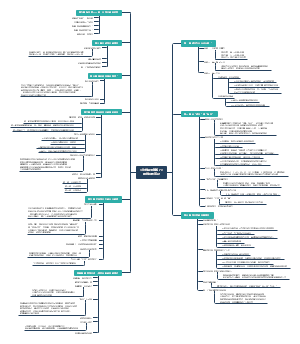
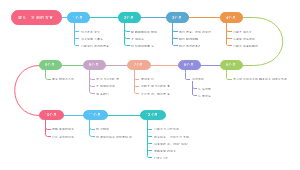
According to Newmark, literal translation ranges from one word to
one word through group to group, collocation to collocation, and
clause to clause to sentence to sentence, including translation of
metaphors and proverbs.
eg.He is said to be a rough diamond.
人们说他是一块浑金璞玉。
Liberal Translation Strategy
Newmark (2001) states that liberal translation reproduces the matter
without the manner, or the content without the form of the original.
eg.Do you see any green in my eyes?
你以为我是幼稚好欺骗的吗?
Literal-Plus-Liberal Translation Strategy
Some sentences have to be translated both literally and liberally because
of bilingual differences. Only thus can they be translated into intelligible
versions. The literal-plus-liberal translation approach is also desirable when
reference books like dictionaries are compiled.
eg.Today a man, tomorrow a mouse.
今天是人,明天是鼠。/今天得志,明天落魄。
Domestication and Foreignization and
Their Application
Studies of Domestication and Foreignization Abroad
In 1813, in Schleicrmacher's essay entitled "On the Different Methods of
Translation".(Schleicrmacher)
In the 1980s, deconstructionism was introduced into translation theories, thus bringing a new
perspective for translation studies. (Lawrence Venuti )
Nida proposes dynamic equivalence. which means that the receptors of the original
message in the receptor language respond to it in the same manner as the receptors in the source
language (Nida, 1964)
Studies of Domestication and Foreignization in China
In 1987. an academic paper entitled "Domestication: the Wrong Track
in Translation"by Liu Yingkai(刘英凯) aroused the first round of dispute
on domestication and foreignization.
Sun Zhili (2002: 44) believes that foreignization will occupy the dominant
place in the 21st century in China.
Cai Ping(蔡平)advocates application of domestication in literary translation.
Xu Jianping(许建平) suggests choosing different translation strategies
according to different types of source texts.
Application of Domestication in Translation
eg.to leave stone unturned 不遗余力
a wet blanket 扫兴的人或事物
a fly in the ointment 美中不足
Application of Foreignization in Translation
eg.Wisdom is better than rubies.
智慧胜过红宝石。
You can′t get blood from a stone.
你不能从石头里挤出血来。
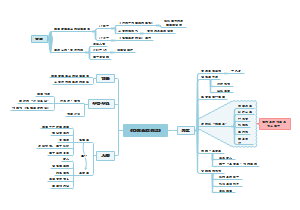
A Comparison of Foreignization and Domestication with
Literal Translation and Liberal Translation
Researchers of the first group regard foreignization and domestication as
counterparts of literal translation and liberal translation.
Researchers of the second group argue that literal translation and free
translation focus on the linguistic level. while foreignization and
domestication involve cultural factors as well as linguistic factors.
Researchers of the third group focus on the category studies. They mostly maintain that
literal translation and free translation are translation methods, while foreignization and
domestication are translation strategies, and that foreignization and domestication as
translation strategies comprise literal translation and free translation,