导图社区 ENVIRONMENT
- 25
- 0
- 0
- 举报
ENVIRONMENT
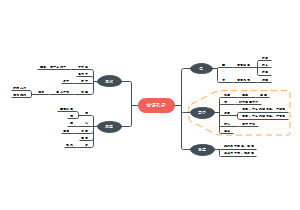
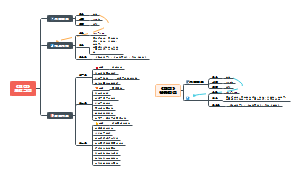
good introduction format(article2)、cause of environmental pollution、obstacles to saving the evironment
编辑于2022-08-25 21:54:06- Environment

- 相似推荐
- 大纲




ENVIRONMENT
good introduction format(article2)
The balance between Singapore's urban development and preservation of its natural environment is again catching the public's attention with question marks hanging over the fate of two forested areas.
cause of environmental pollution
economc growth/human activity
qnestions How far should countries focus on economic development given the serious threat posed by climate change should we give up economic growth for the cause of environmental protection Environmental problems and economic development seem to have been inextricably linked throughout human history. Yet the relationship between environmental harm and economic development is complex and the understanding of this relationship varies among different societal groups. With the impact of climate change escalating, environmentalists believe economic progress should be blamed because the carbon emission comes with it is the main cause of climate change and some even advocate for zero economic development in during the international climate conference could relate to the Paris Agreement or Thunberg for a more grabbing lead-in in order to halt the continuous deterioration of the environment. However, I believe that countries can still focus on economic development as economic growth can be expected without sacrificing the environment and contrary to many have believed, the solution to climate change may lie behind economic development. Insightful stand that could work. First and foremost, the negative economic impact on the environment may be a necessary sacrifice in order to transform the economy into a more affluent one which will empower individuals to adopt a more sustainable lifestyle. Environmental pollution is a price we must pay for the initial development of the economy. This is because the current level of development does not allow us to adopt a clean and green lifestyle. The more sustainable way of life which has less carbon footprint is costly for most of the people. No matter how hard the government tries to promote sustainable living, the choice of how to live is still in its citizens’ hands. When a large portion of the population is still struggling to fill their stomachs and purchasing their houses, they are generally lacking interest in adopting an expensive lifestyle which may bring little benefit which usually cannot be seen by them. Good reasoning but can provide some eg like the pollution of the Ganges river versus the Singapore river that has been cleansed post development The threats posed by climate change seem to be just too far away from them which will cause the lack of agency among people to take actions. However, when the economy has developed to a certain point where most of the people are affluent. They will be more willing to shift to a greener lifestyle despite being costly as when people are wealthy, the additional income contributes to little marginal benefit and hence less satisfaction. That is when people will start to be concerned about the quality of the environment they are living in, such as the quality of air, the rising annual temperature and a series of problems related to climate change. At that time, the impact of climate change will be directly felt by them. Meanwhile, by then they have the ability and sufficient financial resources to make a change. Hence, they will be more willing to live more sustainably. The change of people's mindset and way of life is far more influential than the scenario that only the government advocates environmental protection but receives few responses. Good point but concrete eg? Thus, countries’ aim should be focusing on economic development is to get through the initial period of development which is often pollutive as fast as possible, so that people have more resources to fight with climate change in the future. Key ideas: Strong focus on ec is preferred ec focus is what satisfies human needs and wants e.g. Sub-Saharan region (poorest region), the ec dev is needed for food production for survival (more urgent than evv) e.g. even in urban regions, ppl are unwilling to give up comfort and convenience; capitalism and materialism has become the norm. ec dev also bestower superpowers like the US and China political clout/influence. even though env is also impt it does not seem to hinder our access to immediate needs and wants; in other words, the env problem is too far into the future for most ppl to care furthermore when people are more affluent and educated, and nations are more equipped with new tech, we would naturally deal more with the env issues e.g. China used to be unwilling to participate actively in the Climate Conference agreements to reduce carbon emission, but today after much ec development (becoming the 2nd largest ec now) it has become a leader in the production of renewables technologies that is exported to other countries to help produce cleaner energy. Moreover, economic development does not necessarily have a cost on the environment and economic development and environmental protection can go hand in hand. The government can enact laws and policies to regulate companies’ behavior and discourage waste. This can be done by imposing congestion and emission charges, as in Singapore. Other examples are the introduction of carbon taxes in the Republic of Korea, and increasing block pricing for water, electricity, and other public utilities, as in the Philippines. These countries managed to undergo economic growth with environmental protection policies carried out at the same time. Range of egs to show representation This proves These prove the pollution can be well controlled when developing the economy by implementing laws and regulations. Other than that, the general trend is that as the economy develops, there will be a reformation in the industry structure - more service industries which have much less pollution will appear to displace some of the pollutive production industries. Good add on relating to the current trend This helps the pollution abatement by reducing the channel of carbon emission. Instead of worsening the current situation, the transition of the industry structure may help to alleviate the impact of climate change. Therefore, as the goal of economic progress can be achieved without sacrificing the environment, countries can still emphasize economic development as long as they make sure the environmental impact is taken into account and at the same time adjust the industry structure to progress in the right direction. Could add on the emergence of sustainable production processes like renewable energy and recycled products that allows a win win. e.g. Tesla electric cars and Saudi Arabian Oil Company’s Carbon Capture Technology. In addition, countries can still accentuate economic development as economic growth can facilitate technological research on solutions to climate change. The slowdown in economic development may be helpful in preventing exacerbate climate change. However, it is not a solution in the long run as the situation will be worse as long as carbon emission cannot be totally eliminated or offset. Therefore, the long-term solution lies behind technological breakthrough. Economic growth provides countries with sufficient financial resources to be invested in developing new technology and renewable energy to tackle climate change. For example, the rising economic entity China used to be one of the greatest polluters is now seeking for methods to address climate change. China is building new towns and satellite cities using renewable energy as primary energy sources. Urban sprawl can be tackled by reviving city centres and developing compact, walkable satellite cities centred on efficient train, light rail, or subway systems, without heavy reliance on highways and major roads. The satellite city built in the rural area near Chengdu is one of the successful examples. It can greatly reduce the carbon emission produced by the large city and will utilise energy in a more efficient way with application of cutting edge technology. Other examples include carbon capture and storage technology which will reduce fifth of the global carbon emission, and reducing the cost of tackling climate change by 70 percent. This technology would have not been invented without abundant financial investment derived from economic growth. It is thus necessary for countries to have a good economic foundation to be able to divert large amounts of resources to technology development to mitigate the impact of climate change. Valid reasoning with concrete egs. However, some may argue the economic growth will lead to increased urbanisation and industrialisation which is one of the main culprits to rising carbon emission. Yet, most people only notice that the urban areas where production industries are dense contribute to a large portion of carbon emission. Few people are aware of the fact that these urban areas support a large population while they are criticizing how pollutive these areas are. In my opinion, instead of looking at how much carbon emission these areas produce, we should care about the emission per capita more. Insighful reasoning In From this angle, we may find urbanisation and industrialisation actually help to reduce the carbon emission per capita. Urbanization brings higher productivity and efficient use of resources because of the specialised production industry and economies of scale. Asian urban productivity is more than 5.5 times that of rural areas. The same output can be produced using fewer resources with urban agglomeration than without. In this sense, urbanization reduces the ecological footprint by producing more products with less resources to satisfy more residents’ needs. Therefore, economic growth is justified as urbanisation and industrialisation may not worsen climate change but rather help to reduce the amount of carbon footprint. Good reconciliation In a nutshell, good use of something less cliche the relationship between climate change and economic development is not clear so far. Economic growth does not necessarily bring about increasingly severe climate change as economic development can be achieved in a sustainable method. Meanwhile, as long as there is human activity, there will be carbon footprints left behind. Realistic acknowledgment Instead of blaming economic development, we should be grateful for it may bring us a new solution to reduce carbon footprints and tackle climate change. Best essay so far. Very logical and well covered. Just that egs and elaboration are lacking in some parts.
economic growth leads to natural captital depletion
Economic growth and social development require the production of goods and services – and this unavoidably requires the use of natural resources. Over the past five decades, the global population has doubled while global Gross Domestic Product (GDP) has grown fourfold, requiring large and increasing amounts of natural resources to fuel economic development. The use of natural resources has more than tripled, with increasingly negative impacts on human health and the environment.
eoconomic growth leads to consummerisim
econ growth>>more income>>buy more for satisfaction>>people believe purchacing happiness business create a fast fashion to encourage people to constantly buy new products>>consumerism(buy and throw>>waste of resources) Consumers’ demand for goods requires an enormous amount of resources to be used, many of which are non-renewable. Producers take advantage of this consumerist culture to generate profit, producing newer and better versions of their products to entice consumers to upgrade their possibly still functioning products, resulting in a rapid consumption of natural resources. e.g. designed obsolescence, apple shorten the lifespan of battery to propel users to switch to new products. manufacturing one phone will emit 85 kilograms of CO2 In wealthier nations, where communities can afford to purchase goods unnecessarily, consumerism has led to overconsumption, generating excessive waste, which harms the planet. E.g. In US more than 1o million tonnes of fast fashion clothing end up in landfills, contributing to air pollution when incinerated and textile waste; food waste that releases methane, polluting the environment. The unethical manufacturing processes in the mass production of material goods are killing the environment, especially when businesses are attempting to maximise profit. E.g. inappropriate disposal of chemical waste to cut costs
Economic development outcomes leading to pollution abatement (Environmental Kuznets Curve hypothesis)
Are some negative effects of economic development worth enduring as a necessary sacrifice to reap greater rewards of growth, that would self-correct the deleterious impacts of development? This was the prognosis of the work of economist Simon Kuznets, whose name is now immortalized in the famous 'Kuznets curve.' The original curve shows the result of his hypothesis that economic inequality would increase with economic growth but eventually decline (Kuznets 1955). The same logic was also employed by subsequent economists to environmental harm, suggesting that ecological damage was a price to pay for initial development, after which a self-correcting mechanism would somehow kick in to improve environmental performance The results show that industrialization and urbanization directly increase environmental degradation. Interestingly, industrialization and urbanization were also found to reduce environmental degradation through their indirect effects on per capita income. In general, the authors conclude that the indirect effect of industrialization will overcrowd the direct effect, and this will lead to a decline in the overall effect of industrialization on carbon emission. Also, the positive direct effect of urbanization outweighs the negative indirect effect, thus the overall effect of urbanization will endanger carbon emission in the long run
green economy, more use of environmental frinedly facilitates
environment-friendly infrastructure and public services such as piped water, sanitation, and waste management are much easier and more economical to construct, maintain, and operate in an urban setting. Urbanization allows more people to have access to environment-friendly facilities and services at affordable prices.
more efficient use of natural resources
urbanization brings higher productivity because of its positive externalities and economies of scale. Asian urban productivity is more than 5.5 times that of rural areas. The same output can be produced using fewer resources with urban agglomeration than without. In this sense, urbanization reduces the ecological footprint. The service sector requires urbanization because it needs a concentration of clients. As services generally pollute less than manufacturing, this aspect of urbanization is also beneficial to the environment.
inovation green technology supported by vast cosummers
urbanization drives innovation, including green technologies. In the long term, environment-friendly equipment, machines, vehicles, and utilities will determine the future of the green economy. Green innovations in Asia's cities will be supported by the region's vast market as the billions of people who will be buying energy-efficient products will create opportunities and incentives for entrepreneurs to invest in developing such products.
deforestation: natural habitats needs to give way to human residential space, miining activities
Dover Forest, a 33ha site within Ulu Pandan has been zoned for residential development. Ulu Pandan is one of several areas where HDB plans to offer 17,000 Build-to-Order (BTO) flats in 2021. The area is the home to many animals and plants. The construction of residential areas could mean a loss of habitat for many animals and other species and hence may culminate into loss of biodiversity. The Nature Society Singapore also suggested three alternative sites for HDB development.however,such an approach may not be feasible when it comes to urban planning. Because when you plan a town ... you need certain kinds of amenities. there is a certain size required that you need to develop a whole town. As push comes to shove, with land scarce Singapore continually grappling with perennial issues of competing and conflicting uses ... it could be fairly utopian and overreaching to indefinitely preserve nature areas Brazil gov clear Amazon forest for mining zctivities despite remonstrance of people for all over the world
environmental catastrophe: staggering sea-level rise, record-breaking droughts and floods, and widespread species loss.
austrilian wildfire burn houses and forrests into ashes unprecendented heat wave in Europe kill thousands of people
obstacles to saving the evironment
political structure and governance
nature of climate change does not match current problem solving structure of governments, evironmetal protection does not align with the government's interest
•Democratic governments plan in between elections- 4-5 years •Environmental problems evolve far into the future •Its symptoms/ effects are not noticeable as they occur incrementally e.g. climate change, with temperature increases of 0.2-0.3 degrees Celciues over years (boiling frog syndrome of imperceptible change) for incumbent party to maintain their current position and win more votes in the next election, it has to bring real tangible economic benefits to the people, such as increasing their material living standards, give them more freedom. they will be less likely to pour resources into tackling the environmental issue or prevention whose outcome may be unpredictable or even unnoticible hence not acknowleded by people even if the efforts are successful. as people can only see what problem is solved by the government and neglect what it has prevented. •Time factor- therefore since the environmental problems are felt in the future, possibly beyond some elections. the current leaders will expect the future leaders to tackle this. thus, they would rather focus only on a five- year budget and policy horizon
government is relunctant to change due to the high cost involved in adopatation of green tech and the pre-existing matured fossil fuel based production
•Governments- justifiable belief that economics must be sacrificed for sake of environment- should env be prioritised •Affordability of fossil fuel (in abundance in own country, even) •Maturity of fossil fuel tech (cars- $1000 for cheap car, ships/ planes that are running after 30 years) •Entrenchment of old tech: Electrical generation by burning fossil fuel. hard transition, existing gas oil pipeline, coal fired power plants e.g. china's coal to gas conversion programme take a toll on northern cities. thousands of resident cannot find a reliable fuel source to heat their house
business are not willing to sacrifice profit for environment and not coorperate and even hinders the other evironmental protection efforts.
lobby group invest in anti-environmental campaigns and advertisement to mislead public perception and slows down the transition
•Lobbying can range from secretive meetings with government officials to influencing narratives through public advertising and the funding of third-party groups that aims to undermine the efforts of environmental protection. e.g.BP has successfully lobbied US policymakers to weaken a landmark environmental law, clearing the way for major infrastructure projects to bypass checks. Trump’s decision to dilute legislation, which could make it easier for new projects, such as oil pipelines and power plants trump rollback close to 1 hundred environmental laws in 2020 • e.g. The five largest oil and gas companies in the world have invested over $1 billion in shareholder funds in the three years following the Paris climate agreement on “misleading climate-related branding and lobbying
business unwilling to sacrifice profit margin to adopt green production method
e.g. the European commission found that Daimler, BMW and Volkswagen Group (Volkswagen, Audi and Porsche) colluded in slowing down the entering in the market of the technology for nitrogen oxide emissions cleaning for diesel cars. In spite of the technology being available to them, the competitors agreed not to implement it as the adoptation of such tech will increase their cost of production and hence profit margin volkswagon use technology to bypass pollution standard test, where their products automatically change into clean mode during the test but swithch back to pollutive mode after the test.
consumers are unwilling to change their comsumption behavior or reduce pollution and waste
consummerism and environment
Consumers’ demand for goods requires an enormous amount of resources to be used, many of which are non-renewable. Producers take advantage of this consumerist culture to generate profit, producing newer and better versions of their products to entice consumers to upgrade their possibly still functioning products, resulting in a rapid consumption of natural resources. e.g. designed obsolescence, apple shorten the lifespan of battery to propel users to switch to new products. manufacturing one phone will emit 85 kilograms of CO2 In wealthier nations, where communities can afford to purchase goods unnecessarily, consumerism has led to overconsumption, generating excessive waste, which harms the planet. E.g. In US more than 1o million tonnes of fast fashion clothing end up in landfills, contributing to air pollution when incinerated and textile waste; food waste that releases methane, polluting the environment. The unethical manufacturing processes in the mass production of material goods are killing the environment, especially when businesses are attempting to maximise profit. E.g. inappropriate disposal of chemical waste to cut costs
types and impacts of environmental degradation
pollutions
air pollution: PM2.5
One of the most severe environmental problems from 2003 to 2016 was the hazy weather caused by air pollution. It was reported by China’s Ministry of Ecology and Environment in 2019 that only 121 cities among 338 (one third) major cities had their air pollution levels within the national standard in 2018, accounting for 35.8%. As for the other 217 cities, the average air pollution exceeded the standard levels and turned out to be potentially harmful to human health. In other words, severe air pollution has existed in most Chinese cities for recent years
plastic pollution
nuclear pollution
e.g. japan nuclear plants meltdown in 2011 fukushima earthquake japanese government pour diluted polluted water which they claimed to be harmless and safe into the pecific ocean this takes a toll on marine lives and the health of residence at the ocean
whose responsibility to protect(article1)
how different party treat pollution and envrionmental conservation
contrasting e.g. for how different countries resolve pollution problem e.g. fukushima accident: the tsunami in 2011 destroyed three nuclear reactors. japan plans to release water used to cool down the nuclear reactors into the sea. the fact that the negative impact of the action being very limited does not justify the action itself to be acceptable if all countries have this kind of mindsets, the harmful impacts will multiply. the resultant impact is umbearable. e.g. clean up singapore river. singapore river is previously heavily polluted by various sources such as runn-off from big farms, hawker activities... 1977 through resettlement, relocation, dredging and reconstuction of kallang basin. singapore river becomes clean again.
not only the producer but also the consumer
Many activists advocate for environmental protection, they blame the factories and all the production industries for the pollutive production process. However, they merely notice that everything they use in daily lives cannot be produced without heavy pollution. they simply assume the water comes from the water tap and the food comes from the supermarket. they stand at the end of the chain as consumers, enjoying all the benefit of all the products. However, not participating in the process of production or polluting the environment personally does not mean they are free of guilt. Ironically, chances are they are usually most likely to be the largest polluter. what they blame the polluter for doing is practiced by themselves on daily basis. what they are fighting for-zero emission and zero economic growth-comes with their cost-they cannot enjoy everything they have so easily.
developed countries or developing countries
once the country has developed into a certain stage where poverty is largely reduced, it should take the responsibility to protect the environment e.g. china promise to achieve carbon neutrality by 2060. after the US left the paris agreement, China start to take a leading role by hosting preparatory meeting beforehand. Germany: shut down 18 nuclear reactors, then later target to shut 3 more. (due to Fukushima nuclear accident- Black Swan) Aimed to hit 65% green energy (target set: 2019) india government ask for 1 trillion before it raises its target of cut down of carbon emission South Korea will spend US$32 billion on world’s largest floating offshore wind farm •China etc banning ICE cars- 2025, 2030- great push for EV dominance globally norway donate 1 billion dollars to brazil amazon fund for protection of amazon forest.
individuals efforts
individuals are responsible because they are consuming pollutive products and they create a demand for fossil fuels. they are the beneficiary of fast fashion and consumerism. despite not being the direct polluter, they are the largest contributor to pollution and carbon emission. e.g. Elisa Ng social media webpage a litter at a time Mr. beast youtuber, initiate the team tree campaign, his campaign has raised 20 million dollars to plant 20 million trees. use his influence to encourage others to make a change. nick and nichole built their house with solar panel roof in melbourne and sell the extra energy produced to their neighbours at a reasonable price.
conclusion
the value of nature could be better imbued into all levels of society, from public agencies to schools, community groups, and civil societies, he said. The job of maintaining a healthy environment goes beyond having sound policies, careful regulations and stringent enforcement. It needs all of us to feel, and to put into action, because the notion that caring for the environment and nature benefits us, individually and collectively." climate change does not respect borders, it does not respect who you are-rich or poor.small or big. therefore, this is what we called global challenges, which requires global solidarity. simply pointing fingers, urging others such as government or companies to take actions while shaking off personal responsibility is not going to yield any progressive result. a more meaningful and effective approach is to identify and acknowledge the fact that the environment does not belongs to any of a single party or a nation. it belongs to humans, every single individual. if anything goes wrong, we are the ones who suffer the hardest hit. hence, the first step is to take the ownership and sense of agency, treat the environment as if it is a part of our possession, in fact, it is. if and only if the correct mindset is established among every single individual, we can expect a solution to the environment certainly, it takes time for a transition in mindset and subsequently in action. hence, global leadership is need for others to simulate and stringent regulations are required from the government to guide responsible consumption behavior and business conduct in the early stage. in a nutshell, it requires collective efforts. environment protection is a series of effort, from production to regulation to consumption. any part of the chain filing to play its role will lead to fultiity and failure in the end.
solutions to climate change
conservation and efficient use through regulations and policies(article 10)
The first priority is to improve energy efficiency and conservation through appropriate pricing, regulations, and public sector support. It is vital to get prices right so that they incorporate the full social costs and benefits, and ensure the efficient allocation of resources. This can be done by imposing congestion and emission charges, as in Singapore, and by removing inefficient subsidies, as in Indonesia. Other examples are the introduction of carbon taxes, as in the Republic of Korea, and increasing block pricing for water, electricity, and other public utilities, as in the Philippines. E.g. The Paris climate agreement saw 195 nations reach a deal to reduce emissions and adopt sustainable business practices. Kyoto Protocol versus the Paris Agreement While the Kyoto Protocol and Paris Agreement both set out to address climate change, there are some key differences between them. Unlike the Kyoto Protocol, which established top-down legally binding emissions reduction targets (as well as penalties for noncompliance) for developed nations only, the Paris Agreement requires that all countries—rich, poor, developed, and developing—do their part and slash greenhouse gas emissions. To that end, greater flexibility and national ownership is built into the Paris Agreement: No language is included about the commitments countries should make; nations can set their own emissions targets (NDCs) consistent with their level of development and technological advancement. While the Paris Agreement doesn’t have harsh penalties for countries not meeting their targets, it does have a robust system of monitoring, reporting, and reassessing individual and collective country targets over time in order to move the world closer to the broader objectives of the deal. And the agreement sets forth a requirement for countries to announce their next round of targets every five years—unlike the Kyoto Protocol, which aimed for that objective but didn’t include a specific requirement to achieve it
technology
renewable energy and new energy technology
The second priority is to promote renewable resources and new energy technologies. Waste-to-energy plants reduce pollution and generate energy, as in the Philippines and Thailand. Green technology can be acquired either by importation or innovation through research and development, as in the PRC. Rapidly developing Republic of China is facing serious environmental problems. If until recently, more attention was paid to the development of industries, often to the detriment of the natural environment, now there thinking about green cities construction. The PRC is building new towns and satellite cities using renewable energy as primary energy sources. Urban sprawl can be tackled by reviving city centres and developing compact, walkable satellite cities centred on efficient train, light rail, or subway systems, without heavy reliance on highways and major roads. The architects claims the city will use 48% less energy and 58% less water than conventional developments of this size, producing 89% less landfill waste and generating 60% less carbon dioxide. The city, which will be connected to Chengdu and other population centres by a mass-transit system, is intended as a prototype for other parts of China.
artifitial meat(article 9)
The Beyond Meat burger uses 99 percent less water, 93 percent less land and 90 percent less fossil fuel emissions; the Impossible Burger uses 87 percent less water, 96 percent less land, and 89 percent less fossil fuel emissions than a quarter pound of regular ground beef.
green technology transit pollutive industries into cleaner ones
EVs •China etc banning ICE cars- 2025 while subsidise heavily on EV companies in terms of financial resources and supportive policies, 2030- great push for EV dominance globally ev requires less charging fees than gasoline used in traditional ICE more affordable for consumers. more consumption
indicate the carbon pootprint produced by making these product
Many activists advocate for environmental protection, they blame the factories and all the production industries for the pollutive production process. However, they merely notice that everything they use in daily lives cannot be produced without heavy pollution. they simply assume the water comes from the water tap and the food comes from the supermarket. they stand at the end of the chain as consumers, enjoying all the benefit of all the products. However, not participating in the process of production or polluting the environment personally does not mean they are free of guilt. Ironically, chances are they are usually most likely to be the largest polluter. what they blame the polluter for doing is practiced by themselves on daily basis. what they are fighting for-zero emission and zero economic growth-comes with their cost-they cannot enjoy everything they have so easily.
individuals efforts
individuals are responsible because they are consuming pollutive products and they create a demand for fossil fuels. they are the beneficiary of fast fashion and consumerism. despite not being the direct polluter, they are the largest contributor to pollution and carbon emission. e.g. Elisa Ng social media webpage a litter at a time Mr. beast youtuber, initiate the team tree campaign, his campaign has raised 20 million dollars to plant 20 million trees. use his influence to encourage others to make a change. nick and nichole built their house with solar panel roof in melbourne and sell the extra energy produced to their neighbours at a reasonable price. consummers can change their consumption behaviors. avoid using straws, plastic bags...
threats to wildlife conservation
poaching
loss of habitat due to expanding human activity
animal welfare
pet blind box
wildlife conservation(article 13,14)
trophy hunting
preserve endangered animals
campaigns and outrages on social media only tell part of the story. there is a narrative that says these animalare threatened and rich people shoot them for fun. of course that may sounds very compelling, but the reality is more complicated than that. e.g.America imports the most animal trophies over 30000 in 2017 alone. e.g. trophy hunters can bring a large amount of revenues to fund conservation and protect against threats such as poaching which is a significant threat to species on the verge of extinction. e.g. it can also benefit the local community. the community where marina lives benefit form trophy hunting hugely. the 260 children in the local school is fed by the meat from trophy hunting and the fund raised from tro e.g. Namibia, where trophy hunting has been legal since 1960s has more wildlife today than any point in at least the past 100 years. there were only 12 white rhinos in 1968, since trophy hunting began, the number has rebounded and valueable fund has been raised for that conservation. there are strict quotas for which types animals can be hunted. young animals are never taken as they are used for breeding. yet the picture across Africa is bleak, in just over a century ,elephant number have pummeted, over 90 percent of black rhinos were lost between 1970 to 1994. the lions have been reduced by over 30 precent in just a decade. however, trophy hunting is not the major threat facing any of these species, loss of habitat is.
issues facing trophy hunting
critics of trophy hunting say that only benefit the previledged in the country. some country such as Zimbabwee have far too high quatos for male lions here which is completely unsustainable. corruption can also be rife if not regulated carefully. trophy hunting brings in 200 millions a year across seven african countries, but how much of it reaches the local stakeholders is unclear. some arhue that trophy hunting can be replaced by other subsitute methods to generate income. such as photo tourism. however, for most of the time,it is just not the case, tourism needs well developed infrastructure to operate which most of these countries do not have. calls for trophy hunting ban has intensified britain appears to be pushing ahead with a ban.on the inport of trophies. some American states have also followed suit. in 2020, more than 50 african countries leaders signed an open letter, criticising online influencers for calling bans on trophy hunting. most of the people are advocating to put a ban on trophy hunting as they think it is morally unacceptable. but the truth is few of them know this can actually save lives of local people as well as bring a resurgence to the endangered wildlife. we cannot expect the poorest peopel in the world to maintain something that is largely valued by the richest people in the world. trophy hunting is no silver bullet, but taking this conservation tool off the table with no viable alternitive measures lining up will place millios of arces of habitat and the species that rely on it, at risk.
Greta Thunberg(article4)
skip lessons on friday, thusands of children joined her. the question need to be considered is that have they really carefully read the report on climate change and ponder over the current dilema before they take to the street. Kids her age have not seen much of life. Her worldview might be unrealistic, her priorities out of balance. for most of the time, it is not people choose not to cut down the carbon emmission, the real situation is far more complicated than they think it is. In the competitive market, any party are not willing to spend more just to reduce emmission in production. Hence, an apply to all and ehforcing laws need to be inect across the globe. however, It is also hard to say what a real, non-utopian low-carbon politics would look like, once the public got involved in legislating and regulating. Protectionism could be in: If you establish a system of carbon pricing, countries that don’t practice it are “dumping,” and their imports must be excluded. Immigration could be out: It is difficult to see how any kind of long-term mass immigration is consistent with a desire to lower Europe’s carbon output.
vocubulary
irreparable/irriversible ailing earth/envrionmental degradation/devastated environment/deteriorating enviornment environmental extremism demonizing anyone who stands in the way. carbon credits/carbon permits stringent enforcement/strict regulations internal combustion engine coal to gas conversion policy/carbon nutrality environmental protection/climate fight/battle with climate change progress is measured at the speed at which we destroy the conditions that sustain life climate change does not respect borders, it does not respect who you are-rich or poor.small or big. therefore, this is what we called global challenges, which requires global solidarity.
essay Qn
1.How far should countries focus on economic development given the serious threat posed by climate change? 2.Consumerism is as much a good thing as a bad thing. Discuss. 3.The real heroes of environmentalism are rebels. Discuss. 4.Technology is the best solution to environmental problems today. Discuss. 5.Man is helpless in the face of climate change. Do you agree? 6.Given the global impact of climate change, should every country play an equal part in saving the environment? 7.Corporations, rather than individuals, should be blamed for harms done to the environment. Comment. 8.Environmental conservations are nothing more than a token gesture today. Comment. 9.To what extent is Man's concern for the environment driven by self-preservation? 10.How far should protecting the environment be a priority in your society? •Assess the view that most natural disasters are the result of human activity •‘Science and technology have not allowed man to master the environment.’ Comment. •Measures taken to address climate change are futile without good governance •People should have the main responsibility for addressing climate change •Science has not allowed man to master the environment •‘The real heroes of environmentalism are rebels.’ Discuss. •Attempts to address environmental issues will always be futile. TWEDYA?