导图社区 第二章教育心理学两大流派
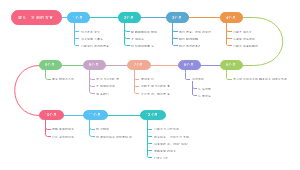
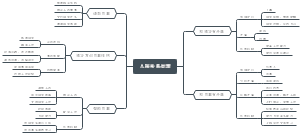
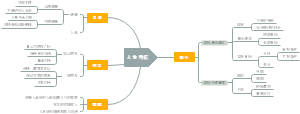
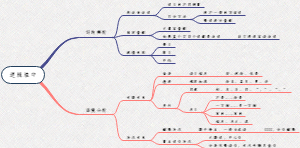
这是一篇关于第二章教育心理学两大流派的思维导图,主要内容有实证主义、知心理学两大部分。
编辑于2022-09-25 18:11:32 新疆教育心理学两大流派
实证主义
The positvist school: Psychology as a discipline of study grew directly out of philosophy.This approach begins with the premise that knowledge and facts exists within the real world and can be discovered by setting up experiments in which conditions are carefully controlled and where hypotheses are set up and tested.
Behaviourism: is an approach to psychology that has its roots within positivism, and which has had a profound influence on language teaching throughout the world. This approach arose out of the ideas of early learning theorists who attempted to explain all learning in terms of some form of conditioning.
S-R theory: It is a theory derived form behavorism.he most well-known example is that of the Russian Pavlov who demonstrated with dogs and other animals that a response (e.g. salivation) generated by one stimulus (e.g. food) could be produced by introducing a second stimulus (e.g. a bell) at the same time. This came to be known as S-R (Stimulus-Response) theory or classical conditioning.It was postulated that all human behaviour could be explained in terms of the way in which simple S-R connections were built up.
B.F.Skinner(选择)
Audiolingualism
limitations: Five
教师使用听说法的原因
Teachers who lack confidence tend to be less frightened of these techniques, whereas allowing language to develop through meaningful interaction in the classroom can be considerably more daunting, and requires teachers with some professional knowledge. An audiolingual methodology can also be used by teachers whose own knowledge of the target language is limited.
Advantages
① Train students to take the initiative to use the language to speak and improve their oral ability .
② The practice is of great important to beginners and make Ss standardize their language .
认知心理学
Cognitive psychology(名词解释): is concerned with the way in which the human mind thinks and learns.interested in the mental processes that are involved in learning. This includes such aspects as how people build up and draw upon their memories and the ways in which they become involved in the process of learning.In a cognitive approach, the learner is seen as an active participant in the learning process, using various mental strategies in order to sort out the system of the language to be learned.
Information processing: cognitive psychologists who take this approach to learning are mainly concerned with the way in which people take in information, process it and act upon it. Thus it can be seen that such factors as attention, perception and memory become the focus of the work of information processing theorists.
Memory: Atkinson and Shiffrin (1968). 阿特金森和谢夫林的记忆存贮模型 This model describes the memory process in terms of a sensory register where stimuli are initially recorded for a brief amount of time before being passed into short-term (or tvorking) memory if attention is given to them
Advance organisers: Ausubel has a significant place in the history of educational psychology. the principal function of advance organisers is to act as a bridge between what learners already know and what they need to know.when introducing a new topic or set of ideas to begin by talking about what will follow from these ideas even before the ideas themselves are grasped.
Constructivism 建构主义
Piaget
Bruner
George Kelly
DEwey 同王蔷教学法内容
Implication
心理学其他流派
人本主义Humanistic approaches
Humanistic approaches emphasise the importance of the inner world of the learner and place the individuaPs thoughts, feelings and emotions at the forefront of all human development.
Erik Erikson
Maslow
Rogers
Implications of the humanist approach 三点
Humans in Elt
社会建构主义 Social interactionism
Vygotsky
ZPD 名词解释 It was originally developed by Vygotsky and further expanded and modified . It is an area of learning that occurs when a person is assisted by a teacher or peer with a higher skill set of the subject . The person learning the skill set cannot complete it without the assistance of the teacher or peer . The teacher then helps the student attain the skill the student is trying to master in hopes that the teacher is no longer needed . ZPD 最近发展区是指介于学生现有发展水平和在他人帮助下可以达到的潜在发展水平之间的部分
Feuerstein 费厄斯坦
A social constructivist model 简答
Social interactionism emphasises the dynamic nature of the interplay between teachers, learners and tasks, and provides a view of learning as arising from interactions with others.
Four key sets of factors which influence the learning process - teachers^ learners, tasks and contexts. They all interact as part of a dynamic, ongoing process.
Teachers select tasks which reflect their beliefs about teaching and learning. Learners interpret tasks in ways that are meaningful and personal to them as individuals. The task is therefore the interface between the eacher and learners. Teachers and learners also interact with each other; the way that teachers behave in classrooms reflects their values and beliefs, and the way in which learners react to teachers will be affected by the individual characteristics of the learners and the feelings that the teacher conveys to them.
the context in which the learning rakes place will play an important part in shaping what happens within it.the physical environment; the whole school ethos; the wider social environment; the political environment and the cultural setting.
It is worth noting that a change in any one part of the model will influence other parts.the whole balance will be affected.