导图社区 Chapter 1-Introduction
- 277
- 0
- 0
- 举报
Chapter 1-Introduction
二语习得引论思维导图,二语习得是对第二语言中所学和未学内容的研究,感兴趣的小伙伴可以下载收藏哦~
编辑于2022-11-03 19:49:02 安徽- 二语习得
- 第二语言
- 相似推荐
- 大纲

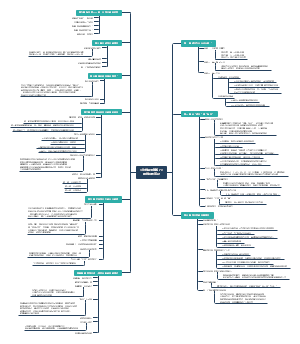

Introducing Second Language Acquisition(SLA)
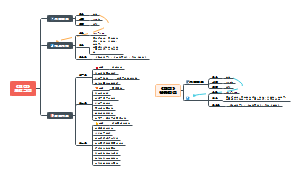
Chapter 1-Introduction
SLA focuses on learners and learning, rather than teachers and teaching
SLA is the study of what is learned and what is not learned of a second language
What is SLA?
Definition: refers both to individuals and groups who are learning a languauge subsequent to learning their first one as young children, and to the process of learning that language.
it could be the second, third, fourth... tenth language
target language vs second language: any language that's the aim or goal of learning; sla includes informal l2 learning(naturalistic contexts) and formal l2 learning(classrooms)
3 basic questions: [highly complex, no conclusive answers yet]
What exactly does the l2 learner come to know?
How does the learner acquire this knowledge?
Why are some learners more succesful than others?
highly complex, differ from theory and research mehods
multidisciplinary / transdisciplinary nature of SLA:
linguists: linguistic competence (underlying knoledge) & linguistic performance (actual production) [differences & similarities]
psychologists: mental, cognitive, brain
sociolinguists: variability in learner linguistic performance, scope of study of communicative competence
social psychologists: group-related phenomenon, such as identity and social motivation, the interactional and larger social contexts of learning
related industries : education, English teaching and learning, publishing, dictionary, advertising, publicity, military science, educational philosophy
What is a second language? (SL)
a second language: official or societally dominant needed for education, employment, other basic purposes; acquired by minority group members or immigrants who speakd another language natively
a foreign language: for future travel, other cross-cultural needs, curricular requirement, elective method; not widely used in the learners' immediate social context; with no immediate or necessary practical application
a library language: functions primarily as a tool for further learning through reading; when books or hournals in a desired field are not commonly published in the learner's native language
an auxiliary language: one which learners need to know for some official functions in their immediate political setting or for wider communication
other languages (专门用途语言): designated language for specific purposes
French for Hotel Management
English for Aviation Technology
Spanish for Agriculture
English for Academic Purposes
What is a first language?
first language vs native language vs primary language vs mother language
L1s: time: acquired during early childhood ; before 3 ; learned as part of growing up
simultaneous multilingualism vs sequential multilingualism
3 disciplinary perspectives: linguistic, psychological, social
diversity in learning and learners: the circumstances under which SLA takds place need to be taken into account
exposure to TL
naturalistic, or formal instruction
language policy (social, cultural, economic factors)
status of both languages and learners
Chapter 2-Foundations of Second Language Acquisition
The world of second language
multilingualism: >=2 languages ; bilinguilism: 2 languages; monolingualism: only 1 language
status quo: more than half —— multilingualism [ normal and common ]
G. Richard Tucker—— bilingual, multilingual > monolingual
Vivian Cook——introduced the concept of multilingual competence, which is used to refer to "the compound state of a mind with two [or more] grammars and differed from the "monolingual competence"
! people with multicompetence are noe simply equivalent to two monolinguals but are a unique combination
knowledge; metalinguistic awareness; cognitive process [different]
Chinese( L 1), English( L 2 ), Spanish, Hindi (commonly used)
MOTIVATON to add second language at an older age:
invasion
contact in economic or other specific domains
immigration
adoption of religious beliefs
educational experiences
occupational or social advancement
knowing more about peoples abroad
reasons for uncertainty in reporting language data:
linguistic information is often not officially collected
answers to questions seeking linguistic information may not be reliable
there is a lack of agreement on definition of terms and on criteria for identification
The nature of language learning
L 1 acqusition: without any conscious effort
how children accomplish the early mastery of L1(s) has changed radically
natural desire to please their doting parents (x)
urge to communicate their wants and needs (x)
learn by immitation (x) [stimulusresponse theory]
the role of natural ability / innate capacity
learning L1 at the same age, same way whether English or other languages
master the basic phonological and grammatical opreations in their L1 by the age of 5 or 6, regardless what the language is
children can understand and create novel urrtances, systematically differ from adults
there is a cut-off age for L1 acquisition
acquisition of L1 is not simple a facet of general intelligence
a hypothesis : many abstract principles are common to all languages, opposes are language-specific
child-grammar
differences between children and adulta are not viewed as failures
but normal putput of children at that level of development
children mature, language abilities
Jean Piaget——what normal children need is additional time, not additional stimuli
rate, order, vary, individual factors
the role of social experience
appropriate social experience (L1 input + interaction)
sources vary depending on cultural and social factors(mothers' talk, fathers and older siblings)
L1 versus L2 learning
initial state——underlying knowledge about language structures and principles
L1: innate capacity
L2: innate capacity? L1 knowledge; World knowlege; interaction skills
intermediate state——all stages of basic language development, process
child grammar vs learner language (or interlanguage / il)
muturation vs transfer (basic processes) 【positive , negative/interference】
input; reciprocal interaction vs input (necessary conditions)
L2: feedback; aptitude; motivation; instruction (facilitating conditions)
final state——outcome of L1 and L2 learning
native competence vs multilingual competence
The logical problem of language learning
how is it possible for children to achieve the final state of L1 development with general ease and complete success, given the complexity of the linguistic system which they acquire and their immature cognitive capacity at the age they do so?
1. Children's knowledge of language goes beyond what could be learned from the input they receive
2.Constraints and principles cannot be learned
3.Universal patterns of development cannot be explained by language-specific input
Framework for SLA
Chapter 3-The Linguistics of Second Language Acquisition
Chapter 1-Introduction
SLA focuses on learners and learning, rather than teachers and teaching
SLA is the study of what is learned and what is not learned of a second language
What is SLA?
Definition: refers both to individuals and groups who are learning a languauge subsequent to learning their first one as young children, and to the process of learning that language.
it could be the second, third, fourth... tenth language
target language vs second language: any language that's the aim or goal of learning; sla includes informal l2 learning(naturalistic contexts) and formal l2 learning(classrooms)
3 basic questions: [highly complex, no conclusive answers yet]
What exactly does the l2 learner come to know?
How does the learner acquire this knowledge?
Why are some learners more succesful than others?
highly complex, differ from theory and research mehods
multidisciplinary / transdisciplinary nature of SLA:
linguists: linguistic competence (underlying knoledge) & linguistic performance (actual production) [differences & similarities]
psychologists: mental, cognitive, brain
sociolinguists: variability in learner linguistic performance, scope of study of communicative competence
social psychologists: group-related phenomenon, such as identity and social motivation, the interactional and larger social contexts of learning
related industries : education, English teaching and learning, publishing, dictionary, advertising, publicity, military science, educational philosophy
What is a second language? (SL)
a second language: official or societally dominant needed for education, employment, other basic purposes; acquired by minority group members or immigrants who speakd another language natively
a foreign language: for future travel, other cross-cultural needs, curricular requirement, elective method; not widely used in the learners' immediate social context; with no immediate or necessary practical application
a library language: functions primarily as a tool for further learning through reading; when books or hournals in a desired field are not commonly published in the learner's native language
an auxiliary language: one which learners need to know for some official functions in their immediate political setting or for wider communication
other languages (专门用途语言): designated language for specific purposes
French for Hotel Management
English for Aviation Technology
Spanish for Agriculture
English for Academic Purposes
What is a first language?
first language vs native language vs primary language vs mother language
L1s: time: acquired during early childhood ; before 3 ; learned as part of growing up
simultaneous multilingualism vs sequential multilingualism
3 disciplinary perspectives: linguistic, psychological, social
diversity in learning and learners: the circumstances under which SLA takds place need to be taken into account
exposure to TL
naturalistic, or formal instruction
language policy (social, cultural, economic factors)
status of both languages and learners