导图社区 英语考试语法句子知识点学习笔记总结
- 43
- 5
- 1
- 举报
英语考试语法句子知识点学习笔记总结
英语考试语法句子知识点学习笔记总结,包括名谈、形副、介词、连词、动词、句子结构、主谓一致、特殊句式、句子种类
编辑于2022-11-11 09:37:35 广东- 英语考试
- 英语句子
- 英语考试…

- 相似推荐
- 大纲

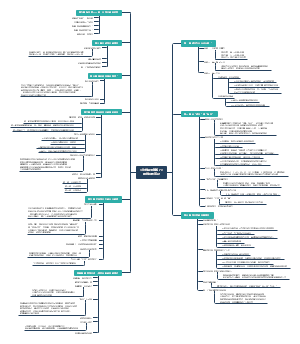

英语考试语法句子知识点学习笔记总结
名词类
名
数
可数
变复数的规则变化(分四类)1.一般在词尾+s book(一本书)—books(多本书) 2.以s,x,ch,sh等结尾或母音字母+o结尾+es class—classes, box—boxes,dish—dishes, brush—bruthes ,hero—heroes, potato—potatoes 3.辅音字母+y,改y为i+es parties—parties (原因+y不用改 boy—boys) 4. 以f,fe结尾,都改为ves leaf—leaves, knife—knives
变复数的不规则变化 1.单复数同形的名词 sheep绵羊,deer鹿,fish鱼等 2.改变原因字母 foot-feet, man-men, tooth-teeth等 3,其它形式的 child-dhildren, mouse-mice, man doctor-men doctors(连个词都变复数)
不可数(指无法分为个体的名词)常见的有:advice建议, air空气,coffee,咖啡,money钱,rain雨,weather天气,smoke烟,fire火,knowledge知识, information信息等等
格
's所有格
构成: 1.一般在词尾+'s(一撇加s) . Jack's pert-time job.杰克的兼职工作。2.词尾是-s,或-es结尾的复数,直接+'(直接加一撇,不用加s) my parents‘ hope我父母的希望 3. 不以-s结尾的复数,+'s(一撇加s)children's time孩子们的时间。
特殊用法。1.Jhon and Mary's school.约翰和玛丽的学校。(两个人共有,再后一名词+s),Jhon's and Mary's school.约翰和玛丽各自的学校。 2 时间、鼓励、地点、国家等直接+s. today's newpaper.今天的报纸, ten minutes' drive十分钟的车程 ,China's weather中国的天气,the city's parks城市的公园
of所有格——1.用于无生命的事物 Beijing is the capital of China.北京是中国的首都。2.用于名词化的词 The life of the poor is the biggist problem in our country.穷苦人的生活是我们国家最大的问题。3.有生命的's所有格和of所有格可以互换。the girl's name=the name of the girl这个女孩的名字
双重所有格——“of+-’s或名词性辅助代词”构成,表示...的..的.. 1.a lastest work of my father's.我父亲作品中最新的一部。(我的父亲的作品)2.表达特殊感情,赞赏、厌恶、不满等感情。That brother of yours is always looking for trouble.你的那个哥哥总是惹是生非。
代
人称代词
分类
主格(主语、表语等) I (我), you(你),he(他),she(她),it(它),we(我们),you(你们),they(他们,她们,它们) !.We all get into trouble sometimes.我们每个人偶尔都会遇到麻烦。(作主语)
宾格(宾语、同位语等)me (我), you(你),him(他), her(她),it(它), us(我们),you(你们),them(他们,她们,它们) 1.I like him.我喜欢他。(作宾语)
人称代词并列时排序。
单数场合:you+he/she+I 1.You and I have done our best.我和你都尽了最大努力了。2. She and I are good friends.我和她是好朋友。3.You,he and I are of the same age.你、我、他都是同龄人。
复数场合:we+you+they 1.We and you are to sapre no efforts over this work.这与这项工作,我们和你们都将不遗余力。2.We and they are longing to see you,我们和他们都很想见你,3.We, you and they are all winners.你们、我们和他们都是胜利者。
物主代词
形容词性(作定语,后加名词等) my(我的), your(你的), his(他的), her(她的), its(它的), our(我们的), your(你们的), their(他们的,她们的,它们的) 1.It's not my computer.那不是我的电脑。(作定语)
名词性=形容词性+名词 (作主语、宾语、表语等) mine(我的), yours(你的), his(他的), hers(她的), its(它的), ours(我们的), yours(你们的), heirs(他们的,她们的,它们的) 1.The book on the desk is not mine.It's my brother's.桌子上那本书不是我的,是我弟弟的。(作表语)
反身代词
表示“...自己”的称为反身代词。 myself(我自己), yourself(你自己), himself(他自己), herself(她自己), itself(它自己), ourselves(我们自己), yourselves(你们自己), themselves(他们自己,她们自己,它们自己) I'm not feeling myself today.我今天感觉不舒服。
词组. 1.You'll have to see it for yourself.你得亲自去看看.(for oneself亲自).2. The computer can shut off of itself.这台计算机能自动关机.(of oneself自动地).3.Jim is not bad in himeself, but he is a llittle shy.吉姆本质并不坏,可是有点害羞.(in oneself本身固有)4.You shouldn't leave the child by himself at home.你不应该把孩子独自留在家里.(by oneself独自)
指示代词
this,that,these,those
this,these表“近指”,that,those表“远指” 1.This gift is for you and that is for your brother.这件礼物是给你的,那件礼物是给你弟弟的。(this近指,that远指)。2.I love these books but I don't like those ones.我喜欢这些书,但不喜欢那些。(these近指,those远指)
that,those可以代替已出现过的名词,以避免重复。 1.The population of China is a quarter of that of the world.中国人口是世界人口的四分之一。(that代替the population)。2.The days in summer are longer than those in winter.夏天的白天比冬天的白天长。(those代替the days).
与时间的搭配。
this morning/afternoon/evening/day/week/weekend/month/year 根据句意来看是否“已发生”、“正在发生”或“未发生” 1. We arrived at ten o'clock this moning.我们今天上午九点到的.(已).2 What are you doing this morning?今早你在干什么?(正在)3.I will attend a meeting this evening.今天晚上我要参加一个聚会.(未)
that morning/afternoon/evening/day/week/weekend/month/year 往往指过去的岁月,意为“哪天早晨/下午..." That night I was so excited that I could not go to sleep.那天晚上我非常兴奋,以至于不能睡着。
1. These days computers are becoming more and more important in our work and life.现如今电脑在我们的工作和生活中变得越来越重要。(these days意为“现如今”) 2.During those days we had a difficult time.在那个年代我们有一段很困难的时期。(those days意为“那个年代”)
such(指如前所述的人或物)1.Roger is such a nice person. 罗杰就是这样一个好人。(有a/an时,such放在其前)2. Any such mistake can be avoided.任何一个类似的错误都可以避免。(有no.another,any等时,such必须在后面)
so(代替一个短语或句子)。1.Will lily come tomorrow? I think so.或I don't think so.莉莉明天会来吗?我认为她会的,我认为她不会.(在think,believe,expect,suppose,guess等词后,so代替前面的观点). 2.He likes pop music and so do I.他喜欢流行音乐,我也是。You are a student,so is she.你是学生,她也是。(so在肯定句中表示与上文想同的情况)
the same(刚提到过的同一人或物).
1.Happy new year!The same to you!新年快乐!你也一样!2.I fell the same as yesterday.我感觉和昨天一样。(跟在动词后)3. Let's meet at the same place as we did yesterday.让我们在昨天相见的地方见面吧。(the same后跟as, as后可接名词、代词、或句子)
固定用法。1.all/just the same"完全一样“ You can pey me now or later.It's all the same to me.你可以现在给钱,也可以以后,都一样。2.same here"我也一样” You agree with her. Same here.你同意她,我也同意。3.the same with"也一样“ I'd like a cup of tea. —The same with me.我要一杯茶。我也一样。
不定代词
one(指人或物)1.具体”一个人“或”一个事物“ He is not one who is easy to work with.他不是一个容易合作的人。(人)This is the one you're looking for.这就是你要找的那一个。(物)2.代替上文出现的.This problem is harder than that one.这个问题比那个难.(one代单数)I prefer red roses to white ones.比起白玫瑰来,我更喜欢红玫瑰.(ones代复数)
no one, none. 1.on one(只指人,后不可接of短语,语气比none强烈)No one in our class is so foolish.我们班没人有这么蠢。2.none(指人或物,可接of短语)None of them believed the story.他们中没人相信这个故事。(指人)I want to eat some cake,but there's none left.我想吃点蛋糕,但一点也没了。(指物)
either,neither 1. either (两者中的一个)There are two apples. You can take either.桌子上有两个苹果,你可以随便拿哪个。Either of us has a laptop.我们俩都有台手提。2.neiither(两者中任何一个都不)Neither of my parents allows me to take up medicine.我父母否不允许我学医。
all,both 1.all(三个或以上) All are here. So let's get started.所有人都到齐了,咋们开始吧。(指人或可数名词用复数)。All I want to know is how you learn English so well.我想知道的是你怎么把英语学这么好的。(指整体或抽象概念用单数)2.both(两个)They both accepted my invitation.他们两个人都接受了我的邀请。
each,every 1.each(两者或以上,作主、宾、定、同)They both came on time,but each left ahead of time.他们两个按时到了,但是都提前走了(主语) I'm going to ask each of you to speak for three minutes.我想请你们没人做三分钟的发言(宾语)2.every(只作定语) Every student needs to be careful with their studies.每个学生都需要细心对待学习.(定语)
every one, everyone 1.every one (指人或物,可跟of短语)Every one of us should believe in each other.我们每个人都必须互相信任。(指人). I checked every one of the drawers, but none had been found.我找遍了所有的抽屉,但什么也没有找到。(指物)2.everyone (只指人,不跟of短语) Everyone likes to be appreciated.每个人都喜欢受到赏识。
another,other
another1.This is not the only way. There's another.这不是唯一的方法,还有其它的方法.(表三者或以上”另一个“).2.We need another person to help us finish the work.我们还需要一个人帮我们完成这项工作.(another+单名或one) 3.You''ll have to wait another three days for the books.你还要再等三天才能拿到书.(another+基数词或few)
other 1.There are one or two other problems I'd like to discuss.我还想谈论一两个其它的问题.(other+复名,表泛指)2. Some people like tea, others like coffee .有些人喜欢茶,有些人喜欢咖啡.(另一些) 3.I have two brothers.One is a doctor and the other is a teacher.我有两个哥哥,一个是医生,一个是老师。(表两者中的另一个)
few,little
few,a few,the few.(修饰可数) 1.A lot of friwnds were invited, but few came.虽然邀请了很多朋友,但几乎没有人来.(表否定) 2.There're still a few mistakes in your composition.你的作文里还有一些小的错误.(表肯定)3. The few young people who speak good English are my students.那几个英语讲的好的年轻人是我的学生.(特定的少数)
little,a little,the little(修饰不可数)1.We have little rain in spring.我们这里春天几乎不下雨。(表否定)2.I feel a little tired.我感觉有点累。(表肯定)3. I hope the little I can do will be of any help to you.我希望我仅能做的这一点对你会有所帮助。(仅有的一点)
many,much 1.many(很多,修饰可数)There are too many mistakes in your composition.你的作文中有太多错误。2.much(修饰不可数)You should spend as much time as you can on English.你应该尽可能多花点时间在英语学习。
some,any
some(一般用肯定句,也可用疑问句得到肯定回答).1.Some say grammar is hard to learn, but I don't think so.有人说语法难学,但我不这么认为。2.I've made a pot of coffee,would you like some?我煮了一壶咖啡,你想喝点吗?3.There must be some job that I could do.一定会有我做的某种工作。(特殊用法,意为不知道的“某一个“)
any (,一般用在否定、疑问、条件句中,意为”一些“;如用在肯定句中,意思为”任何一个“)1.Have you got any money with you? If you have any, pleasr lend me some?你身上带钱了吗?如果带了,请借一点给我。(用在疑问、条件句中)2.I‘ll take any you don't like.我随便拿一个你不喜欢的。(肯定句中”任一个“)
复合不定代词
1.some-类:someone.somebody,something 2.any-类: anyone,anybody,anything, 3.every-类: everyone,everybody,everything, 4.no-类:no one,none,nobody,nothing. 形容词修饰复合不定代词至于其后,如:There's nothing important in today's newpaper.今天的报纸上没有什么重要新闻。(important在nothing的后面)
特殊用法。1.sombody(表示了不起的人物,反义是nobody) 1.He thinks himself somebody, but he's really nobody.他认为自己是了不起的人物,其实他什么都不是。2.something(表示了不起的东西,反义是nothing) I thought the project something, but it is nothing.我原以为这个工程了不起,结果什么也不是。
相互代词——each other,one another 1.each other(两者之间,意为”互相“)We often help each other when in trouble.遇到麻烦,我们经常互相帮助。2.one another(用于三者或三者以上,意为”互相“)We said hello to one another's family.我们相互向对方的人家问好。
疑问代词
who,whom,whose 1.who(意为”谁“,常做主、表)Who has been chosen leader of the team?谁被选为队长了?2.whom(意为”谁“,作宾语)Whom did you meet just now?你刚才碰见了谁?3.whose(意为”谁的“,常作主、定语)Both Jim and Jack speak English.Whose pronunciation is better?吉姆和杰克都会说英语,谁的发音更好呢?
which,what 1.which(指在给定的具体范围内进行选择)Which color do you like better, red or yellow?红色和黄色,你更喜欢哪一种?(在给定的红色和黄色中进行选择)2.what(没有具体范围)What color do you like best?你最喜欢那种颜色?(没有给定范围)
what习惯用法
1.询问职业 What is your mother?你妈妈是做什么工作的?(What be+主语?) What does your mother do for a living?你妈妈做什么工作卫生?(What do/does+主语+do?) 2.询问品行、状况等(What be+主语+like?)。What is Lucy like?露西这个人怎么样?(品行)What is the weather like?天气怎么样?(状况)
3.询问长相 What does Mary look like?玛丽长得怎么样?(What do/does+主语+look like?) 4.询问目的(What...for...) I should get up early tomorrow —What for?明天我要早起.—干什么? 5.建议或询问What about...?(相当于How about?) I'll take the Bozhao ABC English course. What about you?我要参加博钊ABC英语课程,你呢?
关系代词、连接代词 ——关系代词请看左图结构中的定语从句部分;连接代词请看左图结构中的从句部分。
特殊代词it的用法
人称代词it的用法 1.代替人或事物(it一般指人以外的一切生物或事物。指人则指婴儿或不知性别的人)Someone is ringing the doorbell.Go and see who it is.有人在敲门,去看看是谁。2.代替上文的内容。She has decided to take the Bozhao ABC English course and I knew it.她决定参加博钊ABC英语课程,这点我知道。
非人称代词it的用法 1.指时间 What time is it by your watch?你的表现在几点了?2.指天气 It is going to rain tomorrow.明天要下雨。3.指距离。How far is it from here to the ABC English training center?从这里到ABC英语培训中心有多远?
指示代词it的用法 1.It is/was+表语——指明某人或某物的身份。 Who is there talking?—It's my father. 谁在那儿谈话?是我爸爸。 2.指代this或that This is your plan, isn't it?这就是你的计划,是不是?(指代this) That's not true,isn't it?那不是真的,是不是?(指代that)
形式代词it的用法
1.做形式主语 It's very nice of you to help me out.他们帮我忙,真是太好了。(代替不定式) It is no good living alone.独具没有好处.(代替v-ing) It is clear that you are making mistakes.很明显你在犯错误.(代替that从句) 2.做形式宾语 I find it easy to learn grammar.我发现语法很容易学。
3.常用句式 It's been two years since we last met.自从上次见面以来有两年了。(It is/has been+时间+since) ; It won't be long before I can have my own flat.不久以后,我就有自己的房里了。2.强调句型 It is I who am your best friend.我才是你最好的朋友。
数
分类 ——1.基数词 one, two, three... (一,二,三...)2.序数词 first, second,third...(第一,第二,第三...)
重要用法
1.数词表达编号 第12页—Number 12(缩写No.12),第211页—Page 211, 第8行—Line 8, 第505房间—Room 505, 26路车—Bus 26. 2.数词表达年、月、日 2008年8月8日—August 8(th), 2008 3.表达时刻 7:00 seven o'clock , 7 a.m seven a.m, 8:30 eight-thirty或half past eight, 8:56 four to eight或eight fifty-four, 8:21 twenty-one past eight或 eight twenty-one
4.分数 1/2 one half或a half, 1/3 one third或a third,2/3 two thirds, 3/4 three quarters或three fouths, 5.小数 67.89 sixty-seven point eight nine或six seven point eight nine, 0.05 zero point zero five 6.百分数 46% forty-six percent, 3.5% three point five percent 7.加(plus),减(minus), 乘(times), 除(divided by)
冠—— 1.不定冠词a(用在辅音开头)和an(用在元音开头),表示”一(个、台、本、支、位、辆、跟...) 如:a day(一天), a dog(一条狗) an apple(一个苹果),an orange(一个橘子) 2.定冠词the表示"这个、此、该“等意思。第一次提到用a/an,第二次用the. 如:a book(一本书), the book(此书)3.零冠词(就是名词前不用冠词的情况)
形.副
定义: 1.形容词只要是修饰名词和代词的,作定语、表语、补语等。2.副词是修饰动词、形容词、副词、全句的,作状语等。(形容词和副词都有原级、比较级、最高级)
比较级变化规则
规则变化
单音节词或-e结尾的词,加-er,-est(-e结尾的不重复e) 如:1.slow-slower-slowes(形容词),brave-braver-bravest(形容词,末尾e不重复,写一个)2.fast-faster-fastest(副词)
辅元辅(辅音字母+元音字母+辅音字母),最后一个辅音字母双写再加-er.-est. 1.big-bigger-biggest(形容词,b是辅音字母,i是元音字母,g是辅音字母)2.
以“辅音字母+y”结尾的词,改y为i,加-er,-est。 1. happy-happier-happiest.
除-er,-ow,-ble结尾的其它双音节词和多音节词,都在前面加more,most. 1.beautiful-more beautiful-most beautiful(形容词)2.quickly-more quickly-most quickly(副词)
不规则变化(死记)
形容词 1.good-better-best; bad-worse-worst; ilttle-less-least; much,many-more-most; far-farther(futher)-farthest(futhest); o ld-older(elder)-oldest(eldest).
副词 1.well-better-best; badly-worse-worst little-less-least; much-more-most; far-farther(futher)-farthest(futhest);
级别使用
原级
肯定:as+原级+as 1.My English is as good as yours.我的英语和你的一样好。(形容词多用于主系表结构)。2. I speak English as well as you do.我的英语和你说的一样好。(副词多见于主谓宾结构)
否定:not as/so...as...1.My English is not as good as yours.我的英语不如你的好。(as可用so替代,在否定中) 2. I don't speak English as well as you do.我的英语说的没有你好。(as可用so替代)
比较级
比较级+than 1.My English is better than yours.我的英语比你的好。(形容词) 2. I speak English better than you do.我的英语说的比你的好。(副词)
比较级+and+比较级 1. My English is getting better and better.我的英语变得越来越好了。(形容词) 2. I speak English more and more beautifully.我英语说的越来越漂亮了。(副词)
the+比较级...,the+比较级.. 1. The more difficult the problem is, the more careful we should be.问题越难,我们就应越小心。(形容词)2. The harder you work, the better you'll learn,你越努力,学得就越好。(副词).
最高级
形容词:the+最高级+名词+表示范围的短语或从句 1.Jack is the tallest student in his class.杰克是他班上最高的学生。2. Basketball is the most interesting sport I've ever known. 篮球是我所知道的最有意思的运动。
副词: the+最高级+比较范围的短语或从句.(the可以省略) 1.He talks least and does most in his class.他在班上说的是最少,干的是最多的。(最高级前的the省略了)。2.Of all the subjects,I like English best.在所有的科目中,我最喜欢英语。(the省略了)
介词
表时间
at,on,in. 1.I often get up at 7 o'clock.我经常在7点起床。(at表示某一具体时刻)。2.I hope you can come on Monday.我希望你星期一能来。(on表示具体某一天或某一天的上、中、晚)3.I made lots of friends in my school days.在我上学期间,我交了很多朋友。(in表示更长的时间,或“在将来”)
in,after. 1.We'll meet you in two weeks.两周后我们还会再见面的。(”in+一段时间“,是从说话时算起的一段时间之后)。2.They went to the park after supper.晚饭后他们去了公司。We will have a meeting after 3 o'clock this afternoon.下午三点以后我们将开个会。("after+一段时间"表示某个过去或将来的时间点之后的一段时间)
for,since. ——for+一段时间,since+具体的时间点或短语,都常用在完成时态中,表示一直延续的行为。 1.I have lived in this city for more than 10 years.我在这个城市居住了10年了。(接一段时间for more than ten years)2.I have lived here since two years ago.两年前我就住在这里,(接时间点two years ago)
before by——都表示“在....之前”,但by含有“到...为止”的意思,用完场时态。 1.I will be back before supper time.我将在晚饭前赶回来。2.I will have forgotten all about the matter by the end of this week. 我将在本周末前把这件事情全忘记。(用的将来完成时态)
by,until 1.Can you repair my bike by Friday?你能在星期五之前修好我的单车吗?(表示...时候为止)2.I'll work here until five o'clock。我将一直工作到6点。(肯定句表示持续到某时候)3.The work won't be finished by(可用until) tomorrow.这项工作明天才能做完。(否定句中的非延续动词,两者通用)
around,round,about ——三者通用,表示”大约“ We are going to start off at about six tomorrow.我们大约在明早上6点出发.(about可用around,round替换)
地点,方向
over,above 1.The bridge over the river has a long history.河上的这座桥历史悠久(over表示“垂直正上方”)。2.The plane flew above the clouds.飞机在云成上飞。(above表示“上方,不一定正上方”)3.The average temperature here in summer is above 30 degree.夏天这里的平均温度超过30度。(above课用在温度、海拔上)
under,below,beneath 1.A cat sitting under the table.桌子正下方蹲着一只猫。(under表示“正下方,与over反义)2.I live below the mountain.我住在山脚下。(below表示”下方“与above反义,可用于温度、海拔。3.Such a thing is beneath notice.这种事不值得关注。(beneath表示”在...之下"常与below替换,多用于正式文体)
in front of, in the front of 1.There is a river in front of my house.在我家门前有条小河。(in front of表示某一空间外部的前面)2. Don't sit in the front of the bus.不要坐到公交车里面的前部。(in the front of表示在某一内部空间的里面)
before,after 1. She said she had never spoken before an audience.她说她从未在大庭广众下演讲过。(表空间时,与in front of通用)。2.After graduation he went abroad.毕业之后他去了国外。(表空间时,与behind通用)
between,among 1.The village lies between two hills.这个村庄位于两座山之间。(between常用于两者之间)。2.The village lies among hills.这个村庄坐落于群上之间。The teacher was sitting among boys.老师坐在男孩子们中间。(among用于三者或三者以上)
across,through,over,past 1.Be careful when walking across the street.过街时要小心.(across穿过”某一平面“)2.Walk through the gate and you'll the rest room.穿过大门你就会看到卫生间.(through穿过”某一空间内部“)3.The dog jumped over the fence and ran away.狗跳过栅栏跑了.(over越过”某一高度“)4.Our bus drove past the park.我们汽车开过公园.(over从”某物旁边“经过)
around,round,about ——三者通用,表示”某一...周围“ We are sitting around the teacher, playing games.我们围着老师坐着,做游戏。(around可用round,about替换)
表示”用“的with,by,in——1.You can see it with your own eyes.你可以亲自去看看。(with多指用”工具、身体的某部位或器官)2.Why don't we go there by car instead?我们为什么不坐汽车去了?(by表示用“方法、手段”)3. He made the speech in English.他用英语作了这场报告。(in表示用“某种语言、工具、材料等)
表示”除...之外“
but,except——常通用,主要用于不定代词和疑问代词后 1.Nobody but(可用except) John knows the city well。只有约翰非常了解这座城市。(不定代词后)2.Who but(可用except) you should be to blame for the mistake?除了你还有谁应为这个错误负责呢?(疑问代词后)
expect for——整体部分内的细节进行说明 1.The movie is good expect for the ending.这部电影除了结尾之外都很好.(结尾是整部电影的部分细节)
except,nesides——1.All of them have been to the Great Wall expect me.除了我之外他们都去过长城。(不包括我,宾语是排除在外的)2.All of them have been to the Great Wall besides me.除了我之外,他们也都去过长城。(包括我,宾语是加进来的)
apart from——根据句意来判定. 1. The children haddly see anyone apart from their parents.除了他们的父母,孩子们很少见到其它人.(表”排除意义“相当于except).2.Apart from being fun and good exercise, swimming is a very useful skill.游泳除了有趣和是一项很好的运动之外,还是一项很有用的技能。(表”包括在内“相当于besides)
but for——意思为“要不是因为”,表示假设的情况,用虚拟语气。 But for your advice, I would have failed.要不是你的建议,我就失败了。
连词
并列连词
并列 and,both...and...,neither...nor...,not only...but also....1.Both Jane and Peter are interested in pop music.简和吉姆都对流行音乐感兴趣。(...和...都...)2.The weather here is neither too cold nor too hot.这里的天气即不太冷,也不太热。(j既不...也不...)3.She is not only kond but also honest.她不但和蔼而且诚实。.(不但...而且)
转折 but,yet,still,while 1.The car is very old but it runs very fast.这两汽车虽然很旧,但跑得很快。2.The problem is a little hard, yet I'm able to work it out.这道题有点难,但我还是能做出来。3.I have lots of difficulties, still I won't give up.虽然有很多困难,但我不会放弃。4.The winter in Bejing is very cold while that of Kuming is warm.北京的冬天很冷,然而昆明的冬天却很缓和。
选择 or,either...or...,not...but... 1.Would you like to leave or would you like to stay?你是想走了还是想留下?2. You can come either on Friday or on Sunday ?你可以星期五也可以星期天来。3.He is not a worker but an engineer in a big company.他不是工人,而是一家大公司的工程师。.
因果 for 1.He may be ill, for he is absent from school.他可能病了,因为他今天没来上课。(一种补充说明,推断的理由)
从属连词
引导名词性从句,主要有that,if,whether等 1.I think that we should stay another week.我认为我们该再呆一周。(引导宾语从句)2.Whether he'll come or not is unknowm.没人知道他是否要来。(引导主语从句)3.The question is whetther pepple will buy it.问题是人们是否会买它。(引导表语从句)
引导状语从句。(九类:时间、地点、原因、目的、结果、让步、方式、条件、比较),1.When I was your age, I often ask myself how to learn English efficiently?当我是你们这么大的时候,我经常问自己怎样高效学好英语?(时间状语从句)I will be happy if you are happy.如果你高兴,我就高兴。(条件状语从句,大量例句如左图句法结构部分)
动词
5种形式
原形:用于1.一般现在时的第一、二人称;I like you.我喜欢你; 2情态动词后;I can do it.我能做。3.祈使句中。Speak louder!更大声点!4.助动词do,does,did的疑问句和否定句中。Does she like it?她喜欢吗?She doesn't like it。她不喜欢。
第三人称单数(简称三单)1.用于:一般现在时的第三人称单数。如:She likes it.她喜欢。构成1.一般字词尾加-s 如:work-wors 2.以发咝擦音的s,z,ch,sh,xz或o结尾的+es 如:pass-passes, push-pushes,catch-catches,mix-mixes,do-does 3.辅音字母+y,改y为i,+es. 如:try-tries
过去式:用于 1.一般过去时态的主动语态中。 I finished my homework.我完成了家庭作业。构成1.一般词尾和-e结尾的+ed(e不重复) 如:work-worked, hope-hoped 2. 辅音字母+y结尾,改y为i,+ed 如:study-studies. 3.辅元辅(辅音字母+元音字母+辅音字母)结尾,双写最后一字母,+ed 如:admit-admitted
过去分词: 用于 1.所有完成时态中 I have done my homework.我已做了家庭作业。2.用于各种被动语态中。I was invited to the party.我应邀参加了聚会。 构成:规则的与过去式的构成相同,不规则的要牢记
现在分词: 用于 1.各种进行时态中。I'm reading a book.我正在读一本书。1.不发音-e结尾,去e,+ing 如:come-coming,write-writing. 2.少数-ie结尾的词,变ie为y,如:die-dying,lie-lying, tie-tying. 3. 辅元辅(辅音字母+元音字母+辅音字母),双写最后一字母,+ing. 如:admit-admitting, stop-stopping.
句法
谓语动词
实
及物动词(能跟宾语)
跟单宾语。(一个宾语)I love you.我爱你。
跟双宾语。(直接宾语“物”和间接宾语“人”)I give him a book.我给他一本书。(him是间宾,book是直宾)=I give a book to him,(物在前,人在后,人前要加to或for)
跟复合宾语。(宾语和宾语补足语)1.形容词或其短语做宾补。We all believe him honest and kind.我们都相信他诚实,善良。2.名词短语做宾补。We consider him a strange person,我们认为他是一个奇特的人
不及物动词(不跟宾语)——有:arrive(到达),run(跑),appear(出现),happen(发生)等。如:I arrived here a minutes ago.我几分钟前到的这里。
系
常规状态系动词(常可译成“是”)
am,is,are 1.I am a student.我是一名学生。2. He is a teacher.他是一名老师。3. We are happy.我们开心。(其实就是我们是开心的意思)
was,were 1.I was a student.我过去是一名学生。(现在不是了)2.He was a teacher.他过去是一名老师。(现在不是了)3.We were happy yesterday.我们昨天开心。
be,been. 1.I will be a teacher.我将成为一名老师。2. I've been here for three days.我来这儿三天了。
特殊系动词
持续。(主语保持一种状态).有keep,remain,stay,lie,stand,rest等(此6个牢住)1.He always kept silent at meeting.他开会时总是沉默。2.This matter remains a mystery.此事仍是一个谜。
表像。(看起来像的意思)。有seems,appear,look等。(此3个牢住)1.He seems very sad.他看起来很伤心。2.It looked as if they quarreled just now.看上去好像他们刚吵过架。
感官。(身体器官的感觉)。有feel,smell,sound,taste,look等。(此5个牢记)1.This kind of cloth feels very soft.这种布摸上去很软。2.This flower smells very sweet.这朵花闻起来很香。
转变、结果。有become,get,grow,turn,go,come,fall,prove等。(此8个牢记)。1.The weather is becoming hotter and hotter.天气变得越来越热。2.He went blind at the age of seven.他七岁就失明了。
助
be
进行(此时"be"的各种形式看做“进行助动词”不看做“系动词”)
am,is,are +v-ing1. I am reading a book.我正在读一本书。2.He is playing basketball.他正在打篮球。3.They are chatting online.他们正在网上聊天。
was,were+v-ing 1.I was waiting for you at this time yesterday.我昨天这时候正等你。2.They were studying in America last year.他们去年一直在美国学习。
be,been,being.1.I will be waiting for you at this time tomorrow.我明天这时候会正等你。2.I have been learning for two hours.我已经学了两个小时了。3.The house is being built.房子正在被建造.(is是“被助动词,being是“正在助动词”)
被动(此时“be"的各种形式看做”被助动词“不看做”系动词“)
am,is,are+v-ed 1.I am not so easily deceived. 我不是容易上当受骗的。2.It is known to be an expert.人们认为他是一位专家。3. Xiao wang, you are wanted in the office. 小王,办公室有事找你。.
was,were+v-ed.1.I was invited to the party.我应邀参加了聚会。 2. They were forced to study. 他们被强迫去学习。
be,been+v-ed.1.This matter will be solved in the future. 这件事将会被解决的。2..My car has been repaired. 我的汽车已被修好了。
have 完成助动词(用于各种表示完成的句子中)1I have lost my key.我掉了钥匙。2.She had been here before you came here.在你来之前,她几经在这了。3.I will have forgotten all about the matter by the end of this week. 我将在本周末前把这件事情全忘记。
do
疑问Do,Does,Did,1.Do you like it?你喜欢它吗?2.Does he like it?他喜欢它吗?3.Did London phone you yesterday?伦敦昨天打电话给你吗?
否定don't,doesn't,didn't.1.I don't like it.我不喜欢它。2.He doesn't like it.他不喜欢它。3.London didn't phone you yesterday.伦敦昨天没有打电话给你。
强调do,does,did 1.I do like it.我确实喜欢它。2.He does like it.他确实喜欢它。3.London did phone you yesterday.伦敦昨晚确实打给话给你了。
替动do,does,did(代替前面出现过的动词)1.She dances as well as I do.她跳舞和我跳的一样好。2.I speak English as fluently as he does.我英语说的和他一样流利。3.London spent as much time on English as I did.伦敦和我花在英语学习上的时间相同。
shall,will 将来助动词(用于各种将来时态中)1.I will see you tomorrow .明天我去找你。2.She said she would come. 她过去说她要来。
情态动词——表示说话人语气和情态的词,有:can,could,may,might,will,would,should,ought to,must,need,dare,used to 如:He can speak a little English.他能说点英语。Could I use your cell phone for a while?我能用下你的手机吗?
非谓语动词
三大非谓语
不定式
特征
不定式中的及物动词可跟宾语。It is important to learn some skills of communicating. 学一些交际的技巧很重要。
可被状语修饰。 He asked me to read the text aloud. 他让我大声读课文。
无人称.数的变化,总是 to v.1. She likes to play the piano.她喜欢弹钢琴。 2.She liked to play the piano when she was young.小时候她就喜欢弹钢琴。
to前加not表否定. The teacher has told me many times not to come late again. 老师多次告诉我不要再来晚了。
可用for,of引出逻辑主语 1.It's important for us to look into the world. 放眼世界对我们来说很重要。2.It's impolite of you to visit someone without telling him in advance.不提前说一声就是拜访人家是不礼貌的。
功能
主:To master a foreign language calls for a lot of memory work.掌握一门外语需要大量的记忆。
宾:
做动词的宾语。I really like to watch football matches.我非常喜欢看足球比赛。
做介词的宾语。except,but等少数介词后可直接接不定式做宾语。1. I have no other wish except to pass the exam.我除了希望考试及格之外,没有其它心愿。2.I had no choice but to give up this chance to go abroad.我没有办法只好放弃这次出国的机会。
补:通常指宾语补足语。 I told Jim to join the club, but he wouldn't listen. 我告诉吉姆加入俱乐部,但他不听。
表:My wish is to go to college for future studies.我的愿望是想上大学深造。
定
动宾关系,被修饰词是不定式的逻辑宾语。 Have you got anything to do this evening?( anything是to do的逻辑宾语)今晚你有事吗?
主谓关系,被修饰词是不定式的逻辑主语。 She is always the last to hand in homework.(the last是to hand in homework的逻辑主语)她总是最后一个交作业。
同位关系,被修饰词是不定式的同位语。We have made a plan to learn from him.(to learn from him是a plan 的同位语)我们制定了一个向他学习的计划。
状语关系,被修饰词表示不定式动作的方式、时间等。1.That's the way to do it.(way是to do的方式)就那样做。2. I have no time to go there.(time是to go 所表示的时间)我没时间去那里。
状
目的状语。I worked so hard to pass the exam. (目的为了通过考试)我这么努力是为了通过考试。
结果状语。I ran to the station to find the train had left. (结果发现车里已经离开了)我跑到火车站,结果发现火车已经离开了。
原因状语。往往跟在“高兴、生气、荣耀、遗憾”等词后说明产生感情的原因。 1.I'm pleased to be invited to speak here.我很高兴被邀请在这里讲话。2.I'm sorry to have troubled you so much.真对不起给你添这么多麻烦。
条件状语。To turn to the left,you could find a post-office.(向坐拐是条件)向左拐,你就会发现一家邮局。
时态语态
一般式(不定式的动作与谓语动词同时或之后)
主动形式to do:I hope to see you next week.(不定式to see的动作在谓语动词hope之后)我希望下周能见到你。
动动形式to be done:The meeting is to be held tomorrow.(不定式to be held在is之后)会议将于明天举行。
进行式(不定式的动作与谓语同时)—— 主动形式to be doing: Don't prentend to be working hard.Just do what you should.(to be working是现阶段正进行的事情)不要假装努力工作。做你该做的事情。
完成式(不定式的动作在谓语动作之前)
主动形式to have done:I am sorry to have given you so much trouble.(to have given发生在am之前)真对不起给你带来这么多麻烦。
被动形式to have been done:The room seems to have been tidied up already.(to have been tidied up在seems之前)这个房子似乎已经被打扫过了。
完成进行式(不定式的动作在谓语之前就一直进行的动作)——主动形式to have been doing:He is reported to heve been missing since last Friday.(to have been missing在is reported之前一直发生)据报道,自从上周五以来他就失踪了。
V-ing
功能
主:1.Reading is an art.读书是一种艺术。2.It is fun playing with children.和孩子们一起玩真有趣。3.There is no joking about such matters.对这种事情开不得玩笑。
宾
做动词的宾语。He tried to avoid answering my questions.他试图对我的问题避而不答。
做介词色宾语。We should prevent the river from being polluted.我们应阻止河流被污染。
做形容词的宾语。The music is worth listening to many times.这音乐值得听很多遍。
补:指宾语补足语
可以在see,hear,feel,find等表示感官和心理的动词后做宾补。1. I could hear them arguing outside.我可以听到他们在外面争论。2. I suddenly felt myself being hit by a heavy fist.我突然感动被重重地打了一拳。
可以在leave,have,keep等动词后做宾补。1.My father left me sanding alone.我父亲让我孤独地站着。2. Don't have the lights burning all the night.不要让灯整夜都亮着。3.Parents should learn to keep their childern using their mind.父母应当学会让自己的孩子动脑筋。
表:1.Your task is cleaning the windows.你的任务就是擦窗户。2. What you said is rally inspiring.你所说的真令人鼓舞。
定
前置定语。单个v-ing做定语时前置。1. You are a promising young man.你是个有前途的年轻人。2. China is a fast developing country.中国是一个快速发展的国家。
后置定语。短语式v-ing做定语后置。1.The professfor giving a speech about pollution now is from Harvard University.(红字部分等于who is giving a speech about pullution now)正在做有关污染报告的那位教授来自哈佛大学。
状
时间、原因状语。1.Having finished all the work, i left for home.做完所有工作后,我回家去了。(时间状语) 2. Living far from my company, I have to get up early every morning.由于住得离公司太远,我只好每天早晨早起。(原因状语)
方式、伴随状语。1.They came running all the way.他们一路跑着来的。(方式状语,以跑的方式过来的)2. I lay on the grass, staring at the sky for a long time.我躺在草地上,长时间的凝望着天空。(伴随躺在草地上的动作,凝望天空)
结果、程度状语。1.The fire lasted nearly a month, leaving nothing valuable.大火持续了近一个月,没剩下一点值钱的东西。(结果状语)2.It was freezing cold yesterday.昨天天气太冷了。(程度状语)
条件、让步状语。1.Working hard at your lessons, you are to succeed.如果你努力学习,就一定会成功的。(条件状语) 2.Even if taking a taxi, I will still be late for the meeting.即使乘出租车,我开会仍然会迟到的。(让步状语)
评论性状语。Generally speaking,girls are more interested in literature than boys.一般说来,女孩比男孩更喜欢文学。 Judging from her accent, she must come from America.听她的口音,她准是来自美国的。
时态语态
一般式(表一般性泛指、与谓语同时、之前或之后发生)
主动形式doing: 1.Being careless is not a good habit.粗心不是一个好习惯。(泛指)2.The children surrounded the teacher, listening to her story.孩子们围着老师,听她讲故事。(同时)
被动形式being done:1.No one likes being laughed at in public.没有人喜欢被当众嘲笑。2.She is afraid of being taken to the public.她怕被带到公众面前。(一般式在介词后做宾语,无进行意义,being不可省略)
完成式(v-ing动作发生在谓语动作之前)
主动形式having done:Having finished the letter, he folded it and put it into the envelope.写完信后,他把信折起来装进了信封。(Having finished the letter发生在folded和put之前)
被动形式having been done:I am very pleased at you having been chosen a member of the school basketball team.我很高兴你能被选为学校篮球队的一员。
V-ed
功能
表:1.The shop has remained shut for a week.(动词性v-ed)这家商店关门一周了。2.I'am interested in playing piano.(形容词性v-ed)我的兴趣是弹钢琴。3.Spring is gone and summer is come.(位置移动的不及物动词v-ed)春天去了,夏天到了。
补:1.If you want to make yourself respected, you are above all to respect others.如果你想让自己被尊重,你必须首先尊重别人。2.I must go to city to have my computer repaired.我得进城找人修理我的电脑。(找别人修理)
定
前置定语。当个v-ed前置,表完成或被动。1.We only sell used books in our bookstore.(used表示books被用过了)我们的书店只卖用过的书。2.The lost time can never be found again.(lost表示time是已完成的,过去的时间)失去的时间永远找不回来。
后置定语。短语式v-ed做后置定语,相当于从句。The story written by a middle school student is popular in schools.(红色部分相当于which was written by a middle school student)由一名中学生写的这个故事在学校中很流行。
状
时间、原因状语。1.Asked about his family, he made no answer.当问到有关他的家庭情况时,他没有回答。(时间状语)2.Seriously injured, he had to be taken to the hospital.由于伤得很重,只要把他送往医院。
方式、伴随状语。The hunter walked slowly in the forest, followed by his wolf dog.猎人在森林里慢慢地行走,后面跟着他的狼狗。(伴随状语)
条件状语。Given more time and money, we would have done the work better.如果给予更多的时间和钱的话,我们会做得更好。(条件状语)
使用区别
主(to v和v-ing)
to v 强调具体、将来的动作。1.To read English novels this evening will take most of my time.今晚读小说会花去我大部分的时间。(将来的动作)2. It is impossible to arrive there in such a short time. 这么短的时间内赶到那里是不可能的。(不定式常用it 做形式主语)
V-ing 强调一般习惯性的动作。1.Reading Englsih novels is really great fun.读英语小说真有趣。(习惯性动作)。2.There is no telling what will happen.无法知道会发生什么。(在“There be no+主语”中,习惯上用v-ing形式做主语。
宾(to v和v-ing)
意义相差不大。如:like,begin,start,continue,prefer,love等。I like reading China Daily=I like to read China Dalily.我喜欢读《中国日报》。
意义差别很大。
forget,remember,regret
forget to do“忘记应该做的事”,forget doing“忘记已做过的事。”1.I forgot to wake him up this morning.今天早晨,我忘记了叫醒他。(叫醒他这件事情没做)2.I forget turning the light off.我忘记了已经关了灯了。(灯已被自己关了)
remember to do"记着将要做某事”,remember doing“记着已做过的事。”1.Please remember to give my best regards to your family.请记着带我向你的家人问好。2.I sitll remember being sent to school for the first time.我仍记得第一次被送到学校上学的情景。
regret to do"对讲座之事遗憾“,regret doing”对已作之事遗憾或后悔。“1.I regret to tell you that I cannot come.真遗憾,我的告诉你我将不能来了。I regret missing his lecture.我遗憾没能听到他的讲座。(讲座已发生)
try,mean, go on
try to do"尽力做某事”,try doing“试着做某事。”1.I tried to stand up but failed.我想尽力站起来,但没成功。2. Let's try telling him about the sad news.咋们试着把这个不幸的消息告诉他吧。
mean to do"打算做某事“,mean doing"意味着” 1.I meant to buy some bread, but I forgot.我打算买些面包的,但忘了。2. Wasting time means kiiling life.浪费时间就意味着浪费生命。
go on to do"继续做另一件事“,go on doing"继续做同一件事。” 1.Let's go on to discuss the problem of unemployment.我们接着讨论失业问题。(前面讨论的是别的事情)2.After a short rest, I go on writting the letter.休息一会儿,我继续写那封信。(同一封信)
意义相同,形式不同。want,need,require,deserve 做“需要”时, v-ing主动表被动,与to be done的意义一样。
1.Your paper needs checking again. 2.Children deserve awarding.
1.Your paper needs to be checked again. 你的试卷需要在检查一下。 2.Children deserve to be awarded. 孩子需要奖励。
做介词宾语。
v-ing和“疑问词+to v"通常在介词后做宾语。1.I'm looking forward to meeting you.我一直盼望着见到你。2.We are talking about whom to choose as head of the team.我们正讨论该选谁当队长。
to v在except,but等少数介词后可直接做宾语。1. I have no other wish except to pass the exam.我除了希望考试及格之外,没有其它心愿。2.I had no choice but to give up this chance to go abroad.我没有办法只好放弃这次出国的机会。
补
to v. 宾语与补足语是主谓关系,表示动作全过程,已结束或即将发生。I heard him to call me several times.我听见他叫了我几声。(宾语him和to call是主谓关系,动作已发生)
v-ing宾语与补足语是主谓关系,表示动作正在进行。I found her listening to the radio.我发现她一直在听音乐。(宾语her与listening是主谓关系,动作正在进行)
v-ed宾语与补足语是被动关系,表示动作已完成。 I heard my name called many times.我听我被别人叫了几声。(宾语name和called是被动关系,动作已经完成)
表
to v 表具体、将来动作或表一般概念动作(此时与v-ing可互换)。My wish is to become a famous teacher.我的愿望是成为一名著名的老师。 What she likes is to watch children play.=What she likes is watching children play. 她喜欢做的事情就是看小孩玩耍。
v-ing表示主语性质(注意与v-ing进行时态的区别)1.My job is teaching children to speak English. 我的工作就是教小孩子读英语。(做表语解释,说明主语性质)。2. I am teaching children to speak English right now.(进行时态,说明正在进行的动作,不做表语解释)
v-ed表示主语状态(注意与v-ed被动语态的区别).1.The shop is closed.商店关门了。(表状态,关门的状态,看做系表结构)。2. The door was closed by the wind.门被风吹得关上了。(表动作,门被关,看做被动语态)
定
to v常指将来的动作。I have to work extra hours this evening, for I have three letters to write.我今晚的加班,因为我还有三封信要写。(to write表示将来的动作)
v-ing指正在进行的动作。Do you know the man sitting in the middle of the first row?你认识坐在第一排中间的那个人吗?(sitting表示正在进行的动作)
v-ed指已经完成的动作。Have you read any short stories translated by Lu Xun?你读过鲁迅先生翻译的短篇小说吗?(translated表示stories的被动)
状
to v表示意料之外的结果。He studied hard only to fail. 他学习很努力,但却不及格。
V-ing表示顺其自然的结果。His parents died, leaving him an orphan.他的父母都死了,他成了一个孤儿。
v-ed和v-ing做状语时,其逻辑主语必须与主句主语一致。Finding him angry, I began to tell jokes.发现他生气了,我来时讲起笑话来。(finding的逻辑主语是I )
独立主格
特点:其逻辑主语与主句主语不一致,独立存在,用逗号与主句分开,多位句首(逻辑主语在独立主格句中)Lots of homework to do, I have to stay at home all day. 由于有很多的作业需要做,我只好一整天都呆在家里。(独立主格的逻辑主语是Lots of homework)
非谓语独立主格
逻辑主语+to v 表示将来的动作,常作原因状语。 So many children to look after, the mother has to quit her job. 因为有这么多孩子需要照顾,这位母亲只好辞了工作。
逻辑主语+v-ing(主动关系)
时间、原因状语 1.The audience having seated themselves,the concert bagan.观众坐好之后,音乐会开始了。(时间状语)2.Many experts being present, I felt very nerves.由于有很多专家出席,我感到很紧张。(原因状语)
伴随、条件状语1.The coward was backing, his face being deathly pale, toward another room.那个胆小鬼脸色煞白,向另一个房间退去。(伴随状语)2. Weather permitting, we will go for a picnic tomorrow. 如果天气允许的话,我们明天去野餐。(条件状语)
逻辑主语+v-ed(被动关系)
时间、原因状语.1.The task completed, we had a global traveling.完成任务后,我们进行了一次环球旅行。(时间状语)2.Thousands of eyes fixed upon her, Mary felt so nervous.上千双眼睛看着她,玛丽感觉很紧张。(原因状语)
伴随,条件状语.1.London was listening carefully to the lecture, all his attention fixed upon it.伦敦仔细听着讲座,所有注意力都用在上面了。(伴随状语)2. The book written in simple English, it will be more popular.如果这本书用简单的英语写的话,将会更受欢迎。(条件状语)
其它独格
1名词/代词+名/形/副/介词短语
1.I received many gifts, many of them books .我收到很多礼物,其中很多是书籍。(代+名词)2.This road slippery,every driver should be careful.这段路很滑,每个司机都要小心。(名+形)
3We fell asleep, all the lights on,我们睡着了,所有灯还开着。(名+副)4.The teacher came in, bag under arm.老师进来了,腋下夹着个包。
2.with/wihtout+宾+宾补
1.With the floor wet and dirty, we had to stay outside.由于地板又湿又滑,我们只好呆在外面.(With+名+形)2.Without any light on, we had to feel out way.由于灯没亮,我们只要摸索着前进.(Without+名+副).3.With the white skirt on you,you look more beautiful.穿上白裙子,你看上去更漂亮了.(With+名+介词短语)
4.With so much work to do, I can't spare a minute.有这么多活要做,我抽不出一分钟.(With+名+to v) 2.Without anyone noticing, I stole into the room.没有人注意,我偷偷地溜进了房子.(Without+代+v-ing). 3. With all my savings used up, I had to borrow.所有的积蓄花光了,我只要借钱.(With+名+v-ed)
词汇
状态动词——有:be,love,have等。如:I'm a student.我是个学生。2.I love English.我爱英语。 3.I have a laptop.我有台手提。
动作动词:延续和非延续性动词 1.延续动词(表示一种可以持续的行为或状态)有:sleep,run,talk等。2.非延续性动词(表示动作的过程是瞬间完成的)有:buy,borrow,jump,die等。 3.区别(延续动词可以用一段时间修饰,非延续不行)
时态
三个一般
一般现在
主谓宾
主语(第一、二人称等)+动原+宾 1.表述自然现象。In summer ,days are longer than nights. 夏天,白天比黑夜长2.表经常性动作。I usually get up at five o'clock every morning.我通常每天早晨5点起床。
主语(第三人称等)+三单+宾 1.表述客观存在。China lies in the east of Asia.2.表经常性动作。He always goes to work late.
主系表 主语+am/is/are+表语 1.标客观真理。Knowledge is power.知识就是力量。
一般过去
主谓宾 主语+动词过去式+宾 1.表示过去发生的事情。I suddenly fell ill yesterday.我昨天突然病了。2.since后的从句一般用一般过去时。You haven't changed much since we last met.自从上次见面以来,你变化不大。
主系表 主语+was/were+表语 1.表示过去存在的状态。I was a teacher.我以前是老师。(现在不是了)2.since后的从句一般用一般过去时。It's a long time since he was ill.他病好了很长时间了。
一般将来
主谓宾 主语+will+动原+宾1.表示将来的动作。I will see you tomorrow .明天我去找你。2.be going to 在口语中表式安排要做的事。I'm going to buy a pen this afternoon.今下午我要去买只笔。
主系表 主语+will be+表语1.表示将来的状态。I will be a teacher. 我将成为一个老师。2.be going to 在口语中表式安排要做的事。It's going to be a fine day tomorrow.明天是个好天气。
三个进行
现在进行 主谓宾 主语+进行助(am/is/are)+doing+宾语1.表现阶段正进行的动作。I'm reading a book.我正在读一本书。2.表达特定的感情色彩。I'm looking foeward to seeing you again.我盼望着再次见到你。
过去进行 主谓宾 主语+过去进行助(war/were)+doing+宾语1.过去某一时刻正在进行的动作。I was doing my homework at this time yesterday.昨天的这个时候我正在做作业。
将来进行 主谓宾 主语+将来进行助(will be)+doing+宾语 1.将来某一时刻正在进行的动作。I will be doing my homework at this time tomorrow. 明天的这个时候我正在做作业。
三个完成
现在完成
主谓宾 主语+have/has+过去分词+宾语 1.表示已完成事情对现在的影响。I have lost my key.我掉了钥匙。(影响:暗含我现在进不去了)2.表经历过的事情。I have visited your school before.我以前去过你们学校。
主系表 主语+have/has+been+表语1.过去某一动作持续到现在。Progress has been so far very good.到目前为止进展很顺利。2.表经历过的事情。I have been to the Great Wall twice.我去过长城两次了。
过去完成
主谓宾 主语+had+过去分词+宾语1.表示“过去的过去”。I had finished my homework before you came here.在你来之前我以前完成作业了。2.表未实现的愿望。I had meant to come. 我本想来。(实际没来)
主系表 主语+had+been+表语1.表示“过去的过去”。She had been here before you came here.在你来之前,她几经在这了。
将来完成
主谓宾 主语+will+have+过去分词+宾语 1表示将来某一时间之前完成的动作。I will have forgotten all about the matter by the end of this week. 我将在本周末前把这件事情全忘记。
主系表 主语+will+have+been+表语1表示将来某一时间之前完成的状态。 This situation will have been difficult by the end of this year.在年末以前,情况都将是很困难的。
过去.将来.完成组合
过去将来时
主谓宾 主语+would+动原+宾 1.从过去某一时间看,将要发生的事情。She said she would come. 她过去说她要来。
主系表 主语+would be+表语 1.从过去某一时间看,将要存在的状态。She said she would be a teacher.她过去说,她要成为一名老师。
过去将来进行时 主谓宾 主语+助动(would be)+doing+宾语1.从过去某一时间看,将来某一时刻正在进行的动作。She said she would be doing her homwork at this time tomorrow. 她说她明天这时候正在做作业。
过去将来完成时
主谓宾 主语+would+have+过去分词+宾语 1.从过去某一时间看,将来某一时间之前完成的事情。She said she would have finished her homework before 5 o'clock tomorrow.她说她将在明天5点之前完成作业。
主系表 主语+would+have+been+表语 1.从过去某一时间看,将来某一时间之前存在的状态。 She said the situation would have been difficult by the end of this year. 她说在年末以前,情况将是很困难的。
两个最常用
现在完成进行时 主谓宾 主语+have/has+been+doing+宾语 1.动作从过去发生,一直延续到现在,有可能继续延续下去。I have been learning English for two hours.我已经读了学了两个小时英语了。(可能继续学下去)
过去完成进行时 主谓宾 主语+had+been+doing+宾语1.动作从过去的过去开始发生,并一直延续这段时间,有可能继续延续下去。I had been looking for it for days before I found it. 这个东西,我找了很多天才找到。
两个最少用
将来完成进行时 主谓宾 主语+will+have+been+doing+宾语1.动作从某一时间开始,一直延续到将来某一段时间,有可能继续延续下去。I will have been working here for ten years by the end of the year.在年底时,我将在这里工作10年了。
过去将来完成进行时 主谓宾 主语+would+have+been+doing+宾语1.动作从过去某一时间开始,一直延续到将来某一段时间,有可能继续延续下去。She said she would have been working here for ten years by the end of the year.她说在年底时,她将在这里工作10年了。主谓宾
被动
三个一般
一般现在 主谓宾 主语+被动助动词is/am/are+过去分词+宾 1. Xiao wang, you are wanted in the office. 小王,办公室有事找你。2. I am not so easily deceived. 我不是容易上当受骗的。It is known to be an expert.人们认为他是一位专家。
一般过去 主谓宾 主语+被动助动词was/were+过去分词+宾 1.I was invited to the party.我应邀参加了聚会。 2. They were forced to study. 他们被强迫去学习。
一般将来 主谓宾 主语+will be+过去分词+宾 1.This matter will be solved in the future. 这件事将会被解决的。
三个完成
现在完成 主谓宾 主语+have/has+been+过去分词+宾语 1.My car has been repaired. 我的汽车已被修好了。2. I have been told many times not to make noises. 我被告之多次不要制造噪音。成主谓宾
过去完成 主谓宾 主语+had+been+过去分词+宾语1. The party had been planned before 5 o'clock yesterday. 聚会在昨天5点以前已将筹划好了。
将来完成 主谓宾 主语+will+have+been+过去分词+宾语 1.This class will have been taught by London for two years by next summer. 到明年夏天,这个班将由伦敦先生教完两年了。
两个进行
现在进行 主谓宾 主语+被助动词am/is/are+being+过去分词+宾语1. The house is being bulit right now. 房子正在被建造。2. The children are being taken care of by their mother.孩子们正在被他们母亲照看着。I am being asked many questions. 我正在被问很多问题。
过去进行 主谓宾 主语+被助动词was/were+being+过去分词+宾语 1.When I called, tea was being served. 我来拜访时,正值上茶之际。Lots of questions were being discussed at this time yesterday. 昨天这时候,很多问题正在被讨论。
一个情态 主谓宾 主语+情态动词+be+过去分词 1.This work can be finished by me.这份工作能被我完成。 2. This matter must be done as soon as possible.这件事必须尽快做。
虚拟
主要以if引导
以if引导
与现在事实相反
主谓宾 If+从主+动词过去式+宾,主主+would/should+动原/(be+表语) 1. If I had enough monry, I would buy a computer. 如果我有足够的钱,我就会买台电脑。(暗含“事实上我没有这么多钱,电脑也不可能买”。)
主系表 If+从主+were+表,主主+would/should+动原/(be+表语) 1. If I were you, I would do my homework now. 如果我是你,我现在就做家庭作业。
与过去事实相反
主谓宾 If+从主+had+过去分词+宾,主主+would/should+have+过去分词/(been+表语) 1. If you had worked hard, you would have passed the final exam. 如果你当时努力学习的话,就会通过考试了。
主系表 If+从主+had+been+表,主主+would/should+have+过去分词/(been+表语) 1. If you had been more careful, you would have made fewer mistakes. 如果你当时更细心的话,你会犯更少的错误。
与将来事实相反
主谓宾 If+从主+should/were.to+动原+宾语,主主+would/should+动原/(be+表语) 1. If I should see him tomorrow, I would invite him home. 如果我明天见到他,我会邀请他到我家。(事实上明天我见不到他)
主系表 If+从主+should+be+表,主主+would/should+动原/(be+表语) 1. If it should be fine tomorrow, I would go on a trip. 如果明天天气好的话,我要去旅游。(事实上明天天气无法好起来)
省略if
有should,had,were可省if并将以上三词提前形成部分倒装 1.If I had worked hard,I would have succeeded. 2. If she should be my daughter, I wouldn't allow her to study abroad.
Should/Had/Were+从主+剩余谓语部分+宾语,主句同原句。 1.Had I worked hard, 后部分一样。 如果我当时努力,我就会成功。 2. Should she be my daughter, 后部分一样。 如果她是我女儿的话,我就不让她出过学习了。
感情色彩
委婉批评 主语+could/might+have.done(过去分词)+宾语(意为“本该...更“)
1.You are late again. You could have come earlier. 你又来晚了,你本应该早来一些的。
2.You've made a few mistakes. You might have been a little bit more careful. 你犯了几个错误,你本应该更细心点。
强烈责备 主语+should/ought.to+have.done(过去分词)+宾语(意为“本应该做而没做”)
1. I have told you many times. You shoud have done it better. 我已经告诉你多少次了,你应该做的更好些。(暗含你怎么就是不听呢)
2. I ought to have got a better price for the car but I'm not a very good businessman. 那辆汽车我本该讨个更合适的价格,只是我并不太会讨价还价。
本没必要 主语+needn't+have.done(过去分词)+宾语(意为“本不该做而做了”)——1. It's near . We needn't have taken a taxi.这么近,我们当时没有必要做出租车的。 2. You needn't have told him. He has already known about it. 你当时没必要告诉他,他已经知道了。
从句
表示要求,命令,建议(suggest,advise,require,request,order,decide,propose等)的词在丛句中,主句用虚拟,should(可省)+动原
1. 主语从句。It was suggested that he (should) join the club activities. 有人提议他应该参加俱乐部的活动。
2. 宾语从句。My father suggests that I (should) take enough sleep before the final exam.爸爸建议我期末考试前要失眠充足。
3. 表语从句。My suggestion is that we (should) get started as soon as possible. 我的建议就是我们应该尽可能快地出发。
4.同位语从句。Do you konw the order that you (should) keep watch? 你知道让你站岗的命令吗?
It is/was+形(important,necessary,essential,impossible,natural,astrange.....)+that+主+should(可省)+动原 1.It is very important that everyone (should) master the skills of computer.掌握电脑技能对于每个人都是非常重要的。
It is/was+名(a rule, a shame, an honour, a surprise, no wonder.....)+that+主+should(可省)+动原 1.It is a rule that everyone (should) obey the laws.条例规定每个人都应该遵守法律。
wish的宾语从句 1. I wish I were ten years younger.但愿我能年轻十岁。(现在的虚拟)2. I wish you had come to the lecture. 但愿你当时来听报告了。(过去的虚拟) 3.I wish I could fly to the moon some day.如果有一天我能飞上月球就好了。(将来的虚拟)
would rather的宾语从句 1.I'd rather we had a rest now.我希望我们现在休息一下。(现在的虚拟)2.I'd rather you hadn't told me about it.我宁愿你没有告诉我。(对过去的虚拟)
as if/as though引导的从句
1.表语从句。It seems as if it were spring already. 看起来好像是春天了一样。(事实上不是,对现在的虚拟用过去时); It looked as if she had seen a ghost.看上去她好像见了鬼似的。(事实上没见过,对过去的虚拟用过去完成时)
2.状语从句。He walkss as if he were drunk.他走起路来好像醉了。(事实是他并没醉,对现在的虚拟用过去时);The injured man acted as if nothing had happend. 那个受伤的男子行动起来仿佛什么事情也没有一样。(事情已经发生了,对过去的虚拟用过去完成时。)
What if...?/If only.../If you would...在口语中表虚拟常省略主句。
What if...?要是...怎么办? What if I should fail?(完整的句子为 What should I do if I should fail?)万一失败了,我怎么办呢?
If only....要是...就好了。1.If only I were 10 years younger.(完整句子 It would be better if I were 10 years younger.)我要是最年轻10岁就好了。2. If only I had come to the party yesterday.如果昨天我来参加晚会就好了。
If you would...如果你愿意...相当于“please” 相当于礼貌的请求。1. If you would wait for a moment.请您稍等一下。 2. If you'd open your books.请打开书本。
句子结构
简单句
The story happend in London.这个故事发生在伦敦。(谓语动词多为不及物动词)——主+谓
I accepted his gift.我接受了他的礼物。(谓语动词多为及物动词,接接当宾语)——主+谓+宾
I give her a book.=I give a book to her.我给她一本书。(可改”to"的动词)2.I find you a good opportunity.=I find a good opportunity for you.(可改“for"的动词)——主+谓+间宾+直宾
We all think him foolish.我们都认为他很傻——主+谓+宾+宾补
1.I am a student。我是一名学生。(常规系动词)2.This flower smells very sweet.这朵花闻起来很香。(特殊系动词)——主+系+表
1.My father is police and my mother is doctor.我爸爸是警察,我妈妈是医生.(and引导的并列句)2. You can do it yourself or you can ask someone else to do it.你可以自己做也可以喊别人做.(or引导的并列句)——并列句的两个句子都具有完整的主谓宾等结构——并列句
复合句
名词性从句
主从
that引导
That he will come to the meeting has excited every one of us.他要来参加会议,使我们每一个人都很激动。——that位于句首(不作任何成分,没有任何意义,只起连接作用).
It is necessary that everyone should master the skills of computer.每个人都有必要学好电脑。——It+系动词+形容词+that从句
It is a pity that you didn‘t attend the lecture yesterday.你昨天没有参加讲座真是遗憾。——It+系动词+名词+that从句
It was decided that they (should) start the project the next month.他们下个月开始这项工程已经定下来了。——It+系动词+v-ed+that从句。
1.It seems to me that you object to the plan.在我看来,你好像反对这个计划。2.It happend to me that I had been away when he called.他打电话时,我正好不在家。--It+特殊动词(seem,appear,happen,matter)+that从句。
Whether he will agree with us is still a question.他是否会同意我们还是一个问题。——whether引导
What we can't get seems better than what we already have.=(It seems what we can't get better than what we already have.)我们得不到的东西似乎比我们拥有的东西好。 ——wh-类引导(可位于句首,位于句尾用it做形式主语)
宾从
分三类
动词的宾从
He told us that they would help us through the whole work.他告诉我们他们会帮助我们完成整个工作的。
I think it necessary that we take plenty of water every day.我认为每天喝足量的水是有必要的。——动词后有宾补时,用it做形式宾语,将that从句后置。
介词的宾从
We are talking about whether we should accept the gift.我们谈论是否接受这件礼物。——介词后都能用wh-类引导
1.Nothing would please her but that we go along.只有我们一起去,她才会高兴。2.I know nothing about him except that he is a teacher.我只知道他是一位老师。——but,except,besides后可接that引导
形容词的宾从
1.I'm not sure whether he'll agree with us.我拿不准他是否会同意我们的意见。2.I'm confident that we can overcome any difficulty.我有信心我们能克服掉困难。——在sure,happy,confidentd等表示情感的形容词后接宾从
注意
if和wether引导的区别
I am not interested in whether they believe in me or not.我对他们是否信任我不感兴趣。——做动词宾语从句相同,介词宾语从句用wether引导
!.I put it to you wether we should start earlier.你来决定我们是否早点出发。2.I doubt wether they'll keep their word.我怀疑他们能否信守诺言。——lput,doubt,leave,discuss后用wether引导
I wonder wether or not we should make it clear that we've lost the game.我正在想我们是否应该宣布我们已经输了这场比赛。——后接or not时,用wether引导
否定转移
I don't think they'll stick out to the last minute.我认为他们不会坚持到最后一分钟。——主句谓语动词是think,guess,believe,imagine,suppose,consider,ecpect等,从句否定转移到主句上来。
表从
分4类引导
My wish is that I can become a famous teacher.我的愿望是成为一名优秀的老师。——that引导(不做任何成分,没有任何意义,只起连接作用)。
The question is wether we should learn English。问题是我们是否该学英语。——wether引导(不作任何成分,意义为“是否”,不能用“if”替代)
1.That's why we've given you the letter.那就是我们把信给你的原因。2.The question is however we can do the work better.问题是我们究竟如何才能把这项工作做得更好。——wh-类词引导
1.He has heart disease.That is because he has been smoking too much.他有心脏病,那是因为他抽烟太多了。2.It looks as if it is going to rain.看来要下雨了。——特殊系动词because,as if ,as though,look,seem,sound等
注意
The reason for your mistake is that you lack confidence in yourself.你犯错误的原因是你缺乏自信。——主语为reason,表从用that(不用why或because)
My suggestion is that we should find someone else to do it.我的建议是我们应该找其他人来做。——主句的主语是advice,suggestion,order,request等表示要求,建议,命令的词,从句的谓语动词用虚拟语气:should+动原
同位
分3类引导
The fact that he didn't say anything surpeised us at all.她一言不发的事实让我们每一个人都很惊讶。--that引导(不做任何成分,没有任何意义,只起连接作用)。
I have no idea wether he take charge of the company when the manager is away.我不知道他经理不在的时候他是否会接管公司的业务。--wether引导(不作任何成分,意义为“是否”,不能用“if”替代)
1.Have you got any idea where the party will be held?你知道聚会在什么地方举行吗?2.I have no idea when he will be back.我不知道他什么时候回。——wh-类引导
注意
同位语从句用来说明名词的具体内容,与前面的名词完全对等的关系,不带有紧密的修饰关系。
同位语从句修饰的多是含有抽象意义的名词。常有idea(想法),fact(事实),order(命令),news(消息),advice(建议),opinion(观点),belief(信念),fear(害怕)等。
其它从句
定从
关系代词
1.代替先行词。2.做从句成分(主,宾,表,定即代词能做的句子成分)。3,连接先行词和定语从句。——关系代词3大作用
各种关系代词的用法
The man who was here yesterday is a teacher.昨天在这里的那个人是位老师。(who在从句中做主语)——who通常在定语从句作主语和表语。
I konw the man whom you mean.我认识你指的那个人。(whom作mean的宾语)——whom通常在定语从句中作宾语和表语
1.You're the only one whose advice he might listen to.只有你的建议他可能会听.2.I'd like a room whose window looks out over the sea.我想要一个窗户朝向大海的房间.——whose做定语.(意为“谁的”,某人或某物的)
1.Have you seen the film which has won the the Gloden Bear this year?你看了今年获金熊奖的那部影片吗?2.Did you see the watch which she gave me?你看到她给我的手表了吗?——which指物,作主语或宾语。
1.He is the man that gave me some money.他就是给我钱的那个人。2.The letter that I received from him yesterday is very important.昨天我收到他的那封信非常重要。——that指人或指物,作主、宾、表
as引导
1.Let's meet at the same place as we did yesterday.咋们在昨天见面的地方见面吧。2.I never heard such stories as he tells.我从未听过他讲的故事。——先行词是the same,such,so等修饰的情况。
LuXun is a famous writer, as everybody knows.每个人都知道鲁迅是位著名的作家。(as代替整个整个主句,做knows的宾语)——as引导可指整个句子。
介词+关系代词
关系代词的确定
有时从句中的介词可以提到关系代词之前,此时关系代词只能用whom(指人),which(指物),whose(指人或指物,表示“谁的”)
This is the company where I used to work.=This is the company in which I used to work.这就是我过去工作的那家公司.(I used to work in the company中的in提到关系代词which前)
介词的确定
This is the flat on which I spent all my savings .这就是我花光所有积蓄的房子。(spent....on.....)——根据从句动词的习惯搭配。
I'll never forget the time during which I spent my childhood in the country.我永远不会忘记在乡村读过的童年时光。(during the time)——根据先行词的习惯搭配
The colorless gas without which we cannot live is called oxygen.离开它我们不能生存的这种无色气体称为氧气。——根据句子所表达的意思
Here are the questions, some of which I thought difficult for you.就是这些问题,其中一些我认为对你来说很难。——常见的some/most/many of which/whom等形式。
关系副词
1.代替先行词。2.做从句成分(状语,即副词能做的句子成分)。3,连接先行词和定语从句。--关系副词3大作用
各种关系代词的用法
The river where I used to go swimming has now been polluted.我过去常去游泳的小河已被污染。(where替代river)——where引导,代替地点先行词在定语从句中作地点状语。
I will never forget yesterday when you gave me so many beautiful flowers.我永远不会忘记昨天你给了我这么多花。(when代替yesterday)——when引导,代替时间先行词在定语从句中做时间状语。
Can you tell me the reason why the car broke down?你能告诉我车子坏了的原因吗?——why引导,跟在先行词the reason后,why在定语从句中做原因状语。
He told me the way that he solved this problem.=He told me how he solved this problem.他把解决这个问题的方法告诉了我。——that引导,先行词常为the way,the time,the day,the place等。
限定与非限定
限制性定语从句与先行词关系密切,如果去掉,意思会含糊不清。上面举的例子几乎都是限制性定语从句。——限制性定语从句
非限制定语从句
非限制定语从句起补充说明作用,缺少不影响理解;有逗号;引导词常为which,as,whose,of which,when,where
使用情况
She said she had finished her work, which I doubted very much.她说她已经完成工作了,我对此深感怀疑。——关系代词代替整个主句内容。
The moon, which is 384,400 kilometers away from the earth, creates many beautiful stories.月球,距离地球384,400公里的球体,给我们带来很多美好的故事。——先行词为独一无二事物或专有名词。
My father, who is an excellent English teacher, is giving a lecture next month.我爸爸是一位出色的英语老师,下个月准备开讲座。——先行词是某人唯一的某个亲属。(son,daughtert,father,wife等)
We have three foreign teachers, two of whom are from America.我们有单个外教,其中两个来自美国。——当出现some/most/many /two of which.whom时
注意
只用that的情况
1.先行词为all,much,little,few,everything,anything,nothing等不定代词时或被其修饰时
I did nothing that might hurt you.我一点也没做可能伤害你的事。(先行词是不定代词nothing)
I have done all the work that he told me to do.我已把他让我干的活全部干完了。(先行词the work被不定代词all修饰)
2.先行词被形容词最高级和序数词修饰时
This is the best film that I've ever seen.这是我看过的最好的电影。(先行词film被the best修饰)
The first song that I learned will never be forgotten.我永远不会忘记我学的第一首歌。(先行词song被the first修饰)
3、.先行词被the only,the very 修饰时
These articles are the very ones that should be read.这些文章就是你应该读的那些。(先行词ones被the very修饰)
Chatting was the only thing that interested her most.聊天是她唯一最感兴趣的。(先行词thing被the only修饰)
4.先行词是表语或关系代词在从句中作表语
He is not the man that he was.他不再是过去那个样子了。(先行词the man是表语,后用that引导定语从句)
The school is quite different from the one that it used to be.这所学校已和原来的迥然不同了。(关系代词that在从句中作表语,用that引导定语从句)
5.先行词既指人又指物时
She took photos of the things and people that she was interested in.她把她所感兴趣的人和物全拍摄下来了。(先行词是the things an people物和人)
6.主句以here,there开头时
Here is the hotel that you've been looking for.这就是你一直在找的旅馆。
There is a seat in the corner that is still not occupied.在角上还有一个没有占的位子。
7.主句是以who或which开头的特殊疑问句
Who is the person that is standing at the door?站在门口的那个人是谁?
Which is the T-shirt that fits me most?那件T恤衫最适合我?
只用which,who,whom的情况
Footbal, which is a very interesting game, is played in many countries.足球是一项很有趣的的运动,很多国家都有这项运动。——在非限定从中,只能用which指代物,用who/whom指人
1.I live in the house of which the windows open to the east.我住在那间窗子朝南的房间里。——在由“介词+关系代词”引导的定从中,只能用which指物,whom指人
Those who want to learn English are clever students.想要学好英语的是聪明的好学生。——先行词本身是that时,关系词用which,先行词为those,one,he时多用who
重要用法辨析
the same...as与the same...that
I bought the same dictionary as you bought.我买了一本和你买的一样的词典。(两本一样的字典)——the same...as...引导定语从句意为“如同...一样的”
I met the same person that I saw yesterday.我遇见了昨天看见的同一个人。(就指相同的一个)——the same...that...引导英语从句意为“同一个对象或人”
such...as...与such...that...
They had such a fierce dog as I had never seen.他们家有一条我从未见过的凶狗。(as作seen的宾语)——such...as...引导定语从句,as在从句中作主语、宾语
They had such a fierce dog that no one dared to go near their house.他们有一条很凶的狗,没人敢靠近他们家。——such...that...引导结果状语从句,that不作任何成分。
状从
时间
when,while,asl
1.When you see him,please give this note to him.你见到他时,请把这张纸条给他。2.When I got home yesterday,mother was still preparing the meal.昨天我到家时,母亲还在做饭。——when中动词可延续也可不延续。
1.Tom was writing a letter while I was playing games.汤姆在写信,我在玩游戏。2.While I played the piano, my sister did her homework.我在弹钢琴,姐姐在做功课。——whiile中两个延续动词同时发生,或具对比意味。
1.As you grow older,you'll know better about yourself.随着年龄增长,你会越了解自己.(两个变化情况) 2.They talked as they walked along the river.他们沿着河边边走边说话。(一边...一边...)——as表示两个变化情况或一边...一边...
until,till
I'll wait until the concert is over=I'll wait till the concert is over.我会一直等到音乐会结束。(wait是延续性动词)——用于肯定句,意为“直到....为止”主句用延续性动词。
I didn't know anything about it until you told me.直到你告诉我,我才知道这事。(主句didn't know非延续,在until表示的动作后才发生,要翻译成肯定的形式)——用于否定句,意为"直到...才)
since
意为”自从...",常用完成时态
Great changes have taken place since you left this city.自从你离开后,这个城市发生了很大的变化。(主句have taken place为延续性动词)
I've been to the Great Wall twice since I began to teach in Beijing.自从我在北京教书以来,已经去过长城两次了。(主句非延续动词,一定要强调动作的频度)
从句谓语动词理解的区别
He has written to me frequently since he was ill.自从他病好以来,他经常给我来信。(从句中was ill表延续行为,理解为这一状态的结束,本剧就是病好之后的意思)
He has written to me frequently since he went abroad.自从他出过以来,他经常给我写信。(从句中went表非延续动作,理解为这一动作的开始,就是按字面意思解释即可)
It is a few years since we last met.=It has been a few years since we last met.自上次见面以来我们已有多年没见面了。——It is...since...和It has been...since...两者可互用,但口语多用前者。
1.I must finish this letter before I go home.在我回家之前要完成这封信。2.It was some time before we realized the truth.过了一段时间之后我们才意识到真相。(直译为“在意识到真相前,有一段时间”)——before
By the time I graduate next year, I will havc lived here for 5 years.到明年毕业时,我讲在这里呆了五年了。(by the time指到某一时间点的时候,主句用完成时态)——by the time
表示“一...就..."
1.As soon as I get to Beijing,I'll arite to you .我一到北京,就给你写信。2.I'll give you an answer immediately I've finished reading your file.我一看完你的档案就给你答复——as soon as,immediately。
3.Directly you feel any pains, you must go to the doctor.你一感觉不适,就要去看医生。4.I recognized her instantly I caught a glimpse of her.我一看见她就把她认出来了。——directly和instantly
1.No sooner had I reached home than it began to rain.我一到家,就下起了雨.2.Hardly had he got home when he began to prepare supper.他一到家就开始做晚饭。——no sonnor...than...和hardly...when...
where,whereever——地点
1.We live where the road crosses the river。我们住在河流与街道交叉的地方。2.You must go wherever we send him.他必须去我们要他去的任何地方。
1.We live in a place where the road crosses the river.c2.He nust go any place where we send him.——前面加上....place就变成定语从句,因为有现行词place了。
原因
because,since,as
He was absent from school because he was ill.他没去上学,因为病了。——because语气最强,常回答why引导的提问。
Since she can't answer this question, you had better ask someone else.既然她不会回答这个问题,你最好还是另找其他人。——since语气较弱,表对方已知的事实,意为”既然"
As it was a public holiday, all the shops were shut.由于那是一个公共假日,所有的商店都关门了。——as语气最弱,表对方已知的事实,意为“由于”
Now that you understand, I don't need to explain again.既然你已经明白了,我没有必要再解释一遍。——now that 主要用于口语,意为"既然“——now that
I like the city, but I prefer the country in that there's fresher air.我喜欢城市,但我更喜欢乡村,因为那里有更清新的空气。——in that用于书面语中,意为”由于某种原因“——in that
I often go to the concert for the reason that I love music.我经常去听音乐会,原因很简单,因为我喜欢音乐。——that后是同位语从句,说明reason的内容——for the reason that
目的
1.Speak louder in order that everyone can hear you.大声点讲,以便每个人能听见2.Take this medicine so that you can recover soon.吃了这药,以便康复得更快。——两者常可互换,用于正式文体。——in order that,so that
I'm studying hard for fear that I should fail.我怕失败,所以在努力学习。——for fear that意为”恐怕“——for hear that
I stayed all day at home in case you called.我一整天都呆在家里以防你打电话来。——in case意为”以防“——in case
结果
so...that...
The book was so boring that I gave up reading it.这本书真枯燥,我放弃读它了。——so+形容词/副词+that...
He made so many mistakes that he failed the exam once again.他出了那么多错,以致考试又没及格。——so many/much/few/little+相应形式的名词+that...
It was so good an exhibition that I went to see it many times.展览这么帮,以至于我去看了很多次。——so+形容词+a/an+可数名词单数+that...
such...that...
It is such a lovely dog that everyone likes it.这是一只很可爱的小狗,每个人都喜欢它。——such+a/an+形容词+可数名词单数+that...
They are such honest girls that we all trust him.这些女孩如此诚实,我们都很信任它们。——这些女孩如此诚实,我们都很信任她们。
This was such fine music that it was worth listening to again.这音乐太美妙了,值得再听一遍。——such+形容词+不可数名词+that...
让步
Although(Though) she works very hard, she makes very slow progress.尽管她非常努力,但还是进步不快。(后部分翻译成中文有“但是”的意思,但不能接but)——两者通常可互换,都不可接but——though/although
1.Even though the learning is slow and painful, the result is wonderful.尽管学习是缓慢而艰苦的,可结果是美好的。2.Even if you say so, I don't believe it.即使你这么说,我也不信。——可互换,语气更强的让步,意为“即使,尽管”——even though,even if
1.Five as he is,he is very clever.尽管只有5岁,但他很聪明.2.Fail as I did, I would never give up.尽管我失败了,但我不放弃.3.Try as you may, you'll never win her love.无论你怎么努力,你得不到她的爱.(从句中表语、状语或谓语部分的实意动词提至句首)——as
1.All the nations should be equal, whether they are strong or not.所有国家都应平等,不管它们是强是弱。2.Good,and whether you play or watch TV, you mustn't disturb me.很好。无论你玩还是看电视,都不许打扰我。——whether...or not和whether...or...
1.Keep calm, whatever happens.=Keep calm, no matter what happens 无论发生什么都要保持冷静。2.I'll wait for you however late it is.=I'll wait for you no matter how late it is.不管有多晚,我都会等你。——可换成”no matter+相应的疑问词“——疑问词+ever
方式
1.You should do as I do.你应按我做的那样去做。(在美式英语中表示“像...”,as和like有时混用=You should do like I do)——表示“正如。像..."——as
Could you please tell me how I can speak English better?=Could you please tell me how to speak English better?(how+to v可当作从句看待)请告诉我怎样才能把英语说的更好听?——how
as if和as though
He cleared his throat as if he wanted to say something..他清了清嗓子,好像要说什么似的。(从句表示的情况是事实或可能性大时,不用虚拟语气,从句不用提前时态)
The injured man acted as if nothing had happend. 那个受伤的男子行动起来仿佛什么事情也没有一样。(从句表示情况不是事实或可能性小时用虚拟语气,从句提前一个时态)
从句时态不同,意义也会不同
The boss speaks aloud as if he is angry.老板大声说话好像是生气了。(他可能真的生气了,没用虚拟语气,从句时态和主句相同)
The boss speaks aloud as if he were angry.老板大声说话好像生气了似的。(可能他这人说话就这特点,其实他并没有生气,用虚拟语气,从句时态比主句提前一个时态)
条件
If it snows tomorrow, we will build a snownam.如果明天下雪,我们就堆雪人。——if
You'll be late again unless you hurry.如果不快点,你又要迟到了。——unless
As long as you promise to come, I'll wait for you.只要你答应来,我就一直等着你。——as long as
In case it rains, do not wait for me.如果下雨,就不要等我了。——in case
I will do it on condition that you help me.只要你肯帮助我,我就愿意做这件事情。——on condition that
Given that you promise not to tell anyone else, I'll tell you the secret.只要你保证不告诉任何人,我就把这个秘密讲给你听。——supposing that,providing that,provided that,given that
比较
同级比较
He speaks English as well as you do.他英语说的和你一样好。(前一个as是副词,意为”如此“,后一个as是连词,连接比较状语从句,意为”和...一样)——as....as...
1.He doesn't speak English as well as you do.他英语说的不如你好。2.His handwriting is not so good as yours.他的书法不如你的好。——not as...as....和not so....as....
He was more successful than we had expected.他比我们想象的要成功。(...than...,than后面的为比较状语从句,以为“比...更”)——差级比较
The more careful you are, the fewer mistakes you will make.你越小心出的错误就越少。(the+比较级...,the+比较级...看做状语从句)——递进比较
注意
在时间和条件状语从句中,用一般现在时代替一般将来时,一般过去时代替过去将来时。
1.When you see him, you'll know the answer.当你见到他,你就知道答案了.(从句“一般现在”,主句“一般将来”).2.She said when you saw him,you would know the answer.她说当你见到他,你就会知道答案.(从句“一般过去’,主句”过去将来“)——时间状语从句
1.If it rains tomorrow, she won't go out.如果明天下雨,她就不出去。(从句“一般现在”,主句“一般将来”)2.She said if it rained the next day, she won't go out.她说如果下一天下雨,她就不出其。(从句“一般过去’,主句”过去将来“)——条件状语从句
主谓一致
原则
1.He is a teacher.他是个学生。(主语he单数,谓语部分is单数)2.We are students.我们是学生。(主语we复数,谓语部分are复数)——语法一致
1.Three weeks has passed since you left.自从你走后已经3个星期了。(three weeks表示单数概念)2.The professor and writer is invited to many universities. to diliver lectures.这位教授兼作家被邀请到很多大学作报告。——意义一致
1.Neither his parents nor he himself is a bank clerk.他父母和他本人都不是银行职员.(靠近谓语的主语he而定)2.Not jack but his parents are to to blame for the home accident.不是杰克而是他父母为这次家庭事故受到责备.(靠近谓语的his parents而定)——邻近一致
情形
单一主语
不定代词做主
No one is able to complete the work in such a short time.没人能在这么短的时间内完成这样工作。——独立的不定代词either,neither,each,one,the other,another,some-,any-,every-,no-(one,body,thing)作主语时,谓语用单数
1.Neither of us has(可用have) received postcards this Christmas.今年圣诞节我们两人都没收到贺卡。2.Either of the children is(可用are) eager to go home.两个孩子都急着回家。--neither/either of..谓语用单复数均可
!.I keep one apple for myself. and the other two are yours.我只留一个苹果,另外两个给你.2.Five people came to help, but another three were still needed.已经有五个人来帮忙了,但是还需要三个.——the other/another+加基数词用复数。
1.All are present besides the professor.所有的人都出席了,包括那位教授。all指人或可数的物,用复数)2.All is going on well.一切顺利。(all指不可数名词,用单数)——all
each,every
1.Every student has an MP3, which helps them imporve their listening.每个学生有一部MP3,对他们的听力有很大帮助。2.Each of the class has been given a gift.这个班每个学生都得到一个礼物。——修饰名词作主语,用单数
They each have won a prize.(=They have won a prize each)他们每个人都得了奖。——each谓语名词后作同位语,用复数,谓语动词复数与句子主句一致
1.Such was Albert Einstein, a simple man with great achievements.爱因斯坦就是这样一个简朴而又取得巨大成就的人。(一个人)2.Such as have plenty of money want more money.那些有很多钱的人还想要更多的钱。(一类人)——根据意义而定
集合名词做主
Traffic police are always very busy, especially at busy streets.交警总是很忙,特别实在繁忙的街道上。——集体名词prople,cattle,police等做主语,只能用复数
population,family,cpmpany等单复皆可
His family was poor and he used to sit under the tree and draw pictures,他家里很穷,那时他常常坐在树下绘画。(他的家庭,不强调人员)——当做整体看待,用单数
My family are going on a trip this summer.我们全家今年要外出旅行。(我的家人,强调一家的个体成员)——当着眼每个成员,用复数
The English like to be with their families at Christmas.英国人喜欢在圣诞节与家人团聚。——与the连用表示复数概念的词,用复数
貌似复数的名词
Physics is often one of the hardest subjects for a middle school student.物理是中学生感到最难的科目之一。——以ics结尾表学科作主语,用单数
The United Nations was founded in 1945.联合国是1945年成立的。——复数形式的专有名词作主语,用单数
The family were saved but all the belongings were lost.这一家人获救了,但所有的家产都丢了。——以复数形式出现的其它名词只能用复数,如belongings(财产),savings(储蓄),clothes(衣服)等
1.Each means has been tried to solve the problem, but none is effective.解决这个问题的每一个方法都试过,但没有一种有效.(表示单数意义)2.There are various means of communicating with a stranger.同陌生人交流有很多不同的方法.(表示复数意义)——单复同形的名词
含有修饰语的名词
1.A group of boys and girls are dancing.一群儿童在跳舞。2.A couple of days have passed since we parted.我们分手已经好几天了。——a group of,a couple of+名词,用复数
a number of, the number of
A number of rare plants were found in America.在美洲发现了很多稀有植物。——a number of 表示“许多”,用复数
The number of people who travel by plane in China is larger than ever before.在中国乘飞机旅行的人数比以往多了。—— the number of表示“....的数目”,用单数
Several of us are determined to remain in the city after graducation.我们中有一些人决定在毕业后留在诚实。(只修饰可数名词复数)——several,a few,quite a few,a great many of等
some.plenty of, a lot of, lots of等
A lot of students are coming to the meeting.很多学生要来参加这次回忆。——修饰可数名词复数时,谓语用复数
A lot of work is to be done before we leave.我们离开前还有很多工作要做。——修饰不可数名词时,用单数
A large amount of medicine is needed in the stricken area.灾区需要大量的医药品。——a great deal of, a little,quite a little,a large amount of修饰不可数名词,用单数
more...than one
More than one way has been tried to stop noise pollution.已经试过很多制止噪音污染的方法了。——“More than one+单数名词”,意义上为复数,但谓语用单数
More members than one are against the proposal.反对这项提议的会员不止一个。——“more+复数名词+than one”,谓语用复数
one or two和a...or two
One or two days are enough for this work.干这活一两天就足够了。——one or two+复数名词,谓语用复数
A day or two is enough for this work.干这活一两天就足够了。——a+单数名词+or two,谓语用单数
分数/百分数
He earns 3,000 yuan every month, and two thirds of is saved for buying a house.他每个月挣三千元钱,三分之二存下来买房子.20%of the people in the city are old.这个城市百分之20的人是老人.——"分数/百分数+of+名词,根据后面名词决定
One and a half day is all I can spare.我只能抽出一天半的时间。——“one and a half+复数可数名词”作主语,谓语用单数
It is reported that in this area one in four people suffers from lung cancer.据报道在此地区有四分之一的人患肺癌。——"one in+基数词...“相当于分数”几分之一,谓语用单数
The poor are part of the people we help.穷人是我们救助的一部分.——the poor,the rich,the old,the young等表示一类人,用复数——名词化的形容词
非谓动词,从句
非谓做主
To prevent the air from being polluted is what we're now researching.阻止空气污染是我们正在研究的课题。——单独的非谓做主语,用单数
多个非谓语作主语
To go to bed early and to rise early is a good habit.早睡早起是个好习惯。——连接多个非谓语表达同一概念,用单数
To work and to live are two different things but they are always together.工作和生活是两件不同的事情,但它们总是相依相辅。——连接多个非谓语表达不同概念,用复数
1.Who are talking with each other?谁在互相交谈?(意思是两人以上,用复数)2.Who is Abraham Lincoln?谁是亚伯拉罕-林肯?(指个人,用单数)--wh-类引导的从句作主句或疑问句,应根据句子的意思决定单复数——从句做主
1.Two hours is not a long time to study English.两个小时学英语不算很长时间。2.Ten dollars was missing.十美元不见了。3..Six hundred miles is a long distance.六百英里是一段是很长的距离。——时间、度量、长度、金额等的复数名词作主语,看做整体,用单数
并列结构做主语
and及both...and...
1.The poet and the writer are good friends.这两位诗人和作家是好朋友。(指两个人)2.Her teacher and her friend are in the sitting-room.她的老师和朋友都在客厅。——and连接起来表示两个不同的人或物,用复数
1.The poet and writer has peoduced many works.这位诗人兼作家写出了很多作品。(指一个人)2.Truth and honesty is the best policy.真诚为上策。——and连接起来,如果意义上指同一样东西,用单数
1.Each boy and each girl has been invited to the party.每个男孩和女孩都应邀来参加聚会。2.Every man and every woman should protect the invironment.每一个人都应该保护环境。——each...and each及very...and every...(用单数)
1.Not you but I am to blame for the mistake.不是你而是我该为此错误受到责备。2.Neither I nor you are fit for the work.你和我都不适合这个工作。——谓语单复数与靠近它的主语一致——not...but..., either...or..., neither....nor...
其它情况
1.Jane, together with her parents, goes to the park every Sunday.简和他的父母每个星期都去公园。2.The father as well as his three children is playing basketball .这位父亲和他的三个孩子正在打篮球。——with,together wih,as well as等短语可以省略不看,谓语与原主语一致——假性主语
算式中
1.Three and four makes seven.=Three and four make seven.3加4等于7.2.Three times four is twelve.=Three times four are twelve.3乘以4等于12.——相加,加乘中用单复皆可
1.Seven minus four is three.=Seven minus four makes three=Seven minus four equals three=Seven minus four leaves three——相减.相除中只用单数
there/here倒装句中
There is a lake and some hills around the small village.那个村子周围有一个小湖和几座山。(两个主语a lake 和some hills,谓语与a lake一致)——主语不止一个时,与邻近的保持一致
1.There are several grammar mistakes in your composition.你的作文中有几个语法错误。2.Here goes the song again.这首歌又唱了起来。——一个主语时,与主语保持一致
1.I will always remember the moments that were full of happiness.我将永远记住快乐的时光。(先行词是复数)2.The news that has been published in today's newspaper isn't true.今天报纸上发布的新闻不是真的。(先行词是不可数名词)——根据先行词而定——定语从句中
特殊句式
倒装
语法倒装
1.There is no food left for you.没有剩下的事物给你了。(把is提到了food的前面,形成倒装)2.Here comes the bus.车来了。(谓语comes在主语the bus的前面,形成倒装)3.Here you are.给你。(如果主语是代词,则不倒装)——There/Here在句首时倒装
1.He has made up his mind to learn English. so have I.他决定学英语了,我也是。(have在I前,形成倒装)2.She doesn't like to live in the city, nor do I.她不喜欢住在城市,我也是。——so,neither,nor说明前面情况也适合后面主语,用倒装
1.Were I in his position, I wouldn't do it that way.如果我在他的位置上,我不会那样做的。2.Had you been more careful, such mistake might have been avoided.如果你更仔细,这样错误可能会避免。——在含有were,had,should虚拟条件句中省略if的倒装
1.Be I worker or teacher, I should put all my heart into my work.不管我是工人还是老师,我都会全身心投入工作。2.Succeed of fail, it won't matter to me.=(Whether I succeed or fail,it won't matter to me.)成功或失败对我来说并不重要。——省略whether的倒装
修辞倒装
1.Never have I seen such a splendid building.我从未见过这么宏伟的建筑。(谓语have seen中的部分have提到主语前,进行部分倒装)——当否定词not,little,never,seldom,by no means,under no condition谓语句首时,用部分倒装
1.Hardly had I picked up the phone when he hung up.我一拿起电话,他就挂断了.2.So clever is he that he got 90 marks in the exam.他这么聪明在考试中的了90分.——当hardly...when, not only...but also, so...that..等位于句首,前面用部分倒装,后面不倒装
1.Only in this way can we solve problem on time.只有这样我们才能按时解决这个问题。2.Only bu working hard can we succeed.只有努力工作我们才能成功。——only强调状语,位于句首用部分倒装
1.Down come all of you.你们都下来。(方向)2.Now comes your turn. 现在轮到你了。(时间)3. There stands a beautiful girl.那儿站着一位美女。(地点)——方向、时间、地点等副词位于句首,用全部倒装
强调
It is/was...that
对句子中主、宾、表、状等强调
I didn't realize all my mistakes until you told me yesterday.知道昨天你告诉我,我才意识到我所有的错误。(原句,没有进行强调的句子)
It was I that didn't realize all my mistakes until you told me yesterday.(对原句主句的强调)
It was all my mistakes that I didn't realize until you told me yesterday.(对原句宾语的强调)
It was not until you told me yesterday that I realized all my mistakes.(对原句状语的强调)
It is I that am your best friend.(原句I am your best friend)我才真是你最好的朋友。(若强调句子主语,that之后的谓语动词人称和数要与原句保持一致)——人称与数的运用
强调句型、定语从句、同位语从句、It is...since...区别
It was at three o'clock that we finished the work.我们是在三点钟完成任务的。(强调句型,对时间状语的强调)
It is the third time when peter has been late for school.这是皮特第三次迟到了。(定语从句,先行词是the third time)
It is a fact that he has lost the game by one score.事实是他以一分之差输掉了这一局。(同位语从句,补充说明fact的内容)
It is three years since we last met.自我们上次见面已经有三年了。(since在这里引导的是状语从句)
1.I do like it.我确实喜欢它。2.He does like it.他确实喜欢它。3.London did phone you yesterday.伦敦昨晚确实打给话给你了。——do/does/did+动原
1.What I am going to tell you is that you have made a big progress.我想要告诉你的是你已经取得了很大的进步。2What John did last night was prepare a long report.约翰昨天晚上准备了一篇长报告。——What...is/was...型
1.Whatever are you going to do this evening?今晚你究竟要干什么?2.However did you come here?你究竟怎么来的?——wh-ever疑问句型
There be
1.There is a pen on the desk.桌上有本书。2.There are four seasons in a year.一年有四个季节。——基本句式
1.There seemed to be no one who really understand me.似乎没人能理解我。2.There must be someone in the room,for the light is on.房间里一定有人,因为灯还亮着。(be前可接seem to,appear to,happen to,情态动词等)——变式
1.There is going to be a speaking contest next friday.下周五将举行一场演讲比赛。(一般将来)2.There have been no letters for my parents since I left home.自从我离开家乡以来,就没收到父母的来信。(现在完场)——时态
句子种类
陈述
1.正常语序:I know you will come.我知道你会来.(主语+谓语+...) I am a teacher.我是一位老师(主语+系动词+表语)2.倒装语序。Here comes the bus.公共汽车来了。(谓语+谓语+主语)——(两种形式)肯定
否定
1.I am not a bad person.我不是一个坏人.(be动词+not) 2.I cannot play the piao very beautifully.我的吉他弹的不是很好.(情态动词+not) 3.I have not heard the lastest news about the ABC English .我还没有听到有关ABC英语的最新消息.(助动词+not)——主语+be动词/情态动词/助动词+not+...
1.We don't to to shcool in Sunday.我们星期天不上课.(do+not) 2.She doesn't like coffee.她不喜欢咖啡。(does+not).3.They didn't know about our course.他们不知道我们的课程.(does+not)——如谓语是实义动词,要用“主语+do/does/did+not+动词原形...
1.I have never been to America, but I wish I had been there.我从未去过美国。我要是去过该多好啊。2.I can hardly beleive this story.我几乎不相信他的故事。——其它否定词,如no,never,seldom,hardly,nobody等构成否定句
疑问
一般疑问句
1.Are you parents doctors?—Yes,they both are.你父母都是医生吗?是的,他们都是.(be动词+主语+...) 3.Can you do it?—No, I can't. 你能做吗?不,我不行。(情态动词+主语+...) 3. Do you like it?—No, I don't. 你喜欢它吗?不,我不喜欢(助动词+主语+...)——用yes,no回答
1.Would you mind not speaking so fast?—All right, I'll try to speak more slowly.请您能不能说慢点?好的,我尽量慢点说.2.Could you come tomorrow.—I'm sorry. I 'm afriad my schedule is full.你明天能来吗?对不起,恐怕我安排满了.——(用all right, of course,I'm afraid...)不用yes,no回答
Anything the matter?出了什么问题吗? In trouble?有麻烦吗? Want some coffee?喝点咖啡吗?Got any news?有消息吗?Need a hand?需要帮助吗?——(用在口语中的简略问句)省略形式的一般疑问句
特殊疑问句
1.Who will deliver the speech next week?下周谁为我们作演讲?(普通)2.Whoever has taken away my MP3?究竟是谁拿走了我的MP3?(强调)——普通和强调特殊疑问句
1.Who?谁?Where?在哪里?What else?还有什么?What next?下一步怎么办?Where to go?到哪儿去?(省略)2.If you want to eat out, what about Chinese food?如果你想出去吃饭,吃中餐怎么样?(固定短语how about/what about/how come引导)——省略和固定短语特殊疑问句
!.Shall we have a rest or shall we get down to work?我是是休息还是开始工作?(一般疑问句的选择问句)。2 How shall we go to the park? By bus or by taxi?我们怎么去公园,坐公交车还是打的?(特殊疑问句的选择问句)——(or连接,提够选择的问句)选择疑问句
反义疑问句
!.Everyone is having a good time, aren't they?每个人都过的很愉快,是吧?2.Someone is expecting you, isn't he?有人在等你,是不是?3.Everything goes well with you, doesn't it?你一切都顺利,是吧?——当不定代词every-,some-,no-,any-(one,thing,body等),指人用they,he,指物用it
1.That was a hundred years ago, wasn't it?那发生在100年前,是不是?(this,that用it)2. Those are yours? arn't they (these,those用they)——指示代词(this,thst,these,those)用相应的人称代词(it,they)
1.There will be an English lecture tomorrow, won't there?明天有个英语间作,是不是?2.There used to be a lake here? didn't there?(可用usedn't there)——There be句型还是用there
1.Leave all the things as they are, will you?(也可用won't you?) 2.Let's try another way, shall we?让我们试试别的方法吧?(Let's开头的用shall we?) Let us have a try,will you?让我们试一试,行吗?(Let us开头用will you)——祈使句的翻译疑问句
1.I'm sure that out cours will turn out successfully, won't it?我确信我们的课程会成功,是不是?2.Idon't think she can finish it on her own, can she?我认为她不能独自完成这件事,是不是?——”I'm sure,I'm afriad, I don't think(suppose,expect,ibelieve)等+宾语从句“时,附加问句应与从句一致
祈使
1.Don't ever do that again.不要再那样做了。(第二人称常省略)2.We have been working for more than two hours. Let's have a rest.我们已干了两个多小时了。休息一下吧。(第一、三人称)3.No smoking.禁止吸烟。Out with it.说出来吧。——命令祈使句
!.Please give me a hand.I‘m in a big trouble.请帮一下忙,我遇到大麻烦了。(加please) 2.Read the sentence for me, will you?帮我读下这个句子好吗?(加will you?) 3.Shut the door and open the windows, would you?请把门关上,把窗打开。好吗?(加would you?)——委婉祈使句
感叹
1.What a pity you missed the party !真是太遗憾了,你错过了聚会.(What +a/an+形容词+可单+其他!)2.What interesting books you've given us!你给我们的书真有趣.(What+形容词+可复+其他!)3. What great fun surfing on the Internet!在网上冲浪真是太有趣了!(What+形容词+不可+其他)——what引导
1.How wonderful it is that you can speak such good English。你英语说的这么好,真是太棒了!(How+形容词+主语+谓语) 2.How much I wish to join the course!我多么想加入这个课程啊!(主语+副词+主语+谓语)3.How time flies!时间过的真快!(How+主语+谓语)—— how引导
句子成份
一个人或物,是动作的执行者,常为名词——主
1.Books are good friends.书是好朋友。(名词作主语)2. I want to buy a car.我想买辆车。(代词作主语)2.Thiirteen is an unlucky number.13是个不吉利的数字。(数词做主语)——名词类作主语
To stop the work is impossible.停止工作是不可能的。——to v作主语
Smoking is bad to health.吸烟有害健康。——v-ing作主语
That you are coming to visit us is the best news for us.对我们而言,你来看我们是最好的消息。——主语丛句作主语
一个动作,是主语执行的动作,一定为动词——谓
简单谓语
I did my homework yesterday.我昨天做了家庭作业。——动词
I gave up smokingf.我放弃吸烟了。(动词短语一般为“动词+介词”)——动词短语
复合谓语
I can speak English.我能说英语。(大量例句,如右图动词部分)——情+实
I have finished my homework.我已经完成了家庭作业。(大量例句,如右图动词部分)——助+实
1.I am clever.我是聪明的。2.2.This flower smells sweet.这朵花闻起来香。(大量例句,如右图动词部分)系+表
一个人或物,是动作的承受着,常为名词——宾
1.Peter speaks French。皮特说法语。(名词作宾语。)2.I know him.我认识他。(代词做宾语)3.If you add 5 to 5, you get 10.5加5得10.(数词做宾语)——名词类作宾语
I decided to go to Shanghai.我决定去上海。——to v作宾语
I enjoy talking with you.我喜欢和你聊天。——v-ing作宾语
I know that he is telling the truth.我相信他说的是实话。——宾语丛句作宾语
英语中特有的称谓,系动词后就看做表语(几乎很多词都能作表语,除动词外)——表语
1.This is a good way.这是个好方法。(名词作表语)2.It's me.是我.(代词作表语)3.My age is ten.我的年龄是10岁。(数词作表语)——名词类作宾语
You are so beautiful。你真是漂亮。——形容词作表语
I've been here for two hours.我来这儿两个小时了。——副词作表语
The pen is in the box.笔在盒子里。I am on the phone.我在打电话。——介词作表语
My job is to teach students how to learn English efficiently.我的工作就是教学生怎么高效学英语。——to v作表语
My hobby is playing basketball.我的兴趣是打篮球。——v-ing作表语
My wish is that I can become a famous teacher.我的愿望是成为一名优秀的老师。——表语从句作表语
说明名词,意为“...的"——定
1.There is a shoe shop.这有一个鞋店。(名词作定语)。2.My pronunciation is excellent.我的发音很出色。(代词作定语)。3. I haven't seen you for three years.(数词作定语)——名词类作定语
I want to tell you a funny story.我想告诉你一个有趣的故事。——形容词作定语
I think you are the best man to do this job。我想是你做这个工作的最佳人选。——to v作定语
Do you know the man standing over there?你认识站在那边的人吗?——v-ing作定语
Do you still remember the story mentioned in the book?你仍然记得书中提及的故事吗?——v-ed作定语
I konw the man whom you mean.我认识你指的那个人。(大量例句,如左下图定语从句部分)——从句作主语
说明动词,意为“...地"——状
I quickly promised.我很快答应了。——副词作定语
I feel sad in my heart.我觉得心里难受。——介词短语作状语
I come here to learn English。我来这儿是为了学英语。——to v作状语
Being sick, I stayed at home.因为病了,我呆在家里。——v-ing作状语
GIven enough time, I would finish the work.如果有足够的时间话,我将完成作品。——v-ed作状语
1.When you see him,please give this note to him.你见到他时,请把这张纸条给他。(大量例句,如左下图状语从句部分)——状语从句作状语
对句子的补充,常为宾补——补
I wish her a happy birthday.我希望她生日快乐。——名词作补语
I found him ill.我发现他病了。——形容词作补语
I found him in trouble.我发现他有麻烦。——介词短语作补语
to v作补语
We support her to accept the job.我们支持她接受那份工作。——不省略to
1.I saw him come.我看见他来了。(在see,hear,watch,notice,feel...后面省略to),2.Let me do this.让我做。(在let,have,make等表示“使...做"的后面省略to)——省略to
We saw him playing the music.我们看见他演奏音乐。——v-ing作补语
You look so determined.你看起来很坚决。——v-ed作补语
定语、状语、补语的区分
定语、状语、补语有时都可以位于句子的末尾,我们把修饰名词的叫做定语,修饰动词的叫做状语、其余的补充成分为补语
1.状语是用在修饰一个动词的,但明显说明动词的9个方面时(时间、地点、原因、目的、结果、让步、方式、条件、比较),看做状语。2.去掉状语,句子仍完整,而去掉补语后,句子好像没说完,感觉只说了”半截话“(例句见上)