导图社区 6Accounting for materials
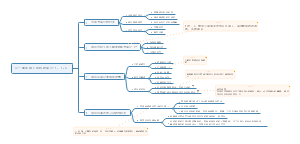
ACCA, Accounting for materials,第六章。内容有Accounting for materials、Control levels、Calculating costs relating to inventory... ...
编辑于2023-06-01 18:50:26ACCA fr,内含有tangible asset、 recognition、 initial measurement。
acca f2 第十章Costing methods,内容有: Job and batch costing Service costing Joint and by-products Activity-based costing (ABC) Total quality management(TQM) Life cycle costing Target costing
acca f2 第14章, a control technique which compares standard costs and revenues with actual results. Differences between standard and actual results are called variances and these are used to improve performance.
社区模板帮助中心,点此进入>>
ACCA fr,内含有tangible asset、 recognition、 initial measurement。
acca f2 第十章Costing methods,内容有: Job and batch costing Service costing Joint and by-products Activity-based costing (ABC) Total quality management(TQM) Life cycle costing Target costing
acca f2 第14章, a control technique which compares standard costs and revenues with actual results. Differences between standard and actual results are called variances and these are used to improve performance.
Accounting for materials
control inventory
Inventory
Raw materials
Spare parts/consumables
Work in progress
Finished goods
process
(a) Ordering
(b) Purchasing
(c) Receiving goods into store
(d) Storing
(e) Issuing inventory
(f) Controlling levels of inventory
raw material
Ordering
Purchase requisition
采购申请
Purchase order (PO)
采购订单
receipt
Delivery note
交货通知
Goods received note (GRN)
货物接收单
Materials requisition note
领料单
issue
Materials transfers and returns
材料转移和退回
Monitoring of inventory levels
Free inventory
The material inventory account
Any increases in materials inventory will result in a debit entry in the material control account,while any reductions in materials inventory will be shown as a credit in the material control account.
Control levels
Reorder level
Reorder level==Maximum usage per day×Maximum lead time 再订购水平=每天最大用量X最大交货期
Minimum level
Minimum level=Reorder level-(Average usage per day ×Average lead time) 最低水平=再订购水平-(每天平均使用量X平均周转货期)
Maximum level
Maximum level=Reorder level+Reorder quantity-(Minimum usage per day ×Minimum lead time) 最高水平=再订购水平+再订购数量-(每日最少使用量x最早交货期)
Average inventory
Reorder quantity
Calculating costs relating to inventory
Purchase cost
Purchase costs=purchase price×annual demand=P×D 采购成本=采购价格X年需求量 每个订单收取固定金额费用,总订购成本受库存政策(下订单数量)影响 收取单位费用,成本将是每年固定的,只取决于购买水平(假设不变)
Ordering costs
Ordering costs=cost per order ×number of orders pa=C₀×D/Q 订购成本=每份订单成本X订单数量 D=年需求量annually demand Q=每份订单的订购数量quantity per order (订单)次成本X年需求量/次订单量 material with a cost of placing an ordering of $32
Holding costs
Holding costs =【cost of holding one unit for one year】×average inventory throughout the year 持有一个单位一年的成本X全年平均库存 (仓库租金等,与政策和单位数量变量无关) Total holding costs =CH×(Q/2+minimum inventory) 总持有成本
The total cost is minimised when
当Q取该值时,总成本最小,即得到经济订货量单位
A company purchases material with a cost of placing an ordering[order cost 订购成本 Co] of $32. Annual demand for the material is 25,000 [年需求量eg.Demand 150 units per month]units and the annual holding cost per unit 【每件持有成本 cost per unit Ch】is 6.40. 
The economic order quantity model
Assumptions of the EOQ model
Activity 3: Basic EOQ Demand 150 units per month Cost per unit$25 Order cost $32 Holding cost 18%per year of inventory value Required (1) What is the economic order quantity(in units)? (2) What is the total cost associated with this order quantity? (3) What are the holding and order costs for order quantities of 200,600 and 1,000 units? 疑问???
Demand is constant
Delivery is instantaneous or lead time is constant
Purchase costs are constant(no discounts)
Bulk discounts
Step1 Calculate EOQ in normal way
Step2 Recalculate EOQ if it falls within a discount band;Ch will have changed as it is a %of purchase price.
Step 3 Calculate the total annual costs using the formula at the EOQ.
Step4 Calculate annual costs at the lower boundary of each discount band above the EOQ.
Step5 Select order quantity that minimises costs.
Total inventory costs
Total inventory costs=ordering costs+purchase costs+holding costs TC =Co·D/Q +PD +C(H)·Q/2 P =purchase price D =annual demand in units Co =fixed cost per order C(H) =cost of holding one unit for one year Q =number of units ordered The total cost is minimised when:Q=EOQ= 【根号下:(2X每个订单的固定成本X单位年需求量)除以(持有一个单位一年的成本)】
Ordering costs
Inventory valuation methods
Financial accounts
Inventory valuation
First in first out (FIFO)
Advantages and disadvantages of FIFO
Last in first out (LIFO)
Advantages and disadvantages of LIFO
Cumulative weighted average pricing(AVCO)
Advantages and disadvantages of AVCO
Economic batch quantity (EBQ)
is used when inventory is replenished gradually to match production rates
Q = The amount ordered per batch 每批订购数量 D = Demand in the time period 时间段内的需求 C。 = Set up cost of one batch/cost of making one order 设置\制作一个批次的成本 CH = Holding cost per unit per time period 每单位时间内的持有成本 R = Production rate/delivery rate per time period 每个时间段的生产率\交货率
Inventory valuation methods
Financial accounts
inventories are valued at the lower of cost and net realisable value
可变现净值率
Inventory valuation
(a)FIFO (First in first out)
issues are priced at the cost of the earliest delivery remaining in inventory
essentially a historical cost method, materials included in cost of production being valued at historical cost.
(b)LIFO(Last in first out)
The average price is determined by dividing the total cost by the total number of units.
(c)AVCO(Average cost)
calculates a cumulative weighted average of all the units in inventory to value those issued/sold.