导图社区 苏菲的世界—苏格拉底、柏拉图、亚里士多德
三者之间的发展,哲学的发展,三者之间的关系
编辑于2020-04-07 02:12:19Classical philosophy
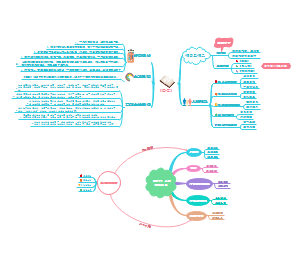
Socrates
Men at the center
Sophists and Socrates turned their attention from question of natural philosophy to problems related to man and society.
Sophists
Man is the measure of all things.
skepticsim
agnostic
There were no absolute norms for what was right or wrong.
Right and wrong was something “flowed”.
the difference between Socrates and Sophists
Socrates did not teach for money
Wisest is she who knows she does not know
"One thing only I know, and that is that I know nothing."
He believed that the ability to distinguish between right and wrong lies in people's reason and not in society.
He believe in the existence of eternal and absolute rules for what was right or wrong.
Teaching method
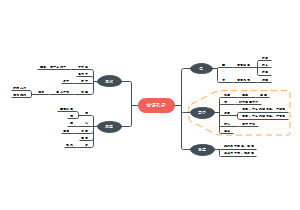
Instead of lecturing like a traditional schoolmaster, Socrates discussed.
Socrates saw his task as helping people tp give birth to the correct insight, since real understanding must come from within.
True sight comes from whitin.
Socratic irony
Rationalist
Socrates felt that it was necessary to establish a solid foundation for our knoeledge. He believed that this foundation lay inman's reason.
He who knows what good is will do good.
Views on women
Everybody can grasp philosophical truths if they just use their innate reason.
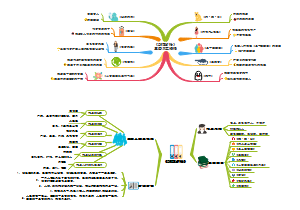
Plato--Socrates's pupil
Plato's academy
Plato set up his own school of philosophy, named after the legendary Greek hero Academus.
Teaching method
Lively discourse
Plato was concerned with the relationship between what is eternal and immutable and what flows.
He is concerned with both what is eternal and immutable in nature and what is eternal and immutable as regards morals and society.
Plato’s theory of ideas
Plato’s conception was of eternal and immutable patterns, spiritual and abstract in their nature that all things are fashioned after.
There must be a reality behind the “material world.” He called this reality the world of ideas, it contained the eternal and immutable “pattern” behind the various phenomenon we come across in nature.
The knowledge
We can only have true knowledge of things that can be understood with our reason.
We can rely on what our reason tells us because that is the same for everyone.
The reality is divided into two regions
The world of sense
The world of ideas
We have a body that flows, is inseparably bound to the world of sense. All our senses are based in the body and are consequently unreliable.
The soul existed before in inhabited the body.
The human body is composed of 3 parts (as well as a state)
The head—reason-wisdom\rulers
The chest—will-courage\auxiliaries
The abdomen—appetite-be curbed\fa-borers
Views on women
Women had the same common sense as men.
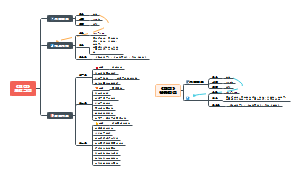
Aristotle--Plato's pupil
Criticized Plato’s theory of ideas
Plato was so engrossed in his eternal forms, or ideas, that he took very notice of the changes in nature.
Aristotle was preoccupied with just these changes—natural processes.
Plato held that ideas were more real than all the phenomena of nature. First came the idea, the came the sensores world.
Aristotle pointed out that nothing exists in consciousness that has not first been experienced by the senses.
Plato would have said that there is nothing in the natural world that has not first exists in the world of ideas.
Man has no innate ideas
The substance and the form
The reality consisted of various separate things that constitute a unity of form and substance.
The substance is what things are made of while the form is each thing’s specific characteristics.
Substance always contains the potentiality to realize a specific form.
The final cause
The material cause
The efficient cause
The form cause
The final cause
Logic
Syllogism
Nature’s scale
Nonliving things
Living things
Plants
Creatures
Namely animals
Humans
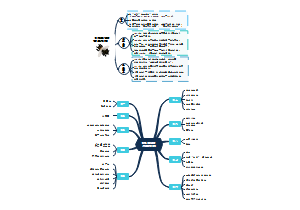
Ethics
There are three forms of happiness (Golden Mean)
A life of pleasure and enjoyment.
A life as a free and responsible citizen.
A life as thinker and philosopher
Aristotle emphasized that all three criteria must be present at the same time for man to find happiness and fulfillment.
The ethics of both plato and Aristotle contain echoes of Greek medicine: only by exercising balance and temperance will I achieve a happy or harmonious life
The man is by nature a political animal.
Views on women
Women were incomplete in some way. A woman was an "unfinished man."