导图社区 Who should rule
- 49
- 3
- 0
- 举报
Who should rule
A introduction of political philosophy 第三章的逻辑导图整理。
编辑于2020-08-27 21:52:33- 相似推荐
- 大纲


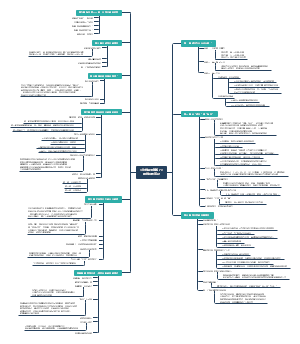


WHO SHOULD RULE?
Introduction
Argument
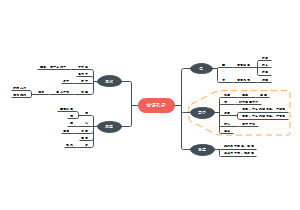
Who should rule
Answer: democracy
What's democracy
Democracy is governed 'of the people, by the people, and for the people'
Of the people
A democratic state has power only over the people who make up the electorate
For the people
The government exists for the sake of its citizens
By the people
Collective self-rule
Why democracy
Even the word 'democratic' is fought over, and has been adopted by regimes which appear quite undemocratic.
Criticism
The tyranny of the majority
Representative democracy vs. Direct democracy
Other voting problem
Voting candidate problem
Voting procedure problem
Voter problem
Plato against democracy
Argument: Who should rule
Answer: philosophical king
What's Philosophical king
The person who experiences long time philosophical training should rule the state
Why is him?
Premise
Craft analogy
Ruling is a skill which demands certain knowledge
Philosophical training can provide such knowledge
Philosophical training only suits to few people, just like certain careers only belong to certain person
The ruling of state has a confirm object
If we have problem and want to solve it, the expert who knows relative knowledge is the most suitable person.
Conclusion
We need to choose the person who has received philosophical training as the king
How he will rule
Criticism
Where philosophical king come from
Response
Since children, the person who are judged as suitable for philosophical training will bring to philosophical training and cultivate as king
Problems with guardianship
How can we ensure that the philosophical king or dictator will not break laws and make interest for himself
Response
The guardians must be placed in a position where the opportunities for corruption are minimized.
Objection
Why they want to rule
Response
Passive response: whatever there are some rulers and why cannot it is ourselves?
How can we ensure the behaviors of reversing laws and earn interest for themselves?
Defense
A proper philosophical education makes a person resistant to temptation
How guardians come to be appointed
Response
Potential guardians can be picked out at an early age, and then undergo various rigours which will allow for the selection of the very best
Objection
Whether their claims to rule would ever be acceptable to the population as a whole
Knowledge and interest
1. No one can be absolutely certain of anything at all?
Response
But we cannot admit that when we have some problem, we still turn to the help of experts rather than by voting to find a solution.
And in fact, we do need much knowledge to rule, such as political knowledge, social knowledge or psychological knowledge...
2. How are those interests of people to be known by philosophical king?
Although Plato is opposed to democracy, he shares the assumption that the rulers should have the interests of the people at heart.
Reality is too complicate to find out what's people actually want
Even we revise it to say that philosophical king only need to know what's best for people, but we still cannot identifify their interest, reality is extremely complex
And for democratic, voting can show people's interest
Objection
But mix-movitation shows that espeical in democracy, voting's outcome is affected by enormous reasons
Defense
If we do not want to accept mixed-motivation voting then it seems we must choose between two models: only for preference or only for people's interest or common good
Objection
If we chose later model, it still cannot display what's common good for people, it will only tell us what the majority think is in the common good, not where the majority preference actually lies
Why not experts to judge what's common good?
Response
Marie's mathematical argument shows the advantages of allowing people to vote on the common good
Objection
But it need to satisfy two conditions
1. The average individual must have a better than even chance of being right
At least in Plato's mind, it's impossible
2. Each individual must be motivated to vote according to his or her ideas of the common good
We return to the problem of mix-motivation
Is there something intrinsically good about democracy?
Democracy(political participant hobby) helps people in enriching and testing people's physical and mental powers, and develop their sense of self-worth
For example, why shouldn't a journey in the ship of state be a drunken pleasure- cruise?
Freedom
Equality
Rousseau and general will
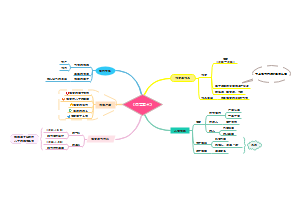
Argument: Who should rule
Answer: direct democracy
What's direct democracy
Everyone in Rousseau's polity who has a hign value on education could participate in political decision
Why direct democracy
General will
What's general will
The answer to mix-motivation problem.
Eg. 1 millin vs. 100 persons
The person who lives in Rousseau's polity would not make decisions from their own interest, but from common good.
The function of general will
Two conditions about arguing democracy is good
People have a better than even chance, on average, of being right, then a majority decision is very likely to get to the right answer, at least in a reasonably large electorate.
People are voting on their idea of the right solution— and not simply for the outcome that most favours them
Conclusion
We introduced Rousseau as someone who had intuitively grasped the importance of these conditions, and had outlined a system which met them.
How direct democray
The general will must apply equally to all citizens, thus general will would not only belong to certain group.
Thus Rousseau requires his citizens to play an active role in political decision-making.
How laws that affect everone will be enacted and applied?
Enact
Popular assembly of everyone + general will
Apply
The government of some capable person would only decide whether the conditions of law is satisfied and apply it or not.
子主题
Criticism
General will
How general will emerge?
Emerge?
Response
A good state needs to pass few laws.
Therefore the people can use all their powers to inform themselves of what is required in the cases where they are called upon to vote.
Equally affecting everone?
It must be a classless society.
How general will maintain?
The problem of particular will
Response
There should be no political parties.
Or, there should be very many, thus the interests of particular groups should have little influence on the decisions of the whole.
How maintain?
Response
Education
Education for civic virtue.
This cements the social bond and widens each person's view so they take an interest in the state as a whole, and hence will naturally seek to advance the general will.
Censorship
The job of the censor is to ridicule, and so discourage, certain forms of anti-social behaviour.
Civil religion
Each state should be regulated by what he calls a 'civil religion'
Objection
Totalitarian?
Defense
1.
2. Rousseau's liberity is different with modern liberalism, thus he should not unduly care about this criticisim.
Minority problem
Exclusion
Bitting to death
Can we ensure that the common good in people's mind is trully common good?
If the people are voting on the basis of their view of the general interest, they are likely to be right?
Response
Education was as important for Rousseau as it was for Plato. Individuals need to be educated into citizenship.
The general will should not be difficult
Freedom and equality
How well democracy expresses or advances the values of freedom and equality.
Equality
Objection
Female inequality problem
The disadvantage of democracy: there must be somepeople who will help voters to do domestic work and other labors so that they have time to join in political decision-making.
Defense
1. A right to vote does not bring with it an onerous responsibility to keep oneself well informed about political and economic matters
2. In the developed world at least, household machinery has greatly eased the burdens of domestic work.
Freedom
Freedom of thought is severely restricted, particularly in the area of religion.
When we add to this the existence of the office of the censor, whose role it is to enforce public or customary morality, then individuals appear to lose any freedom to be unconventional.
Response
Roussea's definition about liberity
Negative liberity
Following your desires, unconstrained by others
Positive liberity
'living the life that the rational person would choose to live'
It is only by acting in accordance with the laws created by the Sovereign—acting on the general will—that we can be said, according to Rousseau, to be truly free.
Objection
On this view one can be 'forced to be free', at least for minority, they are forced to obey laws which are enacted by majority and thus they are forced to 'free'.
Opponents of Rousseau have pointed out that on this basis even highly repressive regimes can be defended on grounds of their support of freedom.
Representative democracy
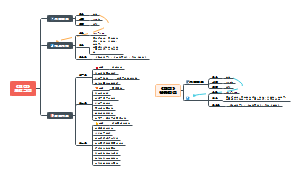
Argument: Who should rule
Answer: representative democracy
What's representative democracy
The people elect representatives who then both make laws and put them into practice.
Why representative democracy
The purpose of government
To 'improve' the citizens
To manage their public affairs
The advantage of representative democracy over good despotism, or absolute monarchy
Premise
1. (Assumption)human beings flourish only under conditions of independence
They need to be self-protecting and self- dependent if they are to avoid oppression and make their lives worthwhile
2. Despotism leads to passivity and inaction, for it produces a people who have no need to inform or educate themselves in the business of the state.
Conclusion
This affects not only the individuals themselves, but also the likely prosperity of the state, thus Mill feels confident that all citizens must play their role in the exercise of sovereignty.
The disadvantage of direct democracy
Efficicent problem
The same opinion with Plato's: things will go badly wrong if we let the people exert great influence over their appointed expert administrators
How representative democracy
Criticism
The government's purpose
Why government should improve the citizens?
How representative democracy will demostrate it in its polity?
Response
It will be answered in next chapter
Whether representative democracy is democracy or not
Response
Mill would accept that representative democracy can fail to achieve its purposes.
换句话说,Mill认为在代议制民主一方面,体现了部分民主,另一方面也实现了功利最大化
But he is keen to propose a system that will do better
Conclusion
Thus he particularly emphasized the importance of educating the citizens for citizenship
For example, Mill emphasizes the importance of jury service and participation in local government
How to protect ourselves from unsavoury leaders who may obtain power
Response
Separation of powers
Further measures to prevent abuse of the democratic process
A limitation on the money
Members of the government should not be paid
The damage of the possible behaviour of the voters
Response
Voters should vote in accordance with their ideas of the general interest
Objection
How can we ensure that voters are going to vote with general interest
Defense
Open vote and has records in detail
Objection
The danger of coercion
Certain people, at least temporarily, are to be excluded from the franchise
Objection
But still, what should we do when short-eye voters votes sombody wrong?
Reponse
On instrumental grounds, and to identify the steps to be taken if there is a danger that it might lead to undesirable consequences.
Plural vote of intellectuals
Objection
There is something of a tension in his thought here
To approve the idea of plural vote, he argued that each of the uneducated will accept that the educated 'understand the subject better than himself, that the other's opinion should be counted for more than his own accords with his expectations, and with the course of things which in all other areas of life he is accustomed to acquiesce in'
Objection
If the uneducated revere the educated then we need not give the latter extra votes, for the uneducated can simply seek out their opinions.
But if they do not respect such opinions then they would not accept plural voting.
Conclusion
Plural voting is either unnecessary or unjustified.
Protecting the minority
How to prevent the 'tyranny of the majority'
Response
Elaborate (and possibly incoherent) system of proportional representation
Objection
A represented minority could still be outvoted in parliament.
Defense
The only way is by giving the morally highly enlightened very many votes
Another solution: to restrict the legitimate sphere of government activity.
Freedom and equality
Obvious in Mill's polity, equality is sacrified