导图社区 CPIM
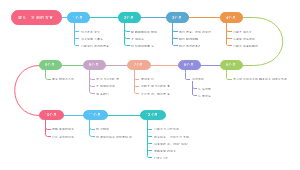
CPIM part 1,CPIM认证体系包括一系列课程,这些课程涵盖了生产与库存管理的各个方面,如基础管理概念、库存管理、生产计划与控制、物料需求计划(MRP)、精益生产与持续改进等。通过系统的学习和考试,学员可以获得对生产与库存管理全面而深入的理解,并掌握一系列实用的工具和技术,以优化企业的生产与库存流程,提高效率和降低成本。
编辑于2024-07-14 08:30:31CPIM part 1,CPIM认证体系包括一系列课程,这些课程涵盖了生产与库存管理的各个方面,如基础管理概念、库存管理、生产计划与控制、物料需求计划(MRP)、精益生产与持续改进等。通过系统的学习和考试,学员可以获得对生产与库存管理全面而深入的理解,并掌握一系列实用的工具和技术,以优化企业的生产与库存流程,提高效率和降低成本。
Coach,领导和教练的区别,教练使用的场景,练式领导是一种将教练的理念和方法应用于领导实践中的领导风格。这种领导方式不仅关注员工的业绩和表现,更重视员工的成长和发展,通过一系列的方法和手段来激发员工的潜能,帮助员工实现个人和职业目标。
法国作家,安德烈 纪德的作品,纠结的阿丽莎,为爱疯狂的“我”,《窄门》讲述了一段纯洁炙热却又无限辛酸的爱情悲剧。主人公杰罗姆自小爱着表姐阿莉莎,两人青梅竹马,彼此爱恋,并以全部的纯真与热情,一心只想为对方而变成更好的人。然而,阿莉莎目睹了母亲与他人私奔、妹妹过着平淡无爱的婚姻生活后,对尘世的幸福和爱情中的欲念成分充满了疑虑和拒斥。她恪守清教徒的自我约束,将感情深深埋在心底,最终积忧成疾,不幸身亡。
社区模板帮助中心,点此进入>>
CPIM part 1,CPIM认证体系包括一系列课程,这些课程涵盖了生产与库存管理的各个方面,如基础管理概念、库存管理、生产计划与控制、物料需求计划(MRP)、精益生产与持续改进等。通过系统的学习和考试,学员可以获得对生产与库存管理全面而深入的理解,并掌握一系列实用的工具和技术,以优化企业的生产与库存流程,提高效率和降低成本。
Coach,领导和教练的区别,教练使用的场景,练式领导是一种将教练的理念和方法应用于领导实践中的领导风格。这种领导方式不仅关注员工的业绩和表现,更重视员工的成长和发展,通过一系列的方法和手段来激发员工的潜能,帮助员工实现个人和职业目标。
法国作家,安德烈 纪德的作品,纠结的阿丽莎,为爱疯狂的“我”,《窄门》讲述了一段纯洁炙热却又无限辛酸的爱情悲剧。主人公杰罗姆自小爱着表姐阿莉莎,两人青梅竹马,彼此爱恋,并以全部的纯真与热情,一心只想为对方而变成更好的人。然而,阿莉莎目睹了母亲与他人私奔、妹妹过着平淡无爱的婚姻生活后,对尘世的幸福和爱情中的欲念成分充满了疑虑和拒斥。她恪守清教徒的自我约束,将感情深深埋在心底,最终积忧成疾,不幸身亡。
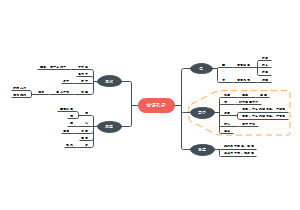
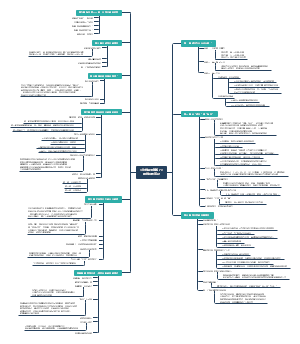
CPIM
Supplier chain management
Supply chain Vs Supply chain management
Process introduction
Functions
Marketing
Operations
Strategic & Tactical
Balanced Scorecard
Priorities
Quality
Dependability(OTD)
Speed
Flexibility
Cost
SMART
Finance
impacts
Customer services
5R + R(Right Cost)
Production efficiency
Inventory investment
Manufacturing,Design,Planning and Control
Manufacturing
Variety & Volume
ETO
MTO
ATO
MTS
Design
Process types
Project
Work center
batch
Line
Continuous
Layouts
fixed position (Project)
Functional(intermittent)
Cellular
Flow process (Product-based )
Manufacturing planning and Control(MPC)
Planning
Resource planning
Material
Capacity(Equipment/Workers)
Control
Quality and continuous improvement
Lean
Demand Management
Demand Management process
Level
Strategic - Manage
Tactical-Shape
Operational- Prioritize
Marketing Management
4Ps
Product
Price
Promotion
Place
Cost-Volume-Profit analysis
Customer Relationship Management(CRM)
Vs Order management
Characteristics of Demand
Independent Demand(S&OP) Vs Dependent Demand(MPS)
Stable - Dynamic
Forecasting
Horizon and Purpose
Business planning(2-10years)
Sale & Operations planning(1-3years)
Master scheduling(3-18months)
Principles
Most Wrong
Error estimates
Family > Unit forecast
In Near > Long term
10 step Forecasting process
Deseasonalization Vs Seasonal Index
SI=各年季度平均/(各年平均/4)
Techniques
Qualitative
Judgment
Quantitative
Methematics
Intrinsic(Time series)
Alpha(α) smoothing constant (0~1, usually 0~0.3)
New forecast = (α*最新需求)+(1-α)*过往的需求
Extrinsic(Causal)
Tracking
Bias Vs Random
Deviation(Algebraic) Vs Error (Abs)
Mean Absolute Deviation(MAD)
MAD=|(实际-预测)|/期数
绝对值
Tracking Signal
Deviation/MAD
F: Master planning
Priority planning
S & OP (Product family level)1-3 years
Product family level
Master Scheduling(End-item level) 3-18months
MRP(Component level) 3-18months
MRP:Material requirement planning
Production Strategies
Chase
Level
Subcontracting
Hybrid
Input,output and purpost of S&OP plan /master scheduling & MPS
MPS:Master Production Schedule
MS - realistic & Achievable
Valid schedule
Valid capacity
Valid Inventory or backlog
Valid number of changeovers
Valod batches and lots
Heijunka for Lean production
MPS,PAB,ATP
PAB:Projected available balance ATP:Available-to-promise
Planning Horizons,Time fences,Zones
Frozen Zone
Slushy Zone
Liquid Zone
RCCP
RCCP: Rough-cut capacity planning
G: Material Requirements planning
independent demand
Capacity requirement planning check
MRP environment
Objectives
Planning
Control
Input
MPS
BOM
Planning factors
Inventory status
Process
Output
BOM
MRP logic
H:Capacity Management
Overview
Determining Capacity
Required capacity
Open orders
Planned orders
Available capacity
BOM
Work center
Routings
Hierarchy
Measurement System
MPR
Unit - not pieces
Unit- standard time
Setup
Run
Average worker
Lead time
operation tme - Load
Setup
Run time
Time between OT - Not load
Queue
Wait
Move
Method
reset
unavoidable delays
Extensive observation
Learning curve issue
CRP
OEE=A*P*Q
Demonstrated Capacity
Average data
Calculate the load
Order->Time
Scheduling
Sum for work center
Resolving Differences
Change Capacity
Alter load and resimulate
Lean
Straightforward
Level scheduling
TPM
eliminate waste
Leeway
Idle equipment
Workers not idle
I: Purchasing
Participants & Objectives
Type of Purchases
Capital expenditures
Regular purchases
Directly used in product
Part of overhead
Participants
Sole responsibility
Marketing
Engineering
Production planner
Shop floor
Objectives
Conventional
Quality & Quantity
Cost
LT,service
Supply chain management
Partnerships
Social responsibility
Part of supplier selection
Process
planning
Specifications
Functional
Quantity
Price
Select supplier
Basic Sourcing methods
Selection criteria
Trusted partners
Managed Inventories
Negotiate
PO
Complex or frequent
Relative
Alternative
Price,terms,Delivery and Q, Q
Execution
cycle
Contract buying
Inputs
MRP
Supplier scheduling
Kanban
Buffer replenishment
No PO needed
MRP planned order release to supplier
Monitoring & Controlling
J:Aggregate inventory management
Overview
Customer service
Inventory
Function
SS
Decoupling inventory
Buffer
Anticipation inventory
Lot-size inventory
Transportation invertory
Hedge inventory
Manufacturing efficiency
Cost
Inventory cost
item
Carrying
Ordering
Stockout
Capacity-related
Components of carrying cost
Capital costs
Financing
Opportunity
Storage costs
Space
Personnel
Equipment
Risk costs
Obsolescence
Damage
Pilferage
Insurance
Deterioration
Components of ordering cost
Purchasing cycle
Factory
Production control
Setup
Lost capacity
FC statements & Inventory
Balance sheet
Assets = Liabilities + Owner's Equity
Income Statement
Cash Flows
Average Inventory and Inventory turnover
Ave. Inv.
Inven. T = Annual COGS/ Average Inv.
Days of supply
FIFO,LIFO and Average Cost
Standard Cost Accounting Vs Lean Acc.
Policies & Control
Policies
Stock keeping Unit (SKU)
in different locations
Wall-to-Wall Inventory
Traceability and lot control
Aggregate control
Item Controls
Safety lead time
Safety Stock
SD = 1.2 MAD (Mean Absolute Deviation)
SS= SD * SD safety factor or MAD * MAD safety factor
Customer service level
Adjusting Lead Time
New SS = Old SS * SQRT(New lead time / Old lead time)
K:Item Inventory management
Control
A/B/C - by Value (B 30% by Qty)
Order Qty
How much
How often
Lot for lot
Qty=requirement
MRP or Lean
A items, expensive components
Large or bulky items (Material handing)
Perishables
Fixed Order Quantity (FOQ)
Fixed lot size or multiples thereof
Basis(efficient production batch , etc)
Fast & easy
Lot-size inventory
Min-Max system
Oder n periods of supply
C items
Economic order quantity (EOQ)
No. of orders(A)
Lots size Q (Q)
Cost of per order (S)
Annual ordering cost = A * S / Q
Cost per unit (c)
Carrying Cost Rate(i)
Annual Carrying cost = (Q * c * i)/2
Total Inventory cost = Ordering cost + Carrying cost
EOQ : Order = Carrying
EOQ = SQRT(2AS/ci)
Independent Demand ordering system
When to place an order
Dependent demand - MRP
Kanban - Lean
Drum-buffer-rope - TOC
Independent demand
Order-point
Periodic review
Lean One-Piece flow
auditing Inventory records
L:Execution and Controal
TOC
Simplicity point
Easy to see
Throughput unit
Throughput-Based
Behavior-based
Drum-Buffer-Rope
Drum - Takt / Pull
Buffer - Time buffer-JIT
Rope - Demand-pull
Continuous improvement
Throughput Accounting
Net profit = Throughput -Operating Expense
Throughput = Rev. - True Variable Costs
Critical Chain and TOC
Shortest Chain
Critical chain
Production Activity Control(PAC)
Order - MPS & MRP
Resources
Information
WIP Inventory
Customer service level
Scheduling and implementation
Scheduling
Final Assembly schedule (FAS)
Job shop
Method
Backward
Forward
Finite
Infinite
Drum-Buffer-Rope
Other scheduling tools
Implementation
Capacity Control
M:Physical Distribution
Physical Distribution Overview
Value added
Utility,ability
Profitably
Customer service
Physical Supply & Distribution Channels
Physical Distribution Vs Transaction Channels
Activities
Global Distribution
Reverse logistics
Physical distribution stakeholders
Cost = Transportation + Carrying+packaging
Air
Water
Distribution Inventory
Planning system
Pull & Push
Distribution requirements planning
Transportation
Overview
Customer service level
Minimize
Transportation cost
In-transit
TL Vs LTL
Ways
Water
Rail
Road
Air
Pipeline
Intermodal
Warehousing
Location system
Fixed loation
Permanent
50% of time half of location empty
Easy to learn where
Floating
Assign
Maximize cube
WMS
Zone
Certain types
Fixed & floating benefit
Less serching
浮动主题
Life cycle
Bullwhip effect