导图社区 4 Corporate Issuers
- 241
- 3
- 1
- 举报
4 Corporate Issuers
CFA一级科目Corporate issuers,所有重要公式都在图上,让你高效备考,希望能给大家带来帮助。
编辑于2022-05-13 16:55:36- 4 Corporate Issuers
- CFA一级科目
- 2024cpa会计科目第17章收入、费用和利润
2024cpa会计科目第17章,本章属于非常重要的章节,其内容知识点多、综合性强,可以各种题型进行考核。既可以单独进行考核客观题和主观题,也可以与前期差错更正、资产负债表日后事项等内容相结合在主观题中进行考核。2018年、2020年、2021年、2022年均在主观题中进行考核,近几年平均分值 11分左右。
- 2024cpa会计科目第十二章或有事项
2024cpa会计科目第十二章,本章内容可以各种题型进行考核。客观题主要考核或有资产和或有负债的相关概念、亏损合同的处理原则、预计负债最佳估计数的确定、与产品质量保证相关的预计负债的确认、与重组有关的直接支出的判断等;同时,本章内容(如:未决诉讼)可与资产负债表日后事项、差错更正等内容相结合、产品质量保证与收入相结合在主观题中进行考核。近几年考试平均分值为2分左右。
- 2024cpa会计科目第十一章借款费用
2024cpa会计科目第十一章,本章属于比较重要的章节,考试时多以单选题和多选题等客观题形式进行考核,也可以与应付债券(包括可转换公司债券)、外币业务等相关知识结合在主观题中进行考核。重点掌握借款费用的范围、资本化的条件及借款费用资本化金额的计量,近几年考试分值为3分左右。
4 Corporate Issuers
社区模板帮助中心,点此进入>>
- 2024cpa会计科目第17章收入、费用和利润
2024cpa会计科目第17章,本章属于非常重要的章节,其内容知识点多、综合性强,可以各种题型进行考核。既可以单独进行考核客观题和主观题,也可以与前期差错更正、资产负债表日后事项等内容相结合在主观题中进行考核。2018年、2020年、2021年、2022年均在主观题中进行考核,近几年平均分值 11分左右。
- 2024cpa会计科目第十二章或有事项
2024cpa会计科目第十二章,本章内容可以各种题型进行考核。客观题主要考核或有资产和或有负债的相关概念、亏损合同的处理原则、预计负债最佳估计数的确定、与产品质量保证相关的预计负债的确认、与重组有关的直接支出的判断等;同时,本章内容(如:未决诉讼)可与资产负债表日后事项、差错更正等内容相结合、产品质量保证与收入相结合在主观题中进行考核。近几年考试平均分值为2分左右。
- 2024cpa会计科目第十一章借款费用
2024cpa会计科目第十一章,本章属于比较重要的章节,考试时多以单选题和多选题等客观题形式进行考核,也可以与应付债券(包括可转换公司债券)、外币业务等相关知识结合在主观题中进行考核。重点掌握借款费用的范围、资本化的条件及借款费用资本化金额的计量,近几年考试分值为3分左右。
- 相似推荐
- 大纲

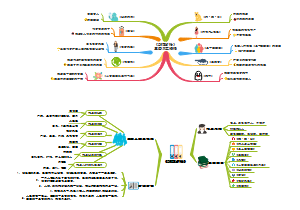
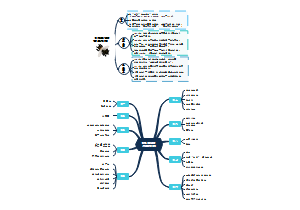
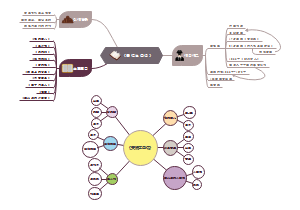
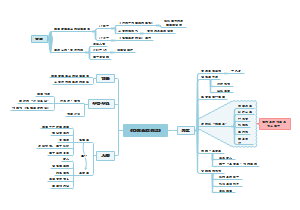

Corporate Issuers
Introduction to Corporate Governance and Other ESG Considerations
Corporate Governance Overview
Corporate governance can be defined as "the system of internal controls and proceduresbywhich individual companies are managed"
It provides a framework that defines the rights, roles and responsibilities of various groups within an organization
At its core, corporate governance is the arrangement of checks, balances, and incentives a company needs in order to minimize and manage the conflicting interests between insiders and external shareowners
两种理论
Shareholder theory: takes the view that the most important responsibility of a company's managers is to maximize shareholder returns;
Stakeholder theory: broadens a company's focus beyond the interests of only its shareholders to its customers, suppliers, employees, and others who have an interest in the company
Company stakeholder
Stakeholder Groups
Shareholders
Managers and employees
Board of directors
Creditors
Suppliers
Customers
Governments/regulators
Principal–Agent and Other Relationships in Corporate Governance
产生原因: A principal–agent relationship (also known as an agency relationship) is created when a principal hires an agent to perform a particular task or service
分类
Shareholders and managers
In certain circumstances, managers may seek to maximize their personal benefits (e.g., remuneration and perquisites) to the detriment of shareholders' interests
Diverge with respect to risk tolerance
In some cases, shareholders with diversified investment portfolios may have a relatively high risk tolerance
Managers and directors, however, are typically more risk averse
Managers typically have greater access toinformation about the business and are more knowledgeable about its operations
Such "information asymmetry" makes it easier for managers to make strategic decisions that are not necessarily in the best interest of shareholders and weakens the ability of shareholders to exercise control
Another conflict of interest might arise between shareholders and directors when the board is influenced by insiders. In this case, the ability of the board to properly perform its monitoring and control role may be hindered
Finally, a conflict between the two groups may occur if directors favor certain influential shareholders over other shareholders
Controlling and minority shareholder relationships
In such ownership structures, the opinions of minority shareholders are often outweighed or overshadowed by the influence of the controlling shareholders
Minority shareholders often have limited or no control over management and limitedor novoice in director appointments or in major transactions
Straight voting vs. Cumulative: Straight voting (one vote for each share owned), controlling shareholders clearly wield the most influence in board of director elections, leaving minority shareholders with much less representation on the board
The multiple-class structure enables controlling shareholders to mitigate dilution of their voting power when new shares are issued
Manager and Board Relationships
Shareholder and creditor relationships: a divergence in risk tolerance
Shareholders would likely prefer riskier projects with a stronglikelihoodof higher return potential
Creditors would likely prefer stable performance and lower-risk activities
Other Stakeholder Conflicts
Conflict between customers and shareholders
Conflict between customers and suppliers
Conflict between shareholders and governments or regulators (tax)
Stakeholder Management
Overview
In general
Effective Communication and active engagement;
Balance their interests and limit the impact of conflicts.
Corporate governance and stakeholder management frameworks
Legal infrastructure: defines rights established by law
Contractual infrastructure: shaped by the contractual arrangements entered
Organizational infrastructure: internal systems, governance procedures, andpractices adopted andcontrolled by the company in managing its stakeholder relationships;
Governmental infrastructure: regulations imposed on companies
Mechanisms of stakeholder management
General meetings
AGM (annual general meeting)simple majority
Extraordinary general meeting-supermajority vote: when significant resolutions requiring shareholder approval
Proxy voting: shareholders who are unable to attend a meetingtoauthorize another individual to vote on their behalf
Cumulative voting: enables each shareholder to accumulateand vote all his or her shares for a single candidate
Board of Director Mechanisms
Composition of the board of directors
One tier: comprise a mix of executive and non-executive directors
Two tier: the supervisory and management boards are independent fromeach other (E.g., separation of CEO and chairman)
Staggered boards
Functions and Responsibilities of the Board
The board guides and approves the company's strategic direction, taking into consideration the company's risk profile
The board also reviews corporate performance and determines relevant courses of action accordingly
The board is also responsible for selecting, appointing, and terminating the employment of senior managers (or the management board in case of a two-tier structure)
The board plays a central role in ensuring the effectiveness of the company's audit and control systems
In addition, the board typically ensures that the company has an appropriate enterprise risk management system in place
Board of Directors Committees
Audit committee
Remuneration or compensation committee
Nominations committee
Governance committee
Risk committee
Investment committee
Committee member independence
The Audit Function
Reporting and Transparency
Policies on Related-Party Transactions
Remuneration Policies
Say on Pay
Contractual Agreements with Creditors
Employee Laws and Contracts
Contractual Agreements with Customers and Suppliers
Laws and Regulations
Factors Affecting Stakeholder Relationships and Corporate Governance
Market Factors
Shareholder engagement
Shareholder activism
Competition and Takeovers
Proxy contest (or proxy fight)
Tender offer
Hostile takeover
Non-market factors
Legal environment
Common law system: the role of judges is generally limited to rigidly applying the statutes and codes to the specific case brought before the court
Civil law system: laws are created both from statutes enacted by the legislature and by judges through judicial opinions
The key difference between the two systems lies in the ability of a judge to create laws
The media
The corporate governance industry
Corporate governance and stakeholder management risks and benefits
Risks
Weak control systems:
Ineffective decision making
Legal, regulatory, and reputational
Default and bankruptcy risks
Benefits
Operational efficiency
Improved control
Better operating and financial performance
Lower default risk and cost of debt
Analyst Considerations in Corporate Governance and Stakeholder Management
Economic ownership and voting control
Dual-class structures: the most common way that voting power is decoupled fromownership
Proponents and critics about dual-class structures
Proponents: the systems promote company stability and enable management to make long-term strategic investments
Critics: they create conflicts of interest between the providers of capital and the management of the business
Board of directors representation
Remuneration and company performance
Investors in the company
Strength of shareholders' rights
Managing long-term risks
ESG Considerations for Investors
ESG Terminology
ESG Implementation Approaches
Negative screening refers to the practice of excluding certain sectors or companies that violate accepted standards(most common)
Positive screening typically implemented through an ESG ranking or scoring approach, isthe inclusion of certain sectors, companies, or practices in a fund or portfolio on the basis of specific ESG criteria
Relative/best-in-class screening,
Full integration,
Overlay/portfolio tilt,
Risk factor/risk premium investing,
Thematic investment,
Engagement/active ownership
Catalysts for ESG Growth
ESG Market Overview
ESG Factors in Investment Analysis
Uses of Capital
Introduction
Steps in the Capital Allocation Process
1||| Idea generation
2||| Investment analysis
3||| Captial allowcation planning
4||| Monitoring and post-audit
Types of Capital Projects
Replacement projects
These are among the easier capital budgeting decisions
To maintain the current business
For cost reduction purpose
Expansion projects
For current projects;
Increase the size of the business
May involve more uncertainties than replacement decisions, and these decisions will be more carefully considered
New products and services
Expose the company to even more uncertainties than expansion projects
These decisions are more complex and will involve more people in the decision-making process
Regulatory, safety, and environmental projects
Frequently required by a governmental agency, an insurance company, or some other external party
May generate no revenue and might not be undertaken by a company
Often, company will accept the required investment and continue to operate
Occasionally, the cost is so high that the company would cease operating altogether or to shut down any part of the business related to the project
Other projects
Projects that cannot be easily analyzed by using capital budgeting process
These are either pet projects of someone in the company or so risky that they are difficult to analyze by the usual methods
Basic Principles
Decisions are based on cash flows
Timing of cash flows is crucial( Time value of money)
Cash flows are based on opportunity costs
Cash flows are analyzed on an after-tax basis: Taxes must be fully reflected in all capital budgeting decisions
Financing costs are ignored: Financing costs have already been reflected in the required rate of return
Capital budgeting cash flows are not accounting net income
Some important concepts
Sunk cost: one that has already been incurred and cannot change
Opportunity cost: what a resource is worth in its next-best use
Incremental cash flow: the cash flow with a decision minus the cash flow without that decision
Externality: the effect of an investment on other things besides the investment itself
Positive
Negative: Cannibalization
Two types of cash flows
Conventional cash flows: an initial outflow followed by a series of inflows
Nonconventional cash flows: the initial outflow is not followed by inflows only, but the cash flows can flip from positive to negative again (or even change signs several times)
Types of project interactions
Independent projects VS mutually exclusive projects
Independent projects: cash flows are independent
Mutually exclusive projects: compete directly with each other
Project sequencing
Unlimited funds VS capital rationing
Unlimited funds environment: the company can raise the funds it wants for all profitable projects
Capital rationing: the company has a fixed amount of funds to invest
Deal with cash flows
Ignore
Sunk costs
Financing costs
Include
Externality
Opportunity costs
Investment Decision Criteria
Net Present Value(NPV)
Definition
Decision rules
For independent projects
NPV>0, increase wealth, accept
NPV<0, decrease wealth, reject
For mutually exclusive projects: Choose the one with highest NPV
Advantages and disadvantages
Advantages
Shows the amount of gains as currency amount;
Positive NPV of project adds value to the firm (or to shareholders) rather than creditors(creditors only gain the interest whatever project bring benefits or losses)
Key advantage of NPV: Consistent with the goal of shareholders wealth maximization
Realistic discount rate-included opportunity cost of funds (the expected return of stockholders
Disadvantage: Size of projects ignored
Internal Rate of Return(IRR)
Definition
Decision rules
For independent projects
IRR≥ the required date of return (hurdle rate), accept
IRR≥ the required date of return, reject
For mutually exclusive projects: Choose the one with highest IRR
Advantages and disadvantages
Advantages
Reflect the profitability (not reflect absolute amount of profit gain)
Comparable for projects with different size
Disadvantages
Unrealistic reinvestment assumption: assume the reinvestment rate is IRR
No IRR & multiple IRR;
Conflicting ranking results of mutually exclusive projects with NPV
NPV is superior to IRR
Advantages of NPV& IRR
Based on Cash flows
Considering Time value of money—-Opportunity cost
Take into account the cash flows generated over the whole project life
Real Options
定义: apital budgeting options that allow managers to make decisions in the future that alter the value of capital budgeting investment decisions made today
特点
Just deal with real assets instead of financial assets
Entail the right to make a decision, but not the obligation
The flexibility is given to managers to enhance the NPV of the company's capital investments
分类
Timing Options: the company can delay investing
Sizing Options
Abandonment option: The company can abandon the project when the financial results are disappointingafter investing
Expansion option: The company can make additional investments when future financial results are strong after investing
Flexibility Options
Price-setting options: By increasing prices, the company could benefit from the excess demand, which cannot do by increasing production
Production flexibility options: The company can profit from working overtime or from adding additional shifts
Fundamental Options
定义: The payoffs from the investment are contingent on an underlying asset, just like most financial options
实例: High oil prices, drill a well
Four common sense approaches to real options analysis
Use DCF analysis without considering options: If the NPV is positive without considering real options, and the project has real options that would simply add more value, it is unnecessary to evaluate the options
Consider the Project NPV = NPV(based on DCF alone) - Cost of options + Value of options
Use decision trees
Use option pricing models
Common capital budgeting pitfalls
Incorrect anticipation for economic response
The template model does not match the project
Influential managers for pet projects
Investment decision made based on EPS, NI or ROE
Basing decisions on the IRR
Bad accounting for incorrect estimation for cash flows
Misstate the overhead costs
Use improper discount rate
Overspending and under-spending the capital budget
Failure to consider alternative investment ideas
Ignoring sunk cost or opportunity costs
Sources of Capital
Corporate Financing Options
Internal and External Funding Sources
Debt vs. Equity
Evaluating Short-term Financing Choices
Sources of short-term funding from banks
Lines of credit: for large corporations with limited reliability
Uncommitted line of credit: bank reserves the right to refuse to honor any request for use of theline
Committed Line of credit: bank charges a fee for making a commitment for short termlending more reliable
A revolving line of credit: a commitment for longer term lending, more reliable than Committedterm lending
Pledge assets as collateral for bank borrowings
Banker's acceptances: mainly used by firms that export goods, who get guarantee fromthe buyer'sbank
Factoring: sale A/R to bank
Non-Bank Sources of Short-term Funding
Non-bank finance company: small weak borrowers with weak credits
Commercial paper: Large corporations and the rate for short-term fund is lowest
Managing and Measuring Liquidity
Liqudity management
Liquidity measures
Primary sources of liquidity: represent the most readily accessible resources available
Ready cash balances: cash available at bank accounts resulting frompayment collections, investment income, liquidation of near-cash securities
Short-term funds
Cash flow management
Secondary sources of liquidity: may result in a change in the company's financial and operatingpositions
Negotiating debt contracts
Liquidating long-term/short-term assets with no substantial loss in value
Filing for bankruptcy protection and reorganization
Drags and pulls on liquidity
Drags: pressures from credit management and deterioration
Uncollected receivables
Obsolete inventory
Tight credit
Pulls: the liquidity reserves may be stretched thin
Making payment early
Reduced credit limits
Limits on short-term lines of credit
Low liquidity positions
Ratios Used for Assessing Company Liquidity(具体计算见Financial Statement Analysis)
Liquidity ratios(current, quick,cash)
Activity ratios(turnover,days)
Cost of Capital-Foundational Topics
Weight average cost of capital(WACC)
公式
Use market value to calculate w
表示
t: the company's marginal tax rate
w: the proportion of each type of capital when it raises new funds
r: the current cost of each type of capital
The priority sequencing of choosing capital structure(从上到下,优先级递减)
The company's target capital structure
The company's current capital structure, at market value weights
Examine trends in the company's capital structure
The average of comparable company's capital structure
图形
A company's marginal cost of capital (MCC) may increase as additional capital is raised, whereas returns to a company's investment opportunities are generally believed to decrease as the company makes additional investments, as represented by the investment opportunity schedule
Costs of the Various Sources of Capital
Cost of debt
Two approaches
Yield to maturity approach(annual return)
Debt-Rating Approach
使用情况: When a reliable current market price for a company's debt is not available
Based on a company's debt rating, we estimate the before-tax cost of debt by using the yield on comparably rated bonds for maturities that closely match that of the company's existing debt
Issues in Estimating the Cost of Debt
Fixed-Rate Debt vs. Floating-Rate Debt
Debt with Option-like Features
Nonrated Debt
Leases
Cost of Preferred Stock
公式
各部分含义
D: preferred dividends
P: market price of preferred stock
Cost of Equity(common stock)
CAPM approach
公式
各部分计算
Estimate risk free rate
Risk free asset is defined as an asset that has no default risk
A common proxy for the risk-free rate is the yield on a default free government debt instrument
Estimate market risk premium: [E(rm )- rf ]: The premium that investors demand for investing in a market portfolio relative to theriskfree rate
Estimate β
计算
Beta is affected by
Business risk
The risk related to the uncertainty of revenues
Sales risk is affected by the elasticity of the demand of the product
Operating risk is affected by the relative mix of fixed and variable operating costs
Financial risk: Fixed cost from using debt and leases brings uncertainty to net income and net cash flows
Estimate beta of a non-public company(Pure-Play Method)
Convert the observed, equity beta of the comparable public company, into an asset beta, or pure project beta , β ∗, removing the effects of financial leverages
Calculate the new equity beta of this non-public company for the proposed capital structure of the new line of business
Country Risk Premium
Sovereign yield spread: The difference between the government bond yield in that country, denominated in the currency of a developed country, and the treasury bond yield on a similar maturity bond in the developed country
Dividend Discount Model(DDM)
计算
r(ce)>g
D1/ P0 :dividend yield
g=(retention rate)(ROE)=(1-PR)(ROE)
PR=Payout ratio=D/EPS
Flotation cost
描述
Charged by investment bank, while based on the size and type of offering
Preferred stock & debt: do not usually incorporate flotation costs in the estimated cost of cost of capital because this cost is quite small<1%
Common stock: should be considered(about 5%)
计算
定量
In fact, flotation costs are a cash flow at the initiation of the project Consider as CF0
Capital Structure
Capital Structure and Company Life Cycle
Capital Structure
定义: The specific mix of debt and equity used to finance a company's assets and operations
特点
Equity: Expensive; permanent source; financial flexibility
Debt:cheaper; finite to maturity; fixed
影响因素
Company life cycle
Cost of capital
Financing considerations
Competing stakeholder interests
Company Life Cycle
The ratios are calculated based on the market value
Modigliani–miller Propositions
假设
Homogeneous expectations
Perfect captial markets
Risk-free rate
No agency costs
Independent decisions
We can slice the pie in any number of ways, yet the total size remains the same
MM proposition 1 without taxes: capital structure irrelevance
Value is not created simply by changing company's capital structure;
With the increase in leverage, the increase in equity returns is offset by increases in the risk and the associated increase in the required rate of return on equity
For simplification, assume 2 firms have the same cash flow (FCFF) and uncertainty
The firm value is the same as the discount rate is the same
The market value is not affected by the captial structure of the company
MM proposition 2 without taxes: higher leverage raises the cost of equity
The cost of equity is a linear function of D/E
Assumption
Financial distress has no cost
Debt holders have prior claim to assets and income: rd < re
re rises with higher D/E to offset the increased use of cheaper debt to maintain constant WACC
MM proposition with taxes
MM proposition 1: The tax deductibility of interest payment creates a tax shield that adds value to the firm,and the optimal capital structure is 100% debt
MM proposition 2: WACC is minimized at 100% debt
公式
Costs of financial distress
Direct costs
Legal fees
Administrative fees
Indirect costs
Foregone investment opportunities
Impaired ability to conduct business
Agency costs associated with the debt during periods in which the company is near or in bankruptcy
Probability that financial distress and bankruptcy happen
Operating leverage and financial leverage
Quality of management and corporate governance structure
Types of Capital Structures
Optimal capital structure
定义: The theoretical point at which the value of the company is maximized
Static trade-off theory
Key points of static trade-off theory
The tax shield add value to the firm
The impact of cost of financial distress, agency cost and cost of asymmetric reduce the firm value
Once the value adding from tax shield and value reduction from these costs are balanced, the company reaches a max value with lowest cost of capital optimal capital structure
When a company recognizes its optimal capital structure, it may adopt it as its target capital structure, which may or may not equal to the optimal capital structure
Actual capital structure is set for a particular project, while target capital structure is measured at the consolidated company level
Agency costs
定义: the incremental costs arising from conflicts of interest when an agent makes decisionsfor a principal.
Agency costs to equity
Smaller stake the mangers have HIGHER cost
Net agency cost of equity
Monitoring costs are the costs borne by owners to monitor the management of the company
Bonding costs are the costs borne by management to assure owners that they are working in the owners' best interest
Residual losses are the costs incurred even when there is sufficient monitoring and bonding, because monitoring and bonding mechanisms are not perfect
影响因素
The better the company is governed, the lower agency cost
The increase in use of debt vs. equity, decrease the agency cost
Cost of asymmetric information
The provider of both debt and equity capital demand higher returns from companies with higher asymmetry in information because there is a great likelihood of agency cost
Pecking order theory
主要观点: the management of the company prefers the way of financing that disclose less information
Pecking order
Managers prefer internal financing
If internal financing is insufficient, managers next prefer debt
The final choice is equity
Conclusion
The management prefers to issue equity when it is overvalued; but is reluctant to issue equity whenit is undervalued
Issuance of equity is a negative signal of the company
Factors affect capital structure
Capital structure policies and targets: guidelines set by management and the board that seek to establish sensible borrowing limits for the company based on the company's risk appetite and abilityto support debt
Capital investment financing: financing opportunities or requirements associated withacquisitionsorother major investments
Market conditions: current share price levels and market interest rates for a company's debt
Asymmetric information: the unequal information distribution that exists between management and other stakeholders
Shareholder and Stakeholder Theory
Shareholder theory: The interests of other stakeholders are considered only to the extent that they affect shareholder value.
Challenges for doing stakeholder theory
The complexity of balancing multiple objectives
A lack of clarity on how non-shareholder objectives are defined, measured, and balanced
The challenges of competing globally when competitors may not face similar constraints
The direct costs in adhering to higher ESG standards
Principal Stakeholder Groups
其他
Role of debt rating
Debt ratings are an important consideration in the practical management of leverage
As leverage rises, rating agencies tend to lower the ratings of the company's debt to reflect the higher credit risk resulting from the increasing leverage
In practice, most managers consider the company's debt rating in their policies regarding capital structure
Managers must be mindful of their company's bond ratings because the cost of capitalis tied closely to bond ratings
Evaluating capital structure policy
Factors an analyst should consider when evaluating a firm's capital structure
The capital structure of the company over time
The capital structure of competitors that have similar business risk
Company-specific factors, such as the quality of corporate governance
A common goal of capital structure decisions is to finance at the lowest cost of capital
Analysts can use a scenario approach to assess this point for a particular company, starting with the current cost of capital for a company and considering various changes
Market Value vs. Book Value
Market values can fluctuate substantially and seldom impact the appropriate level of borrowing
For management, the primary concern is the amount and types of capital invested by the company,not in the company
Capital structure policy ensures management's ability to borrow easily and at low cost: lenders, debt investors, and rating agencies generally focus on the book value of debt and equity for their calculation measures
Measures of Leverage
Basic concepts
Leverage
定义: Leverage is the use of fixed costs, operating or financial, in a company's structure, which increases the risk and potential return of a firm's earnings and cash flows
来源
Operating leverage results from fixed operating cost
Financial leverage results from the use of debt financing and its associated fixed costs
Business risk
定义: the risk associated with operating earnings(EBIT) and results from a combination of sales risk and operating risk
分类
Sales risk: the uncertainty with respect to the price and quantity of goods and services
Operating risk: risk attributed to the operating cost structure, the greater the fixed costs relative to variable costs, the greater the operating risk
Measure of Leverage
Degree of operating leverage (DOL)
Definition
The degree of operating leverage can be regarded as the operating income elasticity, which is the percentage change in EBIT that results from a given percentage change in sales
A quantitative measure of operating risk
计算
定义
Degree of financial leverage (DFL)
Definition
The sensitivity of the cash flows available to owners when operating income(EBIT)changes
A quantitative measurement of financial risks
计算
定义式
Degree of total leverage(DTL)
Definition
A measure of the sensitivity of net income to changes in the number of units produced and sold
The ratio gives a combined effect on both operating leverage and financial leverage
计算
Breakeven analysis
Breakeven quantity of sales(Q(BE))
定义: the level of sales that a firm must generate to cover all of its fixed and variable costs
计算
Operating breakeven quantity of sales(Q(OBE))
定义: Calculate as breakeven quantity of sales but only consider fixed operating costs and ignore fixed financing cost.
计算