导图社区 Control of cell cycle by kinas
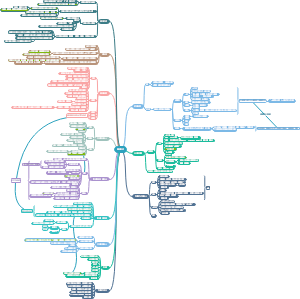
这是一篇关于Control of cell cycle by kinas的思维导图,主要内容有4 Stages of eukaryotic cell cycle、Levels of Cyclin-Dependent Protein Kinases Oscillate、The extracellular talk with cell cycles等。
编辑于2022-06-11 16:24:59Control of cell cycle by kinases
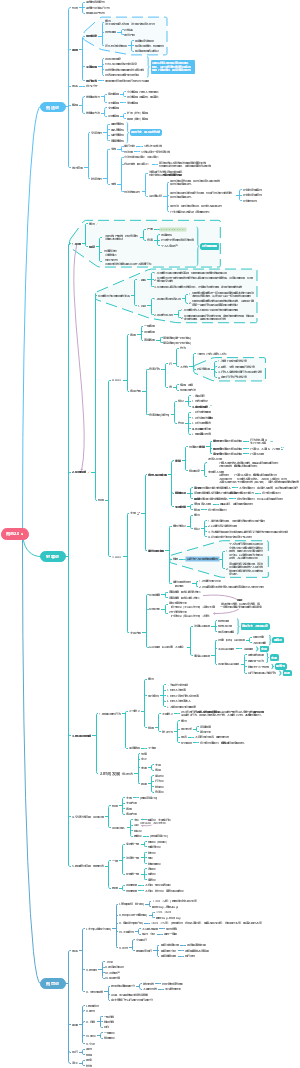
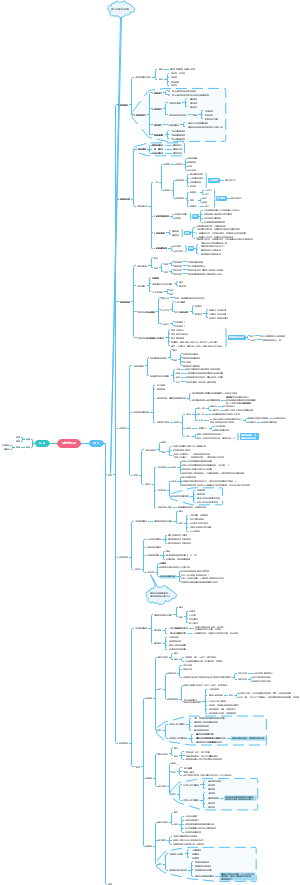
4 Stages of eukaryotic cell cycle
Diagram
S phase(synthesis phase)
DNA is replicated to produce copies
G2 phase(Gap)
new proteins are sythesized and the cell approximately double in size.
M phase(Mitosis)
The maternal nuclear envolope breaks down.
Paired chromosomes are pulled to the opposite poles of the cell.
each set of daughter chromosomes is surrounded by a newly formed nuclear envolope.
Cytokinesis pinches the cell in half, producing two daughter cells.
G1 phase
2 selections
continous through another division
go to S phase
entering G0 phase(A quiescent phase)
last hours
days
entire life time of the cell
When cells leave G0, they re enter the division cycle through G1 phase
Differentiated cells aquire their specialized function and forms in G0 phase
like hepatocytes or adipocytes
Length of G1 is cell type dependend
In embryonic or rapidly proliferating tissue, each daughter cell divides again, but only after a waiting period (G1).
In cultured animal cells, the entire process takes about 24 hours.
Levels of Cyclin-Dependent Protein Kinases Oscillate
Their activities change in response to cell signals
Behaviours of those kinases
They phosphorylate specific proteins at precisely timed intervals.
Structures of those kinases
Heterodimers
Regulatory subunit: cyclin
10 different cyclins exist for animal cells.
Designate A,B,C and so forth
catalytic subunit: cyclin-dependent protein kinases (CDK)
At least 8 CDKs exist
CDK1-CDK8
Plants also use a family of CDKs to regulate their cell division in root and shoot meristems, the principal tissues in which division occurs
When cyclin binds, the catalytic site opens up (by moving away the T loop), a residue essential to catalysis (Glu 51) becomes accessible.
The activity of the catalytic subunit increases 10,000-fold.
In a population of cells undergoing synchronous division, some CDK activities show striking oscillations.
Those oscillations are the result of four mechanisms for regulating CDK activity
The number of different cyclins and kinases and their combinations are species specific
But the basic mechanism has been conserved through evolution
1. Phosphorylation of dephosphorylation of the CDK.
on 2 critical residues of the protein
Phosphorylation of Tyr15 near the amino terminus inactivates CDK2.
The P-Tyr residue is in the ATP-binding site of the kinase.
The negatively charged phosphate group blocks the entry of ATP.
A specific phosphatase dephosphorylates this P-Tyr residue, permitting the binding of ATP
PTPase
When presence of single-strand breaks in DNA, the cell needs to be arrested in G2
A specific protein kinase called Rad3(in yeast) is activated by single-strand breaks, it triggers a cascade leading to the inactivation of the PTPase that dephosphorylates Tyr15 of CDK.
The CDK remains inactivated, and the cell is arrested in G2, the cell cannot divide until the DNA is repaired and the effects of the cascade are reversed.
Phosphorylation of Thr160 in the "T loop" of CDK, activates the CDK
Catalyzed by the CDK activating kinase
Forces the T loop out of the substrate-binding cleft
Permitting substrate binding and catalytic activity
2. Controlled degredation of the cyclin subunit.
Highly specific and precise timed Proteolytic breakdown
G2-M checkpoint, progress to mitosis
requires first the activation then the destruction of cyclins A and B
Cyclin A and B contain destruction box, which near their N-terminus
"Box"?
The box indicates short consensus sequence of nucleotides or aminoacids
Do infer specific functional information
No structural informations
-Arg-Thr-Ala-Leu-Gly-Asp-Iie-Gly-Asn-
The sequence target the cyclins to degredation
DBRP(destruction box recognizing protein)
it recognize the distruction box and bing the cyclin together with ubiquitin, Cyclin and activated ubiquitin are covalently joined by the enzyme ubiquitin ligase.
This initiates the process of cyclin degredation
Several more ubiquitin molecules are then appended, providing the signal for proteosome to degrade cyclin.
A feed back loop controls the timing of cyclin breakdown
picture
Increased CDK activity activates cyclin proteolysis
activated CDK by cyclin will associates and activates DBRP, and promote proteolisis of CDK.
The activity of DBRP also drops slowly after the CDK is distroyed
beacuse the DBRP phosphatase constantly dephosphoralates and inactivates DBRP
It activates the catalytic subunit of the M-phase CDK.
3. Periodic synthesis of CDKs and cyclins
e.x. cyclin D, cyclin E, CDK2, and CDK4 are synthesized only when a specific transcription factor, E2F, is present in the nucleus to activate transcription of their genes.
picture
The synthesis of E2F is regulated by growth factors and cytokines
Developmental signal that induces cell division
Those are essential compounds for mammalian cells to divide in cell culture
They also induce the synthesis of specific nuclear transcription factors essential to the production of the enzymes of DNA synthesis.
Growth factors trigger phosphorylation of nuclear proteins Jun and Fos.
They are transcription factors that promote the synthesis of a variety of gene products
Cyclins
CDKs
E2F
controls production of several enzymes essential for the synthesis of deoxynucleotides and DNA, enabling cells to enter S phase.

4. The action of specific CDK-inhibiting proteins.
Specific protein inhibitors bind to and inactivate specific CDKs.
ex. P21
In general, active CDKs enable a cell to enter a stage of cell division.
Function of those kinases
The list of target proteins that CDKs are known to be act upon continous to grow, and much remains to be learned
CDK phosphorylate lamin in nuclear envelope, the phosphorylation depolarizes the lamin and cause the nucleus to break down
CDK phosphorylates actin and myocin, then they pinches a dividing cell into two equal parts during cytokinesis(ATP-driven contractile machinary)
After division, CDK phosphorylates a small regulatory subunit of myosin, causing dissociation of myosin from actin filaments and inactivating the contractile machinery.
Subsequent dephosphorylation allows reassembly of the contractile apparatus for the next round of cytokenisis.
CDK phosphorylates pRB(retinoblastoma protein)
When DNA damage is detected, this protein participates in a mechanism that arrests cell division in G1.
ATM and ATR are protein kinases, they phosphorylate and activate p53
it functions in most cell types, and regulates cell division in response to variety of stimuli.
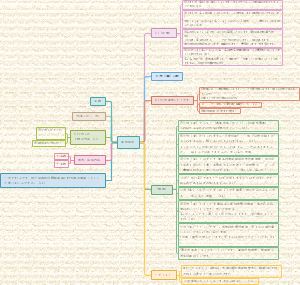
The extracellular talk with cell cycles
When Eukaryotic cells need to divide
All tissues divide during embryonic growth and later development.
In the adult organism most tissues become quiesent.
combination
They act in various combinations at specific points in the cell cycle.