导图社区 管理学原理知识点汇总(英文 期末考试用)
- 212
- 5
- 4
- 举报
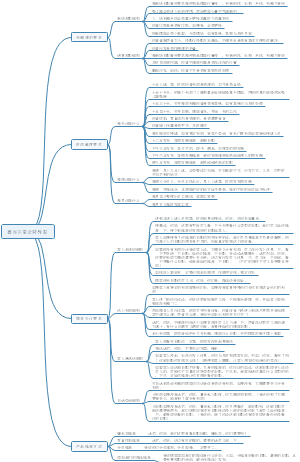
管理学原理知识点汇总(英文 期末考试用)
整理的版本是斯蒂芬·罗宾斯 第十版《管理学原理》。管理学理论庞杂,英文原版教材的阅读量又极大,故采用思维导图形式将所以重要考点归纳整理。
编辑于2022-10-10 19:54:55 福建省
- 相似推荐
- 大纲
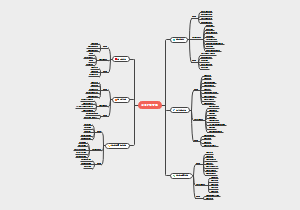







Principles of Management
Planning
Ch.1 Managers and Management
Ch.2 Management Environment
External
Task
Owners
Suppliers
Consumers
Competitors
General
PEST LE
Internal
Resources
tangible/intangible
Human Resource
Culture
Organizational culture is the shared values, principles, traditions, and ways of doing things that influence the way organizational members act.
Important because it influences what a manager can and cannot do and what is encouraged or discouraged by the organization.
Employees
swot & 5 forces
Changes
Types of change
Incremental change增量变化
not change the basic
Discontinuous change
change fundamentally
Punctuated Equilibrium间断平衡
Assess environmental uncertainty
Ch3.Integrative Managemant Issues
What is Globalization and how does it affect organization
Lower production cost, increase the revenue, innovation, risk reduction
Types of Global Organizations
types of global organization
Multinational Corporations(MNC)
Multidomestic Corporation
decentralize to local company
Global Corpoeration
centralization by headquarters
(Borderless Organization)
how to go global
complexity: Choice of partners Qualities of relationships Sharing of control Institutional (legal) environments Marketing capabilities Experience in the market Extent to which knowledge is shared across partners
managers need to know…
wrong perception
Parochialism本位主义(狭隘)
Ethnocentrism民族优越感
difference between cultures
power distance集权忍受度
Individual/collectivism
achievement/nurture帮助
uncertainty avoidance
long term/short term
Masculinity & Feminity
CSR
Green management
Ch4. Foundations of Decisions Making
The Decision Making Process
Identify a problem
Identify decision criteria
Allocate weight to criteria
Develop alternatives
Analyze alternatives
Select an alternative
Implement the alternative
Evaluate the decision efficiency
Decision errors
Heuristics经验法
The anchoring effect
The available bias
hindsight bias
Status quo bias
Decision Making Models
Rational
best outcome
Bounded Rational
Realistic, satisfactory
Intuition直觉
based on experience and feeling
Programed Decision Making
repetitive decisions that can be handled using a routine approach (efficient)
Problem
Structured problems
common and easy to deal with
Unstructured problems
Decision-Making Conditions
Risk
Certainty
Uncertainty
Group/Individual Decision Making
Group
Accurate, more information
More ideas, Creativity
Legitimacy
Time consuming
Individual
Faster
Ch5. Foundations of Planning
Definition
Define org. goals
Establish overall strategy
Develop comprehensive hierarch of plans
why
set up coordinate goals
reduce uncertainty
reduce wasting activities
criteria for controling
Strategic Management
Definition
Process
mission&goal&strategy
Strategy
Corporate Strategy
Growth Strategy
Concentration
Vertical Integration
Forward/Downward
Horizon Integration
Diversitication
Related/Irrelated
Stability Strategy
continue to do what is currently doing
Renewal Strategy
Retrenchment紧缩
Turnaround转向
A corporate strategy is an organizational strategy that specifies what businesses a company is in—or wants to be in—and what it wants to do with those businesses, based on the mission and goals of the organization
Competitive Strategy
Cost Leadership
Differentiation
Focus strategy
Board/Niche market
A competitive strategy is a strategy for how an organization will compete in its business.
Functional Strategy
support competitive strategy by various functional departments
Organizing
Ch.6 organizing design and structure
6 elements
1.Work specialization
2.Departmentalization
3.Authority
Chain of command
Line authority
Staff authority
Unit of Command
a structure in which each employee reports to only one manager.
Types
Power
Coercive强制的
Reward
Legitimate power
Expert
Referent(adore)
4.Span of Control
Contingency
Employee’s training and experience
Workplace
Task complexity
Use of standard procedures
Sophisticated of management information system
5.Centralization v. decentralization
6.Formalization
The number of rules
company culture
Monitor
Avoid risk
Less Autonomy
2 structure
Mechanistic structure
Organic structure
Contingencies
org.size
intensity of environment change
Organization Design
Traditional
Simple Structure
Functional Structure
department
Divisional Structure事业型部门
task
Contemporary
Team Structure
Employees are more involved and empowered
Matrix Structure
Project Structure
Boundaryless Structure
Learning Organization
employees continually acquire, share and use new knowledge
How?
Org.culture
mutual, sense of community
caring
trust
Org.design
boundaryless
team
empowerment
Leadership
shared version
Collaboration合作
Information Sharing
open, time, accurate (feedback)
Ch7. Managing Human Resource
1.Identify and select employees
1.employee assessment
human resource inventory: first reviewing the current human resource status
2.Job analysis
what skills and behaviors need to perform the job
Job description
what a job holders does
Job specification工作规范
how to finish the job efficiently
3.determine future employee needs
4.Select Applicants
Recruit
Selection Device
Test
Interview
Reliability &Validity
2.Training
Orientation
Build relationships, familiar with job, reduce uncertainty
Job rotation: Provides good exposure to a variety of tasks.
Understudy assignments: Working with a coach. Provides support and encouragement from an experienced worker. In the trades industry
Classroom lectures: Lectures designed to convey specific technical, interpersonal, or problem-solving skills.
Films and videos: skills that are not easily presented by other training methods.
Simulation exercises Learning a job by actual performing the job(or its simulation). May include case analyses, experiential exercises, role-playing, and group interaction.
Vestibule training Learning tasks on the same equipment that one actually will use on the job but in a simulated work environment.
3.Evaluate and retain employees
performance evaluation and reward system
Ch8. Managing Change and Innovation
org. change
Types
Structure
Technology
People
an alternative of an organization’s people, structure and technique
Change reason
1.External environment
2.internal forces
Performance < aspiration
Escalation of commitment, Threat Rigidity
change process
Metaphor暗喻:calm water/ white-water
Initiate change
Implement change
Organization Development
1. Survey feedback
2. Process consultation
3. Team building
4.Intergroup development
help employees adopt to organizational changes
Deal With Resistance
How to encourage innovation?
Structural variables/contingency
Organic Structure
Abundant Resources
interunit communication跨部门交流
low time pressure
support
low external control
Human Resource Variables
training
Job security
Creative(multiple) people
Cultural Variables
tolerance of risks
acceptance of impractical
tolerance of conflicts
focus on end
open system
positive feedback
Leading
Ch.10 Groups and Work Team
Groups
Definition: A group is composed of two or more interacting and interdependent individuals who come together to achieve specific goals.
types
formal
Command Groups
determined by the organization chart and report to a given manager
Task Groups(temporary)
Cross-functional Groups(多功能组员,一项一项做任务)
Self-managed Teams
informal
Stages of Group Development
Forming
1.join the group
2.define the group’s purpose, structure and leadership
Storming
confilict
Norming
closer relationships and cohesiveness
Performing
Adjourning
Effective Teams
Types
Problem-solving teams
Cross-functional work team
Self-managed work team
Virtual team
online discussion
Team Effectiveness
Organize the structure
Leadership
Leader
LPC, situational leadership strategy
Motivate
Goal Setting,
Social Loafing
Culture
Team Efficacy
HRM(variety)
Resource
Ch11. Motivation
Early
Maslow’ Hierarchical Need Theory
Physiological needs
pay, cafeteria
Safety needs
job security, safe working conditions
Social needs
Relationships
Esteem needs
Job title
Self Actualisation
Challenging job & Achievement
McGregor’s Theory X and Theory Y
Herzberg’s Two-factor Theory
Motivators
Achievements
Growth
Hygiene Factors
Salary
Working conditions
McClelland’s Three Need
nAch成就
Quick and unambiguous feedback, moderate challenging task
nPow权利
nAff(affiliation人际)
Contemporary
Goal-Setting Theory
Specific goals increase performance and challenging goals result in higher performance
feedback
goal commitment
self efficacy
national culture
Job Design Theory(JCM)
The way how tasks are combined to form complete jobs can motivate.
Equity Theory
share information on how allocation decisions are made
Expectancy Theory
Ch12. Leadership
Definition
Leader: who can influence others and who has managerial authority
Process of leading a group and influence the group to achieve its goal
Early Theory(leaders)
Trait theory of leadership
Ambitious and competent, hardworking
Trust employees
Self confidence
Intelligence
Social and outgoing
Job-relevant knowledge
Behavior theory of leadership
University of Iowa studies
autocratic独裁
Democratic民主
Democratic- consultative leader(参考意见,自己决定)
Democratic- participant leader(集体决议)
laissez-faire
Ohio State Studies
Initiating structure
describe work clearly by step-by-step procedure, and break big tasks into small tasks
Consideration
employees with much knowledge
University of Michigan Studies
task/production oriented
employee-oriented
Contingency Theories (Leadership Styles)
Fiedler’s LPC theory
3 contingencies
Leader-member relations
Task structure
clear and specific direction
Position power
Solution
Change a manager of other leadership style
Change task structure and position power
Leadership should be consistent with performance
Situation Leadership theory
Telling
clear and specific direction
Selling
willing but unable
High task oriented
Participating
Delegating
Leader-Participation Theory
Decision and Leadership
Path-Goal Theory
Directive
Supportive
Participative
Achievement Oriented
Leadership
Contingency
Leader Behavior
Environment
Employees
Modern Theory
1. closeness to leaders will influence employee’s willingness
In-group employees
Out-group employees
2. Transactional vs. Transformational Leaders交易型领导与变革型领导
Ch14. Control
Definition: monitoring activities to make sure they are done as plannned and correct mistake
importance
make sure plans and goals were achieved
an effective control system collects information and feedback from employee’s performance
minimize risks from environment change
Steps
Measure actual performance
Compare actual performance with standard
take actions to correct drawback
Global Village The concept of a boundaryless world where goods and services are produced and marketed worldwide
Performance Management System—to arrive at objective human resource decisions 1. Establishing performance standards 2. Evaluating performance
Problem – A discrepancy差异 between an existing and a desired state of affairs.
shared version:equality, responsibility
先说理论,再说要素
例题:用ch10,11,11知识,思考为什么decentralization/empowerment/autonomy可以提高员工的performance? 例:个人发展、goal setting
关于situational leadership strategy在考场上的应用 1. 理论:Situational theory is to choose leadership style by employee’s readiness. 2. 观点:Given that employees are able and willing to finish tasks, managers should choose delegating strategy 3. 然后再解释delegating strategy:give employees autonomy and freedom 4. 再结合材料,说说delegating strategy应该具体包括哪些举措(绩效考核performance assessment)
Employee‘s Readiness (Willingness and Ability)