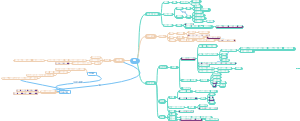
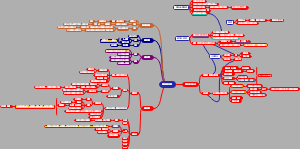
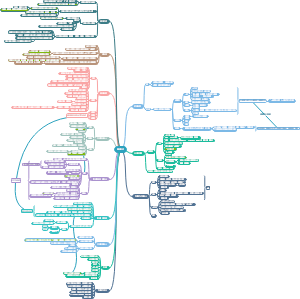
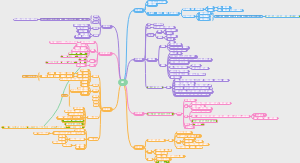
导图社区 Organic Chemistry有机化学思维导图
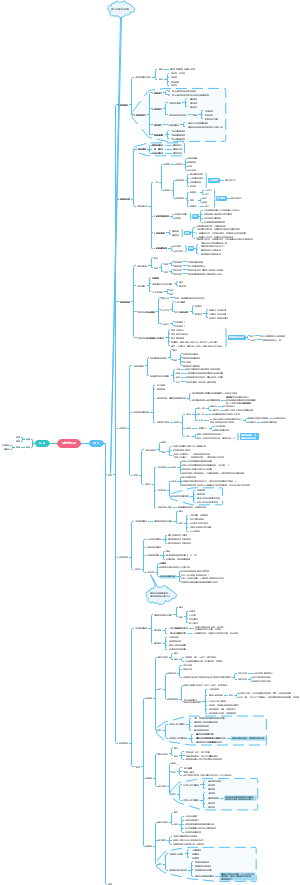
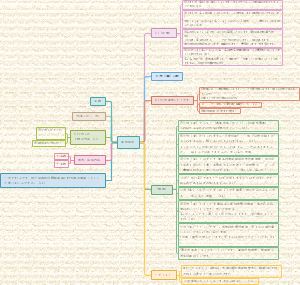
这是一篇关于Organic Chemistry的思维导图,包含碳氢化合物、有机反应的类型和反应机理、立体异构、 结构异构等。
编辑于2024-03-10 22:02:38Organic Chemistry
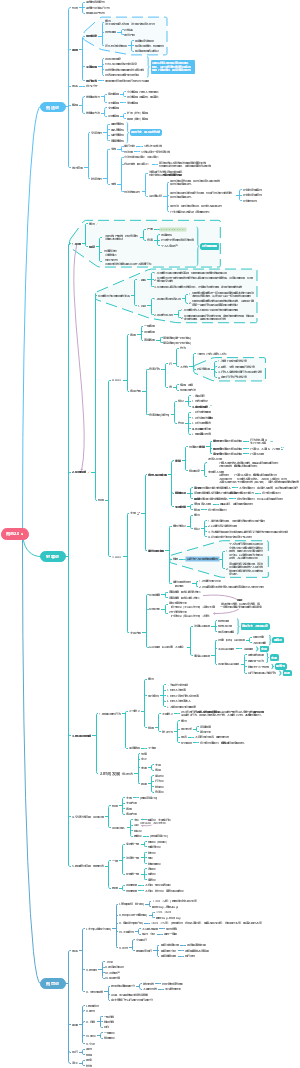
Hydrocarbon
hydrocarbons are compounds of carbon and hydrogen only.
different types of formula
empirical forlula
molecular formula
structural formula
displayed formula
skeletal formula
3D displayed formula
Homologous series
classes of related organic compounds called homologous series.
Functional group
all the compounds within each homologous series consist of molecules with a particular atom, or grouping of atoms.
alkanes
alkenes
halogenoalkanes
alcohols
aldehydes
ketones
carboxylic acid
esters
amines
nitriles
Bonding in organic molecules
single covalent bonds are known as sigma bonds
The pair of electrons in a sigma bond is found in a region of space between the nuclei of two atoms sharing electrons.
single bond: 1 sigma 1 pie
double bond: 1 sigma 1 pie
triple bond: 1 sigma 2 pie
Naming organic compounds
The stem of each name indicates how many carbon atoms are in the longest chain in one molecule of the compound.
The position of side-chains or functional groups: starts at the end that produces the lowest possible nnumbers in the name.
Indicate how many same alkyl groups by inserting di(two), tri(three), or tetra(four)in front of its name.
list in the name in alphabetical order
Use the numberin system where necessary to indicate the position of the functional group.

Structural isomerism
compounds with the same molecular formula but different structural formula.
position isomerism
functional group isomerism
chain isomerism
Stereoisomerism
compounds whose molecules have the same atoms bonded to each other, but with different arrangements of the atoms in space.
Geometrical isomerism
no free rotation about a C=C double bond
unsaturated compounds with the structures have geometrical(cis/trans) type of isomerism.
optical isomerism
If a molecule contains a carbon atom that is bonded to four different atoms or groups of atoms, it can form two optical isomers called enantiomers.
The carbon atom with the four different groups attached to it is called the chiral centre of the molecules.
Types of organic reaction and reaction mechanisms
Homolytic fission
Heterolytic fission
three types of carbocation
primary carbocation
secondary carbocation
tertiary carbocation
Electrophile
electron deficient
Nucleophiles
electron-rich species, they carry a negative or partial negative charge
Addition reactions
the formation of a single product from two or more molecule
catalyst: phosphuric acid
Bromine water in orange is used to test C=C bond in compounds. If it is unsaturated, the bromine water will be decolorised.
Substitution reactions
the replacement of one atom, or a group of atoms by another.
Hydrolysis
the breakdown of a molecule by water
Oxidation
The number of oxygen atoms before and after a reaction
Reduction
The number of hydrogen atoms before a reaction
The mechanism of electrophilic addition to alkene
Cold dilute acidified maganate solution
the pale purple solution turns colourless(open double bond)
Hot concentrated acidified manganate solution
If a carbon atom is bonded to two hydrogen atoms, we get oxidation to a CO2 and water.
If a carbon atom is bonded to one alkyl group and hydrogen, the aldehyde will be formed.
If a carbon atom is bonded to two alkyl group, the ketone will be formed.
Addition polymerisation
Disposal of polyethene plastics
There are non-biodegradable
If poly waste, is burnt, acidic hydrogen chloride gas will be given off, as well a toxic compounds. (recycle)
Halogenoalkanes
free-radical substitution
Alcohol, esters and carboxylic acid
Carbonyl compounds