导图社区 Chapter 1 Language and Lingui
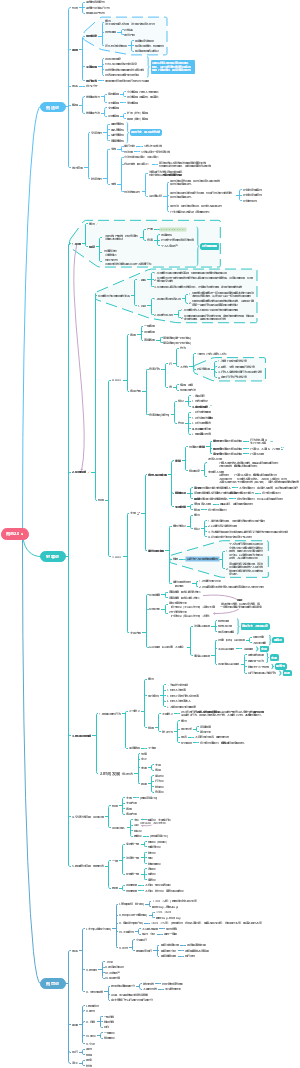
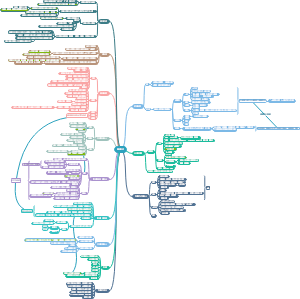
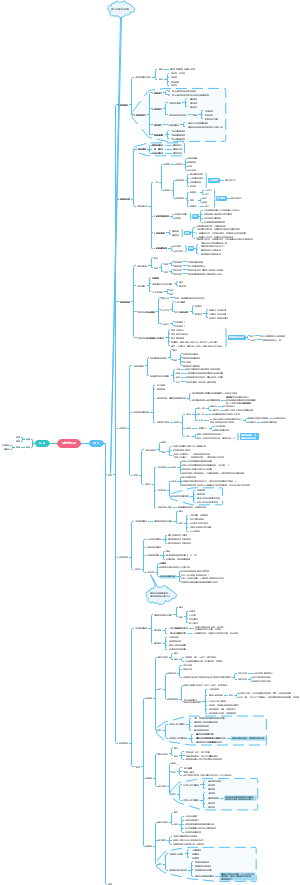
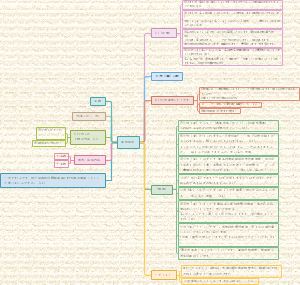
这是一篇关于Chapter 1 Language and Lingui的思维导图.Chapter 1Language & LinguisticsLanguageLinguisticsOriginDefinitionDesign FeaturesFunctionsBranchesMajor DistinctionsSystem/Arbitrary/Symbol/Vocal/HumanArbitrarinessDua
编辑于2022-06-21 14:57:46Chapter 1 Language and Linguistics
Defination
Language is a system of vocal symbols used for human communication.
Features
Creativity
Creativity is the first and foremost stiking feature of human language. It refers to the fact that language provides opportunitiesfor sending messages that have never been sent before and for understanding novel messages. The grammatical rules and the words of a language are finite, but the sentences are infinite. Every speaker uses language creatively.
Duality
Language contains two subsystems, one of sounds and the other of meanings.When certain speech sounds corresopnds to a certain meaning, a unit of language arises.
Arbitrariness
The relationship between sounds and the meanings they represent in the languages of the words is, for the most part, an arbitrary one.
A building we live in with our family is called house in English, masion in French.
Displacement
Language can be used to refer to things real or imagined, past, present or future. When we listen to news broadcast, we know what has happened far and wide in the world. What can be spoken is not limited by time and space,while animals can merely communicate about what happens here and now.
Cultural Transmission
The capactiy for language has genetic basis, but the particular language a person acquires or learns is a cultural fact, not a biological fact.
Interchangeability
All memebers of a speech community can send and receive meaasges.
Bee dances are not interchangeable; only forahers send messages. Nor are songs of many birds; only roosters cow.
Reflexivity
Human languages can be used to describe themselves. The language used to talked about language is called metalanguage. When linguists write grammars or lexicigraphers compile dictionaries the must use metalanguage.
Adaptability
An open system so that all social changes can be represented.Along with social progress, innovations and newproducts are coded by language. Concepts that originated in other cultures may be borrowed into a natural language and new words are added.
Functions
Specific role
The specific roles language plays fulfill an individual's purpose of communication.
speech function
General role
A Metafunction is a more abstract one, which is capable of describeing innumerable specific functions. According to M.A.K Halliday, language plays three metafunctions simultaneiusly.
Metafunctions
The ideational function
Play this function, langugae serves as a medium that links a person with the world.
The interpersonal function
We use it as a medium to get along in a community, we use it to indentify ourselves and others, to soothe or anger someone.
The textual function
We organize messages in a logical way so that they fit in with the other messages and with the wider context in which we are talking and writing. We play this role of bringing unit of language into unity.
Types of languge
natural languages
A natural language is one that is the mother tongue of an ethnic community.
Natural languages that are used to break the barrier of communication between nations are called world lingua francas.
artificial languages
Artificial languages which are specially invented to facilitate international communication.
Genetic classification of language
Genetic classification, one of the two main ways of classification, is based on the assumption that languages have diversified from a common ancestor.
English ---West Germanic division
Typological classification of language
Phonologically
Morphologically
analytic
Chinese
synthetic(inflecting)
Latin, Greek and Arabic
agglutinating
Turkish, Janpanese
Sytactically
languages can also be classified by observing their word order in the sentence.
English --- SVO
Language orgin
The Bow-wow theory
It sees primitive language as an imitation of natural sounds
The Pooh-pooh theory
language arose from instinctive emotional cries, expressive of pain and joy.
The Yo-he-yo theory
It evisages language arising form the noises made by a group of men engaged in joint or effort.
The evolution theory
It is proposed by Darwin and favored by Engles, holds that language is a product of evolutionary development of human species.
The scientific study of language
Language as a science
Linguistics may be defined as the scientific study of language
The process of linguistic study
Branches of linguistics
Intra-disciplinary divisions
Sound
Structure
Meaning
Inter-disciplinary division
Language as a system is also closely interwoven with other aspects of man and society.
Sociallinguistics
Psycholinguistics
Applied linguistics
Features of modern linguistics
1.spoken language is given priority to written language
1.speech is historically priority to writting in any culture, many language do not have written form.
2.sponken language is used for a much wider range of purposes in communication.
3.spoken language is structurally more complex than wirtten language.
4.spoken language is acquired earlier than written language.
2. synchornic rather than diachronic
3.discriptive rather than prescriptive
4.theoretically rather than pedagogically
Schools of linguistics
Formal linguistics
based on the assumption that language is an autonomous system.The starting point in formal linguistic research is observing linguistic forms.
Functional linguistics
based on the view that language is as it is because of what it dose.The starting point in functional linguistics research is observing how meaning is realized by lexcogrammar.