导图社区 写作unit3思维导图
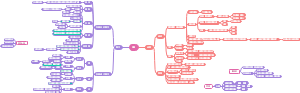
大一英专生,写作课unit3的思维导图,主要内容有The elements of a sentence、Five basic sentence patterns、Types of sentences。
社区模板帮助中心,点此进入>>
英语词性
法理
刑法总则
【华政插班生】文学常识-先秦
【华政插班生】文学常识-秦汉
文学常识:魏晋南北朝
【华政插班生】文学常识-隋唐五代
【华政插班生】文学常识-两宋
民法分论
日语高考動詞の活用
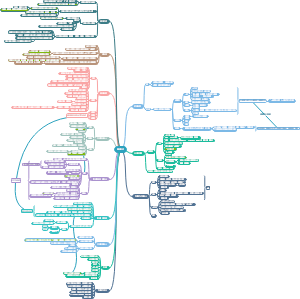
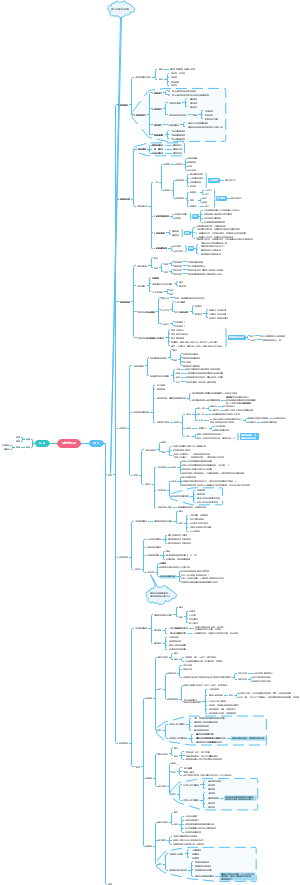
UNIT 3 Sentence fundamentals
The elements of a sentence
Subject
simple subject
complete subject
compound subject
implied subject
Predicate
simple predicate
complete predicate
compound predicate
Object
indirect object
direct object
Complement
subject complement
object complement
Attributive
Adverbial
adverbial of time
adverbial of place
adverbial of cause
adverbial of result
adverbial of purpose
adverbial of condition(条件状语)
adverbial of manner
adverbial of degree
adverbial of concessionz(让步状语)
adverbial of circumstance(伴随状语)
adverbial of comment(评注性状语)
Subject-verb order
eg:There is a dog in the house
Five basic sentence patterns
S+V
David cried.
S+V+SC
David looks tried.
S+V+O
David loves his mother.
S+V+O+O
David gave me the book.
S+V+O+OC
David makes his mother angery
主系表
表象:be/look/appear/seem
感官:feel/smell/sound/taste
持续:keep/rest/remain/continue/last/lie/stand/stay
终止:prove/turn out
变化:become/grow/turn/go/get/fail/come/run
Types of sentences
Grammatical types of sentences
simple sentence
compound sentence
coordinating conjunction(and,but,for,or,nor,so,and yet)
correlative conjunction(such as either...or,neither..nor,and not only...but also)
semicolon
complex sentence
所有从句(重点放在主句,非重点放在从句)
compound-complex sentence
Functional types of sentences
declarative sentence
exclamatory sentence
What+(n.)
How+(adj.)
imperative sentence
interrogative sentence
Rhetorical types of sentences
loose sentence
重点在前面
periodic sentence
重点在后面
Capitalize the title of a work
1.Don't capitalize artivles(a,an,the)
2.Don't capitalize coodinating conjunctions(or,and)
3.Don't capitalize prepositions of fewer tahn five letters(of,in,on,at...)
4.Don't capitalize 星期,月份,人名,地名 and "I"
opshacom(不用逗号隔开的adj.)
1.shape
2.age
3.color
4.origin
5.material
because,because of,since,as,for的区别
because位于句首用逗号隔开;常指直接原因,语气最强;与why对应;后面直接加句子
because of后面直接加词
since常指显然的理由=“既然”;更正式
as常指双方都知道的原因;具有对比意味
for在并列句里指原因时为间接原因,放于主句后,并用逗号隔开
complement不可以去掉,attributive可以去掉
complement与attributive的区别
eg: 1. I will call the man(我会打电话给他)
2. I will call the man (in the company)
3. I will call the man Tom.