导图社区 The Age of Reason and the Enlightenment
这是一篇关于The Age of Reason and the Enlightenment的思维导图,主要内容有1.Growth of rational spirit2.Deism and Classicism3.The awakening of humanity等。
社区模板帮助中心,点此进入>>
英语词性
法理
刑法总则
【华政插班生】文学常识-先秦
【华政插班生】文学常识-秦汉
文学常识:魏晋南北朝
【华政插班生】文学常识-隋唐五代
【华政插班生】文学常识-两宋
民法分论
日语高考動詞の活用
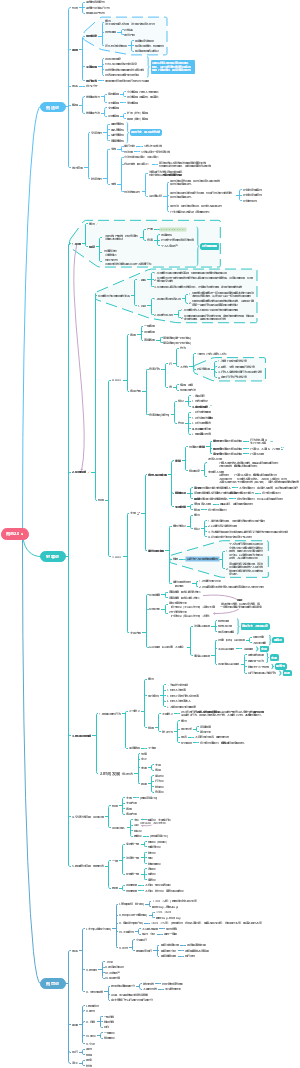
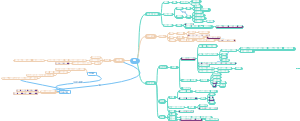
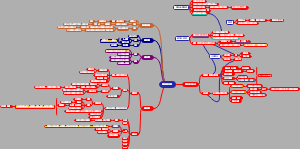
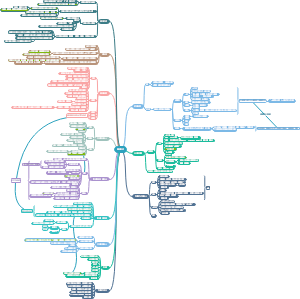
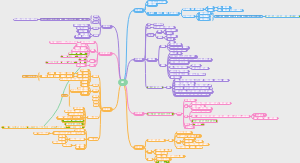
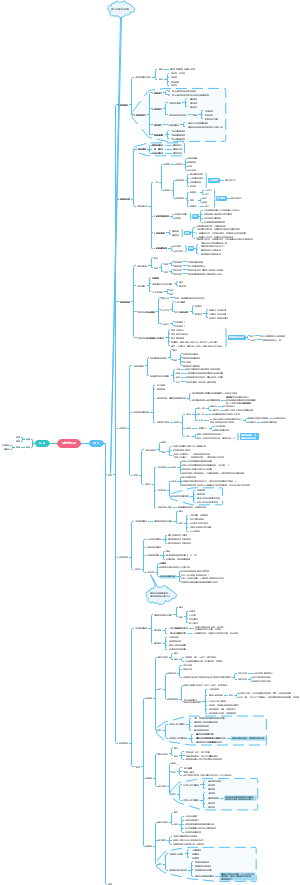
The Age of Reason and the Enlightenment
1. Growth of rational spirit
Background
The rise of western modern nation-state
The far-reaching influence of the Christian spirit
The belief tradition is still true
Performance: general skepticism and empirical stance
17 Common Features of Philosophy and Science in the World
Starting point: experience observation
Research method: experiment
Criterion for judging truth and falsehood: rationality
Achievements
Secular society
Rulers all over the world hold positive attitudes towards science
Scientists endure humiliation for their correct development
Scientific field
Galileo built telescopes to observe celestial bodies
Levinhook made a microscope to observe microorganisms
Harvey discovered the human blood circulation
Kepler discovered three laws of planetary motion
Newton proposed the law of universal gravitation, etc
2. Deism and Classicism
Deism
View of God: God is a rational creator
Natural Religion: Emphasizing Morality and Rationality
Rationalization of Christianity
Classicism
Representative works of tragedy
Gao Naiyi's Xide and Horace
Racine's Andromak
characteristic
Specification of modulation form
Control emotion with reason
Imitate ancient Greece
Pay attention to symmetry and harmony
3. The awakening of humanity
Course
Changes in the 17th Century
Literature and Art
Tragedy of Classicism
Folk literature
Architecture
Baroque architecture
Gothic architecture
Natural Science
Copernicus: heliocentric theory
Newton: Mechanical Theory
4. French Enlightenment in the 18th Century
Deism and Classicism in the 17th century
The skepticism of empiricism and rationalism
France guides the new trend of Europe in social etiquette, literature and art
The religious belief is very conservative
Camp
Deist
Atheist
Theist
Priest
Representative Figure
Rising Period (Britain)
Hobbes
Locke
High tide period (France)
Montesquieu
Rousseau
Voltaire
Extended period (Germany)
Kant
Critical Content
The hypocrisy, insidious and cruelty of the Catholic Church
The corruption of Catholic priests
The ideological root of religiousignorance and the political Basis ofreligious autocracy
Ideological Weapon
Sound reason
Historical facts
Meaning
Revealing and destroying the religious foundation on which feudal autocracy depended
Historical Position
an important hub connecting the ideological revolution in the 17th century and the social revolution at the end of the 18th century
Valuation
It exposed and destroyed a series of religious foundations such as autocracy
It relentlessly criticized the religious ignorance and the autocratic ideology of the Catholic Church at that time
5. The harmony between religious belief and scientific reason
Rousseau's religious thought
Kant's religious thought
Schleiermacher's Religious Thought
Christian Belief in Modern Western Culture