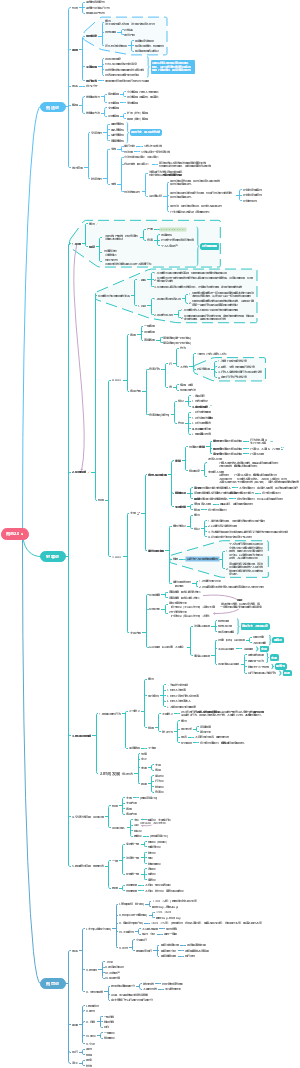
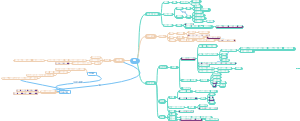
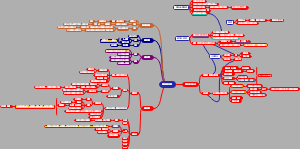
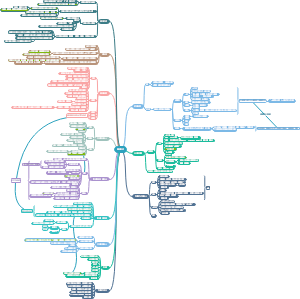
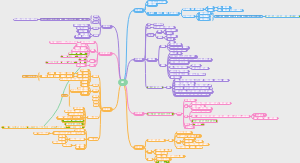
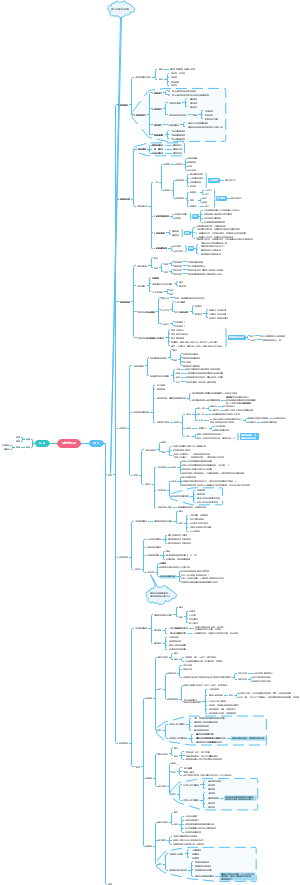
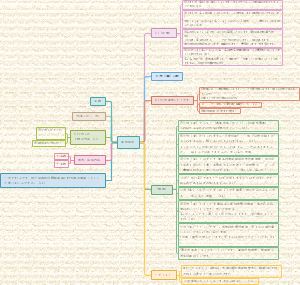
Preliminary exploration of electromagnetism and atomic physics
The discovery of X-rays
Röntgen was honored for his discovery of X-rays, a new type of electromagnetic radiation that penetrates matter.
Röntgen's discovery opened up a new era of medical imaging while giving physicists new tools to study the structure of atoms.
Radioactivity study
Becquerel won the prize for his discovery of natural radioactivity; The Curies won a prize for their work on radioactive phenomena.
Becquerel and Curie's research on radioactivity revealed the concept of atomic energy levels and laid the foundation for nuclear physics.
The theory of the photoelectric effect
Lenard won the prize for his work on cathode rays; Einstein won the prize for explaining the photoelectric effect.
Einstein's theory of the photoelectric effect not only explains the quantum nature of the interaction between light and matter, but is also an important early cornerstone of quantum mechanics.
Development of electron theory and atomic model
Discovery of electrons
J.J. Thomson won the prize for his discovery of the electron, a major discovery of the structure of the atom.
Thomson's electron discovery transformed our understanding of the structure of the atom and provided the basis for subsequent atomic physics and chemistry.
Equations of state for gases and liquids
Van der Waals was awarded the prize for his formulation of equations of state for gases and liquids.
Van der Waals's equation of state reveals the effect of intermolecular forces on the state of matter and is crucial to understanding the transition of state and the behavior of phases.
Quantum theory and X-ray crystallography
Law of thermal radiation
Wien won the prize for his work on the law of thermal radiation, which deals with the properties of radiation emitted by matter.
Wien's research led to the development of blackbody radiation and quantum theory, and has had a profound impact on modern physics.
X-ray crystal diffraction
Laue was awarded the prize for his discovery of the diffraction of X-rays in crystals.
Atomic structure theory
The Braggs won the prize for X-ray analysis of crystal structures.
Von Laue's discovery and the work of the Braggs marked the application of physical methods to the analysis of crystal structures, laying the foundation for the development of materials science
The deepening of quantum theory
Advances in quantum theory
Planck was awarded the prize for proposing quantum theory, the fundamental hypothesis for quantizing energy.
Planck's quantum hypothesis was a turning point in the history of physics, providing a key framework for understanding the energy exchange of atoms and molecules.
Redshift phenomenon
Stark was awarded the prize for his discovery of the Doppler effect and the redshift of galaxies.
Stark's research not only demonstrates the relativity of light volatility, but also provides astronomy with a tool to measure galaxies moving away from us.
The rise of quantum mechanics and atomic physics
Further study of photoelectric effect
Einstein won the prize for furthering the theory of the photoelectric effect, which relates to the interaction of photons with matter.
Einstein's theory of the photoelectric effect not only explains the particle nature of light, but also advances quantum mechanics, especially in understanding the electronic structure of atoms and molecules.
Material wave theory
De Broglie was awarded the prize for his work on the theory of waves of matter, one of the fundamental theories of quantum mechanics
De Broglie's theory of matter waves provided the theoretical basis for understanding the wave properties of microscopic particles and was crucial to the formation of quantum mechanics.
The combination of condensed matter physics and quantum theory
The Compton effect
Compton was honored for his discovery of the Compton effect, an important discovery about the scattering of photons.
The Compton effect revealed the quantum properties of photons when they interact with matter, providing experimental evidence for quantum mechanics, especially in the theory of wave-particle duality of light.
Thermoelectron phenomenon
Richardson was awarded the prize for his work on the phenomenon of hot electrons, which relates to the nature of metals that release electrons at high temperatures.
Richardson's research into the phenomenon of hot electrons was critical to understanding the thermal conductance and electron emission mechanisms of metals, which had a profound impact on the development of early electronic devices and the theoretical foundations of modern semiconductor physics.
Between 1900 and 1930, physics evolved from the initial exploration of electromagnetic phenomena and atomic structure to the in-depth study of quantum theory and condensed matter physics, marking a fundamental transformation from classical physics to modern physics and laying the foundation for physics and scientific and technological innovation in the 20th century.