导图社区 溶液化学
- 108
- 0
- 0
- 举报
溶液化学
这是一篇关于溶液化学的思维导图,主要内容包括:Chapter two:Electrolyte Solution,Chapter three:Buffer Solution,Chapter one:Solution。
编辑于2024-11-06 19:31:39- 溶液化学

- 相似推荐
- 大纲

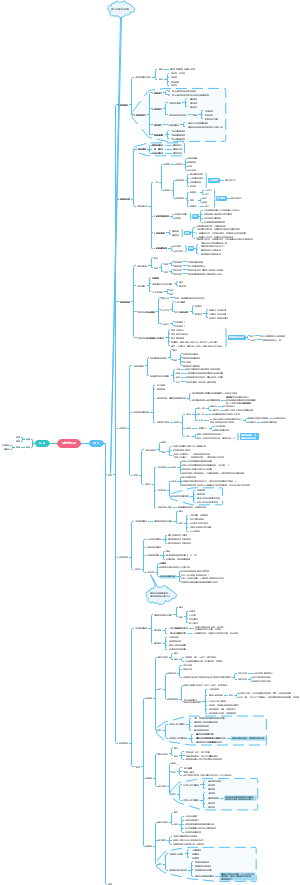
溶液化学
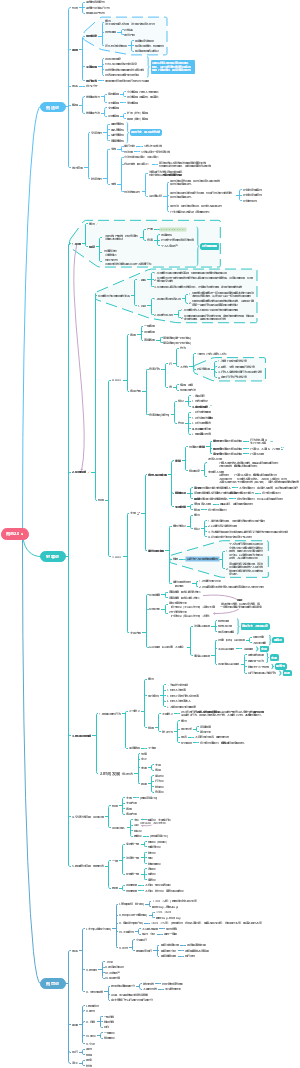
Chapter one:Solution
1-1 Basic Terms of Solution
Solution
solvent
solute
混合情况
miscible
immiscible
Solution Process
diffusion
solvation (hydration)
吸放热
endothermic(吸热)
exothermic(放热)
1-2 Solubility of substance
Solubility & Factors that affect solubility
溶质和溶剂的本性
温度
压力影响很小
1-3 Concentration of Solution
1-3.1 Amount-of-substance and Molar Mass
Amount-of-substance
mole
The mole is the amount of substance of a system which contains as many elementary entities as there are atoms in 0.012 kilogram of carbon-12.
one mole of anything contains 6.022 × 10²³ entities. 6.022 × 10²³ is called Avogadro's Number
molar mass
M
unit:g/mol
1.3.2 Amount-of-substance Concentration
Amount-of-substance Concentration ( molarity)
Unit: mol/L or mmol/L……
mass of a substance (m) Amount of substance (n) = ----------------------------- molar mass (M)
Unit: mole (mol)
易混淆错误
So, c(bB)=1/bc(B)
1-3.3 Reacting Rule of Equal Amountof- Substance
When aA + tT = dD + eE
n(aA)= c(aA)V(A) n(tT)= c(tT)V(T)
1-3.4Mass Concentration(这个不是密度,这个是用溶质的质量,而密度是溶液的质量)
Ρ=m/v
The SI unit is kg/m3 (equal to g/L)
1.3.5 Volume fraction
Va/Va+Vb
1-3.6 Molality (mB )or(bB)
mB=nB/mA
kilogramsofsolvent(mA)
unit must be kg
amount-of-substanceofsolute(nB)
中文课本中用b来表示
1-3.7 Amount-of-substance Fraction(xi)(Mole fraction)
1-3.8Mass Percent of Solute
mass of solute/mass of solution
Summary
G1: molarity; mass concentration;Volume fraction
G2: molality; mass percent of solute;mole fraction
1-4 Colligative Properties of Solutions
*1-4 Colligative Properties of Solutions
Colligative properties are properties that depend only on the number of solute particles in solution and NOT on the nature (identity) of the solute particles, regardless of whether they are atoms, ions, or molecules
Colligative Properties of NonelectrolyteSolutions (Nonvolatile, non-electrolyte and relatively dilute solutions).
Colligative Properties of Electrolyte Solutions.
1-4.1 Vapor Pressure Lowering of Solution -Raoult’sLaw
Raoult’s law : Vapor pressure lowing of a dilute solution that containing nonvolatile, nonelectrolyte is directly proportional to the amount-of-substance fraction of the solute and has nothing to do with the nature of solute.
Vapor Pressure of Solution (p): p= poxA
unit: Pa, kPa
po: vapor pressure of pure solvent
xA:the mole fraction of the solvent in the solution
For Solution: solvent (A), solute (B)
∵ xA+ xB =1, p= p°xA = p°(1- xB )= p°– p°xB ∴ p°- p = p°xB Δ p =p°- p = p°xB
For a dilute solution:mB = n B(bB=nB)
Δ p = K mB
K= p°MA /1000; mB : molality of B
p = px A Δp = px B Δp = K m B
1-4.2Elevation of Boiling Point
ΔTb= Tb-Tb°= K'Δp= K'K mB =Kb mB
Kb: the modal boiling-point elevation constant of solvent
1-4.3Depression of Freezing Point
Freezing point depression refers to the lowering of the freezing point of solvents upon the addition of solutes.
ΔTf= Tf°-Tf =KΔp = K'K mB=Kf mB
1-4.4Osmosis & Osmotic Pressure
Osmosis: the process ofsolvent flow through asemipermeable membrane from apure solvent or from a dilutesolution to a more concentratedsolution in order to equalize theconcentrations of solutes on thetwo sides of the membrane.
osmotic pressure (π):The pressure of a solution which just stops osmosis
The relationship between osmotic pressure , concentration and temperature (Van’t Hoff Law)
Π= c RT
unit: Pa, kPa
For a dilute solution: Π= mB RT
because mB=cB,the 密度of solution is close to pure water
1-4.5 Using Colligative Properties to Determine Molar Mass
1-4.5 Using Colligative Properties to Determine Molar Mass
For dilute nonelectrolyte solutions:
Δp= K mB, ΔT b= Kb mB , ΔT f = K f mB , Π= c RT ≈ mB RT
For dilute electrolyte solutions:
Δp’ =i K mB, ΔT b’= i Kb mB ΔT f ’= i K f mB, Π’= i c RT ≈ i mB RT
i: van’t Hoff factor
例子:NaCl, KNO3, i =2 ; CaCl2, MgCl2 i = 3;
1-4.7Medical Applications of Osmosis
1-4.7.1 Isotonic, Hypotonic, Hypertonic Solution
◆Hypotonic:contains less solute compared to another solution.
◆Hypertonic: contains more solutes compared to another solution.
◆Isotonic: two solutions have the same concentration of solutes
1-4.7.2Osmolarity
It is the total concentration of ALLosmotically active solute particlesin the solution.
Osmole (Osm), Cos , Osm/L, mOsm/L nonelectrolytes:OsmL=mol/L For electrolytes: Osm/L=mol/L×i
1-4.7.3Crystalloid Osmotic Pressure andColloidal Osmotic Pressure
Crystalloid Osmotic Pressure
Definition:Small molecular crystal substance (NaCl ( ≈ 80%), NaHCO3, glucose) formed π
Physiological action:Regulate balance of fluid and electrolyte on the two side ofcell membrane
Semipermeable membranes:Cell membrane
Colloidal Osmotic Pressure
Definition:Large molecular colloid substance (plasma proteins) formed π
Physiological action:Regulate balance of fluid and electrolyte on the two side of blood capillary wall
Semipermeable membranes:Capillary wall
1-4.7.4Applications of Osmosis
Dialysis
The Artificial Kidney
Reverse Osmosis
Chapter two:Electrolyte Solution
2-1 Strong and Weak Electrolyte Solution
2-1.1 Theory of Strong Electrolyte Solution
Ion-ion Interaction Theory
形成ionic atmophere
离子相互制约,使离子移动速率变慢,导致电导所测电离度降低,
apparent degree of ionization
反应强电解质中离子互相牵制程度
表观电离度越大,说明离子间牵制作用越小
表观电离度越小,说明离子间牵制作用越大
Ion Activity and Activity Coefficient
Actual concentration of ion (c) multiply a correction factor - activity coefficient ( f ).
a = f ·c
Generally, a<c, 0<f<1
Activity coefficient are influenced by
ion concentration
the electric-charge number of ion
Ionic Strength ( I )
I =1/2(c₁z₁²+ c₂z₂²+...... + cizi²)
Where, I is ionic strength;
c is the amount-of-substance concentration of the ion i;
z i is the charge number of the ion i
2-1.2 Ionization Equilibrium of Weak Electrolyte Solution
The law of Chemical Equilibrium(Equilibrium Constant)
a A + b B c C + d D
Ionization Constant (Ki )
Ka stands for “acid constant”
Kb stands for “base constant”
Degree of Ionization (α)(Percent Ionization)
1. Definition:
2. The factor influencing degree of ionization
① the nature of solute:
② the initial concentration of solute:
③ temperature
Dilution Law
(1) the weak electrolyte must be monoprotic
(2) α≤ 5%
The Common Ion Effect and Salt Effect
1. Common ion effect
The ionization of a weak electrolyte is markedly decreased by the addition of an ionic compound containing one of the ion of the weak electrolyte, this effect is called the common ion effect.
2. Salt effect
The ionization of a weak electrolyte is increased by the addition of an soluble strong electrolyte which not contains the common ion with the weak electrolyte. This effect is called salt effect.
2-2 Theory of Acid-base
2-2.1 The Arrhenius theory of acids and bases(阿伦尼乌斯电离理论)
2-2.2 Bronsted-Lowry Acids and Bases (Acid-base Proton Theory)(酸碱质子电离理论)
1. Definition of acid and base
Conclusion:
Acid or base may be a molecule, atom, or ion.
Some molecules or ions are capable of donating a proton, and also accepting a proton, which named ampholyte.(两性物质)
There are no concepts of salt in acid-base proton theory.
2. Essence of Acid and Base Reaction
Essence: proton transfer reaction.
3. Relative Strength of Acids and Bases
① Judgment by acid-base reaction:
② Compare by K a or Kb
③ The relationship between acid-base strength and solvent ( proton-accepting ability)
4. The Leveling and Differentiating Effect
The leveling effect:
The inability of a solvent to differentiate the relative strengths of all acids stronger than the solvent’s conjugate acid is known as the leveling
The differentiating effect:
The ability of a solvent to differentiate the relative strengths of all acids stronger than the solvent’s conjugate acid is known as the differentiating effect.
2-3 Acidity and Calculation of Solution
2-3.1 Autoionization of Water
2-3.2 Acidity of solution (The pH Function)
2-3.3 Calculation of Acidity of Solution
For Strong Acids and Bases
Monoprotic Weak Acids and Bases
根号下k乘以浓度(酸碱同理)
2-4 Equilibrium between Dissolution and Precipitation
2-4.1 Solubility Product Constant (Ksp)
2-4.2 Exchange between Solubility and Ksp
● AB (s , ksp)
● AB2(A2B)
2-4.3 Formation/dissolution of precipitation
Rule of Solubility Product
Formation of precipitation
condition: Qi >Ksp
Selective Precipitation of Ions (Separation of Ions by Fractional Precipitation)
Selective precipitation is a technique of separating ions in an aqueous solution by using a reagent that precipitates one or more of the ions, while leaving other ions in solution
Dissolution of precipitation
condition: Qi < Ksp (ion product < solubility product)
methods to dissolve precipitation.
1. Forming weak electrolytes by adding some compounds make precipitation dissolve.
2. Forming coordination compounds by adding some agents make precipitation dissolve.
3. Producing oxidation-reduction reactions by adding oxidizing agents or reducing agents make precipitation dissolve.
Chapter three:Buffer Solution
3-1 Concept of Buffer Solution
3-1.1 Concept of Buffer Solution
Buffer solution (buffer): A solution that can resist changes in pH when limited amounts of strong acid or base are added to it.
● Adding a small amount of acid
● Adding a small amount of base.
3-1.2 Composition and Type of buffer solution
3-2 The pH of Buffer Solution
3-2.1 Henderson-Hasselbalch equation
缓冲比(buffer ratio)
同一缓冲溶液温度一定时,pH值取决于缓冲比
3-2.2 Calculating the pH of buffer solution
3-3 Capacity of Buffer Solution
3-3.1 Concept of buffer capacity
The buffer capacity (β) is the amount-of-substance of strong acid or base per liter needed to produce a unit change in pH.
Δb: the amount-of-substance of strong acid/base added
ΔpH: pH variation after addition of Δb mol strong acid/base
unit:(mol L-1pH-1)
3-3.2 Factors Influencing Buffer Capacity (β)
Table 3-1 the relationship between capacity and concentration
Table 3-2 The relationship between capacity and buffer ratio
3-4 Designing and Preparation of Buffers
3-4.1 Preparing Principle of Buffer Solution
1. Choose the suitable buffer system
2. Choose the best buffer system
3. Choose the suitable total concentration
缓冲容量:0.01-0.1
3-4.2 Methods of Preparing Buffer Solution
• Choose the suitable buffer system
• Choose the suitable total c
• Calculate the amount of acid and base
• Mix the amount of acid and base
3-4.2.1Ways to make a buffer
3-4.3 Preparing a Buffer in Lab
methods
Calculation and weigh
Dissolution
pH measurement
3-5 Buffer Systems in the Body
The pH of blood: 7.35~7.45
Maintaing Body pH Balance
Intracellular buffers: HHbO2-HbO2-, HHb-Hb-,
Intracellular buffers in RBC:HHbO2-HbO2-, HHb-Hb-, H2CO3-HCO3-
We can not determine their strength, because H3O+ is the strongest acid that can exist in aqueous solution.
Body fluids :about 300 mOsm/L. Isotonic solution:cos = 280~320mOsm/L Hypertonic solution: cos> 320mOsm/L Hypotonic solution: cos < 280mOsm/L
Hemolysis
Normal
Plasmolysis /crenation
Significant Figures (有效数字)
Significant Figures Rules
General rule: 'significant figures are any non-zero digits or trapped zeros. They do not include leading or trailing zeros'
1.Trailing zeros in a whole number are not significant (unless they come from a measurement). Examples: 300, 300 kg
2.Leading zeros are zeros before non-zero numbers. Example: 00054
3.Trapped zeros are zeros placed in between any two non-zero digits. Example: 5001
4.Zeros placed between the dot and the first non-zero digit are not significant if the number is smaller than 1 (it is a particular case of the rule above). Example: 0.069 has 2 significant figures.
5.Trailing zeros at the end of the number after the decimal point are significant. Example: 812.00 has five significant figures.
6.Only zeros: The number 0 has one significant figure. Therefore, any zeros after the decimal point are also significant. Example: 0.00 has three significant figures, 0.000 has four significant figures and so on.