导图社区 高级宏观经济学简介
- 152
- 10
- 3
- 举报
高级宏观经济学简介
这是一篇关于高级宏观经济学简介的思维导图,主要内容有oLG Growth model、Economic Growth、Business cycles、Unemployment、Fiscal policy funding。
编辑于2021-10-30 07:32:08- 相似推荐
- 大纲

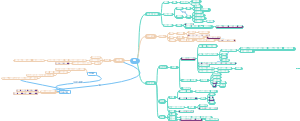
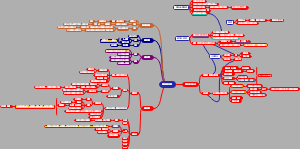
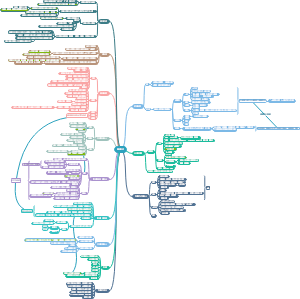
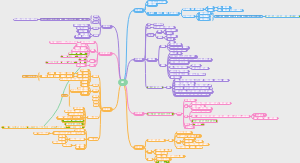
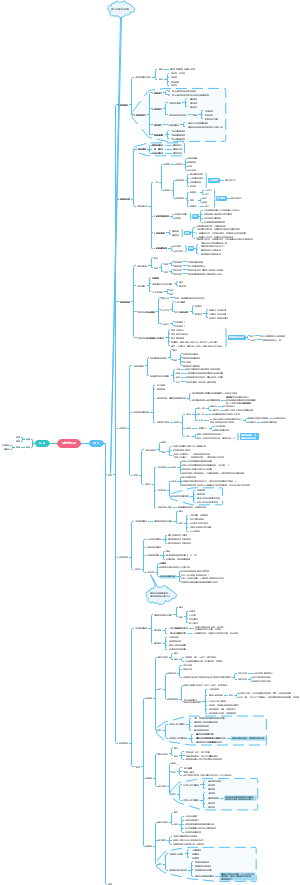
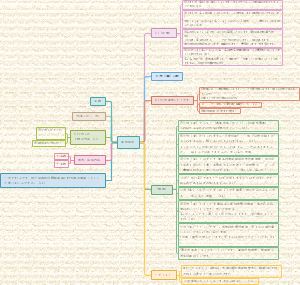
Macroeconomics
OLG Growth model
Model setup
Only one commodity is traded
All measured in real terms
Each generation live for 2 periods
The young supply labour and earn wage
The old supply capital and earn interest
Budget constraint
Young
Old
Life-time
Cobb-Douglas utility
Intertemporal consumption Euler equation
Firm's utility maximisation
Income determines
Market clearing condition
Economic Growth
Savings and Investment
National savings rate
Endogeneous savings rate
Long-run growth
Will not be present if there is no population or productivity growth
The position for which the economy converges is called the steady state
Welfare
Wage rate rises
More consumption in both periods
Interest rate fall
Slow down the consumption growth
unambiguously goes up
Growth models
Neoclassical
Solow
Growth in labour and productivity
Diamond
OLG model
Ramsey
RA model (identical and infinitly living individuals)
Endogeneous investment
Exogeneous constant saving Exogeneous productivity
Endogenous Growth
Learning by doing
Positive externality associated with existing technology
Linear capital transition curve
R & D
Two types of firms
Production firms
R&D firms
Optimality condition see lecture 6 slide 22
A grows at every period
Unchanged transition equation
Achieved by human capital accumulation
Other theory
Better infrastructure
Insititution
Business cycles
Recurrent or periodic fluctuations
Classical cycle
Fluctuations in the level of economic activities
Two phases
Expansion
Contraction
Two truning points
Peak
Trough
Recession
Significant decline in economic activity spreads across the economy
Last drom a few months to several years
2 Quarters of declining GDP
Allow for brief reversals
Examines various activities
Growth cycle
Deviations on real output relative to its long-term trend
Trend is normally the steady state growth path
Gives an indication on how could the central bank sets its monetary policies
Caused by shocks in the economic system
Stylised facts
Statistics
Amplitude of fluctuations
degree of co-movement
lead and lag relationships
Employment & Hours of work
Procyclical
High correlation
Similar volatility
Average weekly hours
Procyclical
Low correlation
Less amplitude in fluctuation
Consumption
Procyclical
less volatile
Investments
Procyclical
More volatile
imports&exports
more volatile
Imports are much more procyclical
Government purchases
Uncorrelated
real wage
Low correlation
Leading indicators
Dwelling investment
Building permits
Vacancy rate, new claims for unemployment insurance
New orders for consumer durable goods
Higher during expansion
consumer expectation
Spreads between long and short-term interest rate
Higher in recession
Lower in expansion
Linkage between countries
Trade/financial linkages
Global production chains
correlated shocks
Technology diffusion
Source
RBC Theory
Technology shocks
Efficient
No need for fiscal and monetray policies
Supported by empirical evidence
Only the modeled wage differs from the actual
Unemployment
No unemployment if the wage is flexible
Caused by minimum wage
Market clearning
Representative Household
Optimal decision
Firm's optimality condition
2 Cases
Non-binding minimum wage
No effect
Binding real wage
Immediately return back to steady state level after the shock disappears
Different to capital per person
Fiscal policy funding
Purposes
Consumption
Providing public goods and services
Investment
Public capital formation
Redistribute income
Across generations
Within generations
Funding
Collecting taxes
Taxing the old
No effect on savings and investment
No effect on transition equation
Lowering consumption when old
Taxing the young
Shift down the transition equation
Lowering saving and investment
Lowering consumption when old
Printing money
Borrowing
From the young
Same as taxing the young
Repay by taxing the old in the next period
Budget
Budget deficit
Primary deficit
Real net debt
GBC
GIBC
Adding fiscal policy to OLG model
Assuming
Household budget constraint
The timing of the tax does not matter The present value of life-time tax matters
Market clearing
Unchanged labour&capital market clearing condition
Bond market
GBC
Transition equation
Positive net fiscal position will shift down the transition equation
Government capital formation
No change in the households' budget constraints
No change in the generational account
Funding
Taxing the old
shift up the transition equation
Taxing the young
No change in the transition equation
Borrowing from the young
No effect on the transition equation
Other aspects
Intragenerational transfers
Within a generation
Heterogenity within generation
Lump-sum vs. distortionary
Lump-sum
Independent of individual's economic decisions
Distortionary
Associated with economic acitivities
Laffer curve
government revenue is initially increasing in the tax rate
revenue strats to decrease as the tax rate continues to increase
Tempory changes in fiscal policy
Transitory changes
Temporary tax cuts/subsidies
Debit finance
Ultimately pay off by the givernment
Economic effects depends on whether the tax burden falls on the same generation who enjoys fiscal benefits
Social Security
Fully-funded
Tax the young and invest the proceeds
Pay out the accumulated wealth
PAYG
Tax the young and immediately transfers to the old
What a person receive is independent of what he or she has paid
Becomes a challenge as the population is aging
Social security reform
Delayed retirement
Positive tax burden
Government holds a part of individual savings but return them a return that is lower than their private savings
transition equation is shifted down
Reduced welfare
No population growth
Positive tax burden
Positive tax benefit
Transition curve unambigiously shifted down
Welfare impact can be either positive or negative
With population growth
Australia is a mixture of both
No effect on the transition path
No effect on individual's welfare
Gloden-rule
Competitive equilibrium
Equilibrium without government intervention
Aggregate resource constraint
Maximisation problem
without subscript
can use the steady state version
No need to intervene the market
Can improve welfare by using PAYG social security system
Cannot use PAYG to achieve pareto improvement
with time subscript
Cannot begin with steady state
Money Theory
Functions of money
As a medium of change that eliminates the need for barter
Store of value (this requires the money value to be stable)
Unit of account
Avoids need for perfect record-keeping
Money aggregates
M1 = Currency + current deposits of the private non-bank sector at banks
M3 = M1 + all other deposits of the private non-ADI (authorised deposit-taking insitutions) sector at banks/credit unions & building societies
Broad money = M3+other deposit-like borrowings of FIs from the non-AFI private sector (short-term debt securities)
Money base: Currency + banks' holdings of notes and coins + deposits of banks with the Reserve Bank + other Reserve Bank liabilities to private non-bank sector
Goals and tools of monetary policy
goals
Stability of the currency (price stability)
Full employment (output/employment stability)
Economic prosperity and welfare of the Australian people (hard to measure)
Targets
On average 2%-3% inflation
Flexible
requires
Monetary policy independence
Transparency and accountability
Credibility
Institutional features
Tools
Operating targets or instruments
Overnight cash rate
Taylor rule
The esitmated values for US
A monetary policy reaction function
Effect of monetary policy
Interest rate channels
decrease in nominal interest rate
Decrease in real interest rate
Higher I and C
Asset price channels
decrease in real interest rate
Decrease in exchange rate
Higher NX
Increase money supply
Private sector got more than optimal money on hand
Buy portfolios
Increase I
Credit channels
Wealth
Bank landing
Balance sheet
The net worth of business is used for collateral for their loans
House liquidity
Increase in consumption on consumer durables and housing expenditure
Only the unanticipated change matters
Money in OLG model
Assumption
At the beginning of period 1 there is an existing quantity supply of money owned by the initial old
In every period the government can increase or decrease the quantity of money
Use the money in utility (MIU) model
Holding money gives people uitilities directly
Budget constraint
All in real terms
Capital return =
Money return =
If capital and money are prefect subsitutes
Happens when money does not provide utility
Demand for money
The higher the nominal interest rate the smaller demand for real money balances
Nominal interest rate affects the opportunity cost of holding money
Market clearing
Labour market/ capital market/ goods market/ money market
Money market
Money supply
Mainly by the old
The government can change the money supply
Money demand by the young
Market clearing
Price determination
Steady state
Transition equation
Full transition equation see lecture 17 slide 7
Steady state
Money supply does not influence long-run steady state capital to labour ratio
Long-run money neutrality
Only the price level changes
Short-run effect of change in money supply
transfers to the old
Saving behaviour does not change
No effect on real variables
Price jumps
Welfare
No change for generation >=2
The increase in price level is offset by the transfer payments received
No wchange for generation 1
Netural in both short and long-run
to finance government consumption
Generation 1
No effect on savings
Transition curve unchanged
Suffer from increase in price level
Welfare decreased
Generation >=2
No effect
Not netural in the short-run
transfers to the young
Generation 2
capital holdings increased by
Transition equation for k_3 shifts up
Generation >2
Transition equation returns
Temporarily higher capital-labour ratio
Temporary expansionary effect
Not neutral in the short-run
Price level will change in every periods after that
Welfare
Generation 1
Hurts
Generation >=2
Benefits
Money growth
superneutral:The growth rate of money supply has no effect on real variables
Money growth at the rate of z
Money is not superneutral
Inflation works as an implicit tax
Seigniorage
Extensive use can contribute to hyperinflation
Inflation effect
Government budget
GBC
Last bracket = real seigniorage
Partial equilibrium
Increase in the inflation rate
General equilibrium
Money demand change as well
Constrains the amount of revenue the government can possibly generate
Inflation dilute the real value of government debt
Only when the inflation is unanticipated
If the tax/subsidy is not indexed
Government may rise higher revenue as people are now in higher tax brackets
Lower transfer payment commitment
Optimal rate of inflation
Friedman rule
Cost of printing money = 0
Nominal interest rate = 0
Implies deflation
Keynesian monetary models
zero or small positive inflation rate
Positive as
Less likely to hit zero lower bound
More effective monetary policy
Able to generate government revenue
Cost of deflation
Unable to adjust nominal wage downwards
Unemployment
People become less willing to spend
Less willing to borrow
Inflation trap
Open Economy
Factor price equalisation
In open economy
If real interest rate were higher in a country compared to another, the citizens from the lower interest rate country will invest in the higher interest rate country
Capital outflow
Requires perfect capital mobility
Process continues until the real interest rates are equal
Two-country life-cycle model
Assumption
Perfect capital mobility
Labour is not mobile
If the two countries only differ by savings rate
The will have same
If the savings rate differs
are equal
are not equal
World capital market
Total demand of capital
Total supply of capital
Worldwide capital-labour ratio
Transition equation
Net foreign investment and trade balance
Net foreign assets
Change as the time changes
Net foreign investment
Not equal to 0 only when there the capital is still changing
=0 in the steady state
Current & Capital account
Domestic investment can be financed by national saving and net capital inflow
Trade balance = NX
Current account
Capital account
If a country is investing overseas, it is a capital outflow
Sum=0
Exchange rates and the balance of payments
Welfare implications
Depands on the golden-rule capital to labour ratio
Exchange rate
Nominal
Real
Terms of trade
The price of goods and services exported relative to the price of goods and services imported
Increase
Associated with high demand for exports
Higher national income
Shocks are important
Determines of exchange rate
Long-run
Law of one price
The price of an internationally traded commodity should be the same in all locations
Requires 0 or very small transportation costs
Purchasing power parity
Short-run
IRP (interest rate parity)
In OLG model
Long-run neutrality still holds
Balance of payments
Bring in foreign exchange
Credits
Outflow of foreign exchange
Debits
Epidemiology Model
RBC Model
representative household
c = consumption
n = supplying labour
Budget constraint
lump sum tax/subsidy
LHS
Marginal utility of working and consuming
RHS
Marginal disutility of working
Production function
Goods market clearing
Firm optimality
GBC
RBC-SIR Model
4 kinds of people
Susceptible
Can become infected
By consumption
New infection
Work
New infection
Random non-economic activities
New infection
Infected
Can recover or die
Fraction of ill population
Recovered
Dead
Assumptions
All probabilities are known to every individuals
People knows their own health status
People gain immunity upon recovery
Health/mortality costs are captured through the forgone utility of life
Results
Simple SIR MACRO model
Lecture 21 slide 16
Fewer infected
People tries to avoid falling ill by reducing their economic activities
Larger economic contractions
Consumption
Recovered
same
Infected
Fall
Susceptibles
Fall
Working hours
Recovered
Same
Infected
Same
Susceptibles
Fall
Not pareto efficient
Susceptible and the ill still consume and work too much
Not internalising the negative externalities
Simple containment
Simple command containment
Best simple containment policy
Choose consumption tax and other restrictions
Better performance
Gradually increase in containment measurez that peaks in line with new infections
Significantly reduces infections and mortality
More pronounced economic recession
Lecture 22 slide 6
Medical preparedness
The death is higher when the infection is higher
More costly
Even stricter containment measures
Lecture 22 slide 9
Treatment model
positive constant probability of discovering a new treatment
Fully effective treatment
Doesn't affect economic decisions much
Very little effect on optimal containment policy
Lecture 22 slide 12
Vaccination model
Constant probability of vaccine discovery
Vaccine has no effect on the people who are already infected/recovered
Immunity benefit from having recovered from illness is redundant
Does have effect on optimal containment
More restrictions at the start
Delay the peak of infections
Minimise the outbreak earlier to increase the probability a vaccine is discovered before the infection peak
Combined model see lecure 22 slide 17
Containment measures
Early/later exit
Higher infection
Lecture 22 slide18
Late strat
Lecture 22 slide 19
Huge containment measure once started
Smart containment
Result in much better outcomes
Set the consumption of the infected to a small but non-zero number
Eliminates the link between infection and economic activities
Eliminating the social negative externality