导图社区 主谓一致(二)
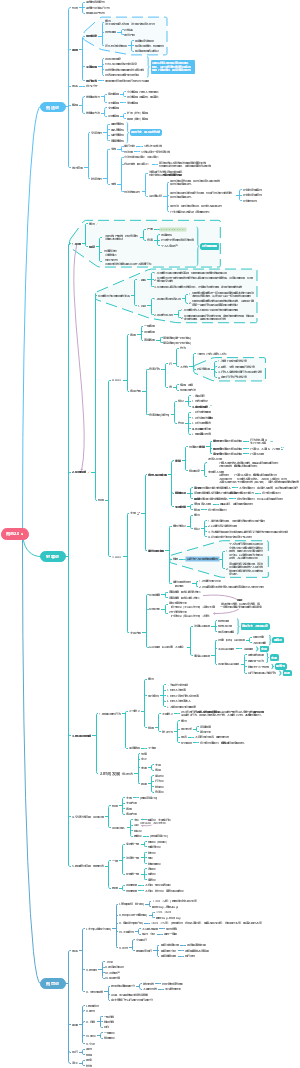
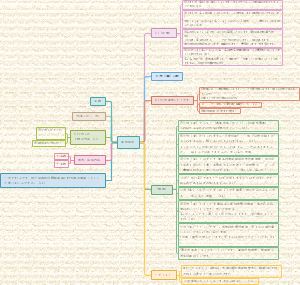
新编英语语法教程第六版主谓一致的思维导图,主要内容有Coordinate Subject、Noun Phrase of Amount or Quantity、Other aspects。
编辑于2022-10-16 16:04:01 四川省Subject Verb Concord
Coordinate Subject
1.A Coordinate subject joined by and/both...and
1. If the subject is plural, the predicate verb is plural. 2. The coordinate structure of the subject does not refer to two or more people or things, but expresses the singular meaning, so the verb uses the singular. 3. Some ellipsis structures with the conjunction "and" are similar to the singular, meaning plural, and verbs are plural. 4. When the coordinate nouns connected with and have qualifiers such as each, every, or many a, the following verbs usually use the singular. 5. Determine according to the context.
2.A Coordinate subject joined by or/nor/either..or etc.
Princle of Proximity
3.Subject +as much as etc.
The subject is followed by:as much as,rather than,more than,no less than,no less than...,and the predicate verb depends on the form of the subject
4.Subject +as well as wtc.
The subject is followed by as well as,in addition to,with,along with,together with,except...,and the predicate verb depends on the form of the subject
Noun Phrase of Amount or Quantity
Use a definite number of noun phrases as the subject
a. Number concepts are considered as a whole and verbs are singular; I'll use the plural as an individual.
b. The number of fractions (or percentages) +of- phrases and the verb form depends on the type of noun in the of phrase.
c.The verb about adding and multiplying two numbers is singular or plural, and the verb about subtracting two numbers is singular.
d.The subject consists of "one in/one out of+ plural noun", and the verb is singular in formal style. In informal speech, verbs can be plural according to the principle of proximity.
Use a non-definite number of noun phrases as the subject
If the subject is all of...,some of...,none of...,most of...,lots of,heaps of,loads of,scads of,plenty of+subject, there is a non-definite number of noun groups, and the verb form that follows depends on the type of noun in the of-group.
If the subject is "a protion of ,a series of,a pile of,a pile of,a panel of+subject" the verb is usually singular, regardless of the noun class.
If the subject is qualifie+kind/type/sort of+nouns usually followed by single or uncountable nouns and singular verbs.
If the subject consists of many a+noun“/more than one+noun", the meaning is majority, but the verb that follows is singular.
If the subject consists of "an average of/a majority of+plural noun", it means that most individual concepts are followed by plural words; If such subjects do not represent most individual concepts, the verb is singular.

Other aspects
Nominal Clause
The noun clause is used as the subject and the verb is usually singular.
If the what-clause itself is clearly plural, for example, the verb and complement of the what-clause are plural, then the east stimulus of the main clause can also be plural.
Nonfinite clauses
The verb is usually singular. Use two compound nonfinite clauses joined by and as the subject. Use the verb in the plural if referring to two things.
Relative Clause
In the "one of+Plural noun + relative clause" construction, the relative clause is usually plural, but sometimes singular (to emphasize one). the relative clause is singular if it is preceded by the definite article "the" or by a determiner such as "the only".
Cleft Sentence
In "It is I+who-clause", the present tense of the who- clause verb should agree with I in person and number.But in informal style, the focus element of a cleft sentence can be used with the accusative pronoun me. In this case, the subsequent 'that' clause is usually in the third person singular.
Existential Sentence
The singular and plural forms of the predicate verb depend on the notional subject that follows. When the noun phrase used as the subject is a coordinate construction, the verb can be singular as long as the first cooordinate element is not plural.