导图社区 人类传染病-病毒-概述
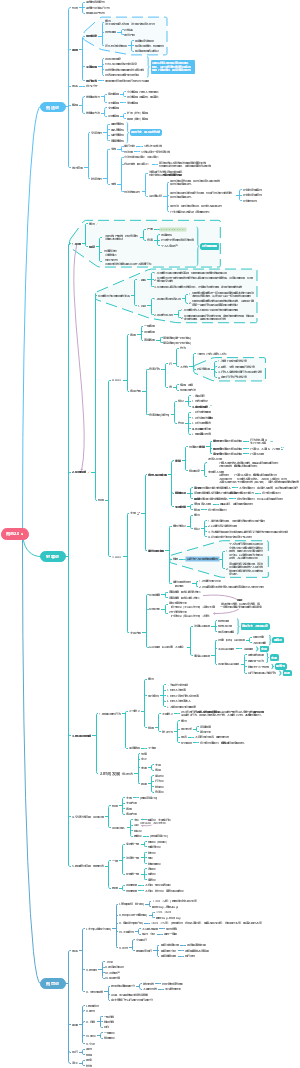
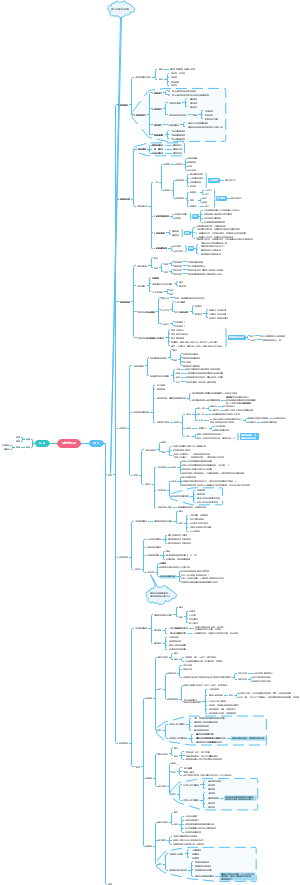
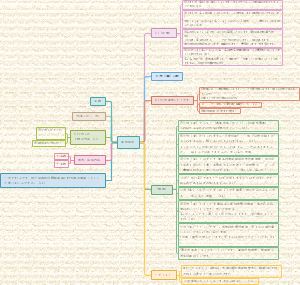
人类传染病-病毒-概述(基因组,一般特征等),总结了结构、 功能、分类等。希望可以对大家有所帮助。
编辑于2024-02-19 13:23:30E病毒概述
Structure
A fully assembled infectious virus is called a virion.
核衣壳nucleocapsid
proein capsid
Capsid proteins are coded for by the virus genome. Because of its limited size the genome codes for only a few structural proteins
Capsids are formed as single or double protein shells and consist of only one or a few structural protein species. Therefore, multiple protein copies must self assemble to form the continuous three-dimensional capsid structure.
衣壳组装方式(Self-assembly)
Helical symmetry
the capsid protein subunits (identical protomers原体) and the genome are arranged in a helix. 多见于丝状病毒和多形态病毒(filamentous and pleomorphic)
Icosahedral symmetry
the capsid protein subunits assemble into a symmetric shell that covers the genomic core. Icosahedral /ˌaɪkəsəˈhiːdrəl/二十面体的:多见于球形病毒(spherical)
virus genome (often with associated proteins)
RNA
DNA
包膜envelope(additional protective coat)
lipid bilayer (derived from host cell membrane)
Peplomer /'pepləmə/包膜粒
outer layer: studded with virus-coded, glycosylated (trans-) membrane proteins
Therefore, enveloped viruses often exhibit a fringe of glycoprotein spikes or knobs, also called peplomers.
宿主外:惰性,甚至结晶化
Viruses are inert outside the host cell.
Small viruses, e.g., polio virus can be crystallized.
Function
病毒粒功能:传宗接代
To deliver its DNA or RNA genome into the host cell so that the genome can be expressed (transcribed and translated) by the host cell.
蛋白质
Because of its limited size the genome codes for only a few structural proteins
The outer capsid and the envelope proteins of viruses are glycosylated and important in determining the host range and antigenic composition of the virion. In addition to virus-specified envelope proteins, budding viruses carry also certain host cell proteins as integral constituents of the viral envelope.
病毒粒大小与功能
Larger viruses often have a complex architecture consisting of both helical and isometric symmetries confined to different structural components. Small viruses, e.g., hepatitis B virus or the members of the picornavirus or parvovirus family, are orders of magnitude more resistant than are the larger complex viruses, e.g. members of the herpes or retrovirus families.
Classification
RNA
70%病毒为RNA病毒
高突变率(10^-4)
Mutation rates of 10-4 lead to the continuous generation of virus variants which show great adaptability to new hosts.
病毒RNA聚合酶缺乏DNA聚合酶的校对能力
单条或多段RNA
单分子monopartite
多分子 multipartite /ˌmʌltɪˈpɑːtaɪt/
侵染效率低;高变异率;高重组率
G3:双链RNA(正+负链),呼肠孤
正链参与复制。(第III组)包含一至十多种不同的RNA分子,每种分子编码一种或多种病毒蛋白。
Each segment consists of a complementary sense and antisense strand that is hydrogen bonded into a linear ds molecule.
Sedoreoviridae(光滑呼肠病毒科):10~12段、线性双链RNA(核衣壳)
G4:正链RNA,星披风,戊小黄冠
宿主核糖体将其翻译为单个蛋白质,由宿主和病毒蛋白质修饰,形成复制所需的各种蛋白质。其中之一包括依赖RNA的RNA聚合酶(RNA复制酶),以形成双链复制形式复制病毒RNA
the genomic /dʒiːˈnəʊmɪk/ RNA can serve as mRNA. Sense viral RNA alone can replicate if injected into cells, since it can function as mRNA and initiate translation of virus-encoded proteins.
Astroviridae(星状病毒科)-单条、正链RNA(核衣壳)
Togaviridae(披膜病毒科)-单条、正链RNA(核衣壳)
Matonaviridae(风疹病毒科)-单条、正链RNA(包膜、棘突、核衣壳)
Hepeviridae(戊肝病毒科)-单条、正链RNA(准包膜、核衣壳)
Picornaviriade(小RNA病毒科)-单条、正链RNA(核衣壳)
Flaviviridae(黄病毒科)-单条、正链RNA(包膜、基质、核衣壳)
Coronaviridae(冠状病毒科)-单条、正链RNA(棘突、包膜、基质、核衣壳)
G5:负链RNA,不丝弹,正负肺
必须通过RNA复制酶复制其基因组以形成正义链RNA。这意味着病毒必须携带RNA复制酶。然后正义链RNA分子充当病毒mRNA,并通过宿主核糖体翻译成蛋白质。
the complementary strand synthesized by a viral RNA transcriptase /trænˈskrɪpteɪs/转录酶 serves as mRNA. Antisense RNA, on the other hand, has no translational function and cannot per se produce viral components.
Bunyaviridae(布尼亚病毒科)-3段、线性负链RNA(包膜,棘突,核衣壳)
Filoviridae(丝状病毒科)-单条、线性负链RNA(包膜、棘突、基质、核衣壳)
Orthomyoviridae(正粘病毒科)-7~8段、线性负链RNA(包膜、棘突、基质、核衣壳)
Paramyxoviridae(副粘病毒科)-单条、纯属负链RNA(包膜、刺突、基质、核衣壳)
Pneumoviridae(肺病毒科)-单条、线性负链RNA(包膜、刺突、基质、核衣壳)
Rhabdoviridae(弹状病毒科)-单条、线性负链RNA(包膜、棘突、基质、核衣壳)
G6:反转录RNA
双正链RNA基因组,但通常不被认为是RNA病毒,因为它们使用DNA中间体进行复制。逆转录酶是来自病毒本身的一种病毒酶,在病毒解除包被后,它将病毒RNA转化为互补的DNA链,复制后产生双链的病毒DNA分子。在使用病毒整合酶将DNA整合到宿主基因组中之后,编码基因的表达可导致新病毒粒子的形成。
The retrovirus genome comprises two identical, plus-sense ssRNA molecules.
Retroviruses contain 2 envelope proteins encoded by the env-gene, 4–6 nonglycosylated core proteins and 3 non-structural functional proteins (reverse transcriptase, integrase, protease: RT, IN, PR) specified by the gag-gene.
The RT transcribes the viral ssRNA into double-stranded, circular proviral DNA. This DNA, mediated by the viral integrase, becomes covalently bonded into the DNA of the host cell to make possible the subsequent transcription of the sense strands that eventually give rise to retrovirus progeny.
integrase /ˈɪntɪɡreɪs/整合酶;covalently /ˌkəʊˈveɪləntli/共价
After assembly and budding, retroviruses show structural and functional maturation.
In immature virions the structural proteins of the core are present as a large precursor protein shell. After proteolytic processing by the viral protease the proteins of the mature virion are rearranged and form the dense isometric or cone-shaped core typical of the mature virion, and the particle becomes infectious.
Retroviridae(反转录病毒科)-单条、环状单链RNA(包膜、棘突、基质、核衣壳)
DNA
G1:双链DNA,乳腺疱痘
一般特征
大多数DNA病毒为单条、线性双链DNA, 在宿主的细胞核内合成DNA,在细胞质内翻译出病毒蛋白。
Most DNA viruses (Fig. 41-6) contain a single genome of linear dsDNA. The papovaviruses, comprising the polyoma- and papillomaviruses, however, have circular DNA genomes, about 5.1 and 7.8 kb pairs in size.
Three or 2 structural proteins make up the papovavirus capsid: in addition, 5-6 nonstructural proteins are encoded that are functional in virus transcription, DNA replication and cell transformation.
大小ranges from 125kb (VZV) to 241kb (CMV)
增殖过程
①早期蛋白的合成: 病毒的DNA侵入宿主细胞,依赖宿主细胞的RNA聚合酶,转录合成的mRNA转移至核糖体上,主要合成DNA复制所需的酶,例如DNA聚合酶, 脱氧胸腺嘧啶激酶等;
②DNA的复制: 复制方式为半保留复制,打开DNA双链,根据碱基互补配对原则,以两条链为模板,合成子代DNA分子;
③晚期蛋白的合成: 病毒DNA复制之后再次转录,主要指导合成病毒的结构蛋白,例如衣壳蛋白、包膜蛋白等,称为晚期蛋白;
④病毒装配:子代DNA分子与结构蛋白装配生成子代病毒。
Papillomaviridae(乳头瘤病毒科)-单条、环状双链DNA(核衣壳)
Adenoviridae(腺病毒科)-单条、线性双链DNA(核衣壳)
Orthoherpesviridae(正疱疹病毒科)-单条、线性双链DNA(包膜、外皮、核衣壳)
The virion comprises a core, capsid, tegument (matrix) and envelope.
Poxviridae(痘病毒科)-单条、线性双链DNA(包膜、侧体,核衣壳)
包裹型病毒粒wrapped virions (intracellular enveloped virus, IEV胞内包膜病毒)
胞外病毒粒extracellular virions (extracellular enveloped virus, EEV胞外包膜病毒)
G2:单链DNA
一般特征
4~6kb in size
Comprises the parvo-, the erythro- and the dependoviruses.
AAV
The virion contains 2~4 structural protein species, which are differently derived from the same gene product.
增殖过程
①DNA的复制: 复制方式为半保留复制,病毒侵入细胞后,在宿主细胞核内,依赖于细胞的酶,以单链DNA为模板,形成双股DNA ( ± DNA) ,含母链的DNA分子可继续复制新的双链DNA;
②转录和翻译: 以不含母链DNA的新合成的双链DNA为模板,转录合成mRNA的模板,并翻译成相关蛋白质;③病毒装配: 子代DNA分子与结构蛋白装配生成子代病毒
Parvoviridae(细小病毒科)-单条、线性单链DNA(核衣壳)
G7:反转录双链DNA
Hepadnaviridae(嗜肝DNA病毒科)-单条、部分环状双链DNA(包膜、棘突、基质、核衣壳)